
Hear from Our Customers
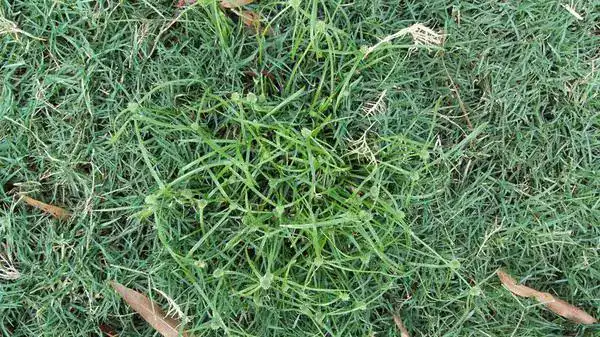
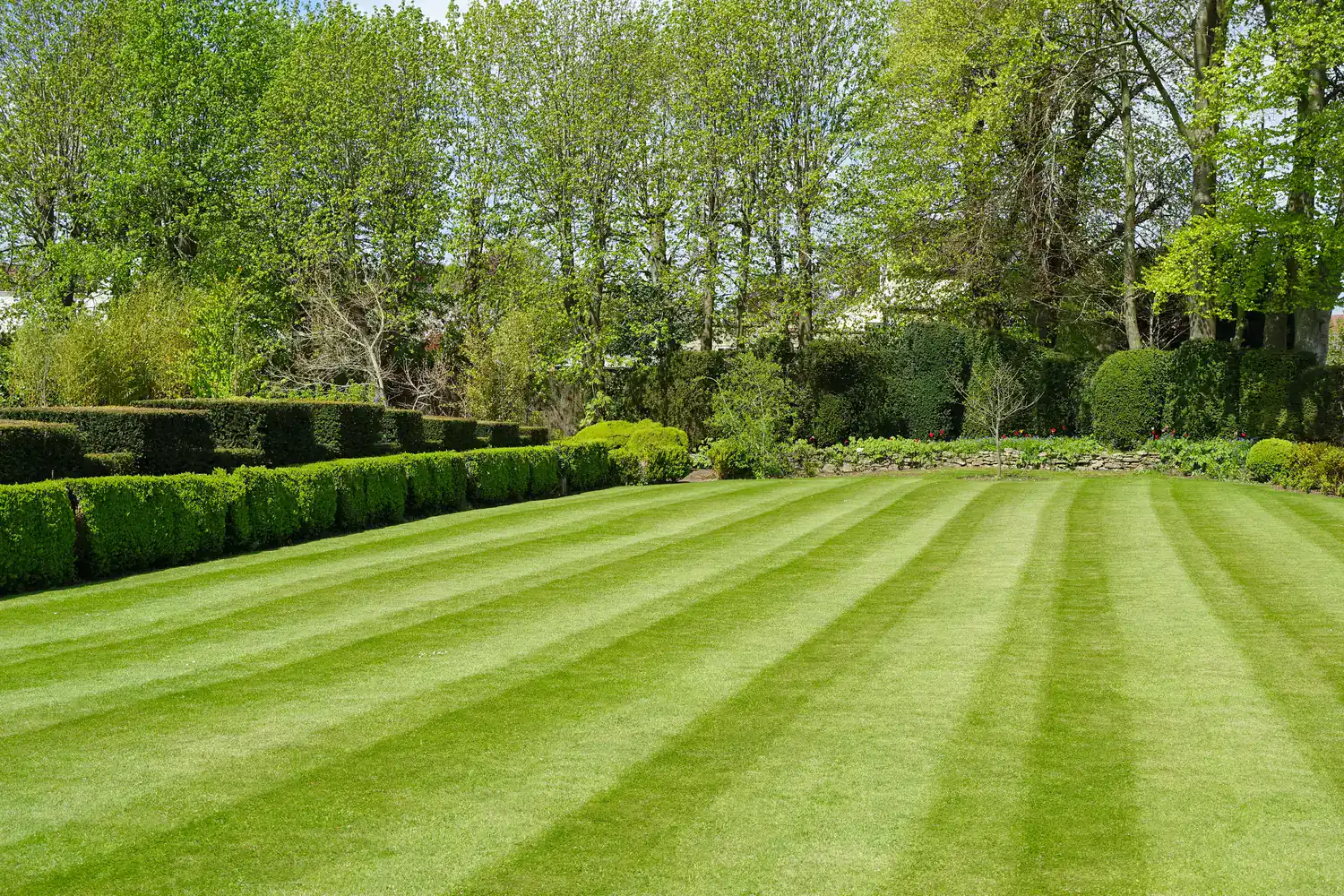
Once kyllinga is properly eliminated, the most immediate thing you notice is consistency your lawn stops looking like two different plants are competing for the same space. No more dark green patches that stay low and dense while the rest of your turf struggles through summer heat. That contrast disappears, and what’s left is a lawn that actually looks like it belongs to the house.
For Port Jefferson Station specifically, that result matters more than it might in other parts of Suffolk County. The older housing stock in the Comsewogue neighborhoods many of these homes built out in the late 1950s and 1960s means decades of soil compaction, aging drainage, and irrigation systems that weren’t designed for today’s watering habits. Those are exactly the conditions kyllinga exploits. Fixing the weed without addressing what gave it a foothold just invites it back.
That’s why our program doesn’t stop at the herbicide application. After treatment, the bare or thinned areas where kyllinga was crowding out your desirable turf get overseeded with cool-season grass varieties suited to North Shore growing conditions. Dense, healthy turf is the most reliable long-term defense against reinfestation and that’s the actual goal.
We operate out of Port Jefferson Station not a regional hub somewhere in central Suffolk, not a franchise office in another county. When you call, you’re reaching someone who drives the same roads you do, knows the soil conditions between Route 112 and the LIRR tracks, and is accountable to this community the way a neighbor is accountable, not the way a call center is.
We hold a New York State DEC Commercial Pesticide Applicator License (Category 3a, Ornamental and Turf) the credential required to legally purchase and apply the professional-grade sedge-active chemistry that actually eliminates kyllinga. That’s not a formality. It’s the difference between a program that works and one that doesn’t.
We also operate exclusively in Suffolk County, which means full familiarity with SCDHS pesticide buffer zone requirements and the local regulations that govern every application we make here. That compliance knowledge isn’t something you should have to ask about it should already be built in.
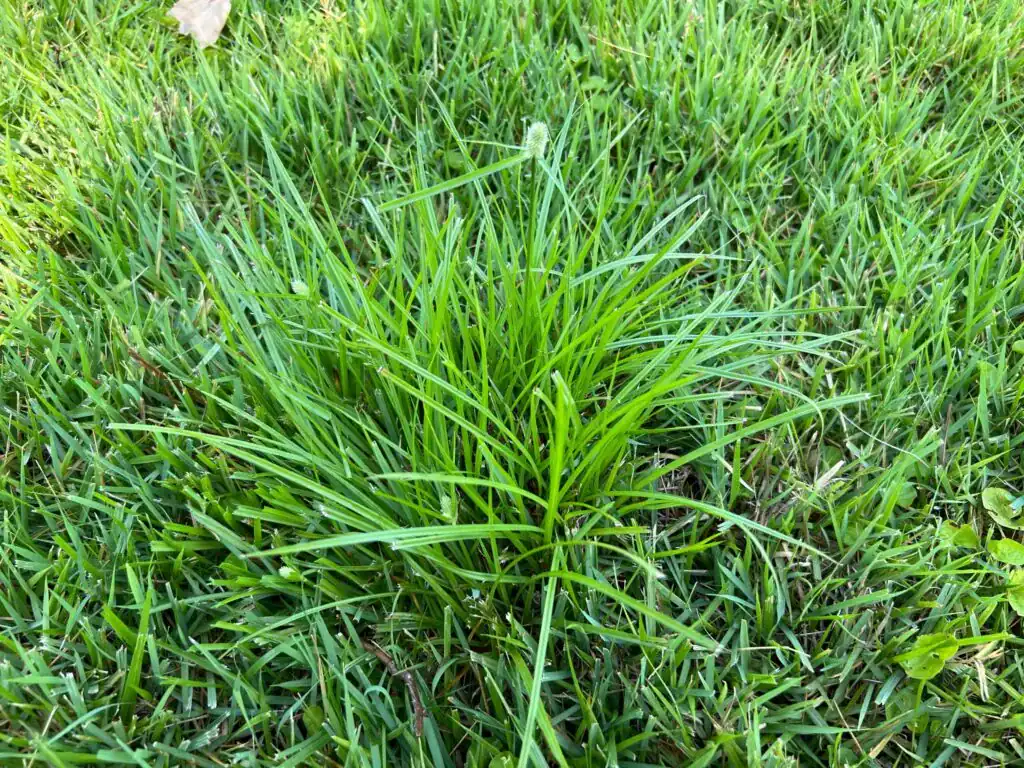
It starts with identification. Kyllinga and nutsedge are both sedges, both resistant to standard weed killers, and both common in Port Jefferson Station lawns but they’re not the same plant and they don’t always respond identically to the same program. Before anything gets applied, the specific sedge species present in your lawn gets confirmed. That step alone separates a targeted program from a guess.
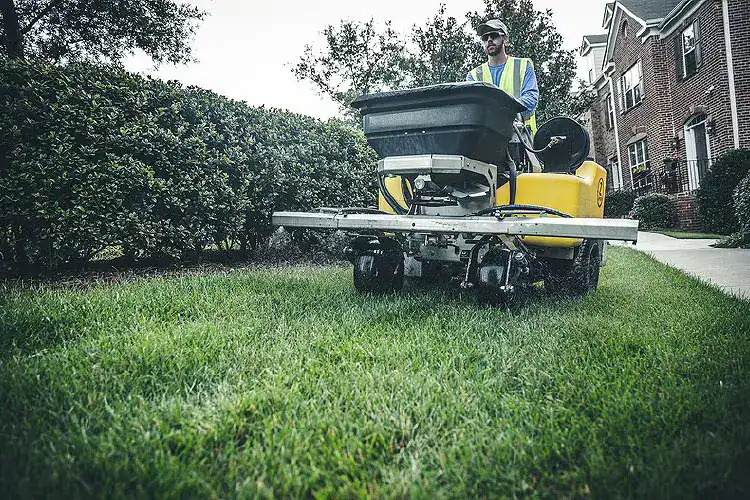
Once identified, treatment begins during the active growing window generally late May through late August for the North Shore’s growing season. The first application targets actively growing tissue using professional-grade halosulfuron or sulfentrazone chemistry, neither of which is available over the counter in effective formulations. A second application follows four to six weeks later to catch regrowth from surviving rhizomes while the plant is still metabolically active. Depending on the severity of the infestation, a third application may be warranted.
After the sedge is eliminated, the program shifts to restoration. Bare and thinned areas are overseeded with appropriate cool-season varieties, and soil and fertilization recommendations are provided based on what your lawn actually needs not a standard package applied to every property regardless of condition. For Port Jefferson Station lawns with the sandy-loam North Shore soil profile, that post-treatment phase is what turns a treated lawn into a recovered one.
Ready to get started?
Our kyllinga control program includes on-site species identification, a minimum of two targeted herbicide applications spaced four to six weeks apart using professional-grade sedge-active chemistry, and post-treatment overseeding recommendations to restore turf density where the sedge was crowding out desirable grass. Every application is documented in compliance with NYSDEC licensing requirements and cross-referenced against the SCDHS pesticide buffer zone map a legal requirement for all commercial pesticide applications in Suffolk County that not every provider takes seriously.
The chemistry we use primarily halosulfuron-methyl (Sedgehammer) or sulfentrazone (Dismiss) depending on the situation requires a Category 3a Commercial Pesticide Applicator License to purchase and apply commercially in New York State. These are not products available at any retailer along Nesconset Highway or Route 112. If you’ve already tried a retail weed killer and watched the kyllinga come back, that’s not a failure of effort it’s a product access problem that only a licensed applicator can solve.
For lawns with significant infestation coverage, our program also includes a soil and drainage assessment. Port Jefferson Station’s older residential lots frequently have compaction and drainage issues that create the chronically moist conditions kyllinga thrives in. Treating the weed without evaluating those underlying conditions is a short-term fix. Our program is designed to address both.
The weed killers available at hardware stores and big-box retailers including the ones you’ll find along Route 347 and Route 112 are formulated for broadleaf weeds and grassy weeds. Kyllinga is neither. It’s a sedge, and it’s completely unaffected by the active ingredients in most consumer weed control products. Applying them to kyllinga is not a dosage problem or a timing problem. It’s a chemistry problem.
The herbicides that actually work on kyllinga primarily halosulfuron-methyl and sulfentrazone require a New York State DEC Commercial Pesticide Applicator License to purchase in professional-grade formulations and apply commercially. They are not sold to the general public in effective concentrations. This is the single most important reason DIY kyllinga control fails: the products that work are legally inaccessible without proper licensing. A licensed applicator isn’t just more experienced we have access to chemistry you simply can’t buy.
For most Port Jefferson Station lawns with an established kyllinga infestation, a minimum of two targeted applications is required. The first application kills actively growing plant tissue above ground. The second application, made four to six weeks later, targets regrowth from the underground rhizome network that the first treatment didn’t fully reach. Kyllinga spreads via rhizomes, and a single application almost never eliminates the full root system.
In lawns where the infestation is more advanced which is common in the older neighborhoods around Comsewogue where drainage and soil compaction issues have given kyllinga years to establish a third application may be necessary. The treatment window on Long Island’s North Shore runs from late May through late August. Applications made outside that window, when the plant is not actively growing, are significantly less effective and are generally not worth the investment. Honest scheduling around the plant’s biology is what produces reliable results.
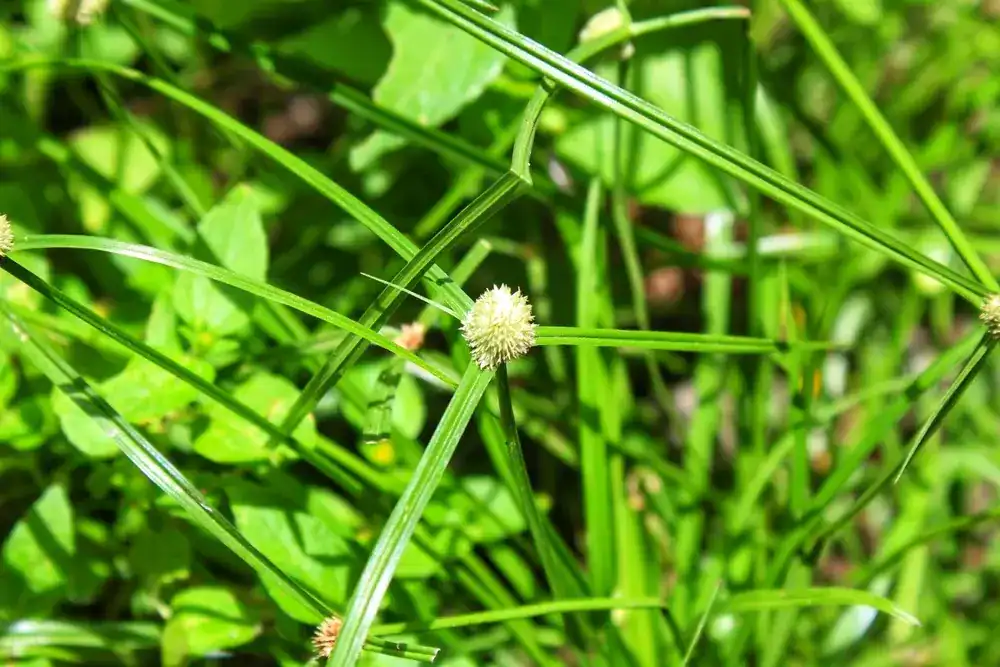
They’re related both are sedges in the family Cyperaceae but they are different plants, and the distinction can matter for treatment. Kyllinga has a compact, round seed head and tends to grow lower and denser than yellow nutsedge, which has a more open, branching seed head. Both are resistant to standard weed killers, and both are common in Long Island lawns. In Port Jefferson Station specifically, it’s not unusual to find both in the same lawn.
The reason identification matters is that while both respond to sedge-active chemistry, the response can vary, and a program that assumes you’re dealing with one when you actually have the other can produce incomplete results. Before any treatment is applied, the specific sedge species present in your lawn should be confirmed. That’s not an extra step it’s the step that makes the rest of the program worth doing. A provider who skips identification and goes straight to spraying is guessing, not treating.
The effective treatment window for kyllinga in Port Jefferson Station runs from late May through late August. That’s when the plant is actively growing and metabolically vulnerable to the sedge-active herbicides that actually work. Applications made before active growth begins in spring, or after the plant starts going dormant in fall, are significantly less effective the chemistry doesn’t move through a dormant plant the way it does through an actively growing one.
Most Port Jefferson Station homeowners notice kyllinga in July or August, when the weed’s dark green color stands out sharply against cool-season turf that’s slowing down in summer heat. If you’re seeing it now, you’re still within the treatment window and it’s worth acting. If you’re discovering it in September or October, the more honest recommendation is to schedule a program for the following spring rather than apply treatments at a time when results will be unreliable. Getting the timing right is one of the most important factors in whether a kyllinga program actually works.
Kyllinga can return after treatment if the conditions that allowed it to establish in the first place aren’t addressed. The weed thrives in moist, compacted, or poorly drained soil and those conditions are extremely common in Port Jefferson Station’s older residential neighborhoods, where original lot grading, aging irrigation systems, and decades of soil compaction create exactly the micro-environments kyllinga exploits. Eliminating the weed without evaluating those underlying factors is a temporary fix.
The most reliable long-term defense against reinfestation is dense, healthy turf. Kyllinga gains its initial foothold in bare or thinned areas where desirable grass is stressed or absent. After herbicide treatment eliminates the existing infestation, overseeding those areas with appropriate cool-season grass varieties closes the gaps that kyllinga would otherwise recolonize. Irrigation adjustments particularly for homeowners running automatic systems on fixed schedules regardless of rainfall also make a significant difference. Our program is designed to address both the weed and the conditions behind it.
Hand-pulling kyllinga is not an effective control method for an established infestation. The plant spreads through an underground rhizome network, and pulling the visible plant material above ground leaves the root system intact. New growth regenerates from those rhizomes within weeks, often producing multiple new shoots where one was removed. For a small, newly emerged patch caught very early, hand removal combined with close monitoring might slow the spread but it won’t eliminate the plant.
In Port Jefferson Station lawns where kyllinga has been present for more than one season, the rhizome network is typically too extensive for mechanical removal to be practical. The weed also produces up to several thousand seeds per plant per year, so even if you removed every visible plant today, seed pressure from neighboring properties which is a real factor in the close-set residential neighborhoods between Route 112 and the LIRR tracks can reintroduce it the following season. A properly timed, licensed herbicide program is the only approach that reliably eliminates an established kyllinga infestation and gives your lawn a genuine chance to recover.
Useful Links
Other Services we provide in Port Jefferson Station