
Hear from Our Customers
If you’ve been fertilizing your lawn for years and it still looks thin, patchy, or overrun with weeds and moss, the problem probably isn’t your effort. It’s your soil. When pH drops too low which happens naturally and consistently in Port Jefferson Station the nutrients in every fertilizer product you apply get chemically locked in the soil. Your grass can’t absorb them. You’re spending money on treatments that can’t do their job.
Port Jefferson Station has a specific combination of conditions that accelerates this problem faster than most of Suffolk County. The sandy, loamy North Shore soil drains quickly, which means the calcium and magnesium that keep pH balanced leach out faster than in heavier soils inland. Add the tall oak trees that line the ranch-home streets throughout Terryville and the surrounding neighborhoods their leaf litter releases organic acids into your soil every fall and you’ve got a two-front acidification problem that doesn’t fix itself.
Once your soil pH is corrected into the right range, the grass you already have starts actually responding to the care you’re putting in. Fertilizer absorbs the way it should. Bare spots fill in. Moss stops creeping across the shaded areas under your oaks. The lawn that’s been frustrating you for seasons starts looking the way you always expected it to.
Our mailing address is Port Jefferson Station, NY 11776. That’s not a technicality it means when you call us about your lawn on a street off Route 112 or in Terryville, you’re calling a company that operates in the same community. We know the soil here. We know the oak canopy. We know the North Shore microclimate that keeps things humid and shaded in ways that inland Suffolk County towns don’t deal with the same way.
When you reach out, you’re going to speak with a real person Carol handles scheduling and knows the accounts. No call centers, no automated systems, no technician showing up without context. We run a program-based model because lawn health isn’t a one-time fix, and the homeowners in this area who’ve tried the franchise approach already know what that gets them. We do things differently, and the lawns we work on show it.
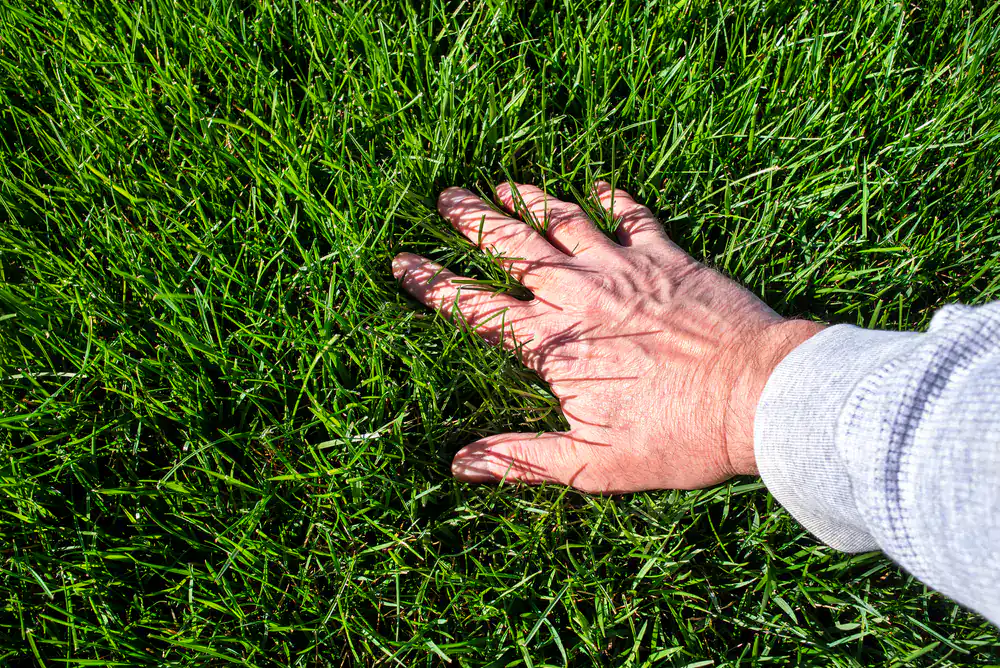
It starts with a soil test not a guess, not a standard application based on zip code. A proper soil test tells us your current pH level, your soil’s buffering capacity, and the exact amount of lime needed to bring you into the 6.3–6.5 target range that Cornell Cooperative Extension recommends for Long Island turf. Skipping this step is how homeowners end up over-applying lime and creating alkaline soil problems that look almost identical to the acidic ones they were trying to fix.
Once we have your results, we apply professional-grade pelletized lime calibrated to your specific lawn. For most Port Jefferson Station properties, fall is the ideal window typically mid-September through October because the freeze-thaw cycle through the winter helps integrate the lime into your soil profile before the spring growing season. This timing also aligns with Suffolk County’s fertilizer blackout, which prohibits fertilizer applications from November 1 through April 1. Lime isn’t a fertilizer and isn’t subject to that restriction, but coordinating your full fall program pH correction, pre-winter fertilization, and overseeding if needed before that date sets your lawn up for the strongest possible spring.
After application, lime takes several months to fully work through the soil. We’re transparent about that timeline because we’d rather set the right expectation than have you think something’s wrong in January. By spring, you’ll have a measurable difference and we recommend retesting every two to three years to stay ahead of the natural acidification cycle that comes with living on the North Shore.
Ready to get started?
Our lawn pH treatment isn’t a bag of pellets spread and forgotten. It starts with soil testing that gives you a real baseline current pH, soil type, buffering capacity so the lime application is calculated, not estimated. For Port Jefferson Station homeowners dealing with the combined pressure of sandy North Shore soil and oak canopy acidification, that precision matters. A generic lime dose won’t account for your specific conditions, and too much lime creates its own set of problems.
The lime we use is professional-grade pelletized limestone the same calcium carbonate that’s been used to balance soil for generations, just applied with the right equipment and the right amount for your lawn’s actual needs. It’s a naturally occurring mineral, non-toxic, and safe for the yards where your kids and dogs spend their time. Once it’s watered in, there’s no residue concern and no re-entry restriction the way there would be with certain chemical treatments.
Because we operate on a program model, pH treatment is part of a broader picture of your lawn’s health. If your soil test reveals other deficiencies, or if your lawn needs overseeding alongside pH correction common in Port Jefferson Station yards where oak shade has thinned the turf over time we’ll tell you directly and build that into your program. You’ll know what’s being done, why it’s being done, and what to expect. That’s how we work with every homeowner in this area, from Terryville to the streets closest to the Village line.
The most reliable way is a soil test, but there are signs you can look for before you even test. If your lawn has been thinning out despite regular fertilization, if moss is spreading in the shaded areas under your oak trees, or if weeds seem to be winning ground no matter what you apply, low soil pH is one of the most likely causes. These are exactly the conditions that show up consistently on Port Jefferson Station properties the combination of sandy North Shore soil and oak leaf litter creates an environment where pH drops steadily without active correction.
A soil test will give you a specific number. The target range for cool-season grass on Long Island is 6.3 to 6.5. If your test comes back at 5.5 or lower which is common in this area without treatment your grass is operating in soil that’s chemically blocking the nutrients it needs. That’s not a fertilizer problem. It’s a pH problem, and lime application is the fix.
This is one of the most common frustrations we hear from homeowners in Port Jefferson Station, and the answer almost always comes back to soil pH. Nitrogen, phosphorus, and potassium the core nutrients in every fertilizer become chemically unavailable to your grass when soil pH drops below 6.0. The nutrients are in the soil, but your grass roots can’t access them. You’re essentially spending money on fertilizer that the ground is holding hostage.
pH is measured on a logarithmic scale, which means a reading of 5.0 isn’t just a little worse than 6.0 it’s ten times more acidic. Many Port Jefferson Station lawns test in that range without treatment, especially those with mature oak trees contributing acid-producing leaf litter each fall. Once pH is corrected, the fertilizer you’re already applying starts doing what it’s supposed to do. For a lot of homeowners, the results after a single fall lime treatment are the most visible improvement they’ve seen in years.
Yes lime is ground limestone, a naturally occurring mineral that contains calcium and magnesium. It’s not a synthetic chemical, it’s not a pesticide, and it’s not a fertilizer. The pelletized lime used in professional lawn applications is the same base material that’s been used in agriculture for centuries to balance soil. Once it’s been watered in, there’s no toxic residue and no concern about skin contact or ingestion the way there would be with certain weed control or pest treatments.
For Port Jefferson Station families with large ranch yards that get regular use kids playing, dogs running around this is a reasonable question to ask about anything going on the lawn. The honest answer is that lime is one of the safest soil treatments available. We’ll always tell you when it’s been applied and recommend keeping foot traffic light until it’s been watered in, but that’s a precaution for effectiveness, not safety.
Fall is the preferred window typically mid-September through October for Port Jefferson Station lawns. There are two reasons this timing works best here specifically. First, the freeze-thaw cycle that Long Island goes through each winter helps work the lime down into the soil profile, so it’s fully integrated and ready to influence spring growth. Second, Suffolk County’s fertilizer blackout begins November 1 and runs through April 1, which means the practical window for a complete fall program pH correction plus pre-winter fertilization plus overseeding if needed closes quickly. Getting lime down in September or October gives it time to start working before the ground freezes.
Spring application, after April 1 when the blackout lifts, is also effective. You won’t get the winter integration benefit, but a spring lime treatment will still improve pH heading into the growing season. If you’ve missed the fall window, spring is a solid second option just know the results will take a bit longer to fully show.
You can, but the risk is applying the wrong amount and that creates a different problem. Without a soil test that tells you your current pH and your soil’s buffering capacity, there’s no accurate way to calculate how much lime your lawn actually needs. The bags at hardware stores give general guidelines by square footage, but those guidelines don’t account for the specific soil type in your yard, how acidic it already is, or how quickly it tends to reacidify.
Over-applying lime pushes soil pH above 7.0, into the alkaline range, where iron and manganese become unavailable to your grass. The symptoms yellowing, poor growth, patchy turf look a lot like the acidic-soil problems you were trying to fix in the first place. For Port Jefferson Station homeowners dealing with the compounding acidification from sandy North Shore soil and oak leaf litter, a soil-test-first approach isn’t just the professional standard it’s what actually gets the result you’re after without creating a new issue.
For most Port Jefferson Station lawns, retesting every two to three years is the right cadence. Lime doesn’t maintain pH permanently the same conditions that drove your soil acidic in the first place continue working after treatment. The sandy, porous North Shore soil keeps leaching calcium and magnesium through rainfall and irrigation. The oak trees keep dropping leaves every fall. Over time, pH will drift back toward the acidic range, and the goal is to catch it before it drops far enough to affect your lawn’s performance.
How quickly it drops depends on your specific yard how many mature oaks you have, how much rainfall you get, and how your soil is structured. Some Port Jefferson Station properties need a lime application every other year; others go three years comfortably before the numbers move meaningfully. That’s exactly why retesting matters more than following a fixed schedule. When you’re on a program with us, we track where your soil stands and flag when it’s time to retest, so you’re not guessing and you’re not over-treating.
Useful Links
Other Services we provide in Port Jefferson Station