
Hear from Our Customers
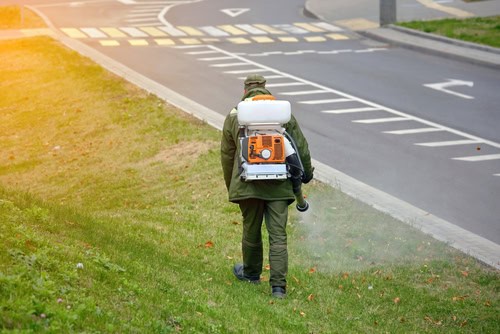
Dead patches that return every summer are not a reseeding problem they are a disease problem. If you have been filling in the same spots year after year and watching them die again, there is almost certainly an active fungal pathogen in your soil that no amount of fresh seed will fix on its own. The cycle stops when the disease is treated correctly, not when it is covered up.
Stony Brook’s proximity to the harbor creates persistently high humidity and extended morning dew on grass blades two conditions that drive brown patch and red thread harder here than in most inland Suffolk County communities. Add the sandy loam soils common across the North Shore, which stress turf during dry stretches and invite dollar spot, and your lawn is working against three different threats depending on the season.
When those threats are identified and treated with the right chemistry at the right time, the results are straightforward: the patches stop spreading, the turf recovers, and next season looks different. That is what a professional fungicide program near Stony Brook, NY actually delivers not just a spray, but a real answer to what has been quietly killing your lawn.
We hold a New York State Department of Environmental Conservation commercial pesticide applicator license the legal credential required to purchase, possess, and apply professional-grade fungicide products in New York. This is not a membership badge or a marketing claim. It is a state-issued license that requires passing exams, meeting experience standards, and renewing with continuing education every three years. It also means access to restricted-use fungicide formulations that are simply not available at any retail store.
Based out of Port Jefferson Station, we operate directly on the North Shore corridor not a franchise dispatching crews from Nassau County or the South Shore. We know the specific conditions that affect lawns in the Three Villages area: the harbor humidity, the mature oak canopy that slows drying and traps moisture, the sandy loam soils that stress turf in dry stretches. That local knowledge shapes every treatment decision we make on your Stony Brook property.
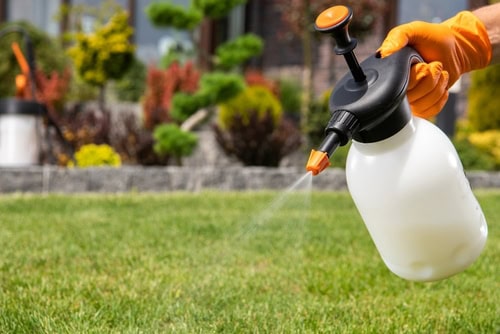
The first thing we do is identify what is actually wrong with your lawn. Brown patch, dollar spot, and red thread look similar from a distance patches of dead or discolored grass but they are caused by different pathogens, require different fungicide chemistries, and respond to treatment at different points in the season. Applying the wrong product, or the right product at the wrong time, wastes money and lets the disease keep spreading. That is why the process starts with diagnosis, not a scheduled spray.
Once the disease is confirmed, we select the correct fungicide based on the specific pathogen, the current conditions on your property, and where we are in Stony Brook’s seasonal disease window. Spring applications target red thread as temperatures climb into the 60s and 70s a window that runs longer here due to the moderating influence of the Long Island Sound. Summer applications address brown patch during the humid stretch from June through September, when harbor air keeps humidity elevated and nighttime temperatures stay warm. Dollar spot treatments are timed to the drought-stress periods that Stony Brook’s fast-draining soils create.
After each application, you receive written documentation of exactly what was applied, at what rate, and when re-entry is safe. That is a legal requirement of the NYSDEC license and it is the kind of accountability that makes a real difference when you are dealing with a property near Stony Brook Harbor’s sensitive coastal watershed.
Ready to get started?
Brown patch, dollar spot, and red thread are the three fungal diseases that consistently show up on Long Island’s cool-season lawns and all three are amplified by conditions specific to Stony Brook. Brown patch thrives when nighttime temperatures hold above 70°F and humidity is high, which the harbor air delivers reliably from mid-June through early September. Dollar spot targets turf that is drought-stressed or nitrogen-deficient, which is a recurring issue on the sandy loam soils that dominate the North Shore. Red thread emerges in spring and fall when temperatures are in the 60s and 70s and it spreads fast, with spores capable of moving up to eight feet from a single infected area.
Our fungicide program for Stony Brook, NY covers all three. Applications are timed to the actual disease windows of the North Shore growing season, not a generic national schedule. Fungicide chemistries are rotated across applications to prevent resistance buildup a step that most homeowners and many generic spray programs skip entirely, which is why the same disease keeps coming back season after season.
Every application uses professional-grade, restricted-use fungicide products the same formulations used on golf courses and professional sports turf that are only available to NYSDEC-licensed applicators. If you have tried store-bought fungicide on your Stony Brook lawn and watched the disease return, the product gap is a significant part of why. What we apply here is categorically different from what is on the shelf at the hardware store.
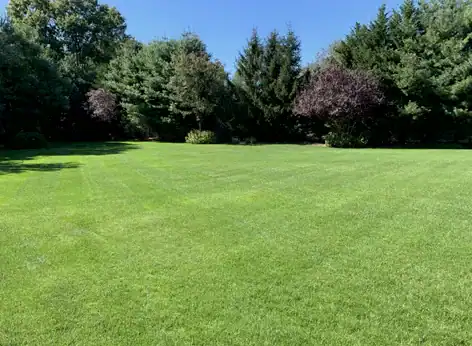
If the same areas die back every June, July, or August, you are almost certainly dealing with brown patch a fungal disease caused by Rhizoctonia solani that thrives when nighttime temperatures stay above 70°F and humidity is elevated. Stony Brook’s location adjacent to the harbor amplifies both of those conditions. The coastal air coming off the Long Island Sound keeps humidity higher here than in inland Suffolk County communities, and the morning dew that settles on grass blades extends the leaf wetness period that triggers brown patch infection.
The reason it keeps coming back in the same spots is that reseeding over active disease does not eliminate the pathogen. The fungus survives in the soil and thatch layer, and when conditions return the following summer, it reactivates. A targeted fungicide application timed to the brown patch window combined with a correct diagnosis to confirm that is actually what you are dealing with breaks the cycle. Reseeding after the disease is treated gives your investment a real chance to hold.
They all produce patches of dead or discolored grass, but the similarities mostly end there. Brown patch creates large, irregular tan or brown patches often with a darker outer ring and it moves fast during hot, humid weather. Dollar spot produces smaller, silver-dollar-sized straw-colored spots that can merge into larger areas when left untreated; it is most common in lawns that are drought-stressed or low on nitrogen, which makes it a recurring issue on Stony Brook’s sandy, fast-draining soils. Red thread shows up as bleached-out patches with distinctive pink or red thread-like strands visible on the grass blades, typically in cooler spring and fall weather.
Each disease requires a different fungicide chemistry to treat effectively. Applying a product designed for brown patch will not reliably stop dollar spot, and vice versa. This is exactly why diagnosis matters before any product is selected and why a licensed fungicide applicator near Stony Brook, NY produces better results than a generic spray program that uses the same product regardless of what is actually present.
Yes, and it spreads faster than most homeowners expect. Red thread is one of the more aggressive spreaders its spores can travel up to eight feet from a single infected area through foot traffic, mowing, or wind. Brown patch can double in size within days during a stretch of warm, humid weather, which Stony Brook gets consistently from late June through August. Dollar spot tends to spread more gradually but will expand across a lawn when conditions stay favorable.
The other issue with leaving fungal disease untreated is what it does to the soil and thatch layer over time. Established fungal populations become harder to eliminate, and thin or damaged turf from repeated disease cycles becomes increasingly vulnerable to new infections the following season. Early treatment especially timed to the beginning of the disease window rather than after the damage is already visible is almost always more effective and less costly than waiting until the problem is widespread across your lawn.
In New York State, applying pesticides for hire without a NYSDEC commercial pesticide applicator license is illegal full stop. Any company offering fungicide treatment in Stony Brook, NY without that license is operating outside the law, which creates liability for both the operator and potentially the homeowner. Beyond the legal requirement, the license matters practically because it grants access to restricted-use fungicide products that are not available at retail. These are professional-grade formulations with higher concentrations of active ingredients the same products used on golf courses that outperform anything you can buy at a garden center.
There is also the compliance piece. Properties near Stony Brook Harbor sit within a sensitive coastal watershed. Licensed applicators are trained in buffer zone requirements and proper application practices near water bodies. New York State also requires licensed applicators to provide advance neighbor notification before lawn applications a legal obligation that unlicensed operators routinely skip. If you are hiring someone to treat your lawn near the harbor, the license is not a nice-to-have; it is the baseline.
Timing depends on which disease you are targeting, and in Stony Brook that means thinking in three seasonal windows. Spring roughly April through early June is when red thread is most active, as temperatures climb into the 60s and 70s and wet weather is common on the North Shore. A preventative or early-intervention application during this window stops red thread before it spreads. Summer, from mid-June through early September, is brown patch season the harbor humidity and warm nights create near-ideal conditions for it, and applications timed to this window protect turf during its most vulnerable period.
Fall brings a second red thread window as temperatures drop back into the 60s, and dollar spot can persist into October in lawns that remain stressed. Stony Brook’s North Shore location gives it a slightly extended shoulder season compared to inland Suffolk County communities, due to the moderating influence of the Long Island Sound meaning the disease windows here run a bit longer than they do just a few miles south. A professional fungicide program accounts for that, rather than following a one-size-fits-all schedule.
You can try, but the results are usually disappointing and there are a few specific reasons why. Retail fungicide products contain lower concentrations of active ingredients than the restricted-use formulations available to licensed applicators. They are formulated for homeowner use, not professional turf management, and they typically provide shorter residual protection. If you have already used a store-bought fungicide on your Stony Brook lawn and watched the disease come back, the product gap is a real and significant part of why.
The other issue is chemistry rotation. Applying the same fungicide product repeatedly which is what most homeowners do builds resistant fungal strains that no longer respond to treatment. Professional programs rotate between different modes of action across the season to prevent that resistance from developing. On top of that, correctly identifying which disease you are treating before selecting a product is something most homeowners are not equipped to do reliably. Brown patch, dollar spot, and red thread require different treatments, and guessing wrong means the disease keeps running while you keep spending money on products that are not addressing the actual problem.
Useful Links
Other Services we provide in Stony Brook