
Hear from Our Customers
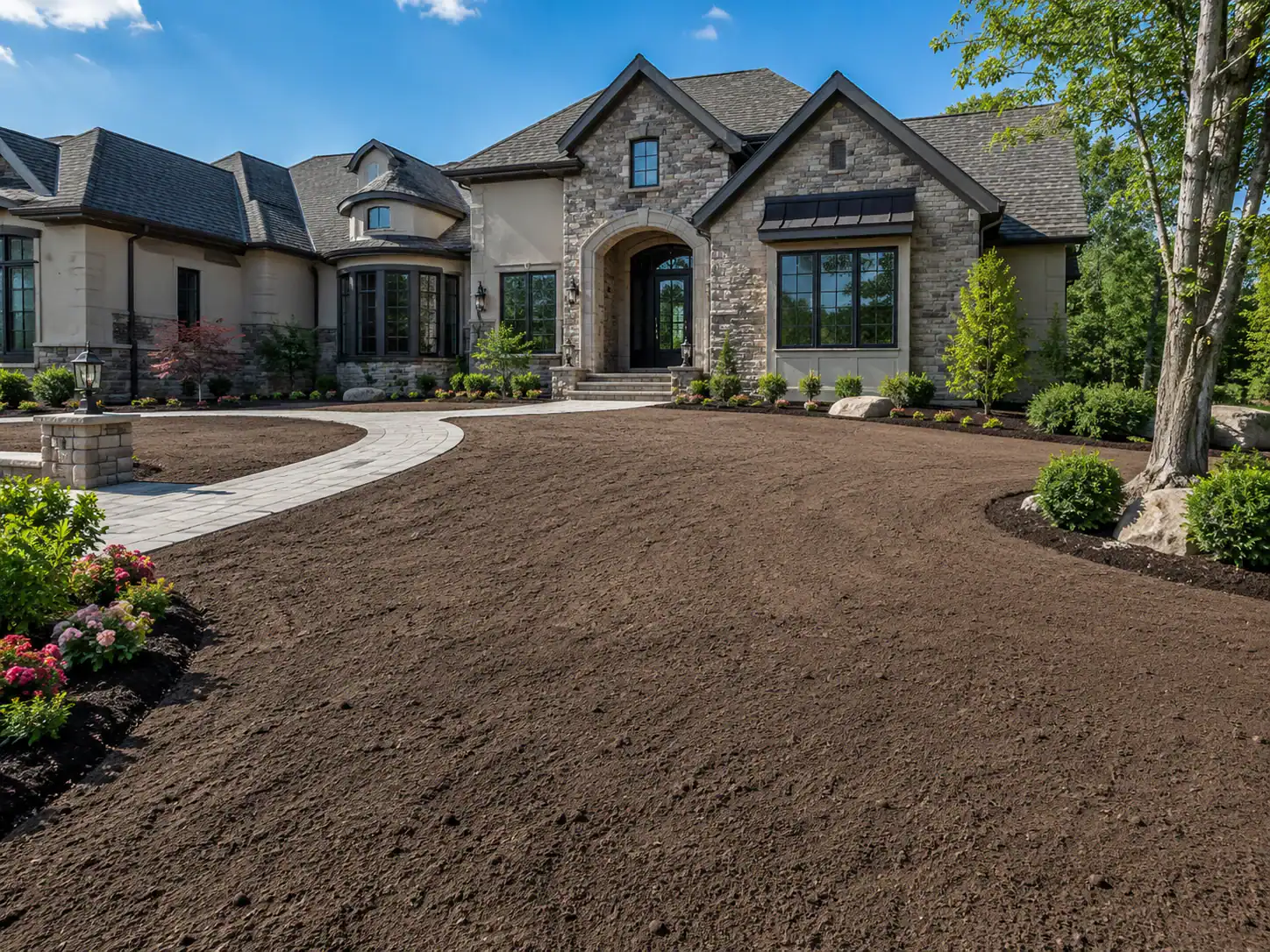
A restored lawn isn’t just about looks though on a street in the Three Village area, where home values are pushing toward $766,000, curb appeal absolutely matters. It’s about getting your yard back to a condition that holds. Dense, healthy turf that fills in bare patches, crowds out crabgrass, and doesn’t collapse again the following summer.
For Stony Brook specifically, that means addressing what’s actually underneath. The sandy loam soil throughout this part of the North Shore drains water and nutrients faster than most homeowners realize. Fertilizer you put down in May can be gone before July. Without correcting the soil’s ability to hold what you feed it, no seeding program will last and that’s exactly why so many DIY attempts in Stony Brook fall short.
The mature oak and maple canopy that defines the historic neighborhoods around Old Stony Brook and the university corridor creates a second layer of challenge. Shade stress combined with root competition from established trees is one of the most common reasons lawns gradually thin out on these properties. A restoration program that doesn’t account for your specific light conditions and select the right seed varieties for them isn’t going to give you lasting results. That’s the difference between a real restoration and just throwing seed at the problem.
We’ve been serving Stony Brook and Suffolk County homeowners since before most of the homes in Stony Brook’s current real estate market were listed for the first time. That’s not a throwaway stat it means our technicians have worked through decades of drought summers, grub cycles, and the specific soil conditions that affect lawns along the North Shore. We know what a stressed Stony Brook lawn looks like in September, and we know what it takes to bring it back.
We hold all required New York State DEC Pesticide Applicator licenses and operate in full compliance with Suffolk County’s fertilizer application regulations which matter here more than most places, given Stony Brook’s proximity to the harbor and Long Island Sound. We’re not just licensed on paper. We apply that compliance to every job.
What you get is a team that diagnoses before it prescribes. We don’t show up with a standard program and apply it to every property. We assess your soil, your shade conditions, your pest pressure, and your existing turf and then we build a plan around what your lawn actually needs.
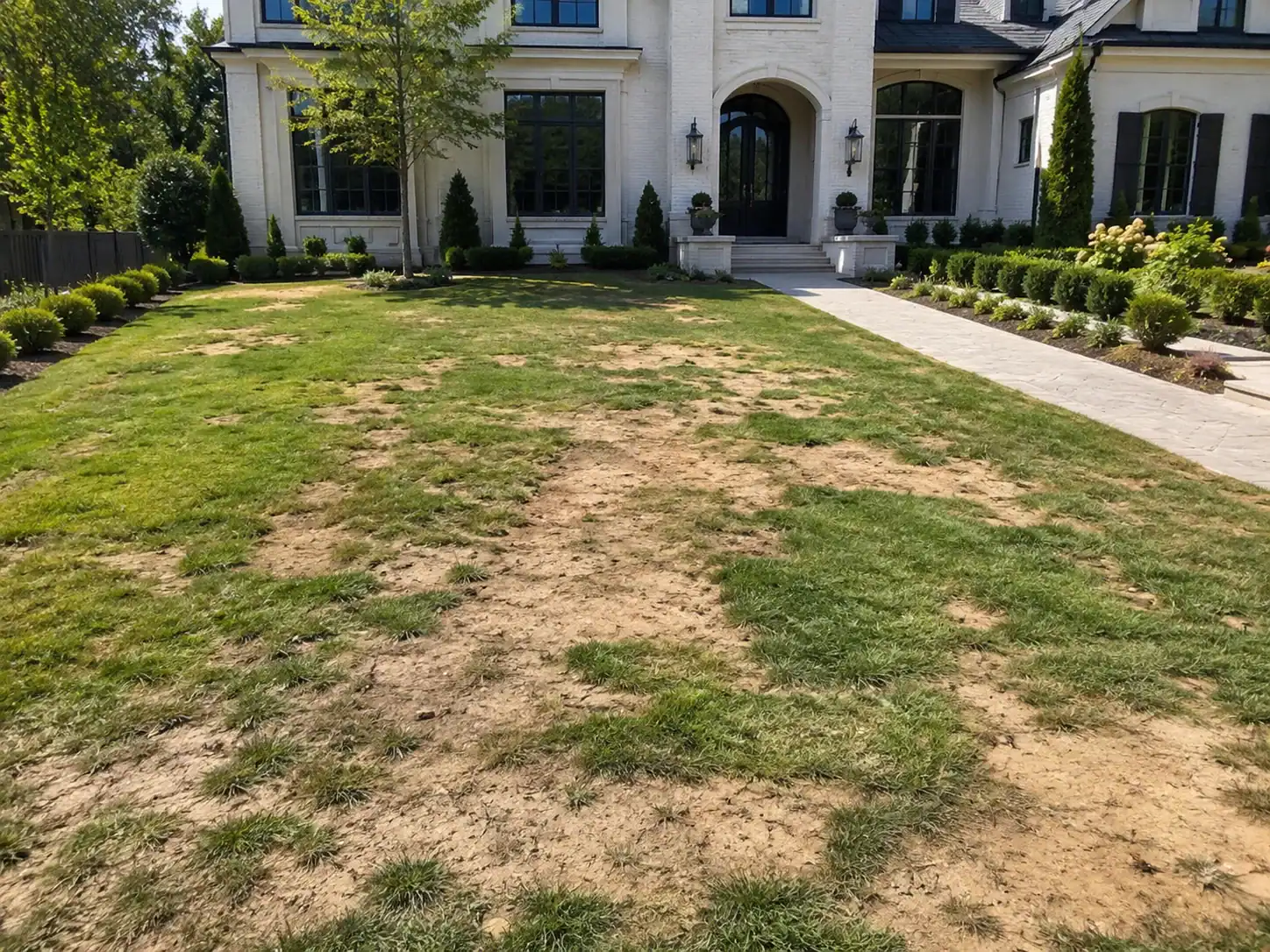
It starts with a thorough on-site assessment. Before we recommend anything, we evaluate your soil pH, thatch depth, compaction level, shade coverage, and any signs of pest damage particularly grub activity, which is widespread across Long Island and commonly mistaken for drought stress. That diagnostic step is what separates a restoration that holds from one that looks okay for six weeks and then falls apart again.
Once we understand what’s actually happening, we address the soil first. In Stony Brook’s sandy loam conditions, that typically means pH correction with lime applications and organic matter amendment to improve the soil’s ability to retain moisture and nutrients. Skipping this step is the single most common reason overseeding fails here. If thatch has built up beyond half an inch which happens frequently on established lawns in this area we dethatch and aerate before any seed goes down.
From there, we use professional slice seeding equipment that cuts directly through compaction and places seed in contact with the soil, rather than broadcasting it on top of thatch where germination rates drop significantly. Seed selection is matched to your specific conditions shade-tolerant varieties for properties under heavy canopy, performance varieties for open areas. The optimal window for this work in Stony Brook is late August through October, when soil temperatures support germination and weed competition drops off. We’ll walk you through the expected timeline before we start typically meaningful germination within 10 to 14 days and measurable coverage improvement heading into spring.
Ready to get started?
This is an important distinction, and it’s one worth being direct about. Lawn restoration is the process of reviving and strengthening an existing lawn that still has viable turf, root structure, and correctable soil. It’s not the same as renovation, which means removing what’s there and rebuilding from scratch. If your lawn has recoverable areas even if it looks rough right now restoration is almost always the right first step, and it protects the years of root development and grade work already in your yard.
What a restoration program from us typically includes: soil testing and pH correction, core aeration and dethatching where needed, professional slice seeding with variety-matched seed selection, bare patch repair, and a targeted fertilization plan built around your soil’s actual nutrient profile. For properties near Stony Brook Harbor or within the environmentally sensitive corridors along the North Shore, all applications are made in full compliance with Suffolk County’s Water Quality Protection regulations something that matters if you’re near the water or in a drainage-sensitive area.
If your lawn is beyond restoration if the turf loss is too extensive or the underlying issues are too severe we’ll tell you that honestly and refer you to our lawn renovation service rather than waste your time and money on a program that won’t deliver. Most lawns we assess in the Three Village area don’t need that. Most just need someone to finally address the real problem.
Restoration means working with the lawn you have correcting soil issues, filling in bare patches, strengthening thin areas, and improving overall turf density without removing what’s already established. Renovation means starting over: killing off existing growth, regrading if necessary, and rebuilding the lawn from the ground up. They’re two completely different scopes of work, and the right answer depends entirely on the condition of your existing turf and soil.
For most Stony Brook homeowners, restoration is the appropriate path. Even lawns that look significantly damaged from grub activity, drought stress, or years of shade thinning under the oak canopy in Old Stony Brook often still have viable root structure and soil biology that can be worked with. A proper diagnostic assessment will tell you which category your lawn falls into. If restoration is the right call, you preserve the existing grade, root depth, and lawn history you’ve built. If renovation is necessary, we’ll be upfront about that rather than running a restoration program on a lawn that needs a full rebuild.
In most cases, yes it can be saved. The lawns that genuinely require full renovation are ones where turf loss is nearly total, the soil has been severely compromised, or the grade needs correction. That’s a smaller percentage than most homeowners assume when they’re standing in their yard looking at bare patches and thin spots.
What looks like a dead lawn in Stony Brook is often a lawn that’s been fighting an undiagnosed problem for one or two seasons. Grub damage that went untreated, soil pH that’s been too acidic for fertilizer to absorb properly, or compaction that’s been blocking water and air from reaching the root zone these are fixable conditions. The key is getting an honest assessment from someone who’s actually going to look at your soil and your turf before giving you an answer. We’ve restored lawns in this area that homeowners had already written off. The diagnostic step is what makes the difference.
For fall restoration programs which are the optimal timing on Long Island’s North Shore you can expect to see germination within 10 to 14 days under normal conditions. Meaningful coverage improvement typically follows over the next four to six weeks, with the restored areas filling in more fully heading into the following spring as the root system establishes through the winter.
The timeline does vary based on what the restoration involved. If soil correction was needed lime applications to address pH, organic matter amendment to improve water retention in Stony Brook’s sandy loam those changes take some time to fully integrate. A lawn that needed significant thatch removal and aeration before seeding will also have a slightly longer establishment window than one that was in better structural condition. We give every homeowner a realistic timeline before we start, so there are no surprises. What we won’t do is promise you a lush lawn in two weeks that’s not how it works, and anyone who tells you otherwise isn’t being straight with you.
This is one of the most common lawn problems we see in the Three Village area, and it has a specific explanation. The mature oaks and maples throughout Old Stony Brook and the neighborhoods surrounding Stony Brook University create two simultaneous stressors: they block the sunlight turf needs to photosynthesize, and their surface root systems compete aggressively for the same moisture and nutrients your grass is trying to absorb. Standard turf varieties can’t survive that combination long-term.
The fix involves two things working together. First, selecting shade-tolerant grass varieties that are actually suited to low-light conditions not just broadcasting whatever seed is available and hoping for the best. Second, adjusting the fertility and watering program to match what turf under canopy actually needs, which is different from an open, sun-exposed lawn. In some areas of very deep shade, we’ll also give you an honest assessment of whether turf is a realistic long-term solution, or whether a shade-tolerant ground cover would serve you better. That’s not a sales pitch it’s just the truth about what certain conditions will support.
The biggest cost drivers are the size of the area being restored, the condition of the soil, and how much prep work is needed before seeding can happen. A lawn that needs full soil correction pH adjustment, organic matter amendment, core aeration, and dethatching before a single seed goes down is going to cost more than one that’s in reasonable structural shape and just needs slice seeding and targeted bare patch repair.
In Stony Brook specifically, the sandy loam soil that’s common throughout this part of the North Shore often does require amendment work before a restoration program will hold. Skipping that step saves money upfront and costs more later when the seeding doesn’t establish properly. Grub treatment, if the assessment reveals an active infestation, is another variable. We provide a clear, written estimate after the on-site assessment broken down by what’s needed and why so you know exactly what you’re paying for before any work begins. There are no packages you get assigned to without understanding what’s in them.
Yes, and it’s something that genuinely matters for properties in and around Stony Brook. Suffolk County has specific fertilizer application regulations under its Water Quality Protection and Restoration Program, which restricts nitrogen-based fertilizer applications near waterways and during certain seasonal windows. These rules exist to protect the water quality of Stony Brook Harbor and Long Island Sound, and they apply to any professional applying products commercially in this area.
We hold all required New York State DEC Pesticide Applicator licenses and apply every product in full compliance with Suffolk County’s regulations. For homeowners near the harbor, in drainage-sensitive areas, or simply in a community that cares about the environmental health of the North Shore, this matters. An unlicensed or non-compliant operator applying restricted products near the water isn’t just cutting corners they’re creating liability for the property owner and contributing to the runoff issues that affect the entire community. Working with a licensed, compliant provider isn’t a premium feature. It’s the baseline of doing the job correctly here.
Useful Links
Other Services we provide in Stony Brook