
Hear from Our Customers
If you’ve been fertilizing, seeding, and treating weeds for years with nothing to show for it, the problem probably isn’t the products you’re using. It’s the soil underneath them. When pH drops too low, grass roots physically cannot absorb nitrogen, phosphorus, or potassium no matter how much you apply. The nutrients are there. The soil just won’t release them. That’s what’s happening on a lot of Stony Brook lawns right now.
Researchers at Stony Brook University’s own Department of Geosciences have documented this. North Shore topsoil pH that measured 6.5 in 1922 had dropped to 4.1 by 1985. Today, soil in wooded areas on the Stony Brook campus tests as low as 2.8 to 3.2 at the organic-mineral layer. Your lawn sits in the same soil. The mature oak canopy that gives Stony Brook its character drops acidic organic material into the ground every single fall and it compounds year after year.
Correcting your soil pH doesn’t just fix the lawn you have. It makes every other investment you’ve made in it the fertilizer, the overseeding, the weed control actually deliver. Grass thickens, color returns, and bare patches that never seemed to fill in finally start responding. That’s what pH-correct soil does. It unlocks what was already there.
We’re based in Port Jefferson Station, just a few miles east of Stony Brook along Route 25A. That proximity isn’t just a convenience it means our team understands North Shore soil conditions firsthand. We’re not applying a national template to a local problem.
We operate under full NYSDEC registration and certification, which is a legal requirement in New York for any company applying treatments to your lawn for hire. Not every company you’ll find online meets that standard. Beyond compliance, our approach starts with a soil test always. Because without knowing your exact current pH and soil buffering capacity, any lime application is a guess. And guessing with your lawn isn’t a service.
Our program-based model means this isn’t a one-time visit. Given the continuous acid input from Stony Brook’s oak and hardwood canopy, pH management is ongoing. We stay in your corner through that process not just for the first application, but for the long haul.
It starts with a soil test not an assumption. A sample from your lawn is tested to determine your exact current pH and your soil’s buffering capacity, which tells us how much lime is actually needed to move the needle. In Stony Brook, where documented soil pH ranges from the low 4s to mid 5s depending on canopy cover and property location, that number matters. Applying lime without it is like dosing medication without a diagnosis.
Once the results are in, we select the right type and amount of lime for your specific conditions. Pelletized lime is most common for established lawns it spreads cleanly, integrates quickly, and is safe for kids and pets immediately after application. It’s ground limestone, not a synthetic chemical. The application itself is straightforward, but the timing is deliberate. Fall September through October is the professional window in Stony Brook. Winter’s freeze-thaw cycle works the lime into the soil profile, so by the time spring arrives, your pH has shifted and your lawn is ready to respond to fertilization.
Worth noting: lime is a soil amendment, not a fertilizer. Suffolk County’s fertilizer application ban runs November 1 through April 1 under County Law 41-2007 but lime falls outside that restriction. We understand that distinction. It’s part of why timing and compliance knowledge matter when you’re choosing who treats your lawn.
Ready to get started?
Our pH treatment service in Stony Brook, NY is built around your specific soil not a regional average. Every job begins with professional soil pH testing, which establishes your baseline and determines the precise lime rate needed to reach the target range for Long Island cool-season turf: 6.3 to 6.5, per Cornell Cooperative Extension guidance. That target matters because it’s where nitrogen, phosphorus, and potassium become fully available to grass roots and where every other program you’re running finally starts to pay off.
We account for what’s specific to Stony Brook properties. Lots near the historic village core and Stony Brook Harbor tend to carry decades of organic acid accumulation from mature tree canopy. Properties near West Meadow Beach and the adjacent wetlands sit in particularly leach-prone sandy loam soil, where untreated acidic conditions push fertilizer straight through the soil profile and toward the groundwater table that supplies drinking water across Suffolk County. Correcting pH in those areas isn’t just good lawn care it’s responsible land stewardship.
Because Stony Brook’s oak canopy delivers a fresh round of organic acids every fall, pH isn’t a fix-it-once situation. We monitor it as part of an ongoing program, with soil retesting recommended every two to three years and lime reapplied as conditions require. You’ll always know where your lawn stands and why.
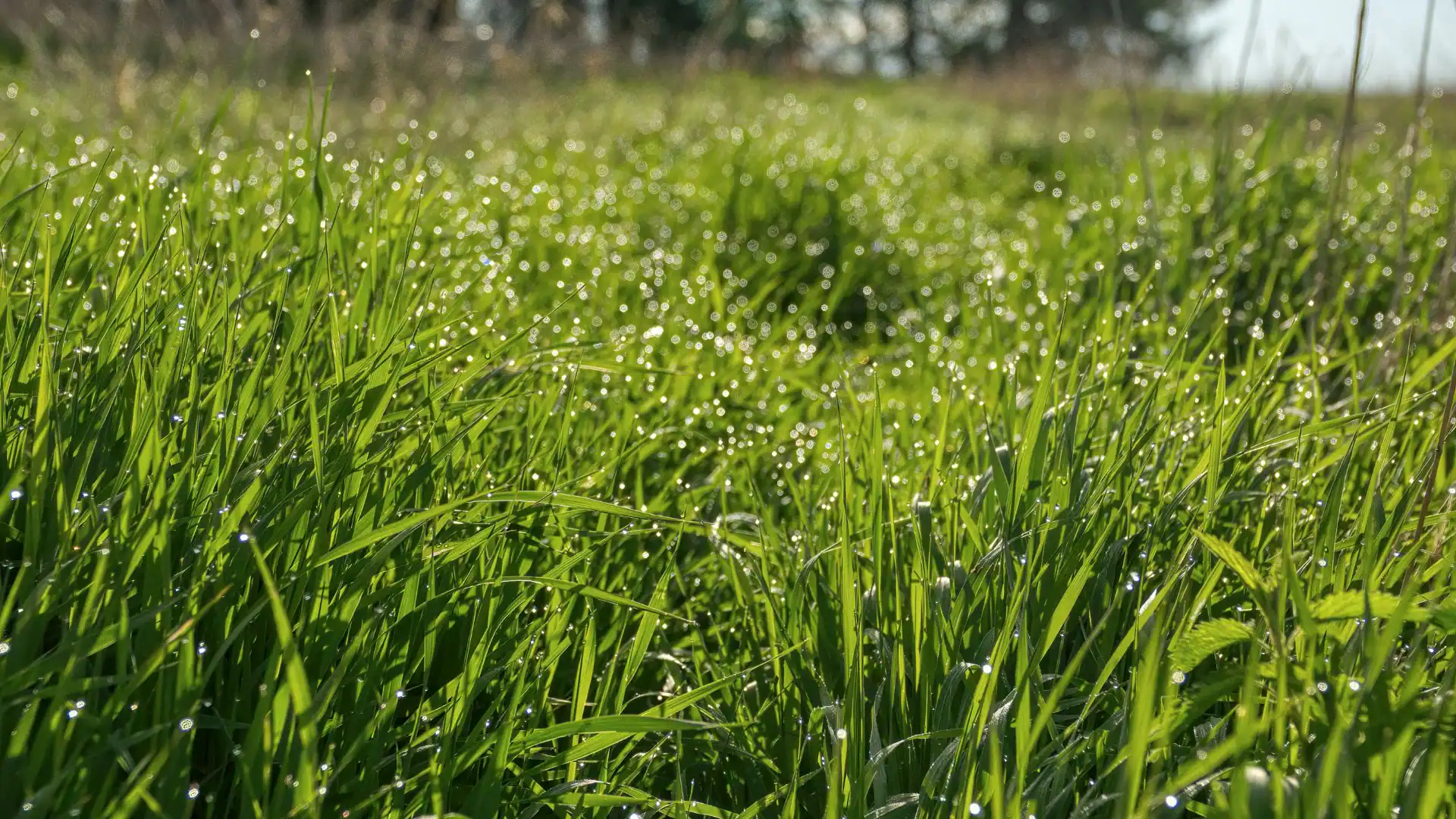
It’s a fair question and the answer is backed by research that came out of Stony Brook itself. Geoscientists at Stony Brook University have published studies documenting that North Shore Long Island topsoil pH dropped from 6.5 in 1922 to 4.1 by 1985. Current measurements in wooded areas on the Stony Brook campus place pH as low as 2.8 to 3.2 at the organic-mineral soil interface. The cause is a combination of acid rain from decades of vehicle and industrial emissions and continuous organic acid input from the oak and mixed hardwood canopy that defines Stony Brook.
Grass needs a soil pH between roughly 6.0 and 6.8 to absorb nutrients efficiently. If your lawn is sitting at pH 4.5 or 5.0 which is common in Stony Brook it doesn’t matter how much fertilizer you apply. The nutrients are chemically locked in the soil. A professional soil pH test will tell you exactly where your lawn stands. If lime isn’t needed, we’ll tell you that too.
Lime and fertilizer are two completely different things. Fertilizer delivers nutrients nitrogen, phosphorus, potassium directly to the plant. Lime is a soil amendment made from ground limestone, a naturally occurring mineral. Its job is to adjust soil chemistry so that the nutrients already present in the soil (and the ones you’re adding through fertilizer) become available to grass roots. One feeds the plant. The other fixes the environment the plant lives in.
As for safety: pelletized lime is not a synthetic chemical. It’s not a pesticide. Once it’s applied and the dust has settled typically within an hour or two it poses no risk to children or pets on the lawn. It’s also worth noting that under New York State law, lime is classified as a soil amendment, not a pesticide, so it’s not subject to the same NYSDEC application regulations that govern pesticide treatments. You don’t need to clear the yard for days. Normal caution during application is all that’s needed.
Thin, patchy grass that doesn’t respond to fertilizer is one of the clearest signs of a pH problem in Stony Brook. When soil pH is too low which is the documented baseline condition for North Shore Long Island soils, including Stony Brook grass roots cannot absorb the nutrients that fertilizer delivers. The product is going into the ground, but the chemistry of acidic soil is blocking the uptake. You end up with a lawn that looks like it’s been neglected even though you’ve been investing in it.
The other factor specific to Stony Brook is the oak canopy. Decomposing oak leaves are acidic, and every fall they’re adding another layer of organic acid to your soil. If you’ve had the same trees shading your lawn for years, the soil beneath them has been progressively acidifying that entire time. Thin, mossy, weed-prone patches in shaded areas are often a direct result of this. Lime application corrects the pH and gives grass a real chance to establish in those spots but the correction needs to happen before overseeding or fertilizing for either to work.
Fall is the professional standard specifically September through October. Applying lime in the fall lets Long Island’s freeze-thaw cycle do the work of integrating the lime into the soil profile over winter. By the time spring arrives and your lawn starts actively growing again, the pH correction has already taken effect. That means your spring fertilizer application goes into soil that’s actually ready to use it. Homeowners who wait until spring to apply lime are a full growing season behind.
Summer application is generally not recommended heat stress on the lawn combined with lime’s temporary surface presence can cause issues. Winter application after the ground freezes is ineffective because the lime can’t integrate. One important distinction for Stony Brook homeowners: Suffolk County Law 41-2007 prohibits fertilizer applications between November 1 and April 1, but lime is a soil amendment, not a fertilizer. It’s not subject to that ban. We know this and can time applications accordingly including late fall lime applications that a less-informed DIY approach might skip out of confusion about the law.
A good general rule is to test soil pH every two to three years. But in Stony Brook specifically, the answer leans toward the more frequent end of that range. The reason is the continuous organic acid input from the oak and mixed hardwood canopy that covers so much of this community. Every fall, decomposing leaves deposit fresh acid into the soil. Over time, even a well-corrected lawn will drift acidic again especially in shaded areas under heavy tree cover.
Properties near the Avalon Nature Preserve, the historic village core, or any lot with significant mature tree canopy should expect to retest and potentially reapply lime on a regular cycle. It’s not a sign that something went wrong it’s just the nature of the soil environment here. Our program-based approach builds this monitoring in, so you’re not guessing when the next application is due. You’ll have actual data from your lawn, not a generic schedule.
You can but without a soil test, you’re applying blind. Lime bags at the hardware store don’t tell you your current pH or how much lime your specific soil needs to reach the target range. Soil buffering capacity varies significantly, and the amount of lime needed to shift pH by one point on a sandy Long Island soil is different from what’s needed on a heavier clay soil. Applying too much lime is a real problem it pushes soil alkaline, which creates its own set of nutrient deficiencies involving iron, manganese, and boron. You’d be trading one problem for another.
Basic home test kits give you a rough pH reading, but they don’t calculate a lime rate. And in Stony Brook, where documented soil pH ranges from the low 4s to the mid 5s depending on location and canopy cover, the difference between a correct dose and an incorrect one is significant. A professional soil test gives you the exact number, the right product, and the right rate. For a lawn in a community where home values run well above the Suffolk County average, that precision is worth more than the cost of a bag of lime.
Useful Links
Other Services we provide in Stony Brook