
Hear from Our Customers
Most Fort Salonga lawns don’t have a grass problem they have a soil problem. The same red clay deposits that once fueled the hamlet’s brickworks industry are still sitting beneath your turf, and decades of foot traffic, mowing equipment, and Long Island’s freeze-thaw winters have packed it tighter every season. When soil compacts, water pools instead of soaking in, fertilizer sits on the surface instead of reaching roots, and grass thins out from the ground up. Core aeration physically removes plugs of compacted soil opening channels so air, water, and nutrients can actually get to where the grass grows.
For properties near Crab Meadow or along the wooded stretches off Bread and Cheese Hollow Road, there’s an added layer. Salt air exposure from the Sound accelerates thatch buildup, and heavy oak canopy creates acidic soil conditions that already put cool-season grasses under stress. Aeration doesn’t just help in those situations it’s often the only thing that actually moves the needle. Once those channels are open, everything else you’re doing watering, fertilizing, overseeding starts working the way it should.
The difference shows up fast. Grass that’s been thin and patchy for years starts filling in. Water stops running off the surface. And if you follow up with overseeding right after aeration, you’re giving new seed the best possible chance at real root contact with the soil not just sitting on top of it.
We’ve been treating Suffolk County lawns since 1987. That means we were working on North Shore properties before most of our current competitors existed, before the internet, and before the housing development along Pulaski Road filled in the old potato fields. We know what’s under Fort Salonga lawns because we’ve been digging into this specific soil for nearly four decades.
Every job we take in Fort Salonga is handled by a NYSDEC-licensed pesticide professional not a seasonal crew member supervised remotely by someone with a license. That distinction matters, especially in a community this close to the Long Island Sound and the Jerome A. Ambro Memorial Wetland Preserve. Our certified applicators know the timing rules, the rate restrictions, and what responsible application actually looks like in a sensitive coastal environment.
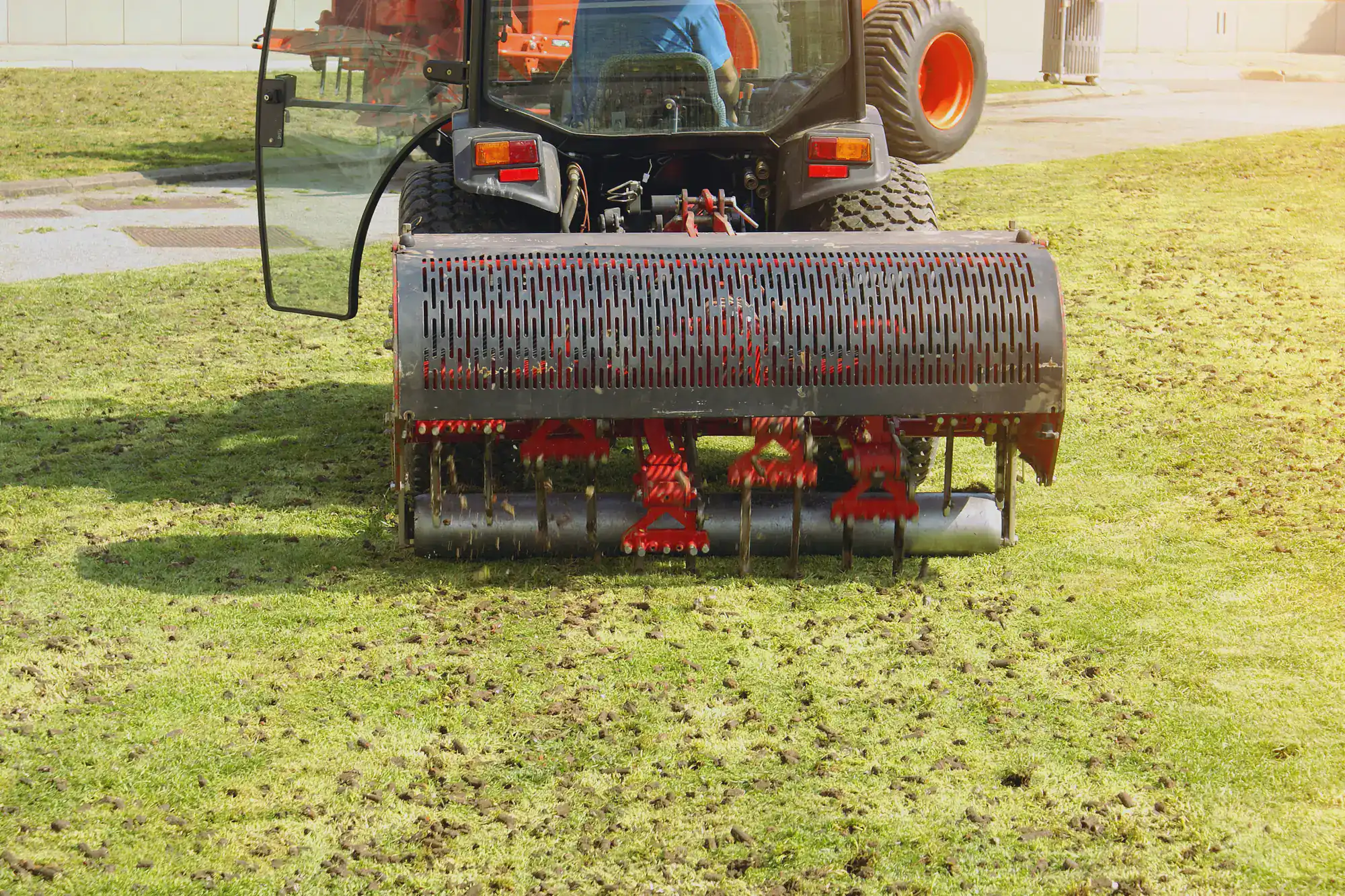
We run five fully wrapped professional trucks and use hydraulic aerators and custom-blended fertilizer made specifically for our programs. This is a real operation built to serve this county not a one-truck setup that overbooks in September and cancels in October.
Before anything touches your lawn, we assess it. Soil type, grass variety, compaction level, thatch depth, shade coverage all of it factors into what we recommend. A waterfront property near Crab Meadow with salt air exposure and sandy-clay mix is going to need a different approach than a shaded lot under heavy oak canopy off Sunken Meadow Road. We don’t hand you a package off a menu. We look at what’s actually going on.
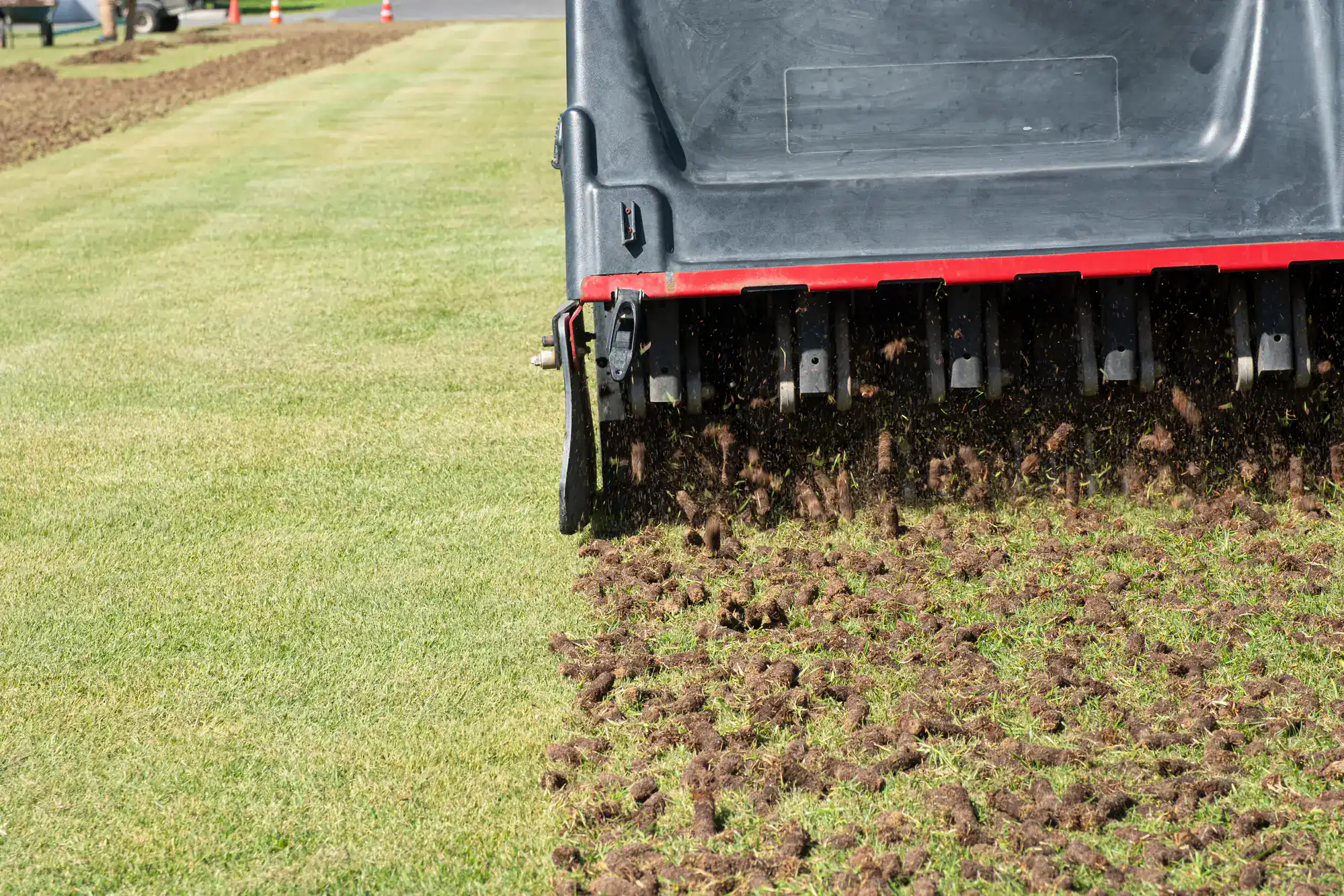
Once we know what we’re working with, we run the hydraulic core aerator across your lawn. These aren’t the walk-behind machines available at equipment rental counters hydraulic aerators deliver consistent tine depth and cleaner core extraction, which matters significantly in the clay-influenced soils common throughout Fort Salonga. The cores pulled from the ground are left on the surface to break down naturally, returning organic matter to the soil as they do.
If overseeding is part of the plan and for a lot of Fort Salonga’s older housing stock we do that immediately after aeration while the channels are open and seed-to-soil contact is at its best. From there, your custom fertilizer application goes in before Suffolk County’s November 1 application ban closes the window. That deadline is real, and we build our schedule around it so your lawn doesn’t miss the most productive treatment window of the year.

Ready to get started?
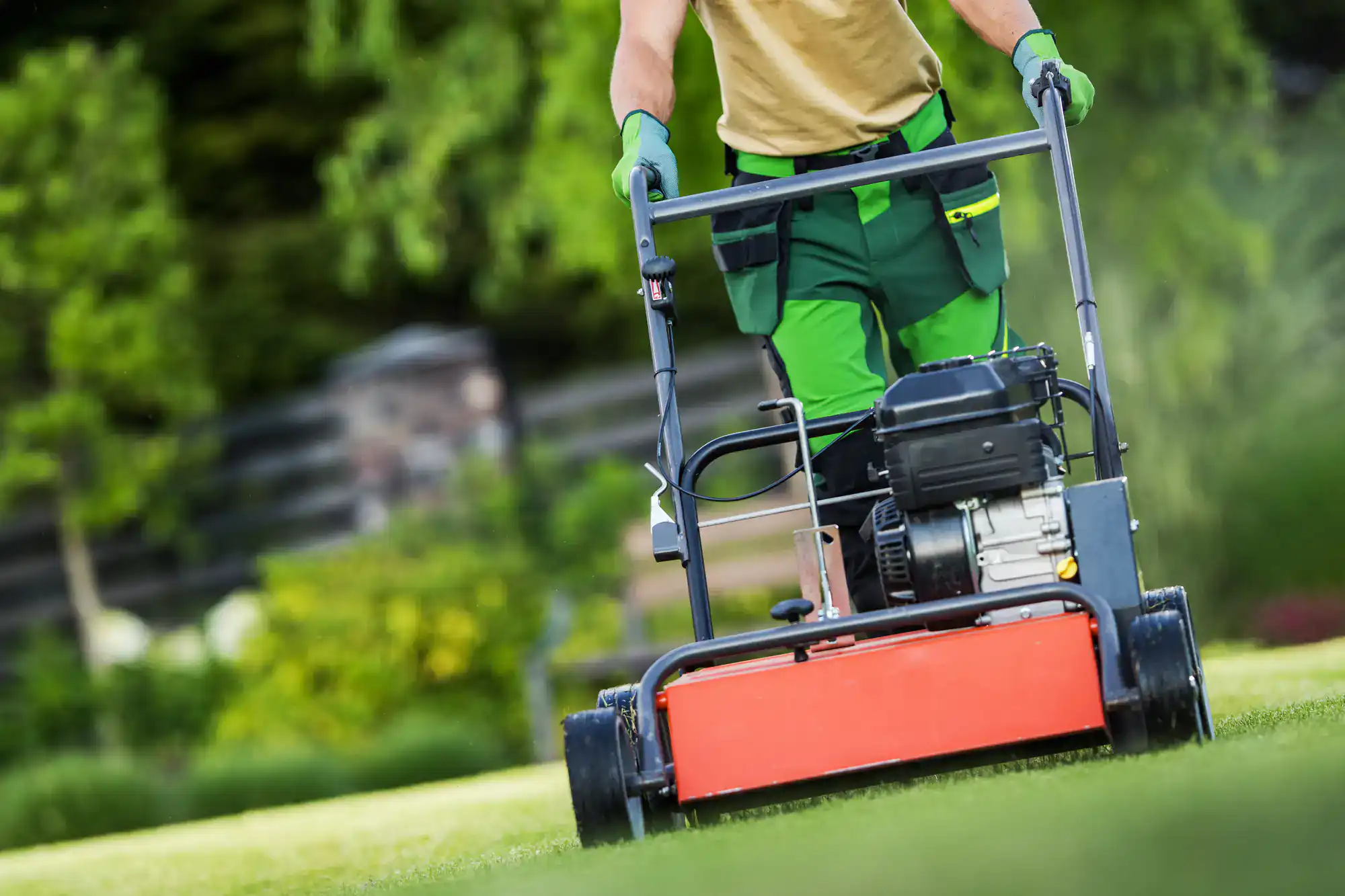
Lawn aeration with us isn’t a single service dropped on your calendar and forgotten. It’s part of a program designed around your specific property the soil, the grass type, the shade exposure, the proximity to water, and the compaction history of your particular lot. For Fort Salonga homes, many of which were built in the 1940s through 1960s on land with documented clay deposits, that history matters. These aren’t lawns that just need a light treatment they need equipment and expertise that can actually reach compacted layers.
Every aeration visit includes a property assessment, hydraulic core aeration calibrated to your soil conditions, and a recommendation for what comes next. If your lawn is ready for overseeding, we handle that immediately after timing it to maximize germination before temperatures drop. Our fertilizer applications use custom-blended formulation, not a generic off-the-shelf product, and are scheduled in compliance with Suffolk County’s November 1 fertilizer ban. We don’t cut that close and hope for the best we plan for it from the start.
As for lawn aeration cost in Fort Salonga, pricing is based on your property’s square footage and what the assessment reveals. Fort Salonga properties tend to run larger than average for Suffolk County, and we quote accordingly. The best way to get an accurate number is to call us directly we’ll give you a straight answer without the runaround.
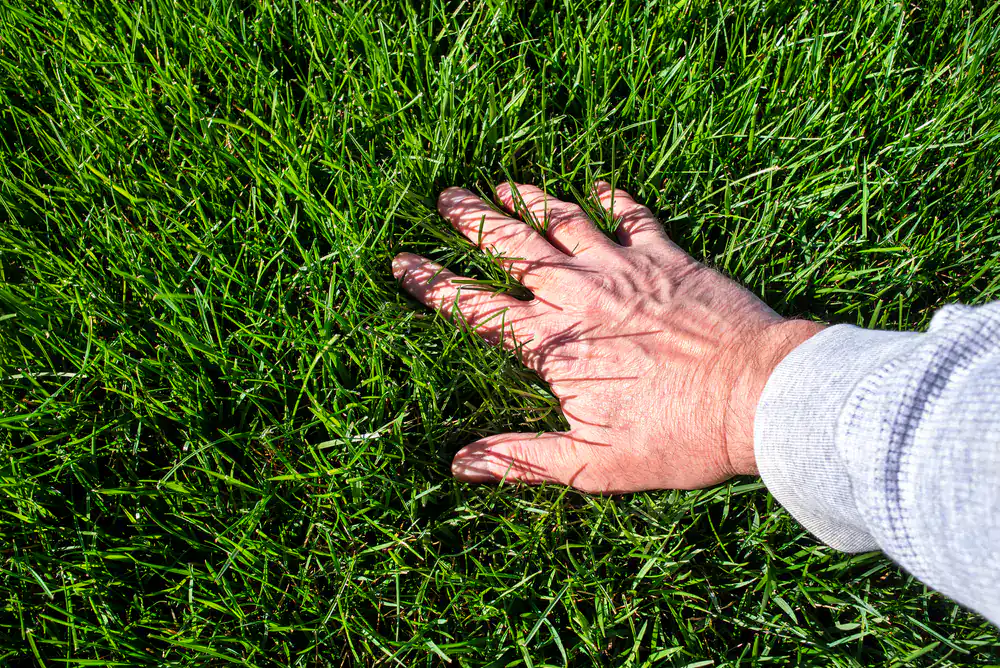
The most reliable field test is simple: push a screwdriver into your lawn. If it takes real effort to get it a few inches into the soil, compaction is the issue. Other signs include water pooling on the surface after rain instead of soaking in, grass that stays thin despite regular fertilizing and watering, and soil that feels hard underfoot even after a wet stretch. These are all symptoms of a soil that’s too compressed to function properly.
In Fort Salonga specifically, compaction tends to run deeper and be more persistent than in communities further east with sandier soils. The clay deposits that run through this area the same ones that made it a brickworks hub after the Civil War compact under pressure and stay that way without mechanical intervention. If your lawn has been struggling for more than one season despite consistent care, there’s a good chance compaction is the root cause, not the grass itself.
For the cool-season grasses that make up most Fort Salonga lawns fescue, bluegrass, and ryegrass the fall window is the most productive time to aerate. Late August through October gives you warm soil temperatures, active root growth, and enough time to overseed and fertilize before Suffolk County’s November 1 fertilizer application ban kicks in. That ban is a hard cutoff, not a suggestion, and everything aeration, overseeding, and fertilization needs to be wrapped up before it takes effect.
Spring aeration is possible, but it comes with a timing complication. If you’ve applied a pre-emergent herbicide to control crabgrass, aerating after that application breaks the weed barrier and reduces its effectiveness. Fall avoids that conflict entirely. The other reason fall works better is that Long Island summers put cool-season grasses under significant heat and drought stress aerating in fall gives the lawn a full growing season to recover and thicken up before the following summer hits.
Yes and in some cases, it helps more than it would for a lawn without one. Irrigation systems encourage grass to develop shallow root systems because water is consistently available near the surface. Over time, that shallow rooting makes the lawn more vulnerable to heat stress, drought, and compaction damage not less. The grass never needs to push roots deeper to find moisture, so it doesn’t. That’s a problem when summer heat arrives and surface moisture evaporates quickly.
Core aeration opens channels that break the shallow root pattern and encourage roots to grow downward toward deeper moisture reserves. For Fort Salonga homeowners who have been irrigating regularly and still see a lawn that struggles through July and August, this is often the missing piece. Aeration also makes your irrigation more efficient water moves through open channels instead of running off compacted clay, so you’re getting more value out of every watering cycle.
It matters quite a bit, especially in Fort Salonga’s soil. Spike aeration pushes solid tines into the ground, which creates holes but it also compresses the surrounding soil laterally as it does it. You’re essentially trading one compaction problem for another. Core aeration removes actual plugs of soil from the ground, which creates genuine open channels without adding compression to the surrounding area. The difference in results, particularly in clay-heavy soils, is significant.
Hydraulic core aerators the kind we use take this a step further. They deliver consistent tine depth and cleaner core extraction than walk-behind or tow-behind consumer machines. In the compacted clay-influenced soils common throughout Fort Salonga’s North Shore, that depth consistency is what separates a treatment that actually works from one that barely scratches the surface. If a company is offering spike aeration at a lower price point, that’s worth knowing before you commit.
Aeration and overseeding should be done together specifically, overseeding immediately after aeration while the cores are still fresh and the channels are open. The holes left by core extraction give new seed direct contact with the soil below the surface, which dramatically improves germination rates compared to broadcasting seed over a closed, compacted lawn surface. That seed-to-soil contact is what determines whether new grass actually establishes or just sits on top and washes away.
For Fort Salonga properties with older housing stock and many homes here were built in the 1940s through 1960s the lawn has likely experienced decades of thinning from compaction, shade, and seasonal stress. Aeration followed immediately by overseeding is the most efficient way to start reversing that. Doing them separately means you lose the window of optimal seed contact that aeration creates. We sequence these deliberately, and we time the full treatment to land well before Suffolk County’s November 1 fertilizer ban so your new seed gets the nutritional support it needs to root before winter.
The price difference usually reflects real differences in what you’re getting. Equipment is one of the biggest factors hydraulic core aerators cost significantly more to operate than consumer-grade walk-behind machines, and they produce meaningfully better results in compacted clay soil. A company charging less is often using lighter equipment that doesn’t penetrate deeply enough to make a real difference, particularly on the North Shore soils common in Fort Salonga.
Licensing is another variable that affects price. We deploy NYSDEC-certified pesticide professionals on every job applicators who have passed state examinations and maintain active certification. That’s a higher operational cost than sending out uncertified labor, and it’s reflected in pricing. But it also means every application is done correctly, compliantly, and with full accountability. For a community near the Long Island Sound with active environmental oversight through organizations like the Fort Salonga Association, that’s not a minor detail. The yard aeration cost you pay to a licensed, properly equipped company is buying you something the cheaper quote isn’t.
Useful Links
Other Services we provide in Fort Salonga