
Hear from Our Customers
Wading River properties along the Sound bluffs face something most Suffolk County lawns don’t consistent coastal wind, salt-laden air after storms, and sandy loam soil that drains so fast that nutrients are gone before the grass can use them. A program designed for Holbrook or Centereach doesn’t account for any of that. When you’re working with Plymouth-Carver Acidic Sandy Loam, the timing, release rate, and formulation of your fertilizer matters more than it does almost anywhere else on Long Island.
When those variables are ignored, the results show up fast color that fades by July, thin spots that never fill in, and edges along driveways and sidewalks that crabgrass claims every spring. That cycle doesn’t end with a different brand of the same generic treatment. It ends when someone actually looks at your lawn, understands the conditions, and builds a program around them.
That’s what a professional lawn treatment program should do. Not just show up on a schedule, but show up with the right product, the right timing, and the kind of knowledge that comes from treating North Shore lawns through 37 years of Long Island seasons not a training manual written somewhere in the Midwest.
We’ve been treating residential lawns in Wading River and throughout Suffolk County since 1987, operating out of Port Jefferson Station just down Route 25A from where you are. That’s not a talking point. It’s just the reality of a company that has stayed in one place, served one county, and built its reputation the slow way through results.
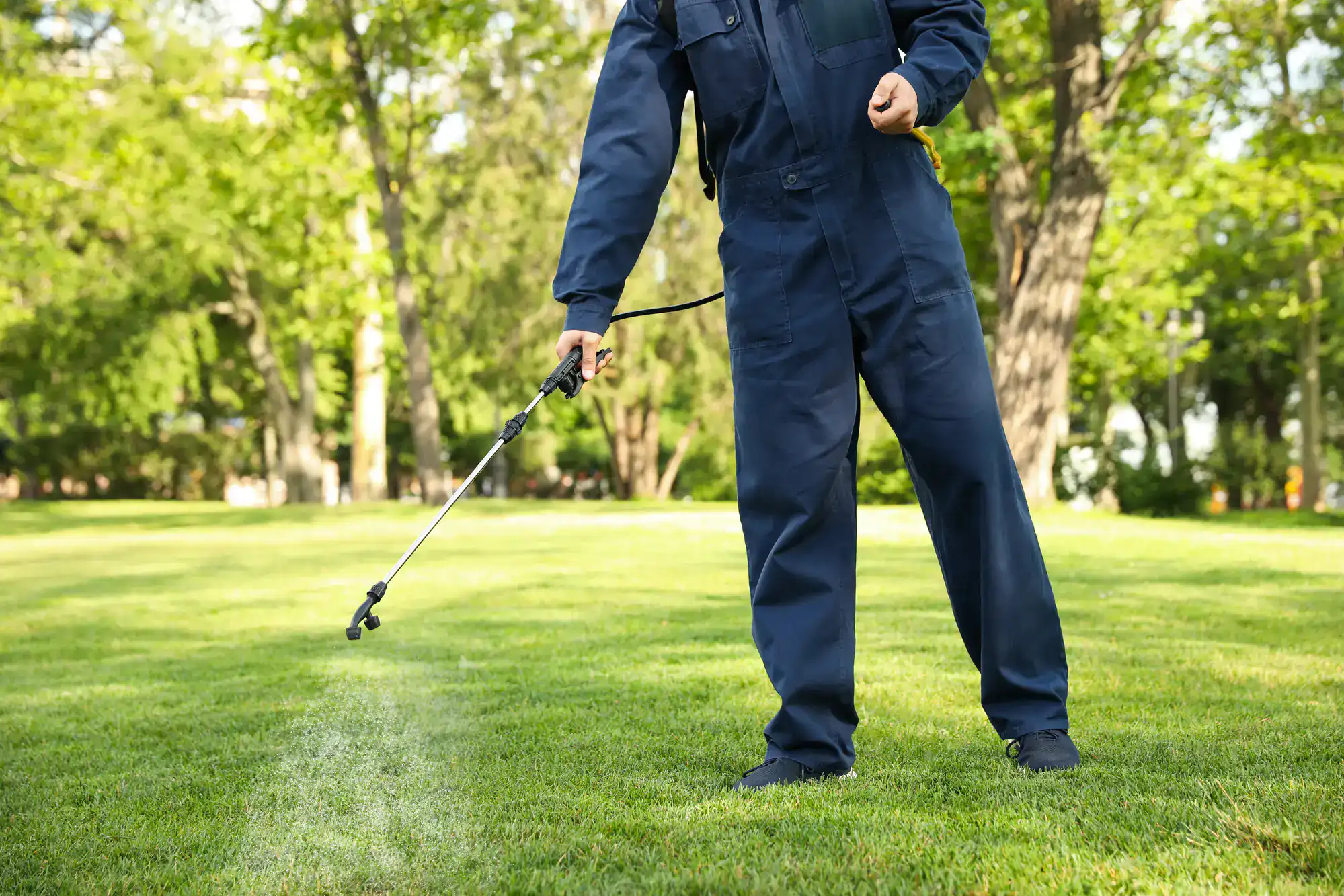
Every technician who treats your lawn is a licensed NYS DEC pesticide applicator. That credential isn’t optional in New York it requires a 30-hour course and a state exam but not every company sending trucks into Wading River actually has it on every person they dispatch. We do, on every visit, without exception.
Our fleet is five fully wrapped, professional trucks you’ll know exactly who’s on your property and why. No unmarked vans, no subcontractors, no guesswork. Just a company that has been doing this long enough to know that accountability isn’t a feature, it’s the baseline.
It starts with an actual assessment of your lawn not a clipboard checklist, but a real look at what’s there. Soil conditions, grass type, sun and shade exposure, existing weed pressure, and any visible stress from the season. In Wading River, that means accounting for whether your property is closer to the Sound with open wind exposure, or tucked back behind mature oaks where shade pressure and root competition are the bigger issue. We build the program around what your lawn actually needs, not what the standard package includes.
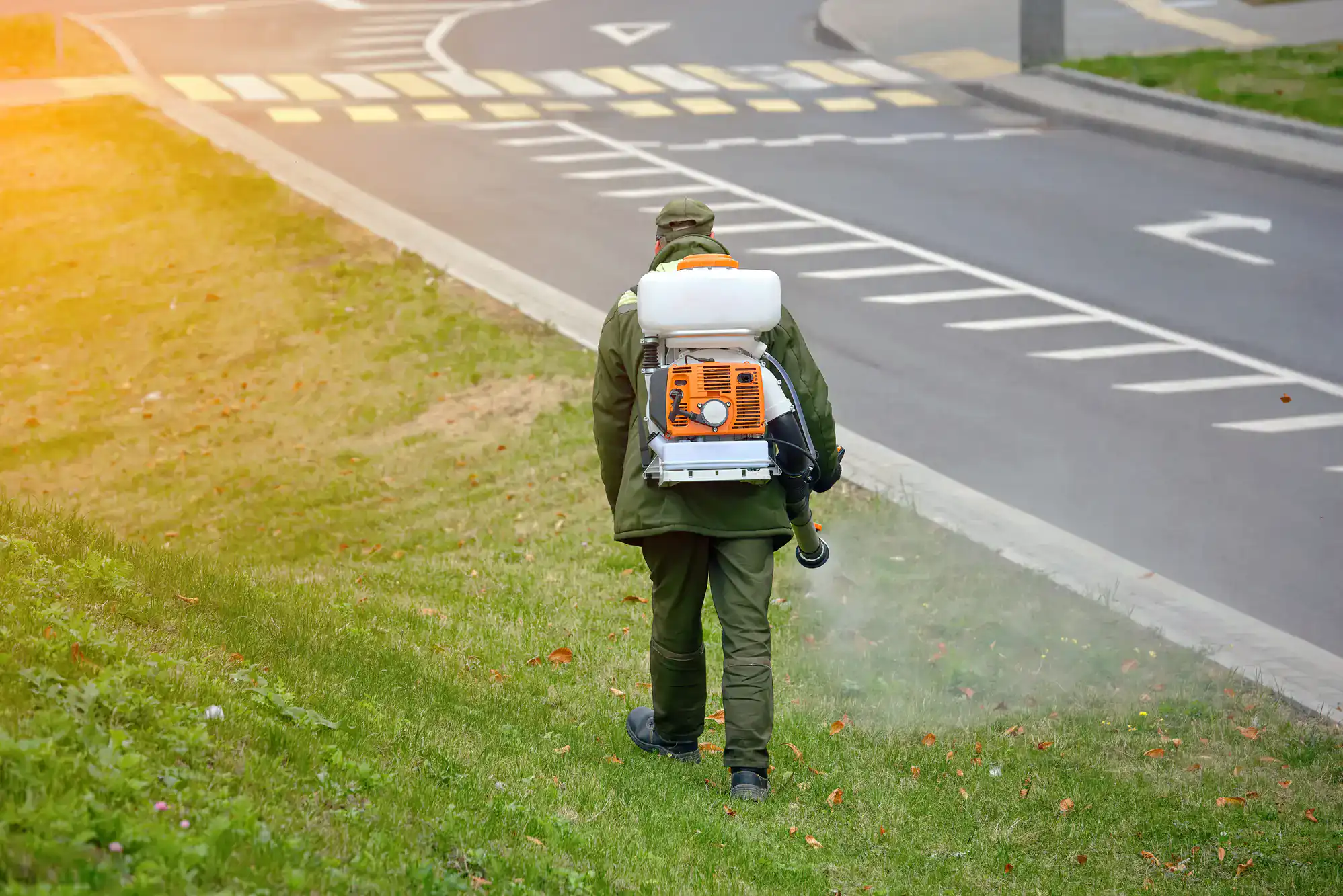
From there, fertilization runs on a schedule calibrated to Long Island’s growing season. We use a custom-blended fertilizer developed specifically for our programs not purchased off a commercial pallet. For Wading River’s sandy loam soils, that formulation matters. The blend is designed for soils that drain fast, so nutrients stay in the root zone long enough to actually work. Suffolk County’s fertilizer blackout runs from November 1 through April 1, and every application we make is timed to stay within those regulations because applying fertilizer to dormant grass doesn’t feed your lawn, it feeds the groundwater problem Long Island is already dealing with.
Fall is the most important window of the year for cool-season lawns on the North Shore. We use core aeration with hydraulic equipment not consumer-grade tow-behind units to pull deep, consistent plugs that open the soil profile and let water, air, and nutrients reach the roots. Overseeding follows with professional equipment that ensures real seed-to-soil contact. That fall renovation window is what separates a lawn that comes back thick in spring from one that spends another year looking like it’s trying.
Ready to get started?
The core of what we do is a custom fertilization program not a schedule of applications, but a program with a proprietary blended fertilizer made specifically for Long Island soils. For Wading River homeowners dealing with fast-draining sandy loam and coastal wind desiccation, that distinction is the difference between a lawn that holds color and density through summer and one that fades out by August.
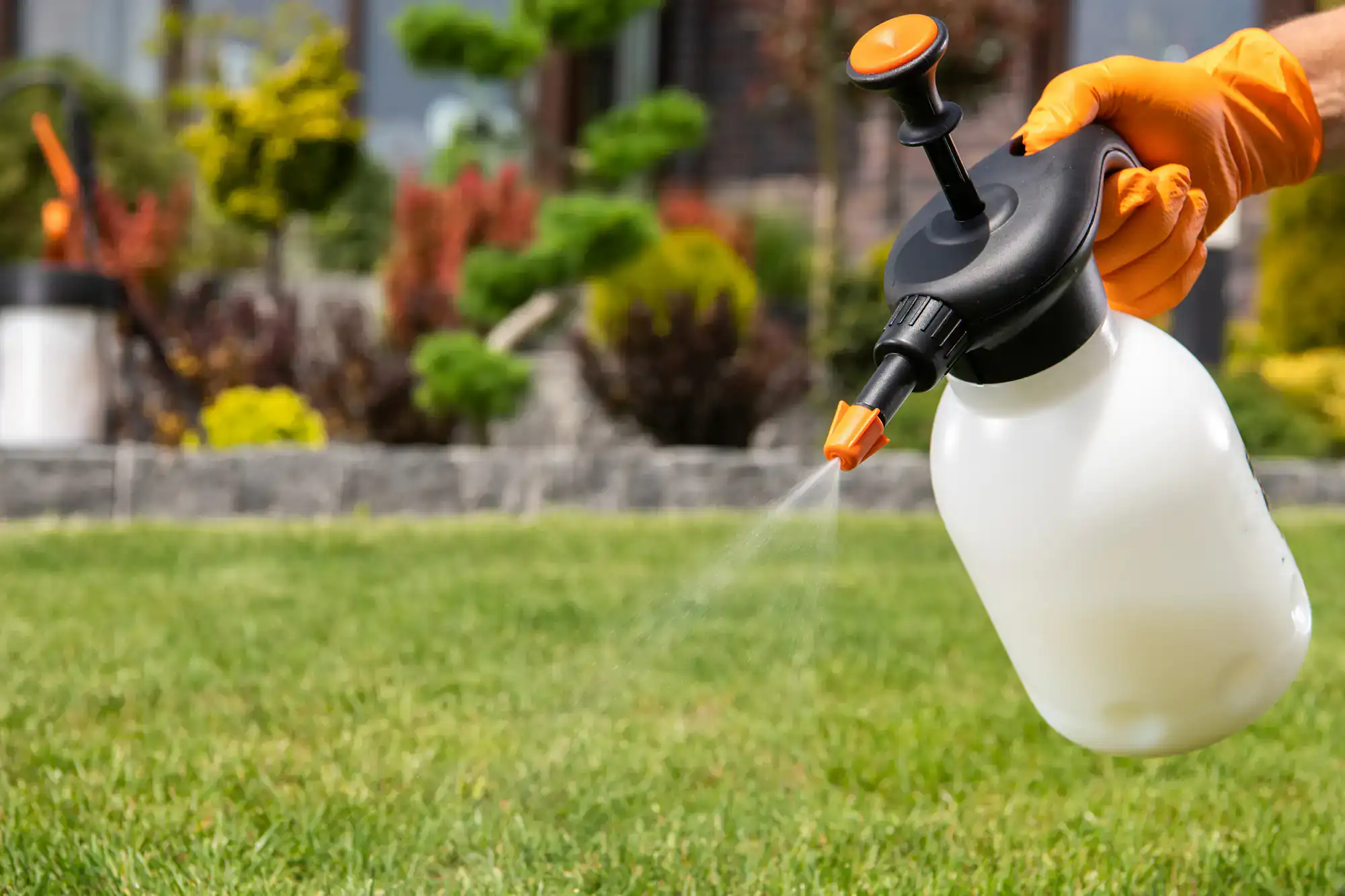
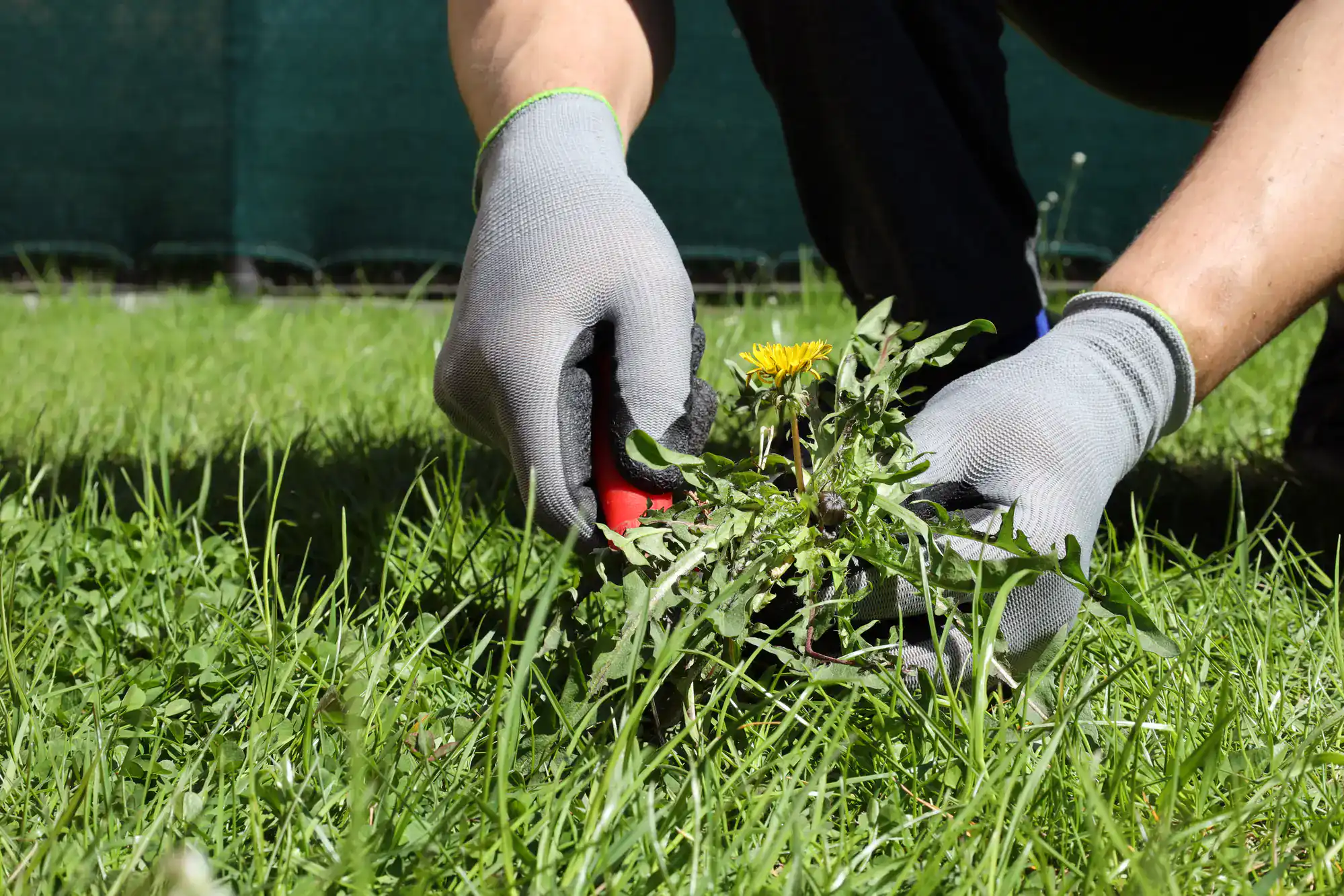
We offer weed control that covers the full spectrum broadleaf invaders like clover and dandelion that move into thinned areas after summer stress, crabgrass along warm open edges near driveways and sidewalks, and the more stubborn problems like nutsedge and bentgrass that beat generic programs entirely. If you’ve had a nutsedge problem that keeps coming back no matter what you try, that’s not bad luck it’s a treatment gap that requires a targeted approach. We offer specific control programs for both.
For lawns that have gone past the point of maintenance whether from a previous company’s incorrect application, years of inadequate care, or new construction with no established turf we provide full lawn restoration and new lawn installation from seed. Suffolk County’s environmental regulations, including the November 1 fertilizer blackout and New York State’s phosphorus restrictions, are built into every program we run. You’re not just getting a better-looking lawn near Wildwood State Park and Long Island Sound you’re getting one that’s managed the right way for the environment your property sits in.
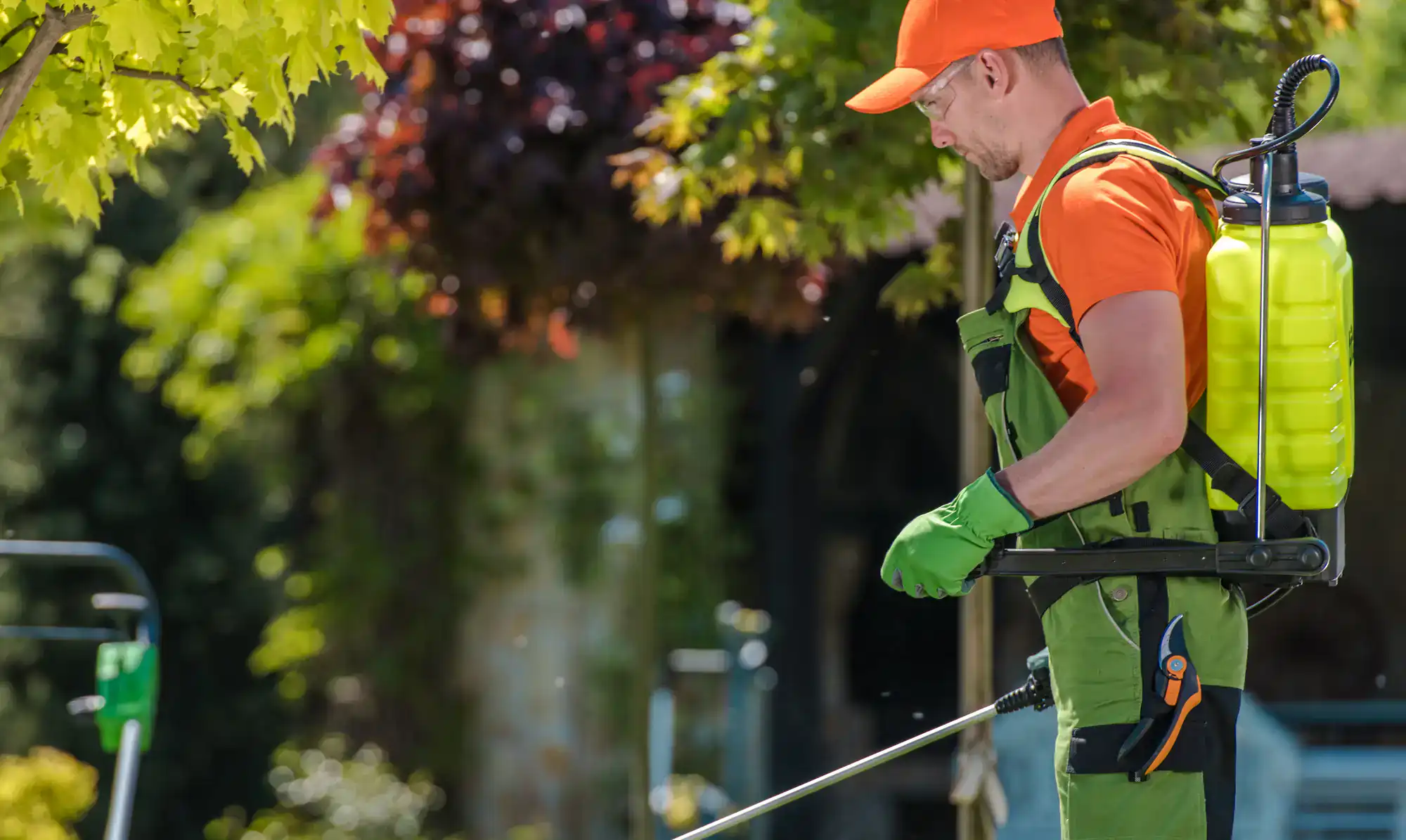
The combination of coastal wind exposure, salt air, and Wading River’s sandy loam soil creates a stress environment that cool-season grasses struggle with during the hottest months. The wind accelerates soil drying, which increases the moisture demand on the turf. At the same time, sandy loam drains quickly, so even when you water, the root zone dries out faster than it would in heavier soils further inland. That repeated stress cycle is what causes thinning the grass isn’t dying from one thing, it’s being worn down by several things happening at once.
The fix isn’t just more water or more fertilizer. It’s a program that accounts for these conditions from the start a fertilizer formulation calibrated for fast-draining soil, a treatment schedule that supports the turf through peak stress periods, and a fall renovation plan that uses aeration and overseeding to rebuild density before the following season. Properties closer to the Sound bluffs will almost always need a different approach than properties two streets inland, and a program that doesn’t recognize that difference will keep producing the same disappointing results.
Yes, it applies to every residential lawn in Wading River and throughout Suffolk County. Suffolk County law prohibits fertilizer application between November 1 and April 1. The reason is straightforward cool-season grasses go dormant when soil temperatures drop below 55°F, and fertilizer applied to dormant turf doesn’t get absorbed by the grass. It leaches through the soil and into the groundwater. Long Island relies entirely on a sole-source aquifer for its drinking water, and nitrogen contamination in that aquifer has been a documented and worsening problem for decades.
For homeowners in Wading River, this means your last fertilizer application of the year needs to happen before November 1, and your spring program can’t start until after April 1. Violating the blackout carries fines up to $1,000. Every program we run is built around these dates not as an afterthought, but as a core part of how the schedule is structured. If a lawn care company is offering you November or March applications in Suffolk County without a specific exemption, that’s a red flag worth paying attention to.
Consumer fertilizers sold at hardware stores are formulated for broad application across a wide range of soil types and conditions. They’re not designed for the specific nutrient demands of Long Island’s sandy loam soils, and they don’t account for the leaching rates that make standard application schedules less effective here. When you apply a generic product to Wading River’s fast-draining soil at the rate printed on the bag, a significant portion of those nutrients move past the root zone before the grass can use them. You’re spending money on fertilizer that’s feeding the groundwater, not your lawn.
We use a custom-blended fertilizer developed specifically for our programs and calibrated for Long Island’s soil chemistry. The nutrient ratios, the release rates, and the formulation are designed for soils that drain fast and dry quickly in coastal conditions. That means more of what you’re applying actually reaches the root zone and stays there long enough to do its job. It’s not a premium label on a standard product it’s a different product built for a different set of conditions.
Fall is the right window specifically late August through mid-October. Soil temperatures are still warm enough to support germination, air temperatures are cooling down, and cool-season grasses like tall fescue and Kentucky bluegrass are coming out of summer stress and ready to grow aggressively. That combination creates ideal conditions for new seed to establish before winter. If you miss that window and try to seed in spring, you’re racing against rising temperatures and summer heat that will stress new seedlings before they’ve had time to develop a strong root system.
Core aeration should happen at the same time as overseeding. In Wading River’s sandy loam, surface compaction can form a layer that restricts water, air, and nutrient penetration even though the soil beneath it drains well. Aeration breaks that layer open and creates direct channels to the root zone. We use hydraulic aerators not walk-behind or tow-behind consumer units which pull deeper, more consistent cores in a single pass. That matters for seed-to-soil contact during overseeding, and it matters for how effectively fertilizer and water reach the roots through the rest of the season.
The honest answer is that it depends on what percentage of your lawn is actually desirable grass versus weeds, bare soil, or problem species like nutsedge or bentgrass. If you’re looking at a lawn where more than 50 to 60 percent of the surface is something other than the turf you want, a standard treatment program is going to maintain the problem more than it fixes it. At that point, restoration whether through aggressive overseeding after aeration or a full new lawn installation from seed is the more efficient path to the result you’re after.
If your lawn has been damaged by a previous company’s incorrect application, or if it’s a new construction property with no established turf, the same principle applies. We offer both full lawn restoration and new lawn installation from seed, so the starting point doesn’t have to be a limitation. An assessment of your specific property will give you a clear picture of where the line is and a straightforward answer about which direction makes more sense for your situation.
We’ve been treating lawns in Wading River and throughout Suffolk County since 1987, operating out of Port Jefferson Station along Route 25A. That’s nearly four decades of North Shore seasons the same coastal wind patterns, the same sandy loam soils, the same salt air exposure that Wading River properties deal with year after year. We didn’t expand into this area recently. We’ve been here continuously, treating lawns in these conditions since before many of the current residents bought their homes.
That familiarity shows up in the specifics. Understanding that a property near the Sound bluffs faces different stress conditions than one tucked behind mature trees on a residential street. Knowing that Wading River’s soil type leaches nutrients faster than heavier inland soils and that the fertilizer formulation needs to account for that. Recognizing that the fall renovation window is the most critical treatment period for lawns in this climate and that missing it sets the lawn back for the entire following year. These aren’t things you learn from a training manual they come from treating lawns in this specific place, through this specific set of conditions, for a long time.
Useful Links
Other Services we provide in Wading River