

Hear from Our Customers
If your lawn has looked thin, pale, or weed-heavy despite regular treatments, the soil is usually the culprit not your effort. Medford sits on sandy, glacially deposited soil left behind by the Long Island Pine Barrens. That soil drains fast, holds almost no nutrients, and runs naturally acidic. A fertilizer program designed for average conditions somewhere else doesn’t stand a chance here.
When the program actually matches the soil, the results are different. Grass fills in where it’s been thin for years. Weeds lose their foothold because the turf is finally dense enough to crowd them out. Color holds through summer instead of fading the moment the heat kicks in. That’s what happens when the inputs are right for the specific ground they’re going into.
There’s also the property value side of it. With median home values in Medford now above $515,000, your lawn is one of the first things anyone sees. A lawn that looks cared for doesn’t just feel better to come home to it signals that the whole property has been maintained. That matters whether you’re staying put or eventually selling.
We’ve been treating residential lawns across Suffolk County since 1987, including properties throughout Medford and the surrounding neighborhoods. That’s not a tagline it means we were already an established operation in this market before most of our current competitors were founded. We know what Medford lawns go through across seasons, and we’ve built our entire program around it.
Every technician who shows up to a Medford property holds a NYS DEC Commercial Pesticide Applicator certification. That’s a state-issued credential that requires real training, a licensing exam, and field experience. It’s not a background check it’s proof that the person treating your lawn actually understands what they’re applying and why.
The fertilizer we use isn’t pulled off a pallet from a distributor. It’s a custom-blended formula developed specifically for our programs and for Long Island’s soil conditions the same sandy, nutrient-poor soil that runs under lawns from Eagle Estates to Old Medford. That kind of specificity is rare, and it’s exactly why our results hold up where other programs fall flat.
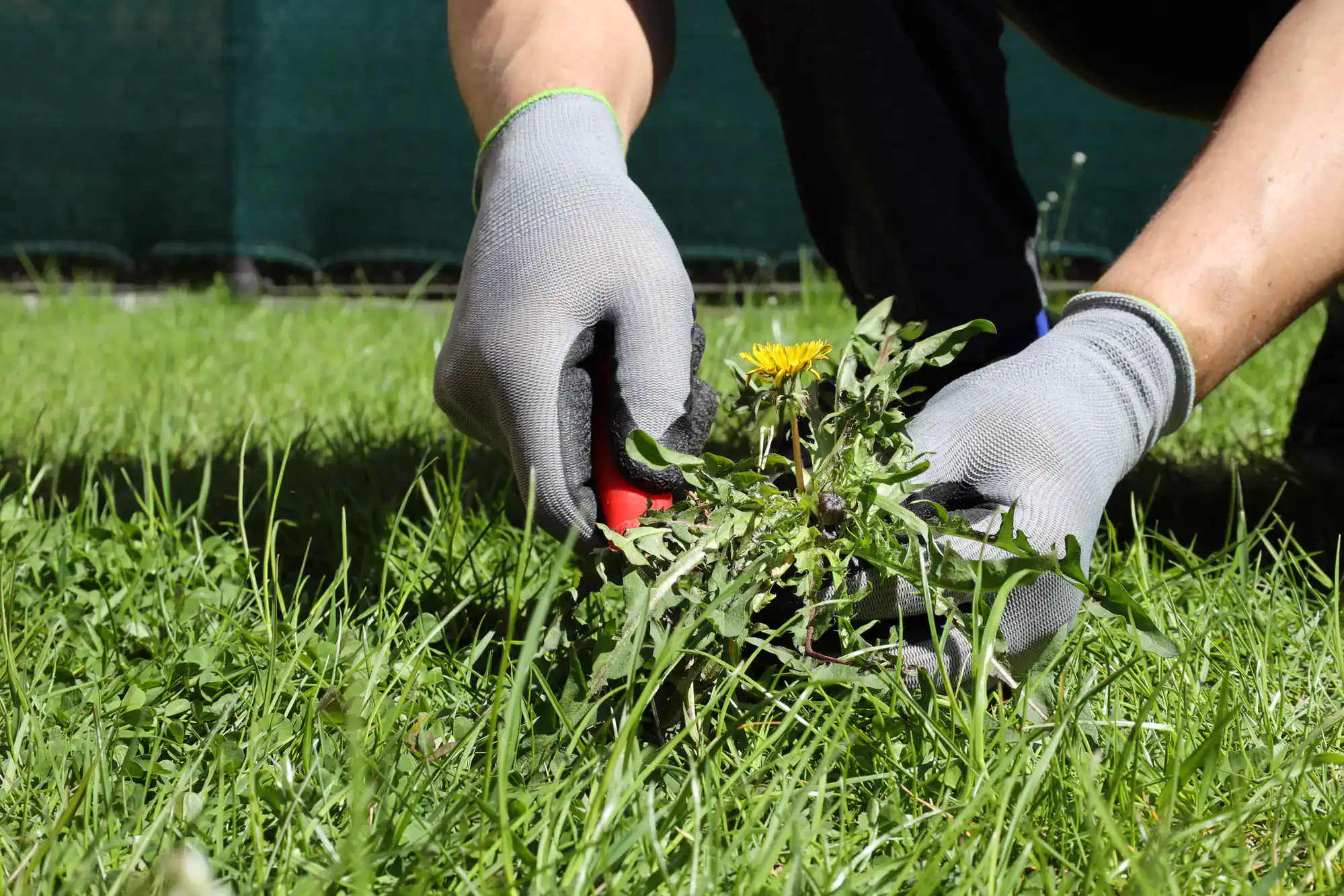
It starts with an honest look at what you’re working with. Before anything gets applied, a licensed technician walks your property and assesses the actual condition of the turf not just what the service ticket says. Soil type, shade patterns, compaction, existing weed pressure, and any visible damage all factor into what the program looks like for your specific lawn.
From there, treatments are scheduled around what your lawn actually needs and when it needs it. In Medford, timing matters more than most people realize. Suffolk County prohibits fertilizer applications between November 1st and April 1st, with fines up to $1,000 per violation. The fall treatment window particularly the late-season fertilizer application before that cutoff is the single most important step for root development and spring green-up. Missing it costs you an entire season. We build the whole calendar around these windows so nothing gets skipped.
Aeration and overseeding, when they’re part of the program, are done with hydraulic aerators not the lightweight drum rentals you’ll see on a lot of other trucks. In compacted suburban soil like what you find throughout Medford’s neighborhoods, the difference in core penetration is significant. Better penetration means better water movement, better root growth, and better seed germination when fall overseeding follows. After every visit, you’ll have a clear record of what was done and what comes next.
Ready to get started?
Our programs cover the full range of what a Medford lawn needs across the season fertilization, weed control, grub control, aeration, overseeding, and full lawn restoration for properties that have been neglected or never properly established. Every program is tailored to the lawn it’s going on. A shaded lot near Horseblock Road doesn’t get the same treatment as a full-sun property in Eagle Estates, and a lawn coming off drought stress gets a different fall approach than one that’s been consistently maintained.
The fertilizer used in every application is a proprietary custom blend developed specifically for Long Island’s soil conditions. It’s not a generic product it was formulated to perform in the sandy, low-organic-matter soils that define central Suffolk County, including Medford. Combined with professional hydraulic seeders for overseeding work, the equipment and product quality here are genuinely different from what most local operators are working with.
For lawns that are beyond routine maintenance heavily thinned, weed-dominated, or damaged by grubs or drought we offer full restoration and new lawn installs from seed. These aren’t add-on upsells. They’re the solution when a maintenance program alone won’t get the job done. If you’ve been paying for lawn care and watching the lawn get worse, that’s the conversation worth having.
The most common reason is that the fertilizer program wasn’t designed for Medford’s soil. The hamlet sits on sandy, glacially deposited soil that drains much faster than the loam or clay-based soils that most generic programs are formulated for. Nutrients applied at a standard rate leach through the root zone before the grass can fully absorb them, which means the lawn stays thin and pale even when it’s technically being “fed.”
On top of that, Medford’s soils are naturally acidic. When pH is off, grass can’t properly absorb nutrients even when they’re present so the fertilizer you’re paying for isn’t doing much. A program that accounts for both the soil’s drainage rate and its pH will produce noticeably different results than a generic off-the-shelf approach. That’s the difference between a program built for Long Island and one that was built for everywhere.
A licensed applicator specifically someone holding a NYS DEC Commercial Pesticide Applicator Certificate has completed state-mandated training, passed a licensing exam, and logged supervised field experience. That means they understand what each product does, at what rate it should be applied, and what the consequences are when something is applied incorrectly. They’re not following a laminated card on a clipboard they’re making informed decisions based on what they actually see on your lawn.
In practical terms, this matters most when something is off. An unlicensed laborer applying product under someone else’s license isn’t equipped to recognize grub damage versus drought stress, or to adjust application rates based on soil conditions. A licensed professional is. In Medford specifically, where lawns sit above the Pine Barrens aquifer recharge zone, applying pesticides or fertilizers at incorrect rates isn’t just a lawn quality issue it’s an environmental one. The licensing requirement exists for a reason, and it’s worth asking any company you hire whether the person treating your property actually holds it.
The fall window typically late August through mid-October is the most effective time for aeration and overseeding in Medford. Cool-season grasses like tall fescue and Kentucky bluegrass, which make up most of the residential lawns in this area, germinate best when soil temperatures are dropping and there’s less competition from crabgrass and summer weeds. Seeding in fall also gives new grass time to establish roots before winter, which means a much stronger lawn the following spring.
Missing that window is one of the most expensive mistakes a homeowner can make, because the next realistic opportunity is the following fall. Spring overseeding is possible but much less reliable pre-emergent crabgrass control applied in spring chemically prevents seed germination, which means you’re often choosing between controlling crabgrass and getting new seed to take. Fall sidesteps that conflict entirely. In Medford’s sandy soils, pairing fall overseeding with hydraulic aeration not rental-grade drum equipment makes a significant difference in how well seed-to-soil contact is achieved and how evenly the new grass fills in.
Yes, and they’re enforced with real fines. Suffolk County prohibits fertilizer application between November 1st and April 1st applying during that blackout period carries fines of up to $1,000 per application. The restriction exists because grass goes dormant when soil temperatures drop below 55°F, and fertilizer applied to dormant turf doesn’t get absorbed it just runs off into the surrounding environment.
Beyond the blackout period, there are additional rules that most homeowners don’t know about. Phosphorus-containing fertilizer can’t be applied unless a soil test confirms a deficiency. There are also buffer zones required near water bodies, wetlands, and storm drains. For Medford residents specifically, this matters more than in many other parts of Long Island the sandy soils here drain directly toward the Pine Barrens aquifer, which supplies drinking water to a large portion of Suffolk County. A professional lawn care program accounts for all of this automatically. You shouldn’t have to track these rules yourself, and with us, you won’t have to.
The honest answer is that if your lawn has been on a maintenance program for a full season or more and hasn’t meaningfully improved, it probably needs restoration not more of the same. Maintenance programs are designed to protect and build on a lawn that’s already in reasonable shape. They’re not designed to recover a lawn that’s been severely thinned, overtaken by weeds, or damaged by grubs, drought, or years of inadequate care.
In Medford, a lot of homes were built in the mid-to-late twentieth century, and many of those lawns have never been properly restored from seed. They’ve been mowed, maybe fertilized, but never aerated and overseeded with the right seed varieties for the soil and sun conditions. If your lawn has bare patches, persistent thin areas, or weeds that keep coming back regardless of what gets applied, a restoration conversation is the more productive starting point. That typically involves core aeration, slice seeding with professional hydraulic equipment, and a customized follow-up fertilization program not just resuming the same six-step routine.
The most useful questions are the ones that reveal how a company actually operates not just what they say on a website. Ask whether the person treating your lawn holds a NYS DEC Commercial Pesticide Applicator license personally, or whether the company has one license-holder covering a crew of unlicensed laborers. Ask what fertilizer they use and whether it’s formulated for Long Island’s soil conditions or sourced generically. Ask how they handle the Suffolk County fertilizer blackout window and whether their program is built around it.
Beyond credentials, pay attention to how long they’ve been operating in this specific market. A company that has been continuously serving Suffolk County since 1987 has treated Medford lawns through drought years, grub cycles, and every kind of seasonal variation Long Island produces. That kind of local history isn’t something a newer company or a rebranded franchise can replicate. It also means they’re accountable they have a reputation in this community that they’ve spent decades building, and they’re not going anywhere.
Useful Links
Other Services we provide in Medford