Hear from Our Customers
Most lawn care programs are designed for average soil in an average market. Holtsville isn’t average. The central Suffolk County soil profile sandy, fast-draining, low in organic matter means nutrients applied at standard rates leach out before your grass can use them. A program that works in Ohio or even Nassau County doesn’t automatically work here. That’s the part most companies don’t tell you.
When your lawn has been dealing with compaction for 30 or 40 years which is common in Holtsville’s established ranch neighborhoods it doesn’t just need fertilizer. It needs aeration that actually penetrates, seed that actually makes contact with soil, and a fertilizer formulated for what’s really underneath your feet. Fix those three things, and the difference shows up fast.
The mature tree canopy throughout Holtsville adds another layer. Shaded lawns need different grass varieties, different timing, and different application rates than full-sun turf. A program that ignores your specific conditions isn’t really a program it’s a schedule. We build around your lawn’s actual situation, not a one-size template.
We’ve been treating residential lawns in Holtsville and throughout Suffolk County since 1987. That’s not a rounded number it’s a founding year that predates most of the companies currently advertising in this area. When you’ve been doing this since before many of Holtsville’s current neighborhoods were fully built out, you stop guessing and start knowing.
Every technician who steps onto your property holds a NYS DEC Commercial Pesticide Applicator Certificate the state credential that requires 30 hours of approved training, a written exam, and two years of supervised experience. That’s not standard practice across the industry here. A lot of operators in the Holbrook, Holtsville, and Ronkonkoma corridor send out unlicensed labor. We don’t.
From the Summerfield gated community to the ranch-home streets throughout the rest of Holtsville, the lawns here have real value behind them. We treat them accordingly.
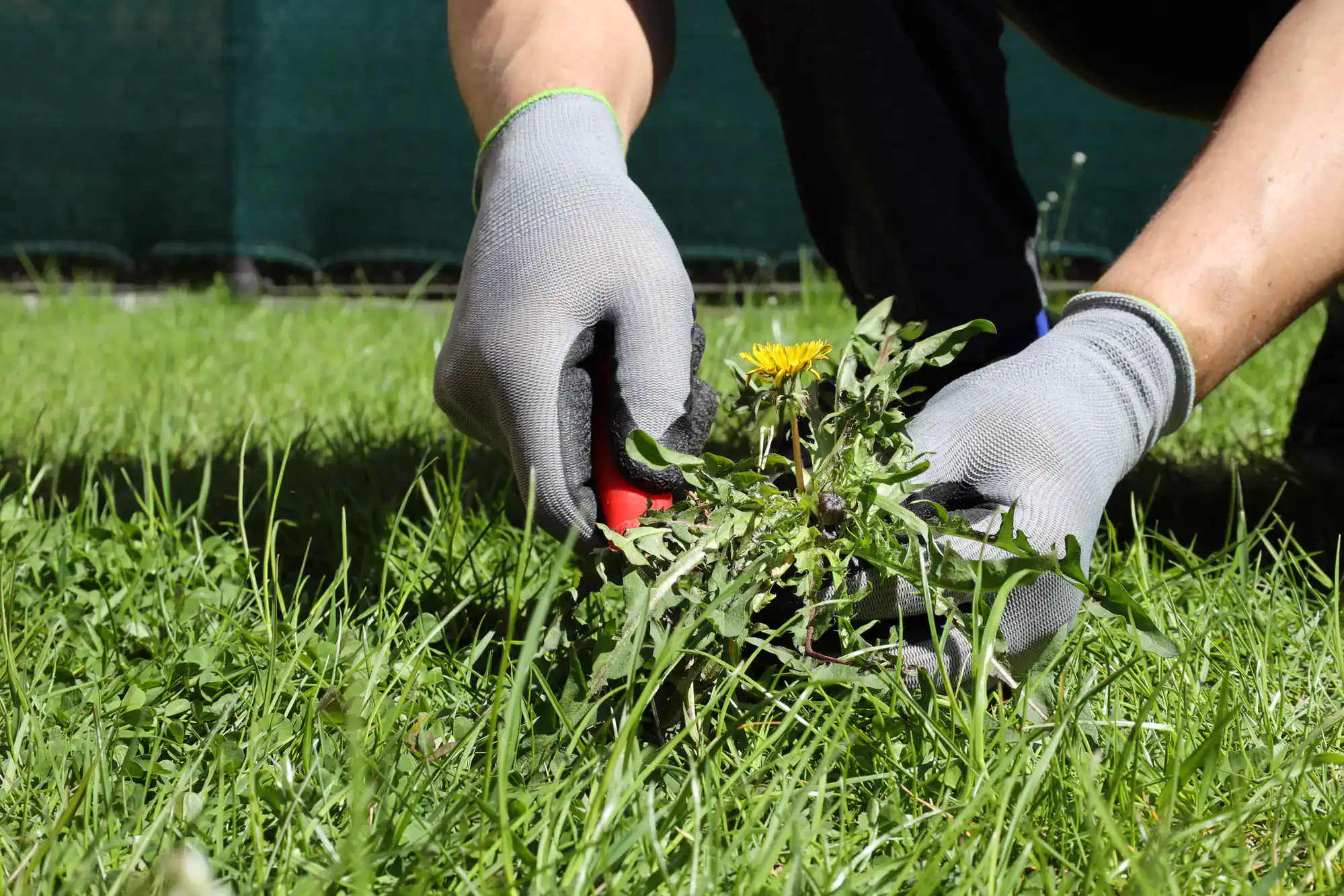
It starts with an assessment of your specific lawn not a glance from the truck, but an actual look at what’s going on. Soil compaction, shade coverage, turf density, weed pressure, visible damage. That assessment drives everything that follows. Your program isn’t pulled from a menu; it’s built around what your lawn actually needs.
From there, treatments are timed around what works for cool-season turf in central Suffolk County. Pre-emergent crabgrass control goes down in early spring before soil temperatures climb past the window. Broadleaf weed control follows in late spring. The most important window of the year aeration, overseeding, and fertilization runs late August through October, when the heat breaks and your turf is ready to respond. Our hydraulic aerators penetrate 3 to 4 inches into compacted ground, pulling real cores that allow roots to expand and seed to make genuine contact with soil. That’s a different result than what a lightweight drum aerator produces.
Suffolk County’s fertilizer blackout period runs November 1 through April 1 no nitrogen or phosphorus applications during that window, with fines up to $1,000 per violation. Every program we build is designed around that regulation from the start. You don’t have to think about it. It’s already handled.
Ready to get started?
Our programs cover the full treatment cycle for residential turf in Holtsville and the surrounding Suffolk County area. That includes fertilization with a custom-blended product made specifically for Lawn Master not a wholesale commodity fertilizer, but a formulation calibrated for the fast-draining, sandy soils that define central Long Island. It also includes pre-emergent and post-emergent weed control, broadleaf treatments, grub control, aeration, overseeding, and winterizer applications timed to maximize root development before the ground goes dormant.
Grub pressure is a real and recurring issue throughout central Suffolk County. Japanese beetle and European chafer populations can reach densities that destroy root systems across large sections of turf. A preventive grub treatment, timed correctly in early summer, is a standard part of a complete program here not an add-on you have to ask about.
If your lawn is past the point of maintenance thin, patchy, weed-dominated, or damaged from drought or grub activity we also handle full lawn restoration and new lawn installs from seed. The hydraulic seeders we use produce germination rates that rental-grade equipment can’t match. Whether you’re in Summerfield or on a ranch-home street off Waverly Avenue, the goal is the same: a lawn that actually recovers, not just one that gets treated on a schedule.
The most common reason is soil compaction combined with the wrong fertilizer for this area’s soil type. Holtsville sits on central Long Island’s sandy, glacially deposited outwash soils they drain fast and don’t hold nutrients the way heavier soils do. If you’re applying a standard fertilizer at standard rates, a significant portion of those nutrients leach through before your turf can absorb them. You’re essentially feeding the ground, not the grass.
Compaction makes it worse. When the soil is dense and hard which is typical in established neighborhoods where the same ground has been walked on and maintained for decades roots can’t develop properly, water doesn’t infiltrate evenly, and the turf stays stressed even when it’s being fed. The fix isn’t just more fertilizer. It’s aeration to open the soil, overseeding with the right variety for your specific conditions, and a fertilizer actually formulated for sandy Long Island soil. That combination produces visible results. Fertilizer alone, applied to compacted ground, rarely does.
A complete program for cool-season turf in Suffolk County typically runs five to six applications across the growing season. The timing matters as much as the number. Early spring brings pre-emergent crabgrass control and the first fertilizer application. Late spring is when broadleaf weeds are actively growing and most responsive to treatment. Early summer is the window for preventive grub control a step that’s easy to skip and expensive to regret if Japanese beetle or European chafer populations are high in your area.
Late summer through fall is the most critical stretch of the year. Aeration and overseeding in late August through October, followed by a winterizer fertilizer application, does more for a lawn’s long-term health than any other part of the program. The winterizer in particular timed before the Suffolk County blackout period begins on November 1 drives root development that determines how well your lawn comes out of dormancy the following spring. Miss that window and you’re starting the next season behind.
Yes, it directly affects your treatment schedule. Suffolk County Law 41-2007 prohibits the application of nitrogen and phosphorus fertilizer to turf from November 1 through April 1. The fines for violations run up to $1,000 per application and those fines apply to the applicator, which means an unlicensed operator who doesn’t know the rules is putting you at risk, not just themselves.
Beyond the blackout period, Suffolk County also restricts phosphorus applications unless a soil test confirms a deficiency, and certain applications require slow-release nitrogen formulations. These aren’t obscure regulations they’re the framework that every legitimate lawn care program in Holtsville and the surrounding area has to be built around. A company that doesn’t know these rules, or ignores them to squeeze in an extra treatment, is cutting corners that could cost you. Every program we build is designed around these requirements from the start, so compliance isn’t something you need to track or ask about.
A significant one. In New York State, anyone applying pesticides commercially including fertilizers that contain pesticide components is required to hold a NYS DEC Commercial Pesticide Applicator Certificate in the Ornamental and Turf category. That credential requires 30 hours of approved training, a written state examination, and two years of supervised field experience. It’s not a rubber stamp. It’s a meaningful credential that ensures the person treating your lawn understands what they’re applying, at what rate, and under what conditions.
Many operators in the central Suffolk County market including some that show up on aggregator platforms employ unlicensed labor and operate under a single license holder who may never visit your property. The person actually walking your lawn may have no formal training at all. For a homeowner with children and pets using that lawn, that’s a real concern. For a homeowner in Holtsville who is paying for a professional program and expecting professional results, it’s also a performance issue an untrained applicator who doesn’t understand the product, the timing, or the soil is not going to produce the same outcome as a licensed professional who does.
Late August through October is the window and it’s not arbitrary. Cool-season grasses like tall fescue, Kentucky bluegrass, and perennial ryegrass, which make up most of the turf in Holtsville’s residential neighborhoods, germinate and establish best when soil temperatures are between 50°F and 65°F. That range aligns with the fall shoulder season in central Suffolk County. Seed put down during this window has cooler temperatures, adequate moisture, and reduced competition from warm-season weeds working in its favor.
Aeration should happen before or at the same time as overseeding not as a separate event months later. The cores pulled by a hydraulic aerator create the seed-to-soil contact that drives germination rates. If you’re aerating with lightweight drum equipment and broadcasting seed on top of compacted ground, you’re not getting the results you’re paying for. The combination of deep core aeration and professional-grade overseeding, done in the right window, is the single most impactful treatment you can do for a struggling lawn in Holtsville. Spring overseeding is possible but significantly less effective fall is the time to do it right.
The most consistent complaint is the rotating technician problem. A different person shows up each visit, nobody has context for what was applied previously or what the lawn’s specific issues are, and the quality of assessment declines as the route gets longer. For a homeowner in Holtsville who has been paying for a full-season program and watching their lawn stay flat or get worse, that pattern gets old fast.
The other issue is program design. National franchise programs are built for average conditions across a broad service territory. Holtsville’s sandy soils, the shade from mature trees throughout the hamlet’s established streets, and the compaction issues common in neighborhoods where homes have been on the same ground for 40 or 50 years none of that gets factored into a standardized national program. A local company that has been treating Suffolk County lawns since 1987 and uses a fertilizer custom-blended for Long Island’s specific soil conditions is starting from a fundamentally different place. The program is built around what’s actually under your lawn, not what’s average across a national customer base. That difference shows up in results, and it’s why homeowners who make the switch typically don’t go back.
Useful Links
Other Services we provide in Holtsville