

Hear from Our Customers

Most lawn care programs were designed for average conditions on average lots. Port Jefferson is neither. The sandy, glacially deposited soils along the North Shore leach nutrients faster than the grass can absorb them, which is why a generic fertilizer schedule produces mediocre results no matter how many seasons you stick with it. When the fertilizer is formulated for your actual soil and applied at the right time by someone who knows what they’re looking at the difference shows up in the turf, not just the invoice.
The hillside lots above the harbor add another layer of complexity. Drainage patterns vary dramatically on sloped properties, which means the top of a slope can be dry and nutrient-starved while the base holds moisture and develops its own weed pressure. A program that doesn’t account for that will always underperform. Getting the lawn right in Port Jefferson means reading the property first, then building a plan around what it actually needs.
And if you’re close to the water, there’s a regulatory piece too. Suffolk County’s fertilizer blackout period runs from November 1 through April 1, and applications near water bodies carry strict buffer requirements. A licensed professional manages all of that automatically. You don’t have to think about it and you won’t be left wondering whether the company you hired even knows the rules exist.
We’ve been operating in Suffolk County since 1987, with deep roots throughout Port Jefferson and the surrounding North Shore communities. That’s not a rounded number it’s a specific founding year that predates most of the companies you’ll find in a search today. Over nearly four decades of working on Port Jefferson properties, from the hillside neighborhoods above Port Jefferson Harbor to the established streets near Mather Hospital and east toward Mount Sinai, we’ve developed a level of local knowledge that no franchise operation or recently launched company can replicate.
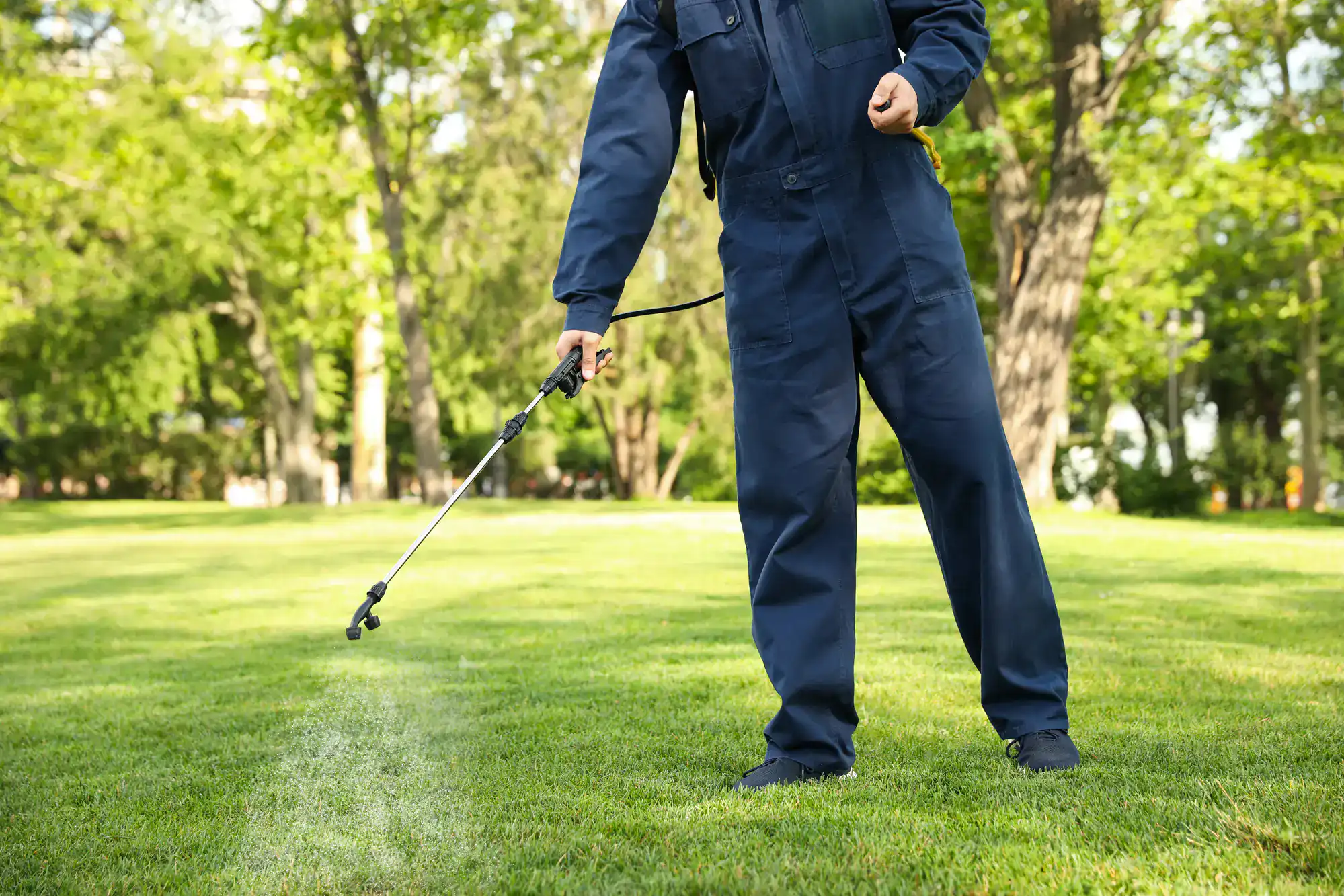
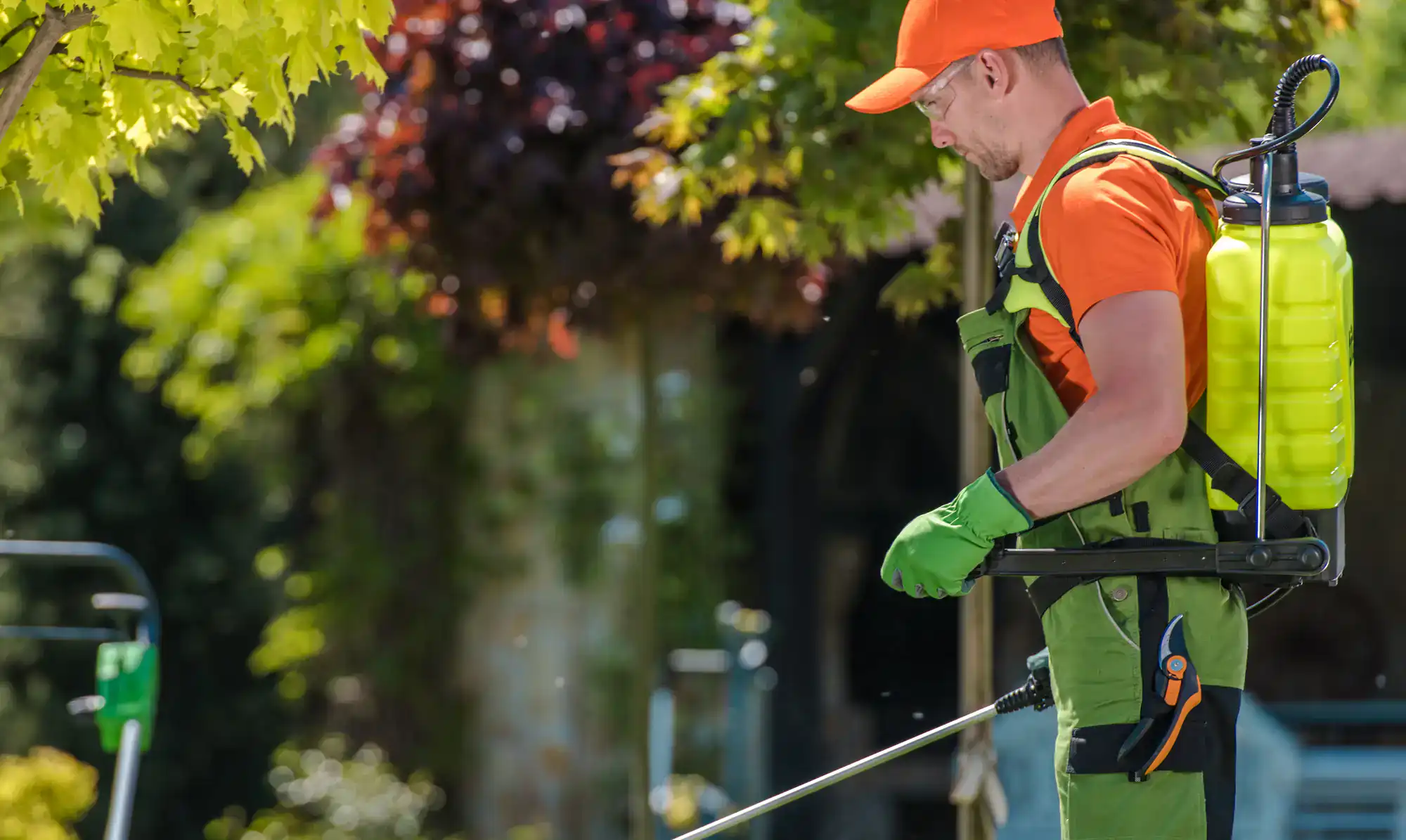
Every visit is handled by a NYS DEC licensed pesticide professional not a labor crew supervised from a distance. The person on your lawn knows what they’re applying, why, and at what rate. That’s not the standard in this industry, but it’s our standard here.
Five fully wrapped trucks run throughout Suffolk County, including along Route 25A through Port Jefferson and into East Setauket and Stony Brook. If you’ve seen them in your neighborhood, you already know the operation is real. The trucks don’t lie about the level of investment behind the work.
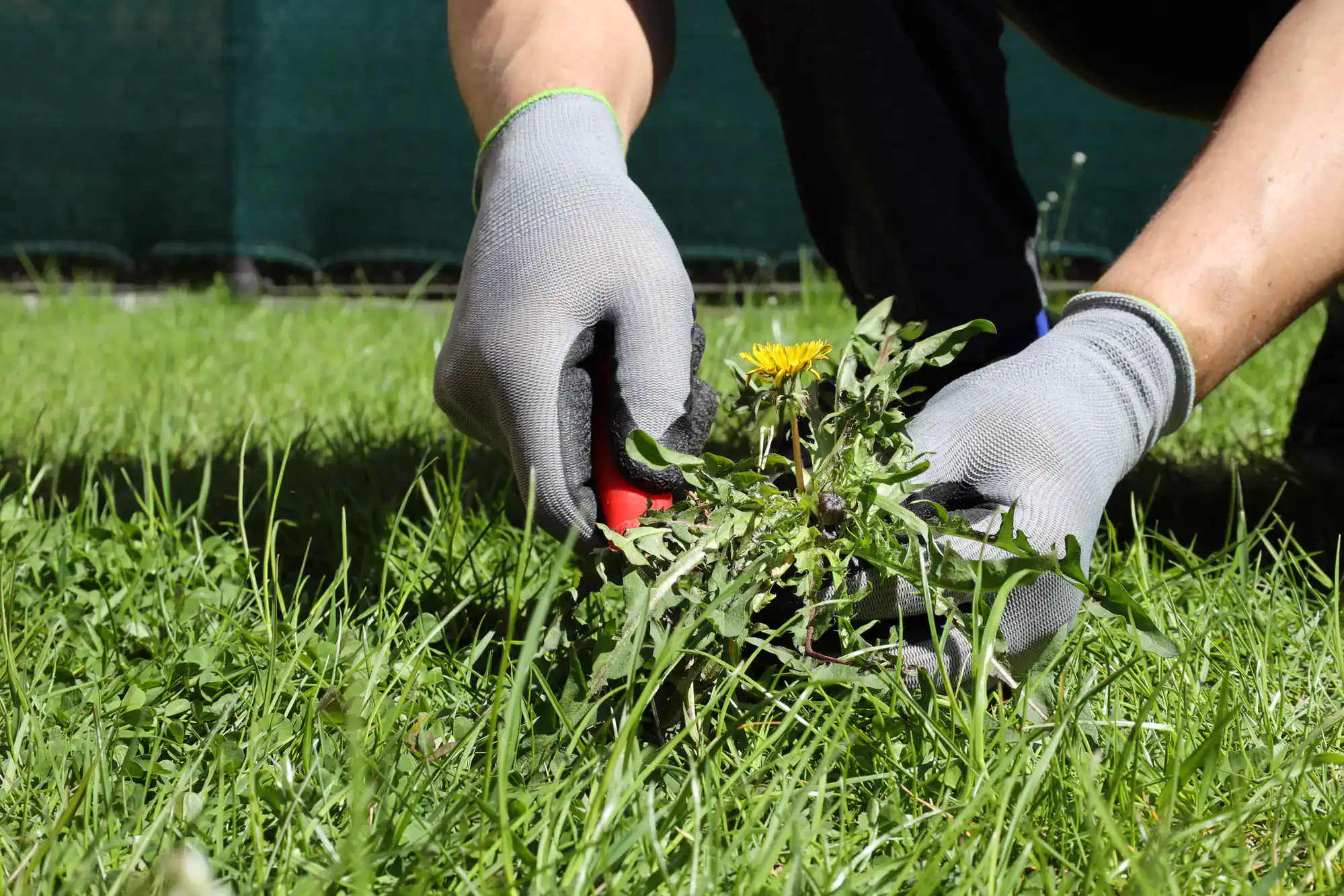
It starts with an assessment of your actual property not a glance from the truck window. Port Jefferson lawns vary more than most. A hillside lot near the harbor has different drainage, sun exposure, and soil moisture than a flat lot a mile inland. Before a program is recommended, we evaluate the conditions on your specific property: the slope, the shade patterns, the soil, the existing weed pressure, and the current state of the turf.
From there, we build a custom-tailored program around what your lawn needs across the season. That typically includes fertilization with our proprietary custom-blended formula developed specifically for Long Island’s sandy soil profiles, not purchased off a distributor’s pallet along with weed control, pre-emergent applications timed to Suffolk County’s seasonal pest cycles, and grub prevention timed to early summer when Japanese beetle larvae are most vulnerable. For lawns with compaction, we schedule hydraulic aeration during the fall window, which is the single most important treatment timing for cool-season turf on the North Shore. If the lawn needs restoration, overseeding follows aeration using professional-grade hydraulic seeders that produce significantly better seed-to-soil contact than broadcast methods.
After every visit, you get a written record of what was done. Invoices are handled online no paper, no mailed checks, no friction. For Port Jefferson homeowners who are managing busy schedules between Mather Hospital, the LIRR, and everything else, that kind of operational simplicity matters.
Ready to get started?
Our programs cover the full range of what a North Shore lawn actually needs fertilization, weed control, pre-emergent crabgrass prevention, grub control, aeration, overseeding, and full lawn restoration for properties where the turf has declined to the point where maintenance alone won’t turn it around. The fertilizer we use in every program is a custom-blended formula made specifically for us not a generic product. We developed it for Long Island’s soil conditions, where standard fertilizer formulations leach through the sandy root zone before the grass can absorb them.
For Port Jefferson’s older housing stock the early 20th-century colonials and Cape Cods with lawns that have decades of compaction, pH drift, and accumulated weed pressure our restoration programs are particularly relevant. These aren’t starter-lawn problems, and they don’t respond to starter-lawn solutions. If you’ve been paying for a maintenance program that produces no visible improvement season after season, the program probably isn’t addressing the underlying issues. That’s where our diagnostic approach and hydraulic equipment make a real difference.
Suffolk County’s Reclaim Our Water regulations apply to every property in Port Jefferson, and they’re especially relevant here given the village’s direct adjacency to the harbor and Long Island Sound. Every program we design is built around these requirements the blackout period, the phosphorus restrictions, the buffer zones near water. Compliance isn’t an add-on. It’s built in from the start.
The most common culprits on Port Jefferson properties are a combination of sandy soil nutrient leaching, maritime heat stress, and compaction and most standard lawn care programs don’t address all three at once. Port Jefferson’s proximity to Long Island Sound means lawns here experience more humidity fluctuation and salt-influenced air than properties even a few miles inland. During summer heat, cool-season turf which is what most North Shore lawns are seeded with goes under stress faster in these conditions, and if the root system is already weakened by compaction or nutrient deficiency, thinning accelerates.
The fix isn’t just more fertilizer. It’s the right fertilizer applied at the right rate for sandy soil, combined with aeration to relieve compaction and allow water and nutrients to actually reach the root zone. If grub populations are also present which is common in Suffolk County, particularly in older, established turf that damage compounds the thinning. A proper diagnostic assessment of your specific lawn will usually identify which combination of factors is driving the problem, and from there we can build a targeted program to address it directly.
A complete program for a typical Port Jefferson residential lawn covers several distinct treatment windows across the season. In early spring, that means a pre-emergent crabgrass application timed before soil temperatures hit the germination threshold, along with a slow-release fertilizer application. Late spring brings a broadleaf weed control treatment and a follow-up fertilizer round. Summer includes a grub prevention application timed to early summer when Japanese beetle and European chafer larvae are most vulnerable along with spot weed treatments as needed. Fall is the most critical window: aeration, overseeding, and a late-season fertilizer application to build root reserves before winter dormancy.
What distinguishes our program from a generic five-round schedule is that the fertilizer we use is a custom-blended formula developed specifically for Long Island’s sandy soil profiles. Generic fertilizers are formulated for average American soils they leach through Port Jefferson’s sandy North Shore soils faster than the grass can absorb them. Our custom blend addresses that directly. Every program we manage is also in compliance with Suffolk County’s fertilizer regulations, including the November 1 through April 1 blackout period and the phosphorus restrictions that apply across the county.
The honest answer is that most established lawns in Port Jefferson need both but the sequence matters. If your soil is compacted, fertilizer applied to the surface won’t penetrate effectively to the root zone regardless of the product quality. You’ll see some surface response, but the underlying health of the turf won’t improve. Compaction is especially common on the hillside lots that characterize much of Port Jefferson’s residential geography, where decades of mowing, foot traffic, and slope drainage have pressed the soil profile tighter over time.
A simple test: push a screwdriver into your lawn. If it meets significant resistance in the top 2 to 3 inches, compaction is a factor. Hydraulic aeration the kind we use, which pulls cores 3 to 4 inches deep breaks that compaction and opens channels for water, air, and nutrients to reach the roots. Fall is the optimal window for aeration and overseeding on Long Island because cool-season grass seed germinates best in September and October soil temperatures. Fertilizing a compacted lawn without aerating first is like watering a plant through a sealed pot some of it gets through, but not nearly enough.
National franchises operate across a very wide service territory, which means their programs are built around broad regional averages rather than the specific conditions of any individual property or community. For Port Jefferson specifically where the sandy North Shore soils, hillside terrain, harbor-adjacent microclimate, and older housing stock create a set of conditions that deviate significantly from the regional average a generic program tends to produce generic results.
The more consistent complaint from Suffolk County homeowners who have tried national services is a lack of continuity: different technicians on every visit, no institutional knowledge of the property’s history, and programs that don’t adapt when the lawn isn’t responding. A local company that has been operating in Suffolk County since 1987 has treated North Shore lawns through every drought cycle, every grub outbreak season, and every variation in Long Island’s weather patterns. That accumulated local knowledge combined with a custom-blended fertilizer formulated for Long Island’s soils and licensed professionals on every visit is a fundamentally different service model than what a national franchise delivers.
The spring window roughly March through early May is when most Port Jefferson homeowners start thinking about their lawn, and it is a legitimate starting point. Pre-emergent crabgrass applications need to go down before soil temperatures reach 55 degrees Fahrenheit, which on the North Shore typically happens in mid-to-late April. Starting in March gives the program the best chance of preventing the crabgrass pressure that plagues thin, stressed lawns throughout the summer.
That said, the fall window late August through October is arguably the most important treatment period for cool-season turf on Long Island. Aeration and overseeding in September produces dramatically better results than spring seeding because the soil temperatures are ideal for germination and the turf has the entire fall and following spring to establish before summer heat stress arrives. If you missed spring and your lawn looks rough heading into August, don’t wait until next year. A fall restoration program started in September can produce a noticeably different lawn by the following May. We can assess your property and tell you exactly where you are in the season and what the most effective next step looks like.
It does, in a few meaningful ways. The salt-influenced air coming off Long Island Sound and Port Jefferson Harbor creates additional stress on cool-season turf during summer, particularly for lawns in the elevated hillside neighborhoods with more wind exposure. That stress accelerates thinning, which opens the turf to crabgrass and broadleaf weed invasion so pre-emergent timing and turf density programs matter more here than they do for properties further inland.
The regulatory dimension is also more relevant in a waterfront village. Suffolk County’s Reclaim Our Water program restricts nitrogen and phosphorus fertilizer applications from November 1 through April 1, prohibits phosphorus applications without a confirmed soil deficiency, and requires buffer zones within 20 feet of water bodies, wetlands, and storm drains. In Port Jefferson, where drainage systems flow toward the harbor and Long Island Sound, these rules are actively relevant to most residential properties not just the ones right on the water. Violations carry fines of up to $1,000 per application. Working with a licensed professional means these requirements are managed automatically, built into the program from the start, without you having to track them yourself.
Useful Links
Other Services we provide in Port Jefferson