
Hear from Our Customers
The ranch homes that make up most of Port Jefferson Station’s housing stock are sitting on lawns that have been walked on, mowed, and frozen and thawed for 50 or 60 years. That kind of history leaves a mark specifically, a compacted soil layer that water can’t get through, roots can’t push past, and fertilizer can’t reach. You can water all summer and still end up with a lawn that looks like it’s barely surviving, because the problem isn’t on the surface.
Core aeration pulls small plugs out of the soil typically three to four inches deep and opens up channels that let air, water, and nutrients reach the root zone again. For the cool-season grasses that dominate yards around Port Jefferson Station fescue, bluegrass, ryegrass that fall aeration window is when they do their most aggressive growing, which means the recovery is faster and the results are more visible than almost any other time of year.
If you’ve got an in-ground irrigation system, this matters even more. Irrigated lawns that get regular foot traffic and mowing actually compact faster than dry ones, because wet soil gives way under pressure. Aeration doesn’t compete with your irrigation investment it’s what makes it worth the money.
We’ve been operating out of Port Jefferson Station since 1987. That’s not a regional franchise claiming the North Shore as a territory this is home. Our address is 11776. The trucks you’ve seen parked on Terryville Road or running through the neighborhood aren’t passing through they work here, season after season, on the same kinds of properties, in the same soil conditions, year after year.
Every job is handled by a licensed pesticide professional not seasonal labor supervised by someone off-site. New York State requires commercial applicators to pass category-specific exams through the DEC and maintain active certification. That’s the standard we hold every technician to, on every visit, on every property.
Our equipment is hydraulic-grade, our fertilizer is custom-blended specifically for Lawn Master, and our programs are built around your lawn not a package designed for someone else’s. That combination is harder to find than it sounds.
It starts with an assessment of your property’s actual conditions soil type, compaction level, thatch depth, shade patterns, and what grass varieties you’re working with. North Shore soil in the Port Jefferson Station area can vary more than people expect. The proximity to the Harbor Hill Moraine means some properties have heavier clay fractions that compact more aggressively than the sandier soils further south on Long Island. That assessment shapes everything that follows.
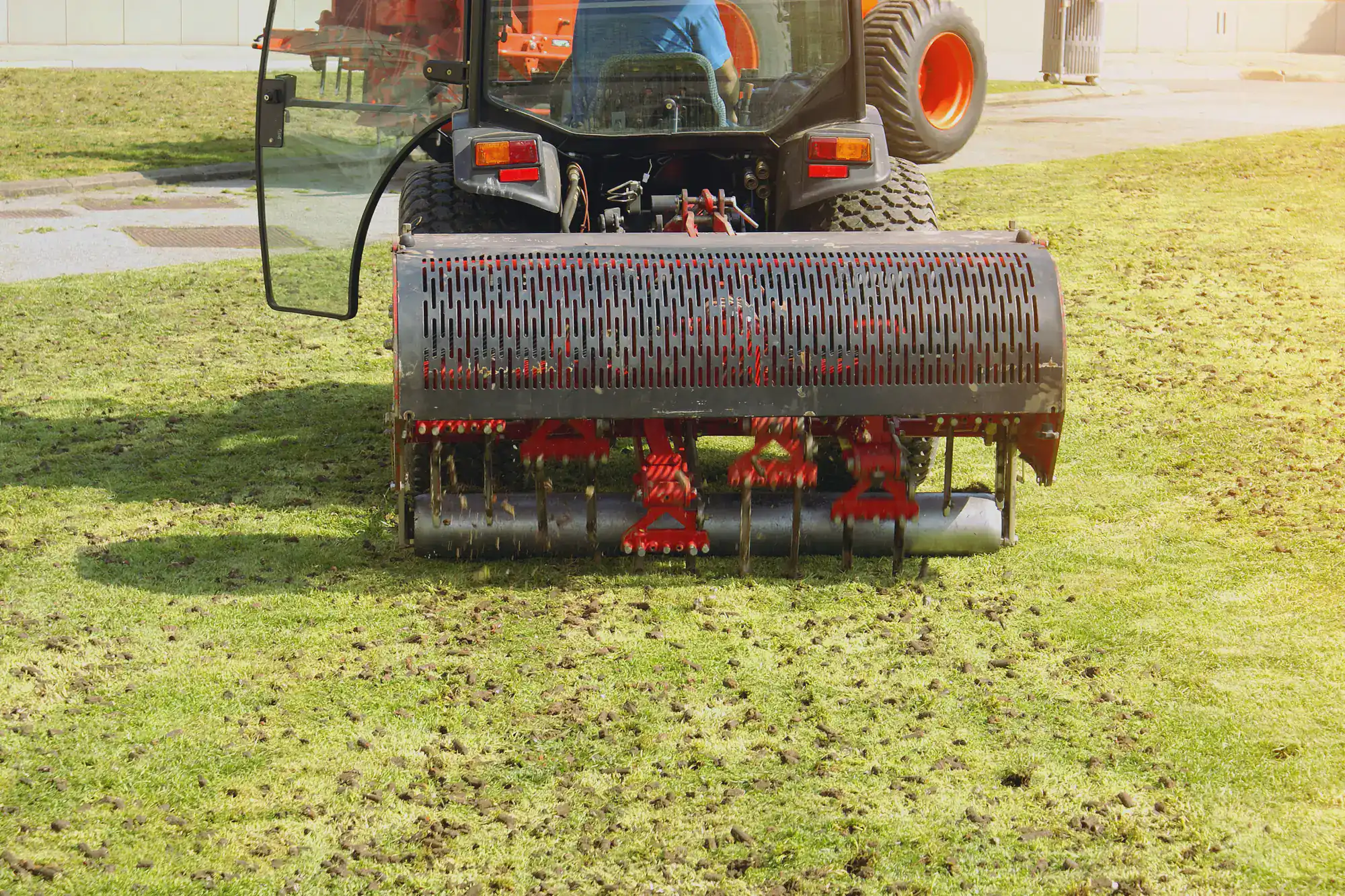
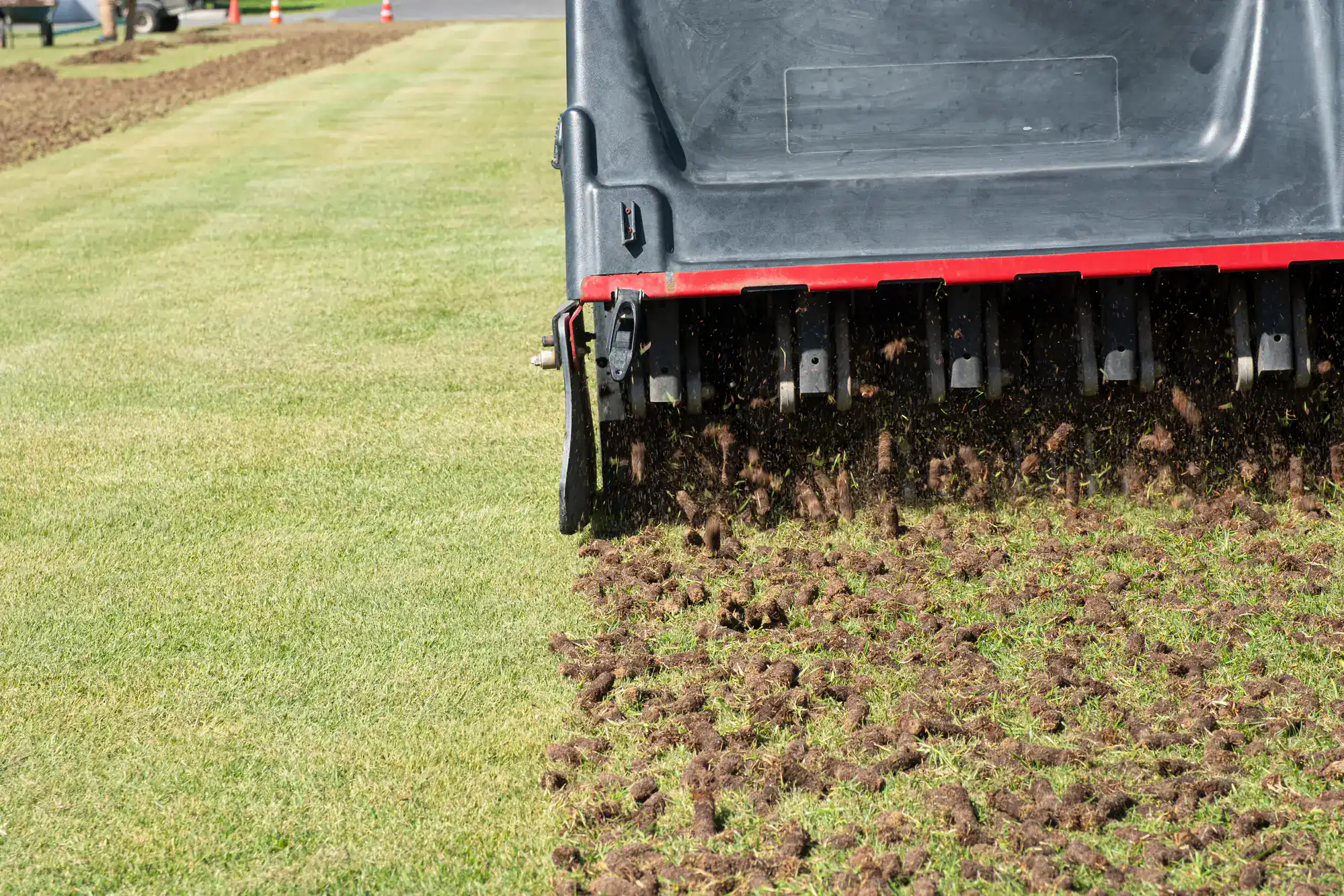
Once the conditions are understood, we run hydraulic aerators across your lawn professional-grade machines that pull clean cores consistently, even in the denser, more resistant soil conditions common to established properties in this area. Consumer rental machines don’t penetrate as deeply or remove cores as cleanly, which matters when you’re dealing with decades of compaction on a ranch home lot that’s never been properly aerated.
After the cores are pulled, the plugs are left on the surface to break down naturally they return organic matter to the soil and help fill the channels. If overseeding is part of your program, seed goes down immediately after aeration, directly into the open soil where germination rates are dramatically higher. Keep in mind: Suffolk County bans fertilizer applications between November 1 and April 1, so the fall window for aeration, overseeding, and fertilization is real and finite. Scheduling matters.
Ready to get started?
For a typical Port Jefferson Station property most of which sit on lots between 7,500 and 15,000 square feet professional core aeration generally runs in the $150 to $300 range for a single service. That’s the ballpark for aeration alone. What you actually need beyond that depends on your lawn’s condition, which is why we don’t sell one-size packages.
If your lawn is thin but structurally sound, aeration paired with overseeding and a custom fertilizer application might be all it takes to see a significant turnaround before winter. If the lawn has been neglected for years or if you’re dealing with a property that’s never had professional care the program might include a more aggressive restoration approach, including new lawn installation from seed. The difference between those two paths is something our professionals assess on-site, not over the phone based on your square footage.
What stays consistent across every program we offer is the equipment hydraulic aerators that handle the variable soil conditions of North Shore Long Island the licensed professionals running the job, and the custom-blended fertilizer that goes to work once the soil is open and ready to receive it. If you’re in Port Jefferson Station, near Sagamore Hills, or anywhere along the Route 112 corridor, the process is the same: your lawn gets evaluated on its own terms, and the program follows from there.
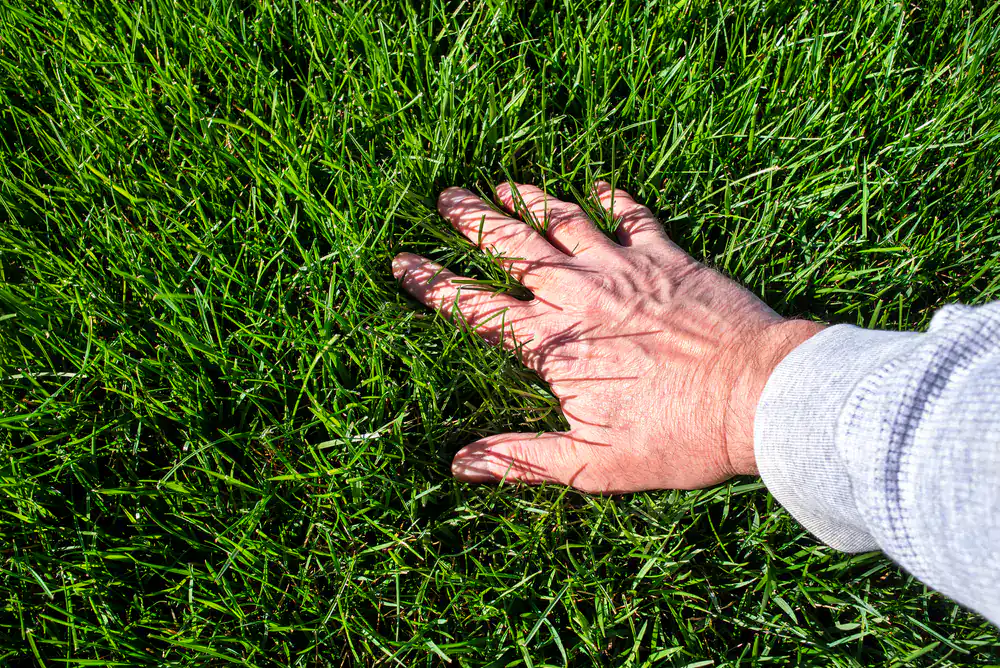
For the cool-season grasses that make up most lawns in Port Jefferson Station tall fescue, Kentucky bluegrass, and perennial ryegrass fall is the optimal window. Specifically, late August through mid-October gives you the best combination of warm soil temperatures and active grass growth, which means the lawn recovers faster and the results are more visible heading into winter.
There’s also a regulatory reason to plan ahead: Suffolk County prohibits fertilizer applications between November 1 and April 1, with fines up to $1,000 for violations. That means if you want to aerate, overseed, and fertilize in the same fall program which is the most effective approach all of it needs to happen before November 1. Our schedule fills up in August and September with Port Jefferson Station homeowners who know this. If you’re calling in late October, you’ve likely missed the window for the full program.
The simplest test is the screwdriver test. After watering or a rain, push a standard six-inch screwdriver into your lawn. If it won’t go three inches deep without real effort, your soil is compacted enough to be limiting root growth, water infiltration, and fertilizer effectiveness. That’s the threshold where aeration stops being optional and starts being the most impactful thing you can do for your lawn.
Other signs are visible without any tools: water pooling on the surface after rain instead of soaking in, grass that looks stressed even when you’re watering consistently, thin or bare patches that don’t respond to overseeding, and a lawn that feels hard underfoot rather than slightly springy. For Port Jefferson Station’s established ranch home properties many of them on lots that have been compacted by decades of foot traffic, mowing equipment, and freeze-thaw cycles compaction is more the rule than the exception. Most lawns here that haven’t been professionally aerated in the last two or three years are overdue.
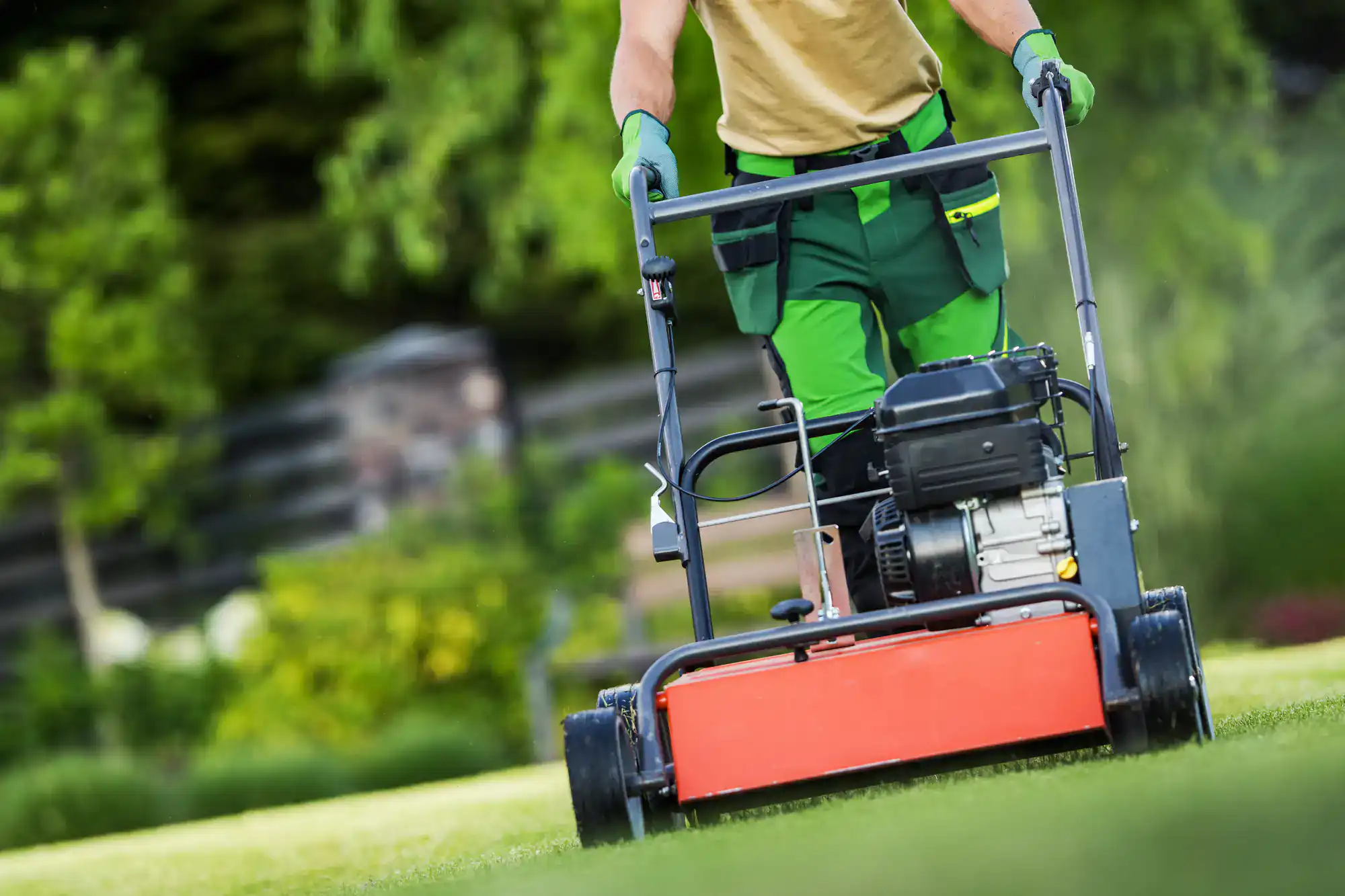
It matters quite a bit. Core aeration uses hollow tines to physically remove plugs of soil from the ground, creating open channels for air, water, and nutrients to reach the root zone. Spike aeration the kind done with solid tines or spiked rollers just pushes holes into the soil without removing anything. The problem is that in compacted soil, spike aeration actually compresses the soil further around each hole, which can make the compaction worse over time, not better.
For the soil conditions common to Port Jefferson Station particularly properties with heavier clay fractions from the North Shore’s glacial till composition spike aeration is largely ineffective. You need the plugs removed to create real relief. This is also why the equipment matters: our hydraulic aerators pull clean, consistent cores even in denser, more resistant soil. A consumer rental machine or a spiked attachment behind a riding mower isn’t going to produce the same result, especially on a lawn that’s been compacted for decades.
Aerate first, then overseed immediately after ideally the same day. The reason is straightforward: when you pull cores from the soil, you create open channels with exposed soil that seed can fall directly into. Germination rates in those channels are dramatically higher than seed broadcast onto an unbroken surface, where it sits on top of thatch and has a much harder time making contact with the soil.
For Port Jefferson Station lawns, the fall timing makes this combination especially effective. Cool-season grasses like fescue and bluegrass germinate best when soil temperatures are between 50 and 65 degrees Fahrenheit which typically means late August through early October on the North Shore. Aerating and overseeding in that window gives new seed the best possible environment to establish before the ground freezes. If you wait until November, you’re past the fertilizer application window under Suffolk County’s seasonal ban, and the soil temperature may already be too low for reliable germination.
Renting a consumer aerator from a home improvement store runs roughly $75 to $107 per day. On the surface, that looks like a deal compared to professional service. But there are a few things that number doesn’t account for.
Consumer aerators aren’t built for the soil conditions found in many Port Jefferson Station properties. If you’re dealing with compacted clay-heavy soil which is more common on the North Shore than the sandier soils further south on Long Island a lightweight rental machine won’t penetrate deeply enough or pull cores cleanly enough to produce meaningful results. You’ll spend a Saturday on the job and end up with a lawn that looks like it was aerated without getting the benefit of it actually being aerated properly. Our hydraulic equipment is built for this kind of soil. Add the licensed professional assessment of your lawn’s specific conditions, the custom fertilizer application that follows, and the overseeding program tailored to your grass type, and the professional service isn’t just more convenient it’s a different outcome entirely.
For most residential properties in Port Jefferson Station which typically sit on lots between 7,500 and 15,000 square feet professional core aeration runs roughly $150 to $300 as a standalone service. The exact number depends on your lot size, the condition of your lawn, and what the assessment turns up in terms of soil compaction and thatch depth.
Where the cost picture gets more nuanced is when aeration is part of a broader program. If your lawn needs overseeding, a custom fertilizer application, or a more involved restoration approach, those are separate line items but they’re also the services that make the aeration investment pay off. A lawn that gets aerated but doesn’t get seed or nutrients into those open channels recovers slower and produces less visible results. We build programs around what your specific lawn actually needs, so you’re not paying for services that don’t apply to your property. For a custom quote based on your address in Port Jefferson Station, the most direct path is a call the assessment is the starting point, not the package menu.
Useful Links
Other Services we provide in Port Jefferson Station