
Hear from Our Customers
Most homeowners in Stony Brook aren’t dealing with a bad lawn they’re dealing with a lawn that’s been handled by the wrong company. A national chain that sent a different technician every visit. A gig-economy service that showed up twice and disappeared. Or a generic program that never accounted for the fact that your property has three different growing conditions under one roof: full sun near the street, deep shade under a 60-year-old oak, and everything in between.
When your lawn gets a program built around its actual conditions soil type, shade exposure, weed history, seasonal timing the results are different. Crabgrass stops taking over your sunny patches by August. Bare spots under the tree canopy fill in. The turf thickens up instead of thinning out every summer. You stop spending weekends trying to fix what last season’s service made worse.
Stony Brook’s North Shore sandy loam soil leaches nutrients faster than most homeowners realize, which means generic fertilizer applied on a generic schedule doesn’t hold. The custom-blended fertilizer we use is formulated specifically for Long Island’s soil conditions the right nutrient ratios, the right release rate for how your soil actually behaves. That’s not a minor detail. It’s the difference between a lawn that looks okay for two weeks and one that stays healthy through the season.
We’ve been treating lawns in Stony Brook and throughout Suffolk County since 1987 which means the North Shore’s sandy loam, the mature oak canopy, the harbor-adjacent moisture conditions near Stony Brook Harbor, and the specific weed pressures that come with this geography are not a learning curve for us. They’re just Tuesday.
Every technician on our crew is a New York State DEC-licensed pesticide applicator. Not a seasonal hire, not a subcontractor sourced from an app. A licensed professional who’s qualified by law to apply the products that actually make a difference and who knows the difference between a lawn that needs fertilization and one that needs restoration first.
We run five fully wrapped, professionally branded trucks through Stony Brook and the surrounding Three Villages communities. When one pulls into your driveway, there’s no guessing who’s there or who’s accountable. That’s by design.
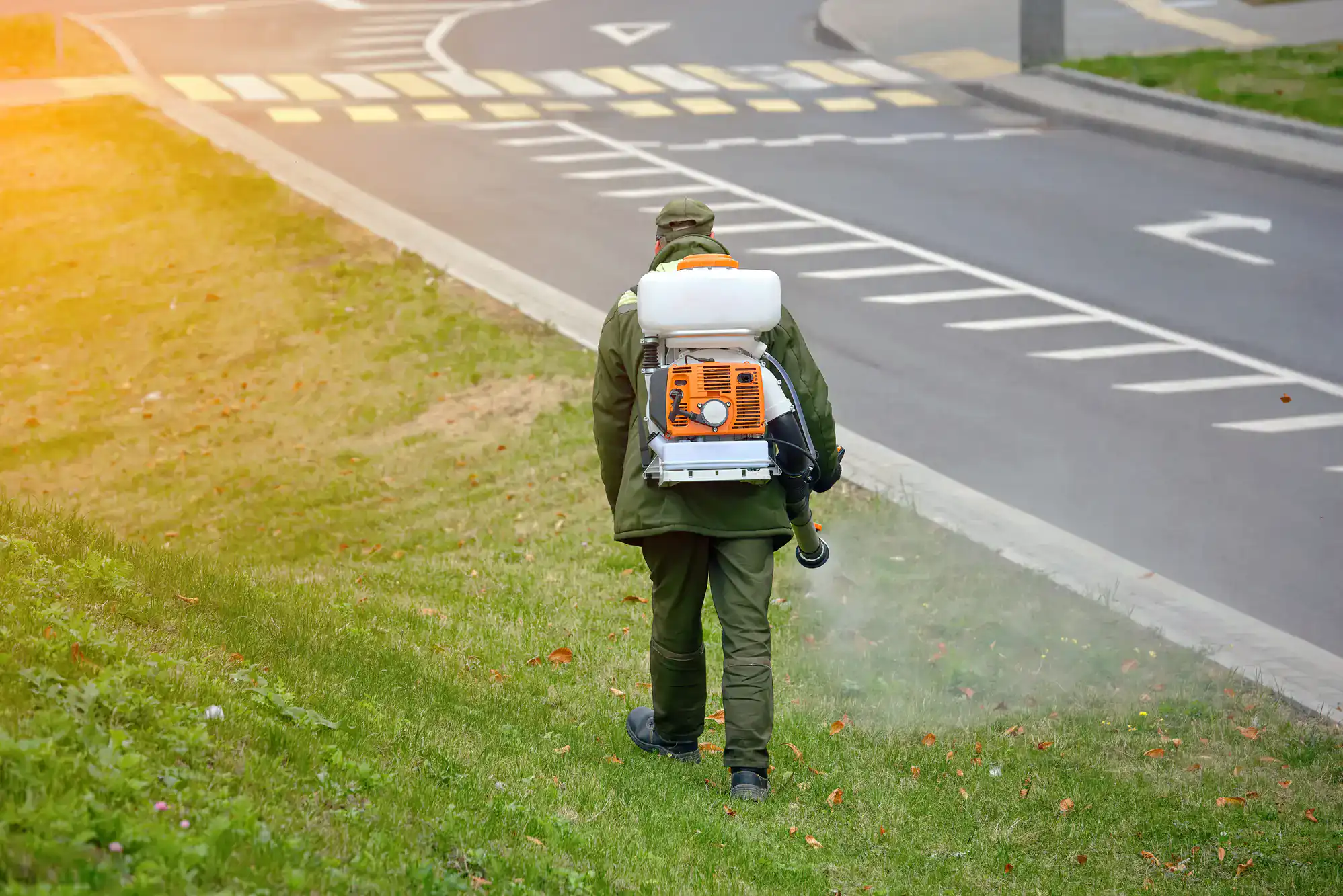
It starts with an assessment of your property not a glance from the truck, but an actual walkthrough of what your lawn is dealing with. Soil condition, sun and shade exposure, existing weed populations, compaction, turf density. In Stony Brook, that assessment matters more than most places because a single lot can have genuinely different growing environments depending on where the mature trees are and how close the property sits to the harbor or a low-lying area.
From there, we build a program around what your lawn actually needs. In spring, that means getting pre-emergent crabgrass control down before soil temperatures hit 55°F which typically happens by mid-April on the North Shore. Miss that window and you’re managing crabgrass all summer instead of preventing it. We also align every application with Suffolk County’s fertilizer blackout period, which prohibits applications between November 1st and April 1st. That’s not optional it’s county law, and it exists because Long Island sits over a sole-source aquifer that supplies all the region’s drinking water.
Through the season, we handle fertilization, weed control, and grub prevention on a schedule that matches what your turf needs at each stage. In fall, when the soil is still warm but the air is cooling, we bring in the hydraulic aerators and seeders the right time and the right equipment to get real root development before winter. You don’t need to manage any of it. That’s the point.
Ready to get started?
The core of what we deliver is a custom-tailored treatment program fertilization, pre- and post-emergent weed control, grub prevention, and seasonal applications timed to what your lawn needs, not what a national schedule says. The fertilizer itself is a proprietary blend formulated specifically for us and calibrated for Long Island’s soil. You won’t find it at a garden center. It’s not what the national chains are using.
For lawns that need more than maintenance, we also handle full lawn restoration and new lawn installs from seed, using hydraulic seeders that deliver even, consistent coverage at the right depth. If your turf has been thinned out by years of shade stress from the mature tree canopy common throughout Stony Brook’s residential neighborhoods or damaged by incorrect applications from a prior service restoration is a real option, not a workaround.
Specialty weed problems get specialty solutions. Nutsedge thrives in the moist, low-lying conditions found near Frank Melville Jr. Memorial Park and harbor-adjacent properties in Stony Brook. Bentgrass invades established turf and is notoriously hard to eliminate without targeted treatment. These aren’t problems a generic program solves they require the kind of focused, experienced approach that comes from actually knowing this area. Suffolk County’s environmental regulations, the aquifer, the blackout period we know all of it and build every program around it.
The honest answer is that timing depends on what your lawn needs and what the season allows. In Stony Brook, the first spring application typically happens after April 1st that’s when Suffolk County’s fertilizer blackout period ends. The blackout runs from November 1st through April 1st and applies to all residential lawn fertilization in the county. It exists because Long Island’s entire water supply comes from a sole-source aquifer underground, and fertilizer applied to dormant turf in winter doesn’t get absorbed it leaches straight into the groundwater.
On the North Shore, soil temperatures usually reach the low 50s by mid-April, which is when cool-season grasses start actively growing and can actually use what you’re putting down. The most critical timing window is pre-emergent crabgrass control in early spring it needs to go down before soil temps hit 55°F or you’ve already lost the window. Fall is equally important: late September through October, before the November cutoff, is when fertilization does the most lasting good for root development heading into winter.
Stony Brook’s lawns are almost entirely cool-season turf tall fescue, fine fescue, perennial ryegrass, and Kentucky bluegrass are the most common types throughout the Three Villages area. Which one performs best on your specific property depends heavily on sun exposure. In the open, sunny sections of a lot near the street or in open backyard areas tall fescue and perennial ryegrass handle summer heat stress reasonably well. In the shaded areas under Stony Brook’s mature oak and maple canopy, fine fescue varieties are significantly more tolerant and hold up better long-term.
The challenge on many Stony Brook properties is that you have both conditions on the same lawn. A single lot might have full sun near the curb, deep shade under a 60-year-old tree, and partial shade in between. That’s why seeding with a single variety across the whole lawn often fails the grass that thrives in one zone struggles in another. A proper overseeding program accounts for these micro-environments and uses the right seed mix for each area, which is exactly what we assess before any restoration or seeding work.
The clearest sign that a lawn needs aeration is when water pools or runs off instead of soaking in, or when the turf feels spongy underfoot and looks thin despite regular fertilization. Compaction is the underlying problem it physically prevents water, air, and nutrients from reaching the root zone, so even a well-designed fertilizer program can’t perform the way it should. In Stony Brook, where a lot of homes were built in the 1960s and 1970s and their lawns have been in place for decades, compaction is extremely common. Years of foot traffic, mowing, and natural settling add up.
The best time to aerate on Long Island is early fall typically early to mid-September. Soil is still warm from summer, which means grass roots can recover and establish quickly, but air temperatures are cooling down, which reduces stress on the turf during the process. Aerating in spring is possible but less ideal because summer heat arrives before the lawn has fully recovered. We use hydraulic core aerators, which pull deeper and more consistent cores than the tow-behind consumer equipment most people have seen the difference in results is real and visible within a few weeks.
This is one of the most common frustrations we hear, and the answer is almost always one of three things: timing, product, or both. The fertilizers sold at big-box stores are typically quick-release formulas they push a burst of green growth fast, but the nutrients don’t last, and in Stony Brook’s sandy loam soil, they leach out even faster than they would in heavier soil. You get a short flush of growth and then the lawn is right back where it started, or worse, because the surge of top growth without strong root development leaves the turf more vulnerable to summer heat stress.
The second issue is timing. Applying fertilizer too late in spring after crabgrass has already germinated, or after the lawn is already stressed from heat means you’re feeding the problem, not the solution. And applying in fall without aerating first means nutrients are sitting on compacted soil instead of reaching roots. Our programs use slow-release commercial-grade fertilizer applied on a schedule that matches what the grass is actually doing biologically at each stage of the season. That’s a fundamentally different approach than a bag from the store applied when it’s convenient.
The recurring complaints we hear about national chains in the Stony Brook area follow a consistent pattern: technicians who change frequently, applications that get marked complete when they weren’t fully done, difficulty reaching someone accountable when something goes wrong, and programs that don’t account for the specific conditions of your property. That’s not a knock on any individual technician it’s a structural issue with how national chains operate. They’re built for volume, not customization.
The difference with us is accountability. The same licensed professionals, the same custom fertilizer program, the same equipment and when something isn’t right, you’re talking to someone who actually knows your lawn and your property, not a call center routing your complaint to a regional manager. For a home in Stony Brook where the median property value is over $600,000 and the lawn is a real part of that investment, the question isn’t just who’s cheaper. It’s who’s actually going to show up consistently and get it right.
Yes the Route 25A corridor through Stony Brook and the residential neighborhoods near Stony Brook University are part of our regular service area. We’re based in Port Jefferson Station, which sits immediately adjacent to Stony Brook along the same Route 25A corridor and the LIRR’s Port Jefferson Branch. This isn’t a company driving in from Nassau County or the south shore to service North Shore lawns. We’re local in the actual sense our trucks travel these roads regularly, and our technicians have been treating lawns in this specific area for decades.
Properties near the university and along the 25A corridor tend to have established, mature landscaping that requires a more experienced approach than newer developments. Older turf, established weed populations, and significant shade from mature tree canopy are the norm rather than the exception. That’s exactly the kind of lawn our programs are designed for not a fresh install on a new construction lot, but a property with history that needs real expertise to bring back to where it should be.
Useful Links
Other Services we provide in Stony Brook