

Hear from Our Customers
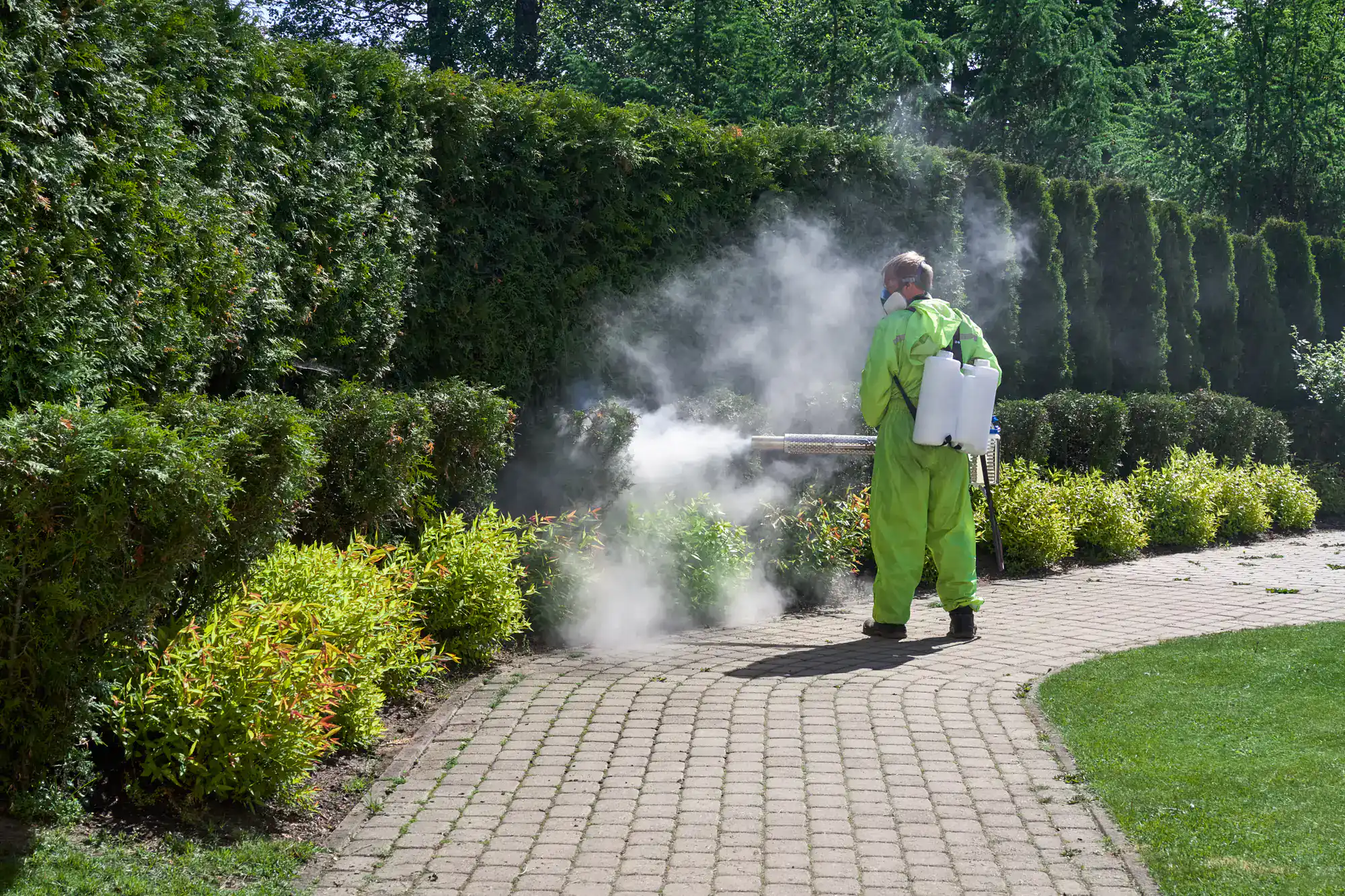
You stop doing the mental math every time your kids head to the backyard. You stop checking the dog after every walk along the wooded edge of your property. That shift from constant vigilance to actual peace of mind is what a properly executed seasonal tick program delivers. It’s not dramatic. It’s just your yard working the way it should.
Fort Salonga’s one- to two-acre lots are genuinely beautiful. They’re also genuinely high-risk. The wooded borders, the mature tree canopy, the deer moving through from Sunken Meadow State Park and Crab Meadow all of it creates the kind of environment where ticks don’t just visit, they thrive. Research consistently shows that 89% of ticks on residential properties live in wooded areas and the transition edges between lawn and tree line not out in the open grass. On a large North Shore lot like yours, that’s a lot of untreated territory if you’re only getting a perimeter spray.
We address the whole property the lawn edges, the wooded buffers, the ornamental beds where deer walk through at dusk. When that’s done right and maintained through the season, you’re not just reducing tick counts. You’re reclaiming the part of your property you paid for.
We’ve been serving Suffolk County since 1987, and Fort Salonga has been part of our service area from the beginning. That history matters when you’re hiring someone to apply pesticides on a property near protected wetlands like the Jerome A. Ambro Memorial Wetland Preserve or Crab Meadow’s salt marsh. Every technician who shows up is a licensed pesticide professional under the NYSDEC not a labor-only crew member handed a spray tank. That distinction is required by New York State law, and it’s one a lot of companies quietly sidestep.
What sets us apart from the tick-only sprayers working Fort Salonga is the integrated approach. Lawn health and pest control aren’t separate conversations here. A properly aerated, fertilized lawn with reduced thatch is physically less hospitable to fleas and ticks and that’s something only a company that manages both can deliver. Five fully wrapped professional trucks, a custom-blended fertilizer program, and owner-level accountability on every job. That’s our standard, not a pitch. Thin or patchy lawns also benefit from professional lawn seeding in Fort Salonga to fill in bare spots.
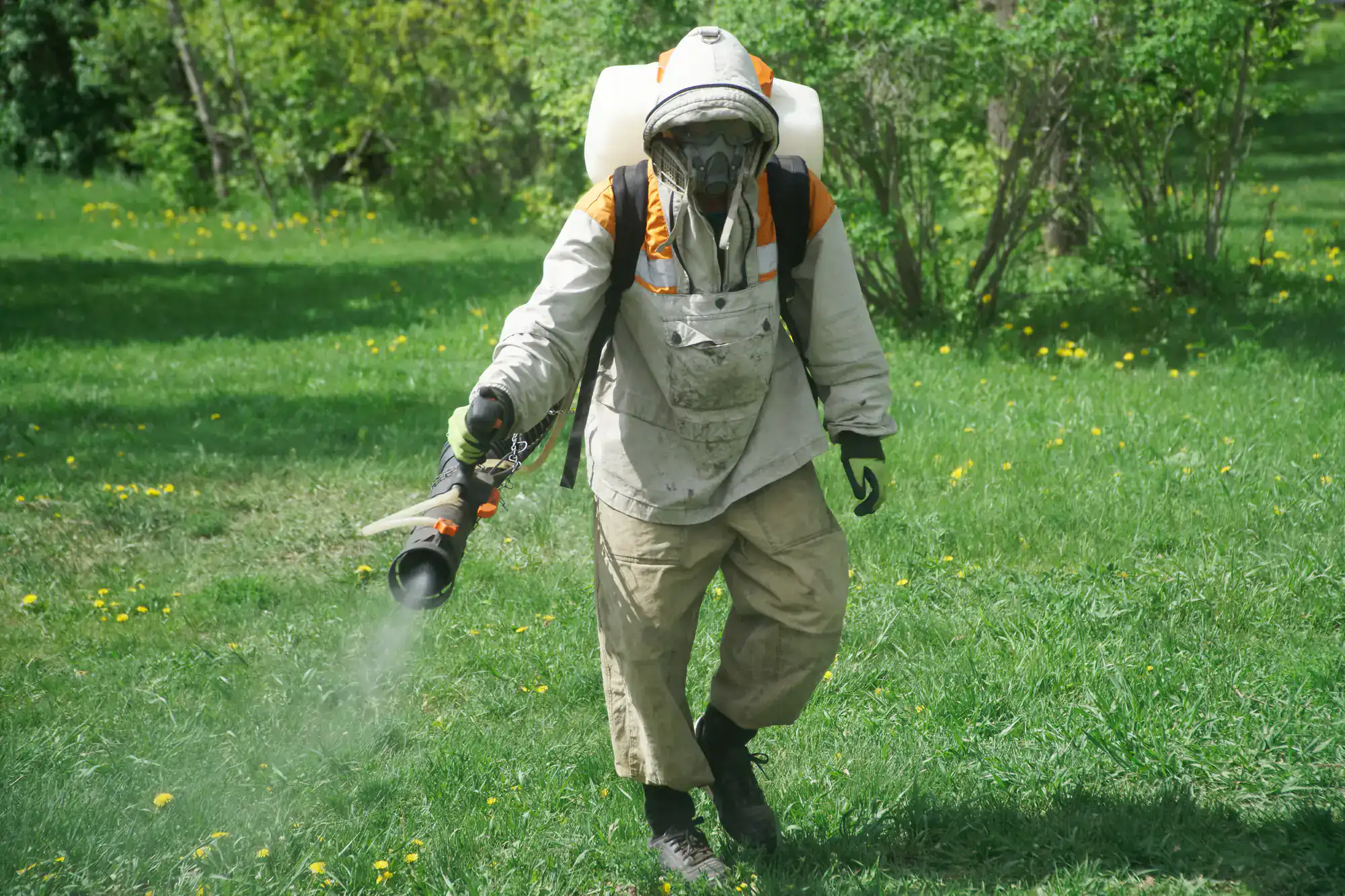
It starts with understanding your specific property. A one-acre wooded lot backing up to the tree line near Sunken Meadow Road is a different job than a more open lot closer to Fort Salonga Road and we build the program around what your yard actually needs, not a one-size-fits-all schedule pulled from a brochure.
The first treatment goes down in early spring, typically April, before nymphal ticks reach peak activity. That May–June nymph window is the highest-risk period for Lyme disease transmission on Long Island, and it’s when the smallest, hardest-to-detect ticks are most active. We continue applications through the season every three to four weeks during peak outdoor use targeting the wooded edges, ornamental beds, fence lines, and transition zones where ticks actually live. Products are applied by our licensed professionals using targeted methods, not broadcast spraying across your entire lawn. Re-entry is typically safe within 30 to 60 minutes of drying.
The season doesn’t end in August. Fort Salonga’s coastal humidity and mature canopy keep conditions favorable for ticks well into fall. Adult blacklegged ticks surge again in October and November, actively looking for hosts before winter. A fall treatment reduces the overwintering population and limits the tick pressure you’ll face the following spring which matters a lot when deer are still moving through your yard from Sunken Meadow every single week.

Ready to get started?
Most flea and tick control programs were designed for a quarter-acre suburban lot. Fort Salonga isn’t that. The properties here are larger, woodier, and more exposed to wildlife corridors than almost anywhere else in Suffolk County. Fort Salonga is one of a small number of North Shore communities where deer overpopulation has reached the level requiring organized, licensed bowhunting management which tells you something about the volume of deer traffic your property sees on a regular basis. Every deer that crosses your lawn potentially deposits ticks. Our program has to account for that.
We cover the full property not just the lawn perimeter. That includes the wooded buffer zones, the ornamental bed edges, the shaded areas under your mature tree canopy, and the transition zones between your lawn and the tree line. These are the areas where 89% of ticks actually live, and they’re what most single-application sprayers skip entirely. For properties near protected areas like Crab Meadow’s salt marsh or the Jerome A. Ambro Memorial Wetland Preserve, we apply products using NYSDEC-licensed professionals who understand the environmental buffer requirements specific to this area not a crew unfamiliar with Fort Salonga’s wetland boundaries.
The program is custom-tailored to your property’s layout, seasonal exposure, and the level of wildlife activity you’re dealing with. You’ll also get seasonal reminders so you never miss a treatment window, and online payment so the admin side of it stays simple.
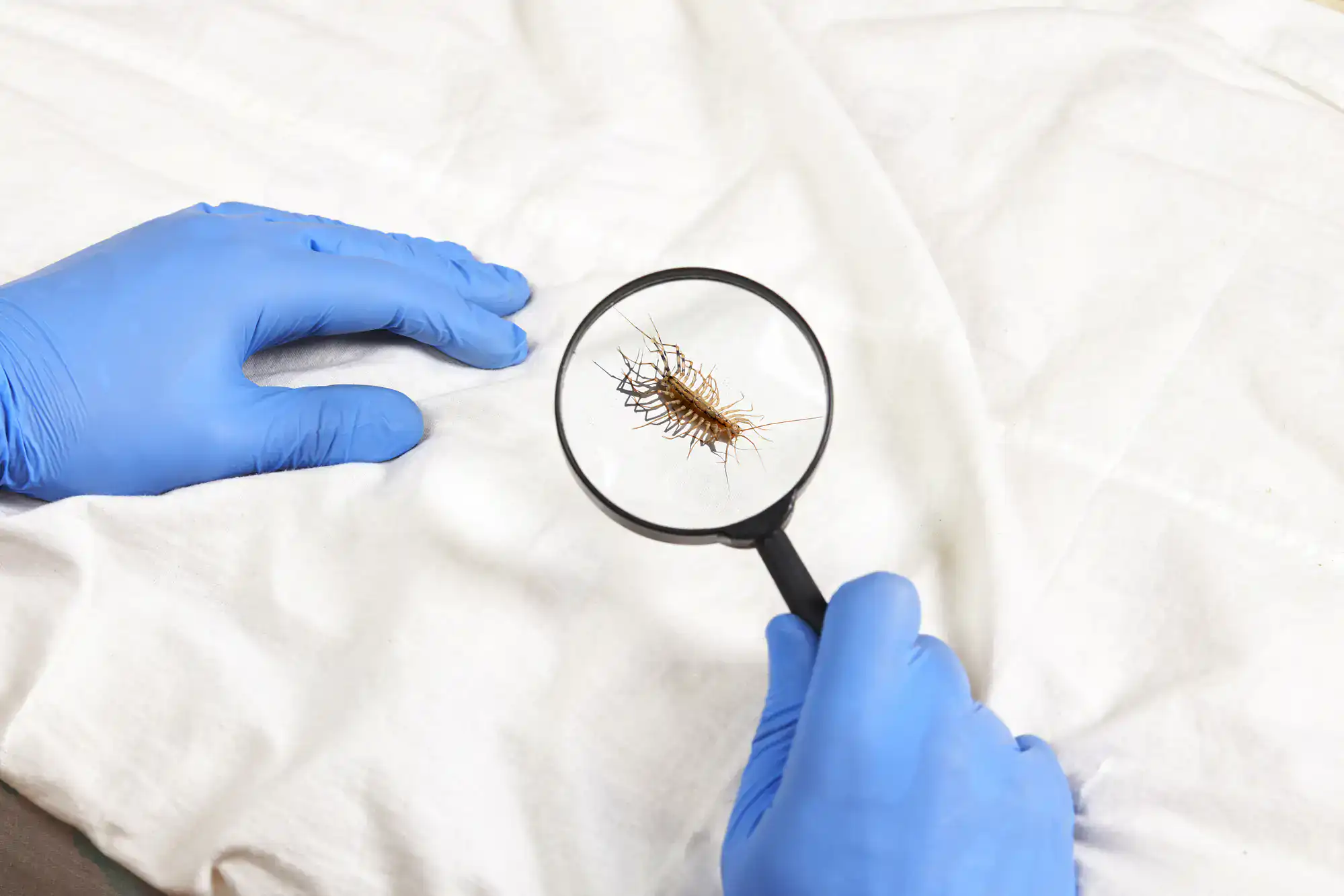
The short answer is April before nymphal ticks hit peak activity. On Long Island, the nymph season runs from roughly May through June, and that’s the highest-risk window for Lyme disease transmission. Nymphs are about the size of a poppy seed, which makes them nearly impossible to spot on skin or clothing. Getting a treatment down in early April creates a barrier before that window opens.
Fort Salonga’s coastal location and mature tree canopy mean the ground warms more slowly than inland Suffolk County communities, but the ambient humidity stays higher and ticks thrive in moist, shaded environments. That combination makes early-season treatment especially important here. Waiting until you see ticks on your dog or your kids means you’ve already missed the most critical part of the season. Starting in April and maintaining treatments through November gives you full-season coverage across all three active tick periods: spring nymphs, summer maintenance, and the fall adult surge.
Yes when it’s applied correctly by someone who knows what they’re doing. The key word there is “correctly.” Our NYSDEC-licensed technicians use targeted application methods, meaning products go where ticks actually live wooded edges, leaf litter zones, ornamental beds, fence lines not broadcast-sprayed across your entire property. That approach reduces overall product volume while concentrating it where it does the most good.
Re-entry is typically safe within 30 to 60 minutes of the application drying. You’ll know exactly what was applied, where it was applied, and when it’s appropriate to go back outside. For context: the risk of Lyme disease from an untreated tick bite is measurably greater than the risk of a professionally managed, targeted pesticide application. Suffolk County has some of the highest tick bite reporting rates in New York State, and Columbia University research has found that roughly 56% of Long Island ticks carry Lyme disease. Hiring a licensed professional to manage your treatment is the safer option.
Because ticks don’t live in your lawn they live at the edge of it. Research shows that 67% of blacklegged ticks on residential properties are found in wooded areas, and another 22% live in the unmaintained transition zone between your lawn and the tree line. Only about 2% are found on the open lawn itself, and most of those are within three yards of the perimeter. Mowing keeps your grass short, but it doesn’t touch the wooded buffer zones, the ornamental beds, or the shaded areas under your mature canopy which is exactly where the ticks are.
On a one- to two-acre Fort Salonga lot with significant wooded borders and deer moving through from Sunken Meadow State Park, there’s a lot of that transition zone. Deer are the primary host for adult blacklegged ticks, and every deer that crosses your property can deposit dozens of them. A mowed lawn is a good start, but it’s not a tick control program. Treating the full property including the wooded edges and transition zones is what actually moves the needle.
For a typical Fort Salonga property with wooded borders and regular deer activity, a seasonal program of four to six treatments gives you meaningful, sustained protection. A single spring application will knock down the tick population temporarily, but it won’t hold through the summer especially on a property that’s continuously being reseeded by deer moving through from Sunken Meadow State Park or Crab Meadow’s adjacent wetlands.
The general structure is an early spring kickoff in April, maintenance applications every three to four weeks through the peak outdoor season, and a fall treatment in September or October before adult ticks start overwintering in your leaf litter. Fort Salonga’s coastal humidity and mature canopy keep conditions favorable for ticks longer than inland communities which is why skipping the fall treatment is a mistake a lot of homeowners make once and don’t repeat. The fall application directly reduces how many ticks emerge the following spring, so it’s not just about this season.
You can but the results tend to be inconsistent, and the coverage is almost always incomplete. Store-bought products are typically designed for smaller, more open properties. On a large, wooded Fort Salonga lot with significant transition zones and active deer traffic, the application volume and coverage pattern required to treat the full property effectively goes beyond what a consumer-grade product and a garden sprayer can reliably deliver.
There’s also the knowledge gap. Knowing where to treat the wooded buffers, the shaded ornamental beds, the fence lines, the leaf litter zones near the tree line matters as much as what you’re spraying. Most DIY applications end up covering the open lawn and missing the 89% of tick habitat that sits at the edges. Beyond effectiveness, commercial pesticide application on a residential property in New York State requires a NYSDEC license. Hiring a licensed professional isn’t just about getting better results it’s the legally compliant way to have this work done.
Yes and the properties near Crab Meadow, Sunken Meadow State Park, and Fresh Pond are exactly the kind of lots we were built for. Large, wooded, coastal, with active deer corridors running through them. These aren’t properties where a quick perimeter spray is sufficient, and our licensed technicians know the difference.
For properties near protected areas like Crab Meadow’s salt marsh or the Jerome A. Ambro Memorial Wetland Preserve, there are New York State environmental buffer requirements that govern how and where pesticides can be applied. Our NYSDEC-licensed professionals are trained on those requirements and apply products accordingly which matters a great deal when your property sits near one of the few large undeveloped salt marshes left on the North Shore. If you’re on the Huntington side of Fort Salonga’s town line or the Smithtown side, the service area and the licensing requirements are the same. We cover your full property, handled by someone who actually knows this community.
Useful Links
Other Services we provide in Fort Salonga