
Hear from Our Customers
The goal isn’t just fewer ticks. It’s being able to let your kids run in the backyard without doing a full inspection after. It’s your dog rolling in the grass without you wondering what hitched a ride. That’s what a properly managed seasonal program actually delivers and it’s a reasonable expectation when you’re working with licensed professionals who know this area.
Port Jefferson Station’s housing stock tells the story. Most of these homes were built around 1969, which means mature trees, established landscaping, and wooded edges that have been developing tick habitat for decades. The transition zone where your lawn meets the tree line that 10 to 20 foot band of shade and leaf litter is exactly where deer ticks stage before moving into open grass. That’s the zone that needs to be treated first, treated right, and treated on a schedule that matches how ticks actually behave here on the North Shore.
Suffolk County has documented tick-borne disease as a genuine public health issue, not a distant concern. The county health department has held tick education sessions at the Comsewogue Public Library on Terryville Road specifically because local officials know this community is at elevated risk. Getting ahead of the problem with a consistent treatment program is what actually moves the needle not a one-time spray and a hope for the best.
We’ve been based in Port Jefferson Station since 1987. Our mailing address is PO Box 477, right here in 11776 the same ZIP code as many of the properties we service. That’s not a marketing line. It means the people doing this work are your neighbors, and we’ve been treating lawns in this community longer than most pest control companies have been in business.
Every technician on a Lawn Master job is a licensed pesticide professional certified through the New York State Department of Environmental Conservation. That’s a legal requirement in New York, and one that a surprising number of companies quietly sidestep by sending uncertified labor. You won’t run into that here.
What also sets us apart is the integrated approach. Flea and tick control isn’t a standalone add-on it’s part of a broader lawn health program that includes custom-blended fertilization, hydraulic aeration, and seeding. A well-maintained lawn is a less hospitable environment for pests. No standalone exterminator in Port Jefferson Station can say that.
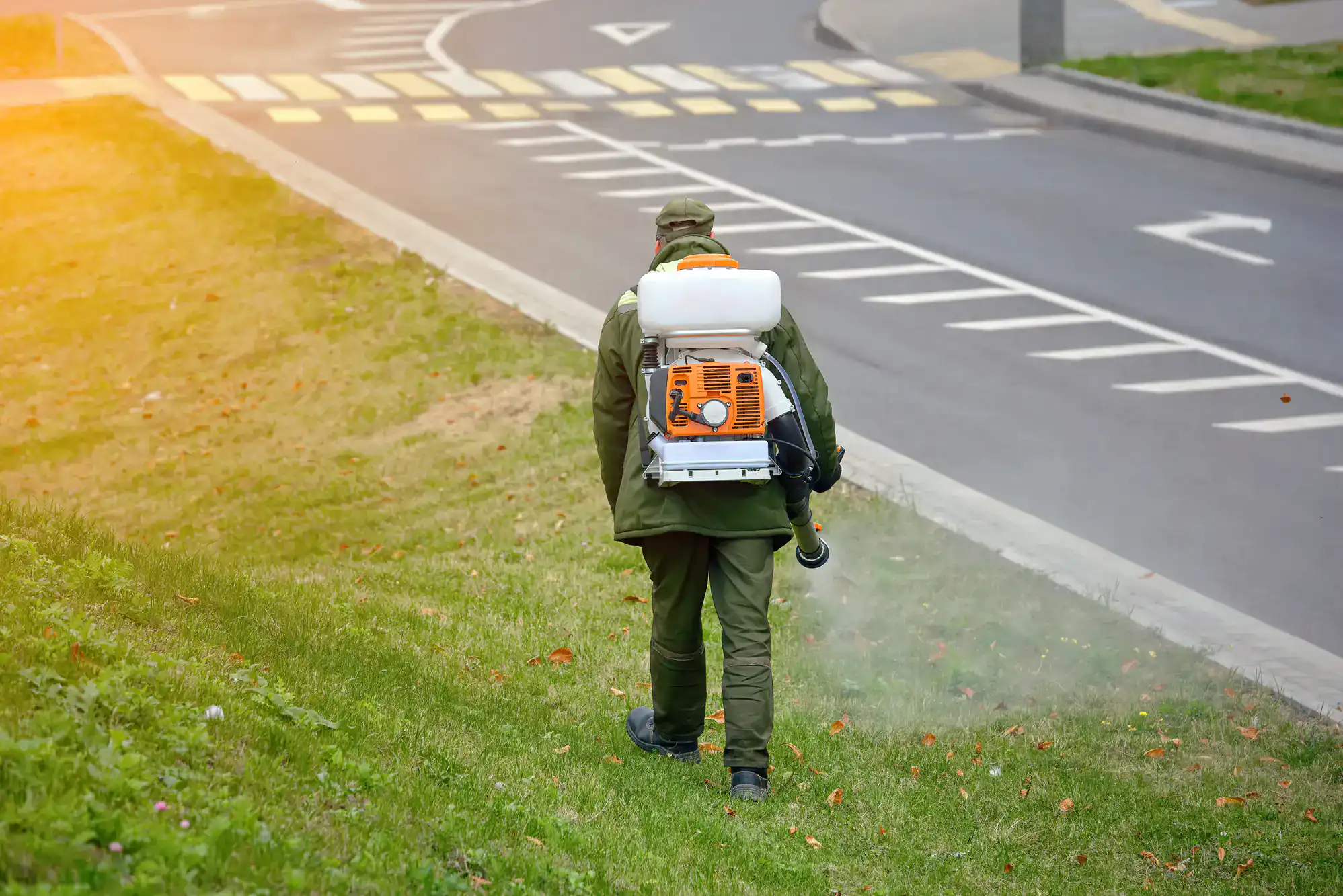
It starts with a property assessment. Every Port Jefferson Station yard is different a home backing up to the wooded corridors near Mount Sinai Road faces different tick pressure than an open lot closer to the Route 112 corridor. We look at your specific property: where the tree line sits, where deer are moving through, how much shade and leaf litter you’re dealing with, and where your pets and kids spend their time. That assessment shapes the program.
From there, treatments follow the tick calendar for Long Island’s North Shore. The first application goes down in early spring late March into April before nymphal tick populations peak. Those nymphs are the size of a poppy seed and nearly impossible to spot before they bite, which is why timing the first treatment correctly matters more than most homeowners realize. Follow-up applications run every three to four weeks through summer, targeting the overlapping activity windows of deer ticks, lone star ticks, and American dog ticks, all of which are active in 11776 from April through December.
The fall treatment in September is one that a lot of people skip and it’s one of the more important ones. Adult deer ticks surge again in the fall, and properties that stop treatment after Labor Day lose the protection they built all summer. Our program is structured to cover that window because the tick season here doesn’t end when the weather cools.

Ready to get started?
Port Jefferson Station yards aren’t generic suburban lots. They’re established properties with mature landscaping, wooded borders, and in many cases regular deer traffic that deposits tick eggs and larvae throughout the yard on a weekly basis. Our service is designed around that reality.
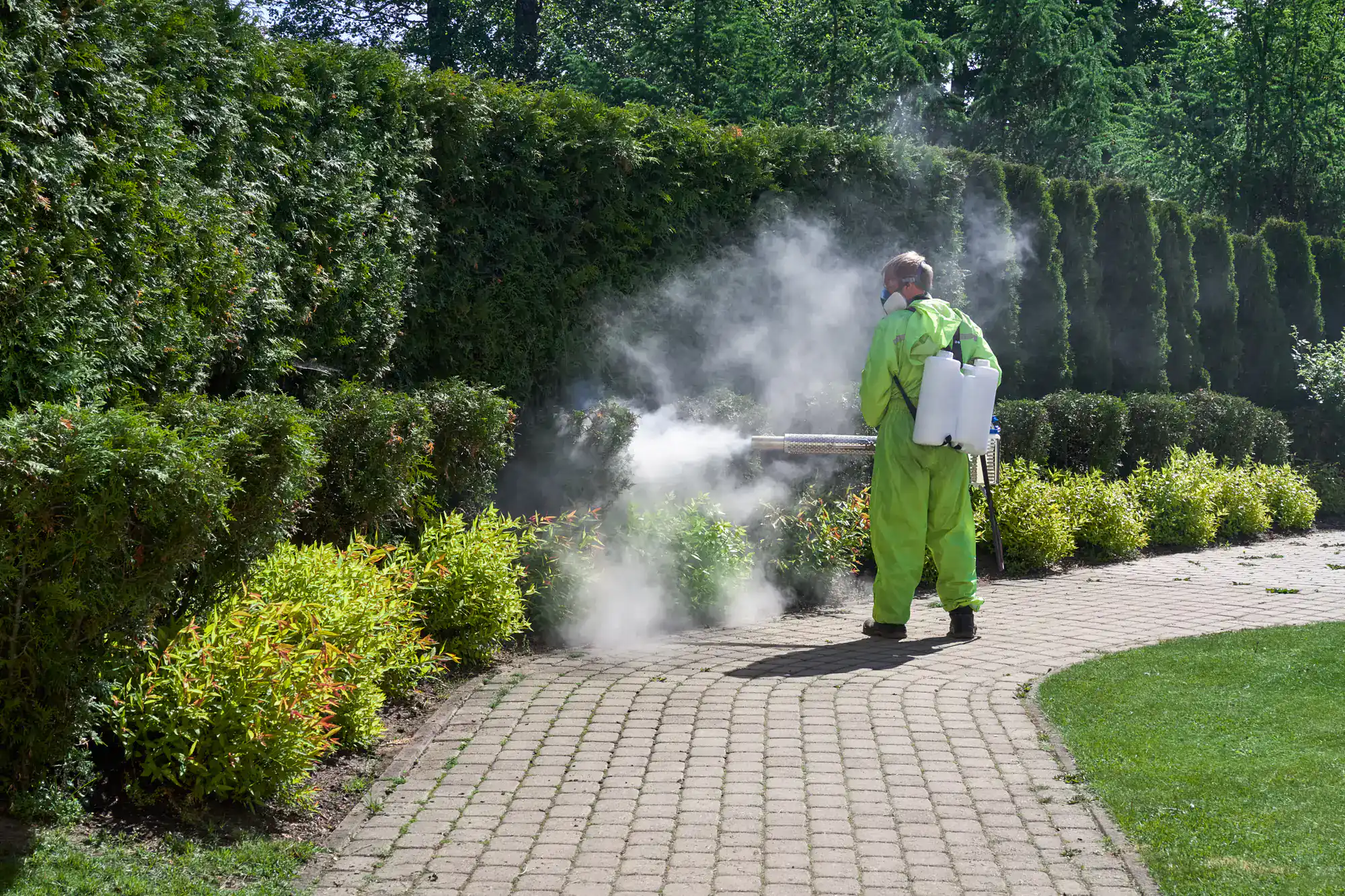
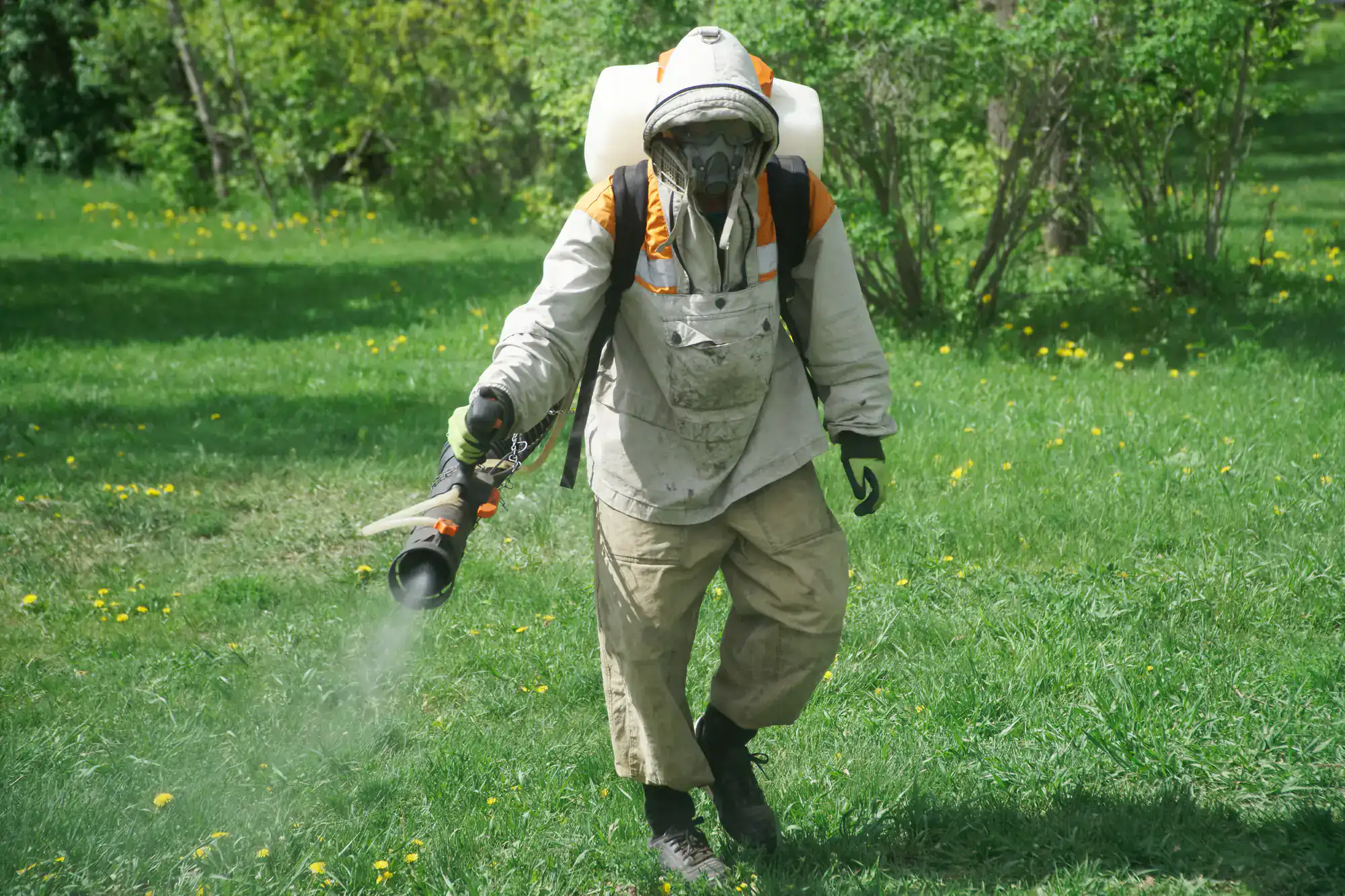
Treatments target the specific harborage zones where fleas and ticks actually live: the wooded perimeter, ornamental beds, fence lines, shaded areas under mature trees, and the lawn border. Broadcast spraying an open lawn without addressing those zones is one of the main reasons DIY products underperform. Our licensed applicators know where the pressure is coming from and apply accordingly using professional-grade products that aren’t available off the shelf.
The program covers all four tick species active in this area brown dog tick, American dog tick, deer tick, and lone star tick as well as common fleas, all of which are documented as active in ZIP code 11776 from April through December. Applications are timed to the seasonal activity windows of each species, not just a generic calendar. And because we also handle fertilization, aeration, and overall lawn health, the yard you’re protecting is actively being maintained to reduce the thatch, moisture, and overgrowth conditions that make tick habitat worse. That’s a layer of protection no standalone pest control company can offer.
For most properties in Port Jefferson Station, a well-structured program runs from late March through November, with applications every three to four weeks during peak activity months. That cadence covers the overlapping activity windows of the four tick species active in this area deer ticks, lone star ticks, American dog ticks, and brown dog ticks as well as flea populations that build through summer.
A single treatment provides roughly four to six weeks of residual protection under normal conditions. Given the deer pressure in this area and the wooded terrain that borders many Port Jefferson Station properties, spacing treatments further apart than that tends to leave gaps in coverage. The fall application in September is particularly easy to skip but genuinely important adult deer ticks resurge in the fall, and that window gets missed more often than any other.
The short answer is yes when applied correctly by a licensed professional, the products we use in a professional tick program are safe for children and pets once they’ve dried, which typically takes 30 to 60 minutes depending on conditions. Our technicians are NYSDEC-certified, which means they’re trained not just in what to apply but in how much, where, and under what conditions the details that separate a responsible application from a careless one.
It’s worth putting the risk in perspective. In Suffolk County, studies have found that more than half of local deer ticks may carry Lyme disease. Babesia microti the pathogen behind babesiosis has been found in roughly 17% of nymphal ticks here, more than twice the rate in neighboring Connecticut. The documented disease risk from an untreated yard in Port Jefferson Station is meaningfully higher than the risk from a professionally managed, targeted application.
Consumer-grade tick sprays work for a few weeks, in the areas you can reach, applied at the right time. The problem is that most of the tick pressure in a Port Jefferson Station yard isn’t coming from the open lawn. It’s coming from the wooded edges, the ornamental beds, the shaded areas under mature trees, and the leaf litter along the fence line. Those are the zones where ticks stage and wait. If you’re spraying the grass and skipping those areas, you’re treating around the problem rather than at it.
There’s also a timing issue. The nymphal deer ticks that cause the most Lyme disease cases are active in May and June and are roughly the size of a poppy seed nearly impossible to spot. Missing the early-season treatment window means you’re already behind when the highest-risk period hits. Professional programs are structured around the actual tick calendar for Long Island’s North Shore, not just a general label direction. The combination of professional-grade products, proper application zones, and correct seasonal timing is what produces results that hold up.
The first treatment should go down in late March to early April before nymphal deer ticks emerge in force. On Long Island’s North Shore, the coastal proximity of Port Jefferson Station creates a moderately mild microclimate that can bring overwintered adult ticks out of dormancy earlier than people expect. Waiting until you start seeing ticks means the highest-risk nymphal population is already active and nearly invisible.
May and June are the peak risk months for Lyme disease transmission in this area, driven by nymphal tick activity. Getting the first treatment in before that window and having the second application timed to overlap with it is the structure that actually reduces exposure. If you’re starting for the first time and it’s already summer, it’s still worth starting. You’ll cover the remaining peak season and get the fall application in, which protects against the adult deer tick surge in September and October that most homeowners miss entirely.
Yes and the reason comes down to deer. Deer are documented as a persistent and serious presence in Port Jefferson Station neighborhoods, not just in properties adjacent to preserved land. Deer move through residential streets, backyards, and along fence lines regularly, depositing tick eggs and larvae as they go. You don’t need a wooded border to have a tick problem when deer are using your yard as a corridor.
Beyond deer, white-footed mice and other small mammals which serve as the primary reservoir hosts for Lyme disease bacteria are common throughout the area and don’t require woodland to establish. Ticks at the larval and nymphal stage are tiny enough to arrive on birds, squirrels, and other wildlife that visit any residential yard. The wooded transition zone does create the highest-pressure environment, but open residential properties in Port Jefferson Station are not low-risk by comparison. A perimeter treatment program addresses the harborage zones and entry points regardless of whether you have a tree line behind your fence.
A standalone exterminator focuses on eliminating the pest that’s present. That’s useful, but it doesn’t address the conditions that make your yard hospitable to ticks in the first place. Overgrown thatch, poor drainage, dense shade from unmaintained turf, and excessive moisture at the soil level all create the microenvironments where ticks and fleas thrive. Treating without addressing those conditions means you’re managing a recurring problem rather than reducing it.
We handle both the pest and the habitat at the same time. A properly aerated, well-fertilized lawn with healthy turf density dries faster, has less thatch buildup, and is genuinely less hospitable to tick populations than a neglected one. For Port Jefferson Station homeowners with established properties and mature landscaping, that integrated approach produces better long-term results than pest control alone. It also means one point of contact instead of coordinating between a lawn service and a separate exterminator which, for a busy household, is a practical advantage that adds up over a season.
Useful Links
Other Services we provide in Port Jefferson Station