
Hear from Our Customers
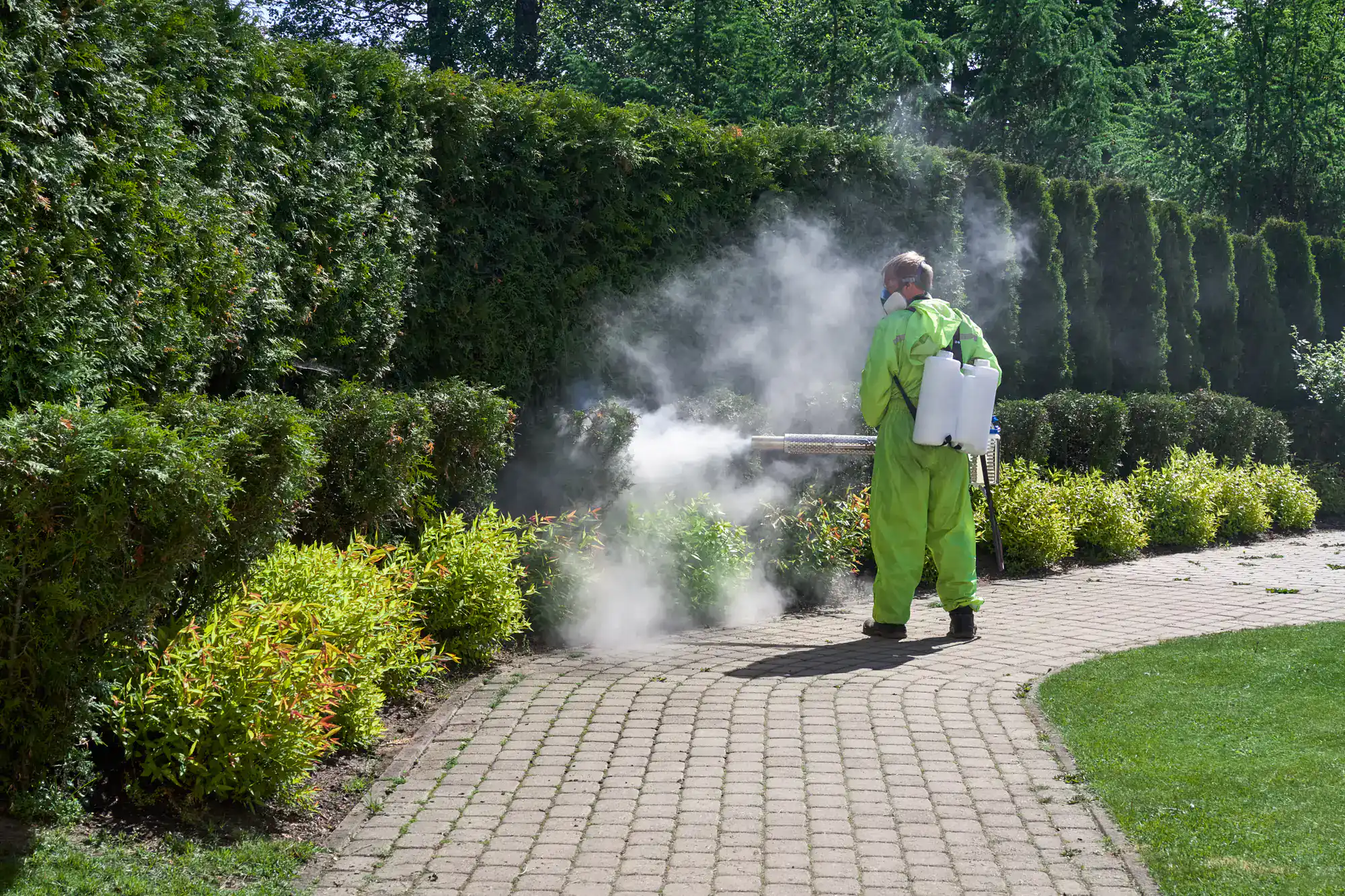
If you live near Avalon Nature Preserve, West Meadow, or anywhere along the wooded corridors that run through Stony Brook, you already know the reality. Deer move through your property. Wildlife cuts across your lawn. And with them come ticks specifically deer ticks, the primary carrier of Lyme disease, which Suffolk County sees confirmed in the hundreds every year. The North Shore isn’t a low-risk area. It’s one of the highest-density deer tick habitats on Long Island, and Stony Brook sits right in the middle of it.
What a proper seasonal program actually gives you is the ability to use your yard again. The kids can play on the grass. Your dog can run without you mentally tracking every inch of fur afterward. You can sit outside without wondering whether something the size of a poppy seed just hitched a ride. That’s the entire reason you have a yard.
The difference between a one-time spray and a structured seasonal program is significant here. A single treatment holds for four to six weeks at best. Tick activity in Stony Brook runs from early spring through late fall, with two documented peaks nymphal ticks in April through June, and adult ticks coming back in September through November. Covering only one of those windows leaves you exposed for the other. A program built around Long Island’s actual tick calendar is the only approach that makes sense for a property like yours.
We’ve been treating Suffolk County properties since 1987. That’s not a number thrown in to sound impressive it means we were protecting North Shore lawns before most of the pest control companies showing up in your search results today even existed. Based out of Port Jefferson Station, just a few miles east of Stony Brook Village along Route 25A, we’re not routing crews in from Nassau County or managing Long Island from a regional office somewhere else. We’re local, and we’ve been local for a long time.
Every treatment we perform is done by a licensed pesticide professional someone who has passed the New York State DEC Commercial Pesticide Applicator exam and holds an active certification. That matters in a community where credentials aren’t an afterthought. It also means you’re not getting an unlicensed laborer sent to spray your yard with whatever’s in the truck that day.
We also bring something that standalone pest control companies can’t: integrated lawn care expertise. Thick thatch, poor drainage, overgrown border vegetation these are the same conditions that create flea and tick habitat. When your lawn is healthy, it’s measurably less hospitable to pests. That’s the difference between treating the symptom and addressing what’s actually driving the problem.
It starts with a property assessment. Before anything gets applied, one of our licensed professionals looks at your specific lot the size, the wooded borders, how close you are to preserved land like Avalon, where your pets spend time, and where the shaded or damp areas are that ticks gravitate toward. A flat, open lot in a more inland community gets a different approach than a wooded Stony Brook property backing up to a nature corridor. Your program is built around what your yard actually looks like, not a standard template.
From there, treatments are scheduled to align with Long Island’s tick activity calendar. The spring application goes in early typically April to get ahead of the nymphal tick population before it peaks. Nymphal ticks are roughly the size of a poppy seed, which means by the time you notice one, it may have already been feeding. Getting the treatment down before that peak is the whole point. Follow-up applications run through the season, with fall coverage timed to address the adult tick resurgence that hits between September and November.
New York State’s Neighbor Notification Law requires commercial pesticide applicators to notify neighbors before certain outdoor applications. Our licensed professionals handle that it’s part of operating legally and transparently, and it’s one more reason that hiring a certified applicator matters. After each treatment, re-entry is typically safe once the application has dried, usually within 30 to 60 minutes. You’ll know exactly what was applied, when, and what to expect next.
Ready to get started?
Stony Brook’s tick environment isn’t the same as a more open, inland community. You’ve got 216 acres of permanently protected habitat at Avalon Nature Preserve sitting within the hamlet itself, West Meadow wetlands feeding wildlife movement along the Sound shore, and the harbor corridor running through the historic village center. That combination of preserved land, active deer populations, and dense woodland transition zones means the tick pressure here is continuous not seasonal in the way people sometimes assume.
Our flea and tick control services address both problems in one program. Flea pressure in Stony Brook is driven largely by the same wildlife moving through your yard raccoons, foxes, and deer that carry fleas onto your property and into the grass where your pets spend time. Once fleas establish indoors, the problem compounds quickly. Treating the yard through the active season is what keeps that cycle from starting.
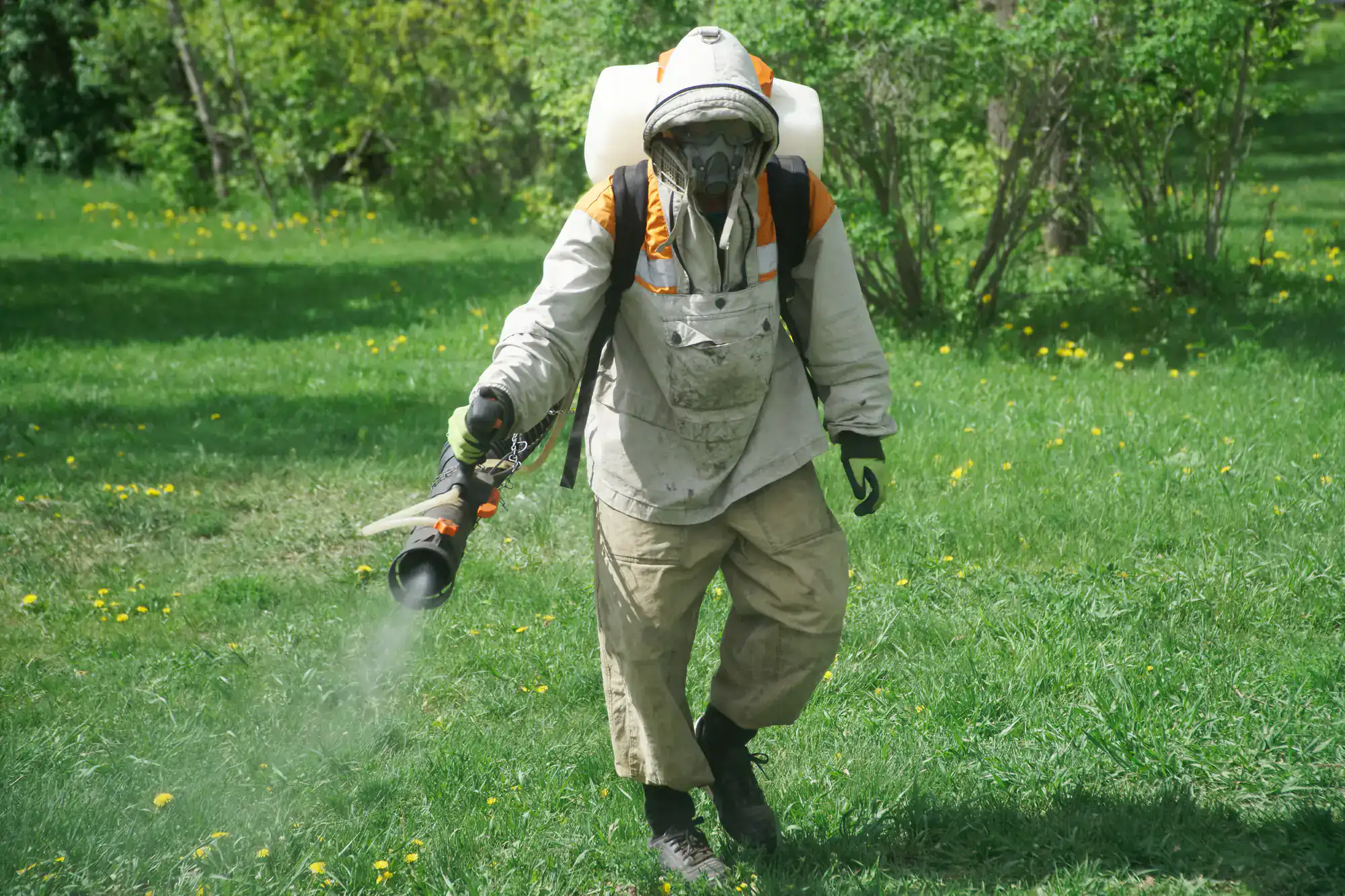
The program runs April through October, with applications timed to the two documented tick activity peaks on Long Island. Treatments target the areas where ticks actually concentrate the 20 to 30-yard transition zone between your lawn and any wooded or brushy border, shaded areas, and ground-level vegetation. We use commercial-grade application equipment that delivers consistent coverage across those harborage zones, which is meaningfully different from what a consumer sprayer can achieve. If your property also has broader lawn care needs, that work can be folded into the same service relationship because a healthier lawn is a less hospitable one.
Yes and it’s not close. Suffolk County consistently ranks among the top three counties in New York State for confirmed Lyme disease cases, with the CDC documenting approximately 600 to 700 confirmed cases per year. Physicians who treat tick-borne illness note that actual infection numbers are likely substantially higher due to underreporting and misdiagnosis. Stony Brook specifically sits within the Town of Brookhaven, which public health researchers have identified as one of the hot spots for tick-borne disease on Long Island.
The North Shore moraine the glacially deposited woodland ridge that runs along Long Island’s north coast is prime deer tick habitat. Stony Brook sits directly on it. Add Avalon Nature Preserve’s 216 permanently protected acres, the West Meadow wetlands, and the harbor corridor, and you have a hamlet with more wildlife corridors and preserved tick habitat than almost any other community in this part of Suffolk County. Stony Brook Medicine’s own research teams study tick-borne disease that’s not a coincidence. It reflects how directly relevant the issue is to this specific community.
A single treatment provides roughly four to six weeks of protection under normal conditions less if you get significant rainfall shortly after application. On Long Island, tick activity runs from early spring through late fall, which means a one-time spray leaves most of the season uncovered. The standard seasonal program runs April through October, with applications timed to the two documented activity peaks: nymphal ticks in spring and adult ticks in the fall.
For properties in Stony Brook, the case for a full seasonal program is especially clear. You’re not dealing with a contained, isolated tick source. Wildlife moving through from Avalon Preserve, West Meadow, and the harbor corridor continuously re-introduces ticks onto residential properties throughout the season. That means the question isn’t whether you need more than one treatment it’s whether your program is timed correctly to stay ahead of each activity peak. Spacing treatments appropriately through the season is what keeps the barrier intact rather than letting it lapse between applications.
Once the application has dried typically within 30 to 60 minutes under normal conditions the treated area is generally safe for children and pets to re-enter. Your technician will give you a specific re-entry window based on what was applied and the conditions at the time of treatment. If it’s a cool, humid day, drying may take a bit longer. If it’s warm and dry, it moves faster.
The more important point is that the products we use are selected and applied at rates that are both effective and appropriate for residential use. This is one of the clearest reasons why licensing matters: a NYSDEC-certified applicator has been trained on product selection, application rates, and safety protocols. That training doesn’t exist for unlicensed crews. If you have specific concerns about a particular product especially if a family member has sensitivities or allergies ask before the treatment. A licensed professional should be able to answer that question specifically, not just tell you it’s fine.
It does, and it’s one of the most important factors in how a treatment program gets structured for your property. Ticks don’t distribute evenly across a lawn they concentrate in the transition zones between maintained grass and wooded or brushy borders. That 20 to 30-yard band where your lawn meets the tree line, the shrub border, or any unmaintained edge is where the vast majority of tick encounters happen. For properties adjacent to or near Avalon Preserve, that transition zone is where the program needs to be most precise.
A perimeter-only spray isn’t sufficient for a property with direct exposure to preserved woodland habitat. The treatment needs to reach into the harborage zones the shaded areas, the leaf litter accumulation, the low-growing vegetation along the border where ticks wait for a passing host. Our property assessment process accounts for exactly this. The proximity to Avalon isn’t treated as a generic “wooded lot” situation it’s a specific condition that affects where product gets applied, how heavily, and how frequently. If your lot borders preserved land, that context shapes the entire program.
The honest answer is that over-the-counter tick products can provide some level of knockdown, but they rarely deliver the same depth of coverage, residual protection, or harborage-zone penetration that commercial-grade application equipment achieves. Consumer sprayers apply product at lower volumes and pressure, which affects how well it reaches the areas where ticks actually hide under leaf litter, in dense ground cover, along shaded edges. The difference in coverage is real and it shows up in how long the protection holds.
Beyond equipment, there’s the licensing question. New York State requires a NYSDEC Commercial Pesticide Applicator certification for any business applying pesticides commercially and that certification exists because improper application is both ineffective and potentially unsafe. A licensed applicator has passed state exams, completed required training, and understands product selection, application rates, and legal notification requirements like New York’s Neighbor Notification Law. If something goes wrong with an unlicensed application on your property, you have limited recourse. With a licensed professional, there’s accountability built into the credential itself.
Flea and tick control are handled together as part of the same yard treatment program and in Stony Brook, that combination makes practical sense. The wildlife that drives tick pressure here deer, raccoons, foxes, and other animals moving through from Avalon Preserve and the West Meadow corridor is the same wildlife that introduces fleas onto residential properties. Treating for one without the other leaves a gap, especially for households with dogs or cats that spend time in the yard.
Fleas are also harder to eliminate once they’ve moved indoors, which is why the outdoor treatment matters so much as a preventive measure. A single flea-carrying animal moving through your yard can seed an infestation that takes weeks to resolve inside the house. Keeping the yard treated through the active season April through October is what breaks that cycle before it starts. If you’re already dealing with an indoor flea problem, the yard treatment is still a necessary part of the solution, because re-introduction from outside will undermine any indoor treatment you do without addressing the source.
Useful Links
Other Services we provide in Stony Brook