
Hear from Our Customers
The lawns we see most often in Centereach aren’t failing because homeowners aren’t trying. They’re failing because the actual cause grub damage, acidic soil, compaction, nutrient depletion never got addressed. Watering a lawn that’s been destroyed by Japanese beetle grubs doesn’t help. Fertilizing soil with a pH below 6.0 doesn’t either, because the nutrients become chemically unavailable to the grass no matter how much you apply. When you fix the right thing, the lawn responds.
Centereach sits on sandy, fast-draining glacial outwash soil the kind that sheds moisture and nutrients quickly during the dry stretches of July and August. That soil profile is part of why lawns here thin out faster than people expect, and why bare patches spread even after a decent amount of rain. Once you understand that, the restoration plan looks very different from what a generic lawn service would sell you.
There’s also a layer of responsibility that comes with lawn care in an unsewered community. Every property in Centereach relies on a septic system or cesspool. The fertilizers and soil amendments we apply to your lawn are working in close proximity to your own wastewater infrastructure and the community’s groundwater. Getting the soil correction right calibrated applications, slow-release formulations, nothing excessive matters here more than it does in a sewered town. When your lawn is restored correctly, you end up with dense, healthy turf that holds up through summer, fills in bare patches that have plagued you for years, and doesn’t require constant intervention to stay that way.
We’ve been restoring lawns across Suffolk County since 1986. That’s not a marketing number it’s the length of time we’ve been showing up in communities like Centereach, Selden, Lake Grove, and Farmingville, diagnosing the same soil challenges, correcting the same pH problems, and rebuilding the same kind of turf that central Suffolk County’s sandy ground makes difficult to maintain.
We’re NYS-licensed for pesticide application and turf management, which means every program we run complies with Suffolk County’s fertilizer regulations and the state’s phosphorus restrictions. In a community like Centereach where there’s no municipal sewer system and groundwater protection is both a legal requirement and a real concern that licensure isn’t just a credential. It’s the difference between doing this right and doing it recklessly.
When you call us, you’re not getting a call center or a franchise operator reading from a script. You’re getting a team that has worked on lawns within sight of Percy B. Raynor Memorial Park, along the side streets off Middle Country Road, and throughout the neighborhoods that make up Centereach. We know this area. That matters when we’re standing in your yard trying to figure out what went wrong.
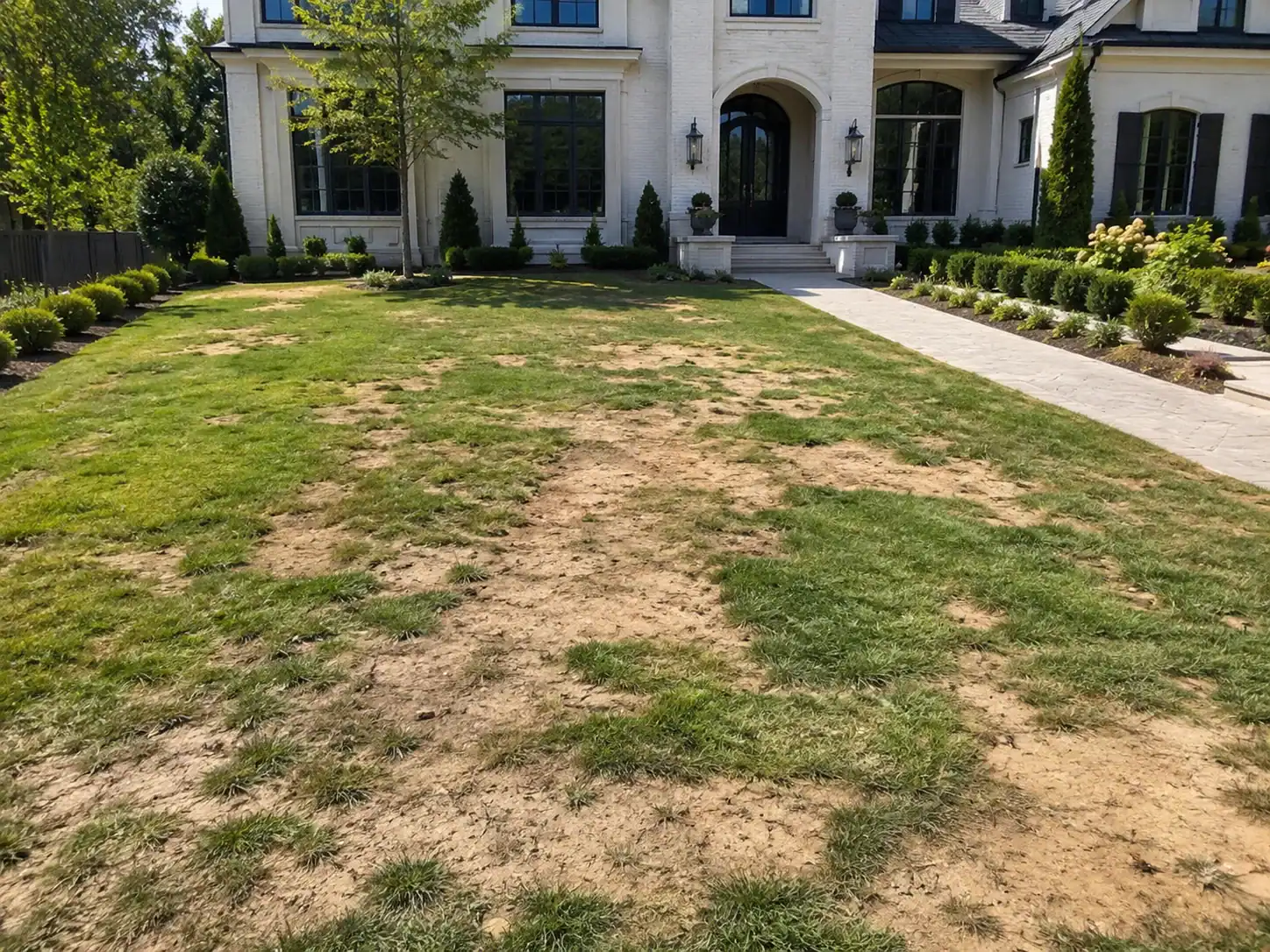
It starts with a property assessment not a sales visit, an actual evaluation. We look at the condition of your turf, the extent and pattern of the damage, and the likely causes. Is it grub activity? pH imbalance? Compaction? Summer drought stress on soil that doesn’t hold moisture well? The cause determines the plan, and we don’t skip this step.
From there, soil testing tells us what your ground is actually doing pH levels, nutrient availability, organic matter content. For Centereach lawns, we frequently find acidic conditions that have been quietly undermining every fertilizer application a homeowner has made. A lime program corrects that imbalance and makes the soil receptive to everything that follows. If grub damage is part of the picture, that gets addressed before any seeding work begins otherwise you’re just replanting into an active problem.
The restoration itself typically involves a combination of core aeration, slice seeding, and targeted fertilization using slow-release, environmentally appropriate formulations that comply with Suffolk County Local Law 41-2007. Slice seeding is critical on Long Island’s sandy soils it cuts directly into the ground and places seed at the right depth for germination, rather than broadcasting it across a surface that dries out before the seed can establish. Timing matters too. The optimal window for seeding in this climate zone is September through mid-October, when soil temperatures support germination and weed competition drops off. If you’re in that window, don’t wait.
Ready to get started?
Lawn restoration means bringing your existing lawn back to health preserving the turf structure you have, correcting the conditions that caused it to fail, and rebuilding density in the areas that have thinned or gone bare. It is not a teardown. If your lawn has recoverable turf, restoration is the right path, and it’s significantly less disruptive and less expensive than a full rebuild.
Lawn renovation is a different service entirely. It involves removing existing turf and starting over whether through full reseeding from bare ground, sod installation, or regrading. If your lawn has deteriorated past the point of recovery, renovation may be the right answer. We’ll tell you honestly which one your property needs after we’ve seen it. If it’s renovation you need, we offer that too you can learn more on our lawn renovation page.
What’s included in a restoration program depends entirely on what your lawn needs. For most Centereach properties, that means some combination of soil testing, pH correction with lime, core aeration, slice seeding with appropriate grass varieties for Long Island’s climate, and a fertilization program built around Suffolk County’s nitrogen and phosphorus regulations. We don’t apply a standard package to every lawn the sandy, fast-draining soils common in central Suffolk County behave differently from property to property, and the program needs to reflect that. What you get is a restoration plan built around your specific lawn’s condition, your soil’s actual chemistry, and the environmental requirements of an unsewered community.
Most lawns we assess in Centereach are restorable even ones that look pretty far gone. The key question is whether there’s still enough viable turf present to work with, and whether the underlying conditions can be corrected. A lawn that’s 40–50% bare but has healthy turf in the remaining areas is typically a strong candidate for restoration. Bare patches from grub damage, drought stress, or soil compaction can be rebuilt through slice seeding once the cause is addressed.
The lawns that genuinely need renovation rather than restoration are the ones where the turf is essentially gone across most of the property, or where there’s a structural problem severe grading issues, drainage failure, or invasive weed species that have taken over completely. We’ll give you a straight answer after we’ve walked the property. If restoration can do the job, that’s what we’ll recommend. If it can’t, we’ll tell you that too, and we offer renovation services for properties that are past the point of recovery.
Restoration works with what you have. It’s the process of diagnosing why your existing lawn is failing, correcting the underlying conditions soil pH, compaction, grub damage, nutrient depletion and then rebuilding turf density through targeted techniques like slice seeding, aeration, and topdressing. The existing lawn structure stays intact. You’re rehabilitating it, not replacing it.
Renovation is a rebuild. It means removing what’s there and starting fresh full reseeding from bare ground, sod installation, or regrading. Renovation is the right answer when a lawn has deteriorated beyond what restoration can fix, but it’s more expensive, more disruptive, and involves a longer establishment period. For most homeowners in Centereach who are dealing with thinning turf, bare patches, or grub damage, restoration is the more practical and cost-effective path. The right call depends on the condition of your specific lawn, which is why the assessment comes first.
This is one of the most common frustrations we hear from homeowners in central Suffolk County, and the answer almost always comes back to soil chemistry. The sandy, glacial outwash soils that underlie most of Centereach drain quickly they shed moisture and nutrients faster than heavier soils, which means your fertilizer is often leaching below the root zone before the grass can absorb it. You’re spending money on product that isn’t reaching the plant.
The second issue is pH. When soil acidity drops below 6.0 which happens frequently in this area nutrients become chemically locked in the soil regardless of how much fertilizer you apply. The grass can’t access what it needs, so it thins, stresses, and browns out under summer heat. A soil test will tell you exactly where your pH stands, and a targeted lime application corrects it. Once the soil chemistry is right, the same fertilizer you’ve been applying actually starts working. That’s often the turning point for lawns that have been struggling for years.
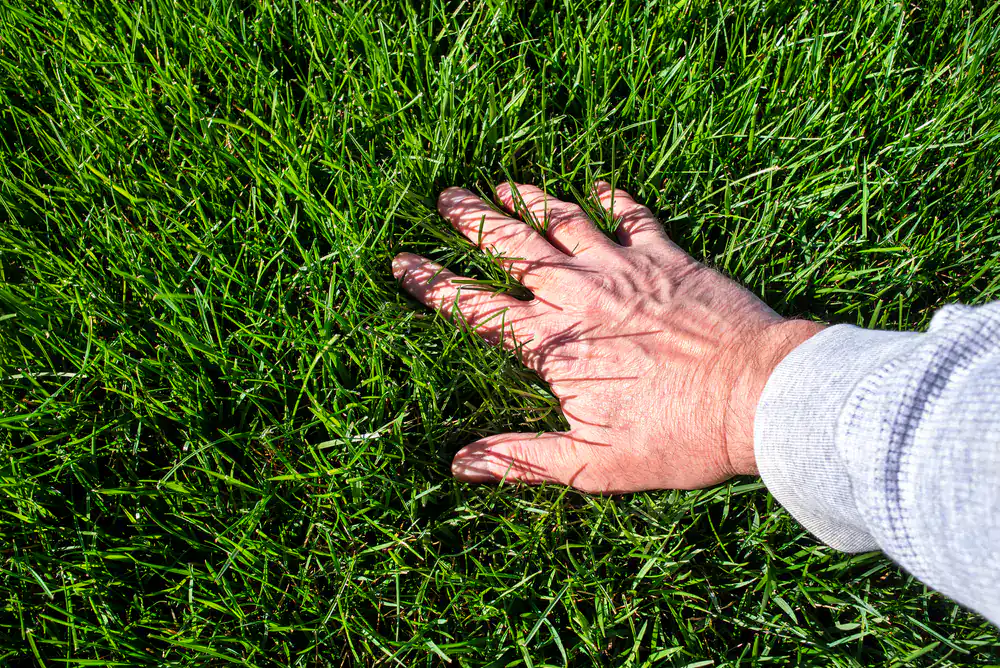
The visual symptoms look almost identical, which is why so many homeowners in this area keep watering dead patches that never recover. Here’s the diagnostic test: grab a handful of turf in the brown area and pull. If it lifts away from the soil like a loose carpet roots severed, no resistance you have grub damage. If it holds firm and the roots are intact, you’re more likely looking at drought stress or a fungal issue.
Japanese beetle grub damage is endemic on Long Island, and Centereach is no exception. Grubs feed on grass roots below the surface through late summer, and the resulting brown patches typically appear in August through October. The critical mistake is applying water or fertilizer to grub-damaged turf without treating the grubs first you’re just wasting inputs on a root system that’s already been destroyed. A proper restoration plan addresses the grub infestation, allows the soil to stabilize, and then rebuilds the turf through targeted slice seeding and aeration once the underlying problem is resolved.
Fall is the optimal window specifically September through mid-October. Soil temperatures in Centereach and the broader central Suffolk County area are still warm enough to support seed germination during this period, air temperatures have dropped enough to reduce heat stress on new seedlings, and weed competition falls off significantly compared to spring. Grass seed established in fall has the entire cool season to develop a strong root system before it faces its first summer.
Spring seeding is possible, but it comes with trade-offs. You’re racing against rising temperatures and weed pressure crabgrass and other opportunistic weeds germinate aggressively in spring and will compete directly with new grass seed. If you missed the fall window, early spring (late March through April) is your next best option, but the timeline for establishment is tighter. Summer seeding on Long Island’s sandy soils is generally not recommended the combination of heat, fast soil drainage, and high evaporation rates makes it difficult to keep newly seeded areas moist enough for consistent germination without intensive irrigation.
No permits are required for standard lawn restoration work aeration, slice seeding, topdressing, and soil amendment on private residential property in Centereach. However, there are real regulatory requirements that govern how fertilizers and pesticides can be applied, and they matter more here than in many other communities.
Suffolk County Local Law 41-2007 restricts nitrogen-based fertilizer use to reduce groundwater contamination, with specific limits on timing, application rates, and product types. New York State’s Nutrient Runoff Law separately prohibits the use of phosphorus-containing fertilizers on established lawns. Because Centereach has no municipal sewer system every property relies on its own septic or cesspool these regulations exist for good reason. Nitrogen and phosphorus applied carelessly don’t just damage your lawn’s long-term health; they contribute to groundwater contamination that affects the entire community’s water supply. Any pesticide application also requires a NYS DEC license. We hold that license and build every restoration program around full compliance with county and state requirements which is one of the practical reasons working with a licensed operator in an unsewered community like Centereach isn’t optional, it’s the responsible choice.
Useful Links
Other Services we provide in Centereach