
Hear from Our Customers
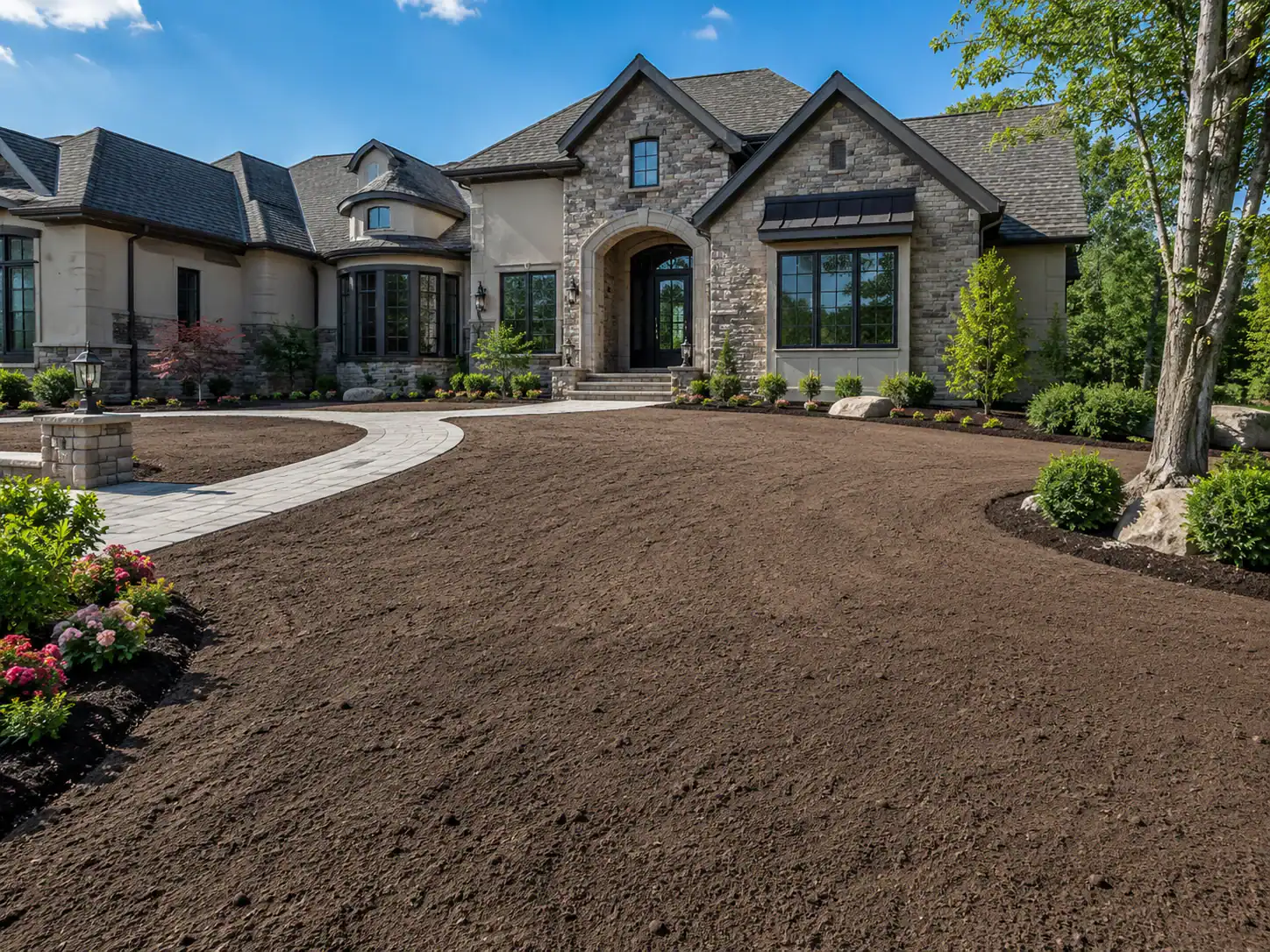
Fort Salonga is one of the few places left in western Suffolk County where a one-to-two-acre lot with mature trees and real privacy is just the standard. That’s what people pay for here. But those same wooded lots the oaks, the maples, the deep canopy that makes this hamlet feel like a different world from Commack or Hauppauge are also some of the most punishing environments for cool-season turf. Shade stress, compacted glacial clay, and coastal humidity from the Sound don’t give your lawn much room for error.
Lawn restoration brings your existing turf back to health without tearing everything out and starting over. When it’s done right, you end up with dense, even grass that holds through the seasons not a temporary fix that fades by the following summer. For a property in Fort Salonga, where home values run well above the Suffolk County average and curb appeal is tied directly to that investment, a properly restored lawn isn’t a cosmetic upgrade. It’s protecting what you’ve built.
The difference between a lawn that comes back and one that doesn’t usually comes down to whether the underlying problem was actually diagnosed. Reseeding into compacted, acidic clay doesn’t work. Neither does fertilizing a lawn that’s being choked by thatch or eaten alive by grubs. What works is figuring out what’s actually wrong first and then treating that.
We’ve been restoring lawns across Suffolk County since 1986. That’s nearly four decades of working in the exact conditions Fort Salonga homeowners deal with the heavy glacial clay that the hamlet’s old brickworks industry was literally built on, the late-warming North Shore soils that throw off spring seeding windows, the deer pressure that can undo a fresh restoration if you don’t plan around it.
We’re NYS-licensed applicators, which matters here more than it might elsewhere. Fort Salonga’s northern sections border the Long Island Sound, and the streams and wetlands that feed into Smithtown Bay run through this community. Every treatment we apply is done in full compliance with New York State’s fertilizer and pesticide regulations including setback requirements near water bodies that unlicensed operators routinely ignore.
We serve the full Fort Salonga community both the Huntington Township side and the Smithtown Township side along with neighboring Kings Park, Northport, and the broader North Shore corridor. If you’re on Bread and Cheese Hollow Road or closer to Callahan’s Beach, we know the difference those few miles make to your soil and your lawn.
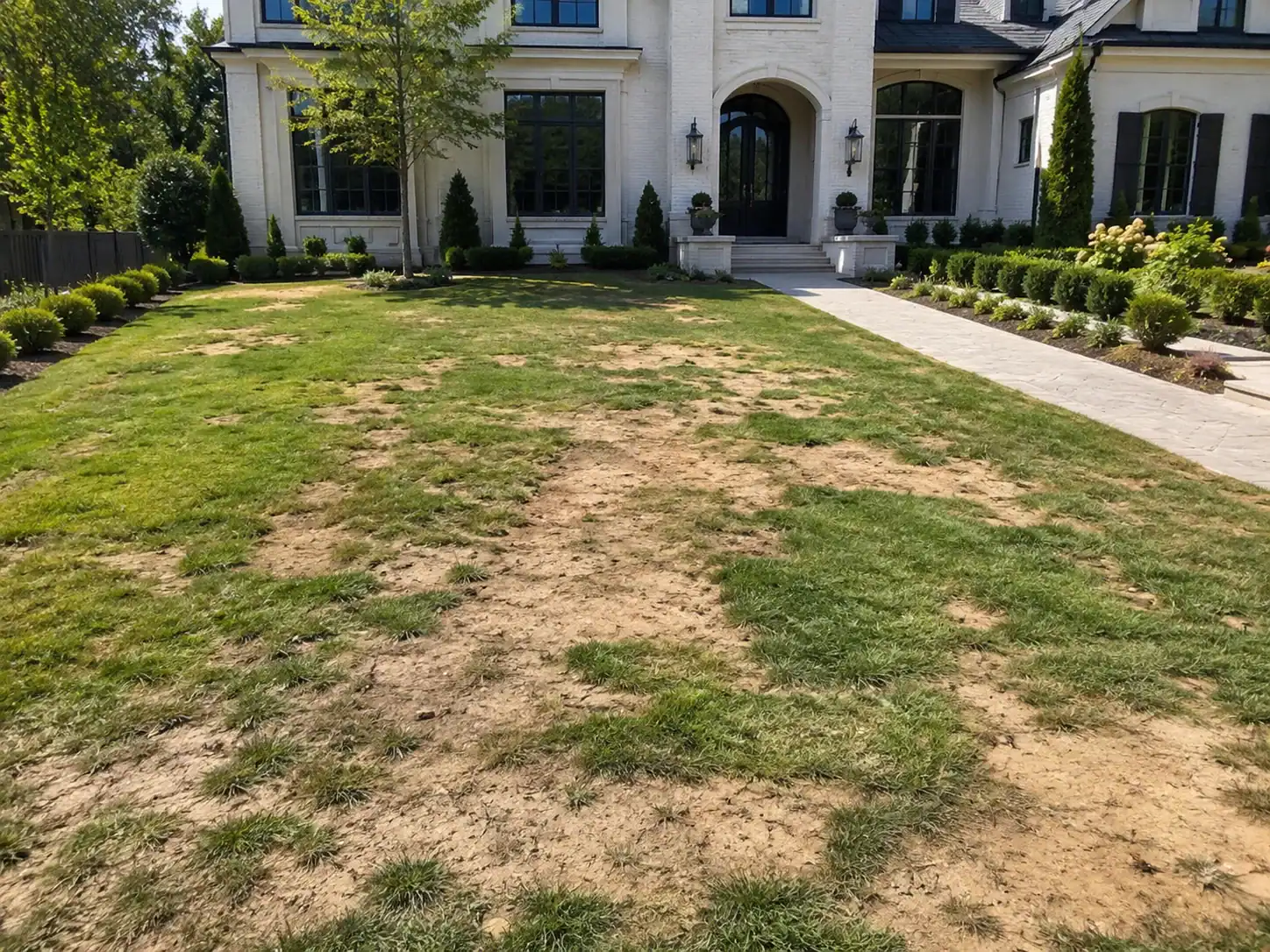
It starts with a real assessment. Before anything gets applied to your lawn, we look at what’s actually happening the soil, the grass, the thatch layer, the sun exposure across your lot, and any visible damage patterns. For most Fort Salonga properties, that means a soil test. Fort Salonga’s glacial clay soils tend toward acidity, and if the pH is off, fertilizer won’t absorb the way it should. Seeding into acidic, compacted soil produces poor germination no matter how good the seed is. We need to know what we’re working with before we recommend anything.
Once we understand the root cause whether that’s compaction, pH imbalance, grub damage, fungal disease, shade stress, or some combination we build a restoration plan around it. That typically includes core aeration to break up compaction, lime or soil amendment to correct pH, and slice seeding to place seed directly into the soil at the right depth. Broadcast overseeding on Fort Salonga’s heavy clay soils doesn’t establish reliably. Slice seeding does.
Timing matters here more than most homeowners realize. North Shore soils warm 7 to 14 days later in spring than the sandy soils on Long Island’s South Shore, which shifts the optimal seeding window. The primary restoration window on the North Shore runs from late August through mid-October when soil temperatures are right, summer weeds are fading, and fall rains support establishment. We schedule your restoration around that window, not around a generic Long Island calendar.
Ready to get started?
This distinction matters, and we’ll be straight with you about it. Lawn restoration is the right path when your turf base is still worth saving when the damage is real but the lawn hasn’t completely collapsed. It covers soil correction, aeration, slice seeding, bare patch repair, pH adjustment, and a structured recovery program that rebuilds density and color over one to two growing seasons. Most Fort Salonga lawns that look bad in August are restoration candidates, not renovation candidates.
Renovation is a different conversation. It’s for lawns where the turf base is gone, the soil has failed, or the damage is too widespread for targeted recovery to make sense. If your assessment points that direction, we’ll tell you and we can handle that too. But we’re not going to sell you a full rebuild if your lawn can be brought back through restoration. That’s not how we’ve operated for 38 years, and it’s not how we work now.
What’s included in a restoration program depends on what your lawn actually needs. For many Fort Salonga properties, that means addressing shade-tolerant grass variety selection for areas under heavy hardwood canopy, incorporating deer pressure into the timing and protection strategy for newly seeded areas, and building in disease management for the fungal pressure that Long Island Sound’s coastal humidity creates throughout the growing season. Every program is built from your soil test results and your lawn’s specific condition not a standard package applied across the board.
Restoration means bringing your existing lawn back to health. The turf base is still there it’s damaged, thin, or struggling but it’s recoverable through targeted treatment. That typically involves soil correction, aeration, slice seeding, and a recovery program that rebuilds the lawn over one to two seasons. Renovation is a full rebuild: the existing turf is removed or killed off, the soil is regraded or amended from scratch, and the lawn is re-established from the ground up with new seed or sod.
For most Fort Salonga homeowners, restoration is the right call. The large, wooded lots here mean the turf base has usually been in place for decades, and even a lawn that looks severely damaged in late summer often has enough viable root structure to recover with the right treatment. The key is honest diagnosis upfront. If your soil test and turf assessment show that restoration is viable, that’s the path we’ll recommend and we’ll also tell you clearly if it isn’t.
The short answer is: a proper assessment will tell you. There are a few things we look at how much living turf remains across the lawn, what the soil profile looks like, whether the damage has a diagnosable cause that can be corrected, and whether the existing grass varieties are appropriate for your lot’s conditions. A Fort Salonga property with significant mature tree canopy, for example, may have areas where the grass has thinned because the wrong variety was planted in a shaded zone not because the soil has failed. That’s a restoration problem, not a renovation problem.
If more than 50 to 60 percent of your lawn has viable turf, restoration is almost always the better investment. If the damage is more widespread or if the underlying cause is something structural like severe grading issues or complete soil failure renovation may be the more realistic path. We’ll give you a straight answer after we see the lawn and the soil results. There’s no benefit to us in recommending the wrong approach.
This is one of the most common situations we see on North Shore properties. Homeowners buy quality seed, spread it in the fall, get some initial germination and then watch it thin out or disappear by the following summer. The problem is almost never the seed. It’s the conditions the seed is going into.
Fort Salonga’s glacial clay soils compact heavily over time, especially on larger lots with vehicle or foot traffic. Compacted soil has poor air and water movement, which suffocates roots before they can establish. On top of that, clay soils in this area tend to be acidic and when pH is off, grass can’t absorb nutrients even if you’re fertilizing regularly. Broadcast overseeding on compacted, acidic clay also produces poor seed-to-soil contact, so germination rates are low to begin with. Slice seeding, combined with aeration and soil correction, addresses all three of those problems at once. That’s the difference between a restoration that holds and one that doesn’t.
Late August through mid-October is the primary restoration window for Fort Salonga and the broader North Shore. Soil temperatures during this period are ideal for cool-season grass germination typically between 50 and 65 degrees Fahrenheit and competition from crabgrass and summer annual weeds drops off significantly. Fall rains on Long Island also support seed establishment without the irrigation demand that spring and summer restorations require.
One thing that catches a lot of homeowners off guard is that North Shore soils warm 7 to 14 days later in spring than the sandy soils on Long Island’s South Shore. That means the spring restoration window mid-April through mid-May in general Long Island guidance is often closer to late April through mid-May for Fort Salonga specifically. Applying seed too early into cold, wet clay produces poor results. We schedule around actual soil temperature, not calendar dates, which is part of why our restorations establish reliably and others don’t.
A realistic timeline for full lawn restoration is one to two growing seasons. The first season typically a fall restoration followed by spring recovery is when the foundational work happens: soil correction, aeration, slice seeding, and initial fertilization. You’ll see germination and early establishment within two to four weeks of seeding under normal conditions. By the following spring, a properly restored lawn should be showing significantly improved density and coverage.
What you should expect during the process is some patience in the early weeks. Newly seeded areas need consistent moisture to establish, and on Fort Salonga’s clay soils, drainage management matters overwatering compacted clay creates standing water that drowns seedlings. If deer pressure is a factor on your property, we’ll also discuss protective strategies for the establishment period, since newly seeded turf is particularly vulnerable to grazing in fall and early spring. We’ll walk you through what to do and what to watch for at each stage so you’re not guessing.
Yes, lot size affects the cost of lawn restoration more square footage means more aeration, more seed, more soil amendment, and more labor. Fort Salonga properties are larger than average for western Suffolk County, with most lots running one to two acres, so restoration programs here are priced accordingly. That said, the cost of restoration is almost always significantly less than full renovation, and for a property in this community where home values run from the upper six figures into seven figures a properly restored lawn is a meaningful return on a relatively modest investment.
The more useful way to think about it is what it costs to do nothing, or to keep applying generic programs that don’t address the actual problem. A lawn that’s been declining for two or three seasons is harder and more expensive to bring back than one that gets addressed early. Fort Salonga homeowners who’ve already spent money on big-box fertilizer programs or unlicensed applicators that didn’t diagnose the root cause are often surprised at how much progress a properly structured restoration delivers because they’re finally treating the right problem.
Useful Links
Other Services we provide in Fort Salonga