
Hear from Our Customers
When a lawn has thinned out, developed bare patches, or stopped responding to basic care, the problem usually isn’t the grass it’s what’s happening underneath it. Port Jefferson Station sits on sandy, fast-draining glacial soil that loses moisture and nutrients quickly. Without addressing what’s happening at the root level, no amount of seed or fertilizer will hold.
What lawn restoration does is give your existing turf a real path back. That means correcting the soil chemistry, eliminating the conditions that caused the decline, and rebuilding density through proven techniques like slice seeding where seed makes direct contact with the soil instead of sitting on top of a thatch layer that blocks germination. The result isn’t just green grass for a season. It’s a lawn with a root system strong enough to handle the dry North Shore summers and cold winters that follow.
For homeowners near Comsewogue, along Route 25A, or in the neighborhoods between Nesconset Highway and the LIRR tracks, a restored lawn also means something more visible: curb appeal on a block where home values are pushing toward $550,000. That’s not a small thing. A dense, healthy lawn is one of the first things people notice and one of the last things they forget.
We’ve been working in Port Jefferson Station and across Suffolk County for 38 years. That’s not a number we throw out for effect it means we’ve spent decades diagnosing and restoring lawns across the North Shore, in the same sandy soils, under the same seasonal pressure, dealing with the same grub cycles that affect your yard every year. We know this area because we’ve worked in it, not because we read about it.
We’re NYS-licensed, which matters more than most homeowners realize. Suffolk County sits on top of the Long Island Aquifer the region’s sole-source drinking water supply and the county enforces real restrictions on pesticide application and fertilizer timing. An unlicensed operator can’t legally perform certain treatments here. We can, and we do it right.
When you call Lawn Master, you’re not reaching a regional call center. You’re reaching a team that knows the difference between a lawn that can be restored and one that needs to be rebuilt and we’ll tell you honestly which one you have.
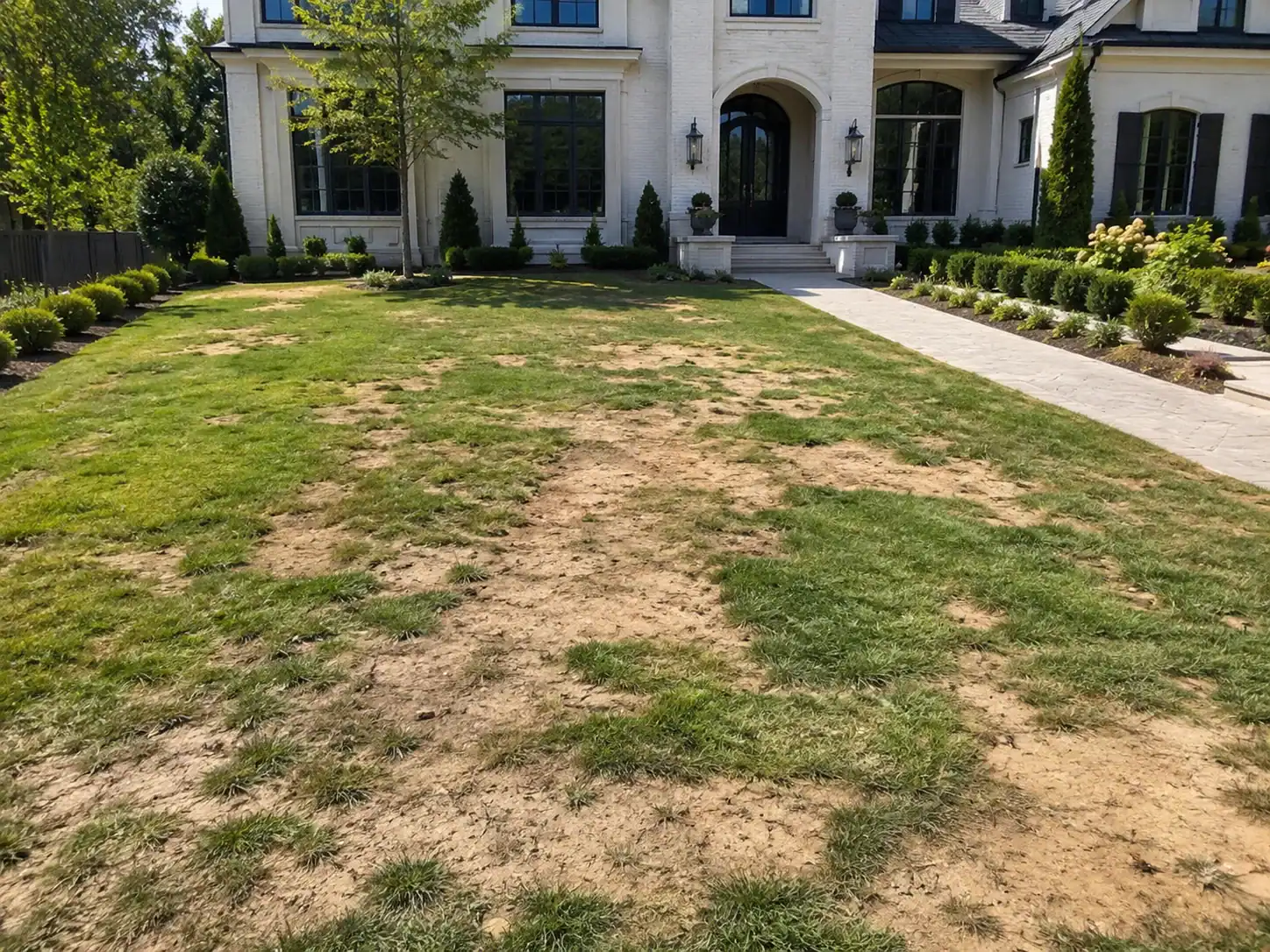
It starts with a proper diagnosis. Before anything goes into the ground, we assess your lawn’s condition soil pH, thatch depth, root system health, and damage patterns. In Port Jefferson Station, that diagnosis almost always turns up the same underlying issues: acidic, nutrient-depleted sandy soil, compaction from foot traffic or construction, or grub damage that destroyed the root system from below. Knowing the cause is the only way to fix the problem for good.
Once we understand what we’re working with, we correct the soil. That typically means lime application to bring pH back into range, organic matter to improve moisture retention in Port Jefferson Station’s fast-draining sandy topsoil, and targeted fertilization based on what the soil test actually shows not a generic program. Suffolk County restricts phosphorus applications unless a soil test confirms deficiency, so this step isn’t optional it’s the foundation everything else builds on.
From there, we move into the restoration work itself. For lawns with significant bare patches or thinning turf, slice seeding is usually the right call. It cuts furrows directly into the soil and deposits seed at the root level, bypassing the thatch layer that causes surface overseeding to fail. The best window for this on Long Island’s North Shore runs from late August through mid-October soil temperatures are still warm enough for germination, and the heat stress that kills new seedlings in summer has passed. If you’re thinking about fall restoration, the time to get on the schedule is now, not after that window closes.
Ready to get started?
Lawn restoration is specifically about bringing your existing lawn back to health not tearing it out and starting over. If your turf has thinned, developed persistent bare patches, lost density after a dry summer, or taken grub damage that left dead zones across the yard, restoration is the process of identifying why that happened and correcting it at the source. If your lawn is more than 50% weeds or has suffered catastrophic damage beyond rehabilitation, that’s a different conversation that’s renovation, and we offer that too. We’ll tell you which one you actually need.
For most Port Jefferson Station lawns, a restoration program includes soil testing and correction, aeration to break up compaction, slice seeding with grass varieties suited to Long Island’s cool-season climate, and a follow-up fertilization plan that accounts for Suffolk County’s nutrient management regulations. White grub damage caused by Japanese beetle and European chafer larvae, both endemic to Long Island often requires targeted treatment before seeding can succeed, because new roots won’t establish in soil where the larvae are still active.
The work we do here isn’t one-size-fits-all. A lawn on a newer property near the Jefferson Plaza redevelopment corridor has different soil history than a 30-year-old yard in an established Terryville neighborhood. We account for that. The program is built around what your specific lawn needs not what’s easiest to deliver.
Restoration means rehabilitating the lawn you already have. We diagnose what caused the decline whether that’s soil chemistry, grub damage, compaction, drought stress, or thatch buildup correct the underlying conditions, and use techniques like slice seeding and aeration to rebuild density in your existing turf. The grass is still yours. We’re bringing it back.
Renovation is a full rebuild. It means removing what’s there whether through sod cutting, herbicide application, or mechanical stripping and starting from scratch with new seed or sod. That’s the right answer when a lawn is too far gone for rehabilitation: more than 50% weeds, severe soil contamination, or root system damage that can’t be corrected without starting over. For Port Jefferson Station homeowners, the distinction matters because restoration is significantly less disruptive and less expensive than renovation. We’ll give you an honest read on which path makes sense for your lawn not the one that’s easier to sell.
In most cases, yes a grub-damaged lawn can be restored, but the timing and sequence of treatment matter. White grubs, specifically Japanese beetle and European chafer larvae, are endemic to Long Island and one of the most common causes of bare patch development in Port Jefferson Station lawns. They feed on grass roots from below, which is why the damage often appears suddenly in late summer as large irregular dead zones that lift away from the soil like a loose mat.
Before any seeding can succeed, the grub population needs to be addressed. Putting seed into soil where larvae are still active is a waste of time new roots won’t establish. Once the grub issue is treated and the soil is corrected, slice seeding into the damaged areas during the fall window typically produces strong results. Lawns that have lost 30–40% of their turf to grub damage can recover to full density within one to two seasons with the right program. Lawns with more extensive damage may need a phased approach, but full renovation is rarely the first answer.
For slice seeding done in the fall which is the optimal window on Long Island’s North Shore you’ll typically see germination within 10 to 21 days, depending on soil temperature and moisture. By the time the growing season winds down, most of the seeded areas will have established initial coverage. The lawn won’t look finished after one season, but it will look dramatically different from where it started.
Full density the kind where bare patches are completely filled in and the turf looks uniform usually takes one full growing season after the initial restoration work. That means a fall restoration program delivers visible improvement before winter and reaches its full result by the following summer. The soil correction work we do in year one is also cumulative: lawns with corrected pH and improved organic matter content continue to improve as the root system deepens and the turf thickens. Expecting instant results from lawn restoration is like expecting a broken bone to heal in a week the biology has a timeline, and working with it produces better outcomes than rushing it.
Recurring bare patches almost always point to an unresolved underlying condition not just a seed or watering problem. In Port Jefferson Station, the most common culprits are annual grub cycles that return if the soil isn’t treated, low pH that prevents grass from absorbing nutrients even when you’re fertilizing regularly, and compaction that chokes root development in high-traffic areas. Sandy soils drain so quickly that even lawns that look watered can be moisture-stressed at the root level during a dry July or August.
The other factor is thatch. If a significant thatch layer has built up over the years, water and nutrients can’t penetrate to the soil, and new seed can’t make root contact. Surface overseeding into heavy thatch is one of the most common reasons DIY lawn repair fails year after year. Addressing the thatch layer through mechanical dethatching or core aeration is a prerequisite for any seeding program that’s meant to last. If you’ve been throwing seed at the same bare spots for two or three years without improvement, the answer isn’t more seed. It’s a proper diagnosis of what’s blocking recovery.
Lawn restoration pricing depends on the size of your lawn, the extent of the damage, and what the diagnosis reveals about the soil and root conditions. A targeted bare patch repair program for a smaller damaged area will cost significantly less than a comprehensive restoration of a full lawn with widespread thinning, grub damage, and soil correction needs. For most residential properties in Port Jefferson Station which tend to be standard single-family lots a full restoration program including soil testing, aeration, slice seeding, and soil amendment typically falls in a range that reflects the scope of work required.
What affects the price most is what the soil test shows and how much corrective work needs to happen before seeding can succeed. A lawn with severe pH imbalance or significant compaction requires more preparation than one that just needs overseeding after a dry summer. The honest answer is that restoration almost always costs less than renovation and significantly less than the compounding cost of continuing to patch a lawn that keeps declining because the root problem was never fixed. The best way to get an accurate number is to request an estimate so we can assess your specific lawn’s condition.
It’s genuinely the best window, and the biology explains why. Cool-season grasses which are the standard turf type across Long Island and Port Jefferson Station germinate and establish most effectively when soil temperatures are between 50 and 65 degrees Fahrenheit and air temperatures have dropped below the summer heat threshold. On the North Shore, that window runs roughly from late August through mid-October. Soil is still warm enough to support germination, but the seedlings aren’t fighting 85-degree days and drought stress at the same time.
Spring seeding is possible but comes with real disadvantages. New seedlings established in spring have only a few weeks to develop roots before summer heat and drought stress arrive and Port Jefferson Station’s sandy soils lose moisture fast. Many spring-seeded lawns thin back out by August because the root systems never had time to deepen. Fall seeding gives new grass a full cool season to establish, then a winter dormancy period, then a spring growing season to fill in which is why fall-restored lawns consistently outperform spring-restored ones. If you’re on the fence about timing, the fall window is not a manufactured urgency. It’s the season that actually works.
Useful Links
Other Services we provide in Port Jefferson Station