
Hear from Our Customers
You’ve put serious money into your Blue Point property. Whether it was a renovation, a pool, a new septic system, or a full teardown and rebuild the last thing you want is bare ground staring back at you when everything else is done. A professionally installed lawn is the finishing touch that pulls it all together, and in Blue Point, it gets noticed.
Blue Point’s soil is fast-draining sandy loam. It looks like dirt, but it behaves more like a sieve nutrients and water pass straight through before roots have a chance to take hold. Without proper soil amendment before seeding, even good seed fails. What you end up with is thin, patchy coverage that struggles through its first summer and doesn’t recover. Getting the ground ready is half the job, and it’s the half most people skip.
The other factor here is the bay. Salt air off the Great South Bay doesn’t just affect your deck furniture it deposits on grass blades, pulls moisture out of the plant, and accumulates in the soil over time. Variety selection matters for a lawn installed near the water in Blue Point, and so does how the soil is prepped before anything goes down. When both of those are handled correctly, you get a lawn that establishes strong, holds through summer heat, and actually looks like it belongs on an $800,000 property.
We’ve been installing lawns on Long Island since 1986. That’s not a marketing number it means our team has worked through every soil type, every season, and every post-construction mess that Suffolk County properties can throw at us. The South Shore is its own category, and Blue Point’s combination of sandy coastal soil and bay proximity is something that takes real experience to get right.
Most of the companies that show up when you search for lawn installation in the Blue Point and Bayport area are general maintenance operations mowing, fertilization, shrub care. That’s a different business. Our focus is new lawn installation and total lawn renovation. It’s what we’ve done for nearly four decades, and it’s the reason homeowners from Blue Point to Bayport to Patchogue call us when the ground is bare and the stakes are high.
We serve Blue Point directly and know this area not a franchise routing your call to whoever’s available.

The first step is a site assessment. Before anything else, the condition of your ground needs to be understood what’s there, what needs to come out, how the soil is structured, and what it’s going to take to support healthy turf. Blue Point properties with older homes, especially those built in the 1950s and 1960s, often have compacted subsoil, buried construction debris, or stripped topsoil from prior work. We identify that upfront, not mid-job.
From there, it’s soil preparation grading the surface for proper drainage, adding organic matter and quality topsoil to correct Blue Point’s naturally sandy, nutrient-poor base, and making sure the ground is actually ready to grow something. Organic matter holds up to four to six times its own weight in water, which matters enormously on a lot where rain and irrigation drain straight through otherwise. This phase is where the real work happens, and it’s what separates an installation that lasts from one that fails by August.
Once the ground is set, seed selection and application follow. For South Shore properties near the bay, variety matters cool-season blends that hold up to coastal salt stress and Long Island’s summer heat cycles. The optimal installation window on the South Shore is late August through mid-October, when soil is still warm from summer but air temperatures drop enough to support strong germination without heat stress. If your project wraps up in spring, we adjust the plan for that timing. After installation, you get clear establishment guidance watering schedule, mowing height, first-season traffic restrictions so the investment doesn’t get undone in the first 30 days.
Ready to get started?
Every new lawn installation in Blue Point starts with the ground, not the seed. That means full site preparation grading, debris removal, topsoil, and soil amendment specific to the sandy coastal conditions that define South Shore Suffolk County properties. You’re not getting a crew that shows up with a bag of seed and a spreader. You’re getting a process that’s been refined over 38 years of working on Long Island soil.
Seed-based installation is our primary method, and for most Blue Point lots it’s also the right one. It produces root systems that establish in place, handles the sandy drainage conditions better than sod in the long run, and costs significantly less per square foot on larger properties which matters when you’re dealing with a full tearout on a mid-century home with a generous lot. Seeding is available for larger bare-ground areas and offers excellent coverage with built-in erosion control, which is worth considering on any site near the Great South Bay where stormwater runoff is a factor.
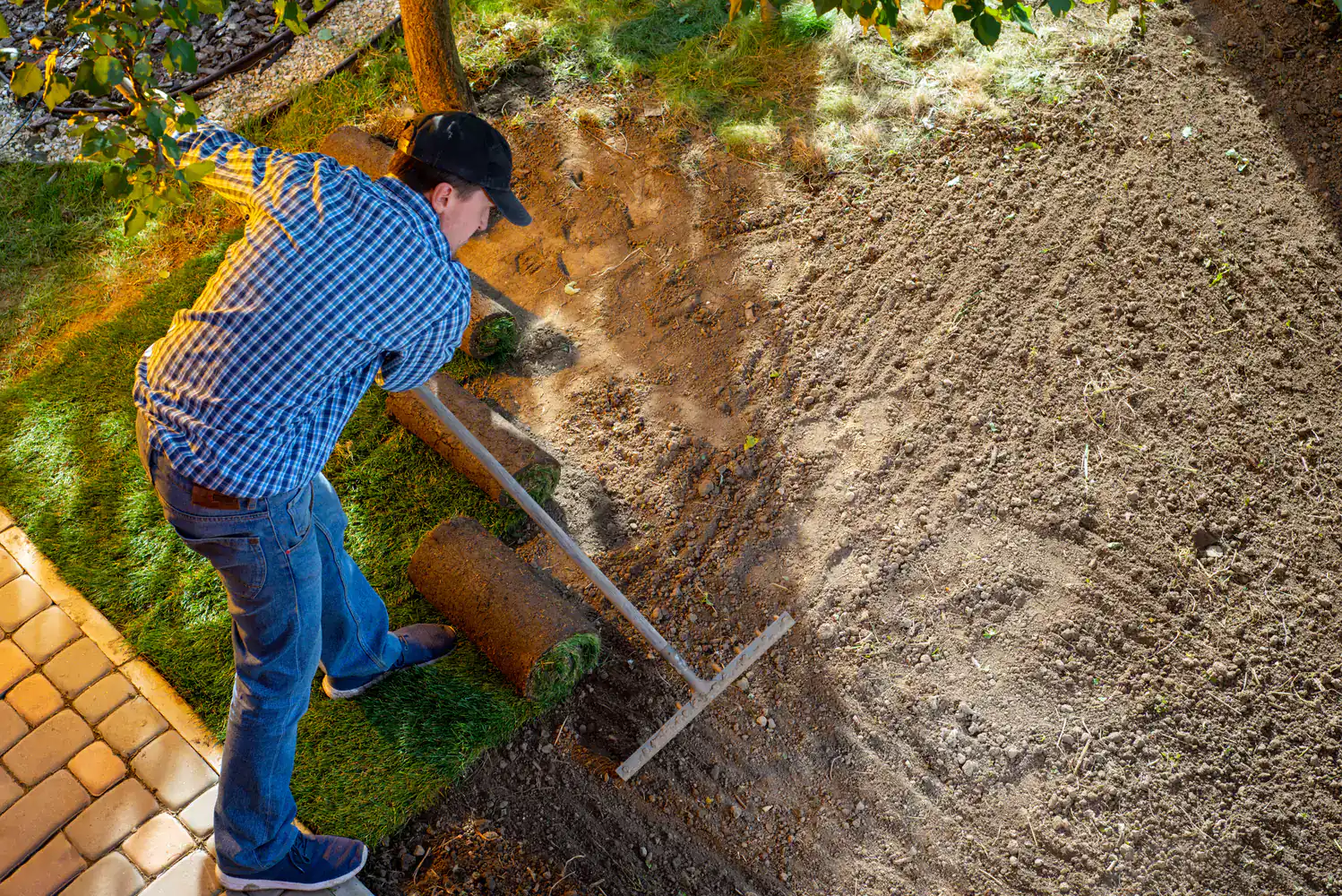
Sod installation is an option when timeline is the priority immediate coverage, faster curb appeal for a pre-sale situation or a project with a hard deadline. The right method depends on your specific property, your timeline, and your goals. That conversation happens before any work is scoped. Suffolk County’s fertilizer regulations near coastal water bodies also factor into the application plan high-phosphorus applications are restricted near the bay, and we account for that from the start.
Blue Point sits right on the edge of the Great South Bay, and that location creates two conditions that don’t exist the same way in inland Suffolk County towns. The first is soil: most of Blue Point’s residential lots sit on sandy loam that drains fast and holds nutrients poorly. Without significant soil amendment before seeding, even quality seed struggles to establish. The second is salt air. Coastal proximity means salt deposits from the bay reach your lawn year-round, drawing moisture from grass blades and disrupting nutrient uptake at the root level.
These aren’t problems that show up on a standard lawn care checklist. They require specific soil prep, the right cool-season grass varieties for coastal stress tolerance, and a process that accounts for how this particular ground behaves. A general landscaper who also does seeding isn’t going to approach a Blue Point installation the same way a specialist with 38 years on the South Shore will. The difference shows up in whether your lawn is still thriving two summers from now.
Cost depends on square footage, the condition of the existing ground, and the installation method. For a seed-based installation with full soil preparation grading, topsoil, amendment, and seeding most residential properties in Blue Point and the surrounding Bayport-Patchogue area fall somewhere between $3,000 and $10,000 depending on scope. Seeding on larger bare-ground areas can reduce the per-square-foot cost while still delivering strong coverage. Sod installation runs higher, typically $1 to $3 per square foot installed, and makes more sense when timeline is the driving factor.
The more useful question is what a failed installation costs. If the soil prep is skipped, the wrong seed variety is used, or the timing is off, you’re looking at a lawn that fails by late summer and needs to be redone. On a Blue Point property worth $700,000 to $800,000-plus, that’s not just a financial setback it’s a visible one. The investment in doing it right the first time is almost always less than the cost of doing it twice.
For cool-season grasses which are the right choice for Long Island late August through mid-October is the optimal installation window. Soil temperatures are still warm from summer, which supports germination, but air temperatures are dropping, which reduces heat stress on new seedlings. Fall installations also benefit from natural rainfall patterns and face far less weed competition than spring seedings.
Spring installation is possible, but it comes with trade-offs. Germinating seed goes almost immediately into summer heat and drought stress, and weed pressure is significantly higher in spring. If your renovation or construction project wraps up in spring or early summer, the better approach is often to stabilize the ground with temporary erosion control, then plan the full installation for the fall window. That’s a conversation worth having early so the timing works with your project schedule, not against it.
In almost every case, yes. Blue Point’s native soil is sandy and drains quickly it’s not naturally suited to supporting dense, healthy turf without help. Adding quality topsoil and organic matter before seeding does two things: it improves water retention in a soil that otherwise lets moisture pass straight through, and it increases the nutrient-holding capacity of the ground so the root system actually has something to work with during establishment.
The amount of topsoil needed depends on what’s already there. Post-renovation sites in Blue Point where excavation or construction has stripped or compacted the original topsoil layer often need more than a standard installation on undisturbed ground. Homes that have had pool installations, new septic systems, or addition work done frequently fall into this category. The site assessment at the start of the process determines exactly what the ground needs before anything else is planned.
It depends on your timeline and your property. Sod gives you immediate coverage it looks finished the day it’s installed, which makes it attractive for pre-sale situations or projects with a hard deadline. But sod costs significantly more per square foot than seed-based installation, and on the sandy, fast-draining soil common to Blue Point properties, sod needs consistent irrigation during its establishment period or it can dry out and fail before roots anchor in.
Seed-based installation including seeding for larger areas produces root systems that develop in place, which tends to perform better long-term in Blue Point’s soil conditions. It costs less, handles the coastal environment well when the right varieties are selected, and for properties that aren’t on a tight sale timeline, it’s usually the better investment. The honest answer is that the method should follow the site, not the other way around. That’s the conversation that happens before any scope is written.
The first 30 to 60 days after installation are the most critical, and Blue Point’s sandy soil makes watering discipline more important here than it would be on a heavier inland soil. Sandy ground dries out fast especially during July and August when South Shore temperatures climb and humidity pulls moisture from the surface. New seedlings don’t have deep enough roots yet to chase water down through the soil profile, so consistent shallow watering in the early morning is essential during that first establishment period.
Beyond watering, the first-season rules are straightforward: don’t mow too short, don’t allow heavy foot traffic until the turf has knitted in, and hold off on any herbicide applications until the lawn has been mowed at least three to four times. Salt air off the bay is a background stressor throughout the season, so avoiding additional chemical stress during establishment matters. We provide specific establishment guidance after every installation watering schedule, mowing height, timing for first fertilization so you’re not guessing at any of it.
Useful Links
Other Services we provide in Blue Point