
Hear from Our Customers
When a lawn is installed correctly from the start, you stop thinking about it. No bare patches showing up by August. No washout after the first heavy rain. No second attempt at something that should have worked the first time. That’s the outcome a lawn that establishes cleanly, holds through the seasons, and looks like it belongs on the property you’ve built.
In Stony Brook, that outcome requires more than dropping seed on bare ground. The Riverhead sandy loam and Haven loam soils that dominate this area drain fast, run slightly acidic, and won’t hold nutrients without proper organic amendment. Skip the soil prep and you’re not installing a lawn you’re setting up a failure. Get it right and you’ve got a root system that anchors through summer heat, recovers from dry spells, and fills in the way a premium North Shore property demands.
The oak canopy on many Stony Brook lots adds another layer. Dense shade across half your yard means the wrong seed mix will thin out within two seasons regardless of how well everything else was done. The right installation accounts for that from day one shade-tolerant varieties where the canopy falls, sun varieties where it doesn’t, and a plan that treats your specific property as exactly that: specific.
We’re a lawn installation and renovation specialist based in Port Jefferson Station minutes from Stony Brook along the Route 25A corridor. This isn’t a franchise with a local phone number. We’ve been working North Shore Long Island soil for 38 years, on properties from Stony Brook and the Three Villages area to the broader Suffolk County coastline.
Our work here is focused. We don’t mow, don’t do seasonal cleanups, and don’t run a maintenance route. Every project is a from-scratch installation or a full renovation the kind of work that requires real soil knowledge, proper grading, and a process built around getting it right once. That focus is exactly what separates a lawn that thrives from one that has to be redone.
If you’re near the S-Section, close to Stony Brook Harbor, or on a new construction lot off Nicolls Road, the conditions on your property are familiar. We’ve worked them before and know what they need.
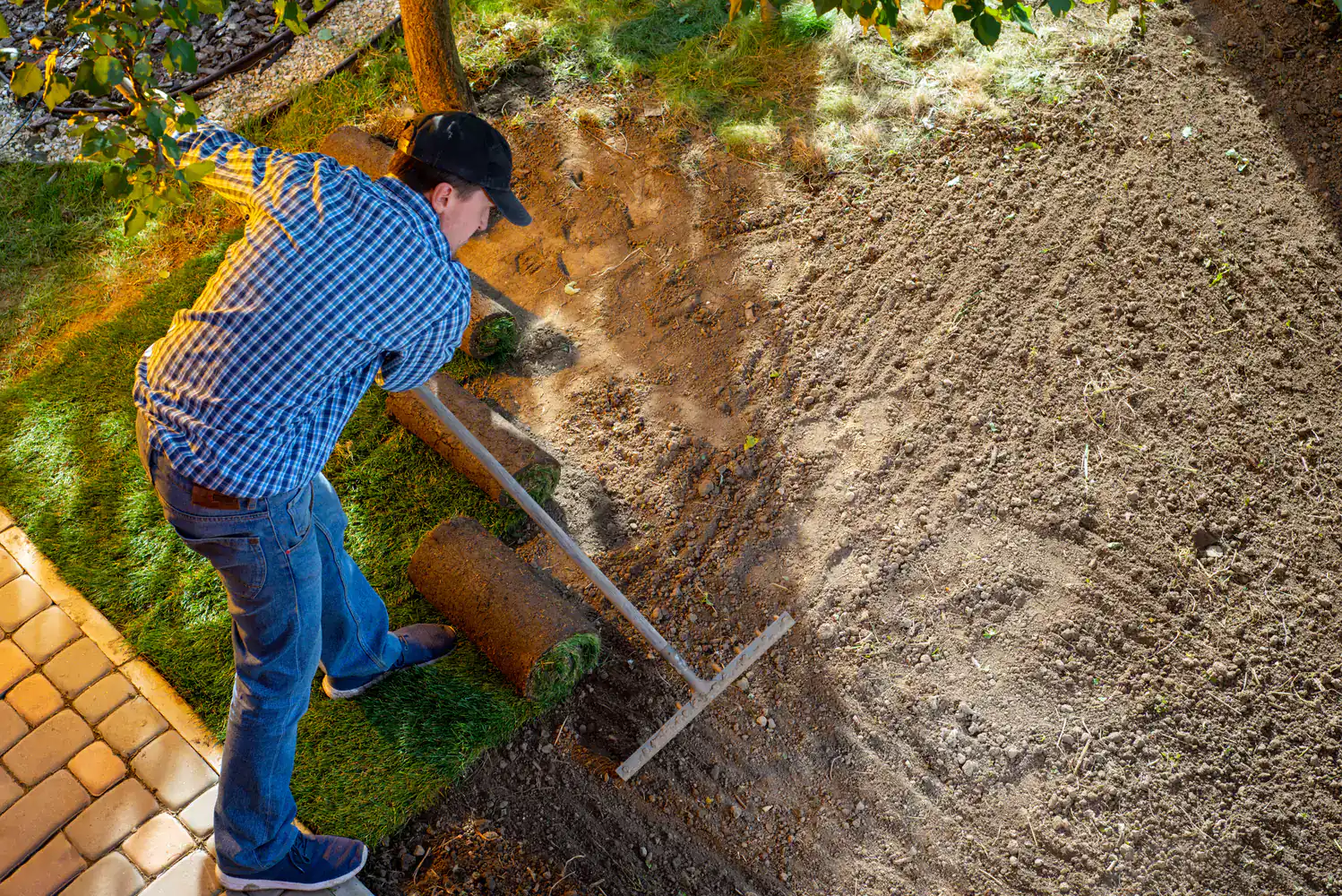
It starts with the ground, not the seed. Before anything goes down, we assess the soil pH levels, compaction, topsoil depth, drainage patterns. On new construction sites in Stony Brook, this step is non-negotiable. Heavy equipment strips topsoil and compacts subsoil during the build process, and what’s left behind looks like dirt but won’t support a lawn without intervention. Grading, topsoil, and organic amendment come first. Everything else follows that foundation.
Once the ground is ready, the installation method gets matched to your property. Larger lots common in the S-Section and surrounding residential areas are often better suited to seeding, which delivers strong coverage at a lower cost than sod and produces root systems that establish in place. Smaller or more visible areas may call for a different approach. The recommendation is always based on your property, your timeline, and what will actually perform here.
Timing matters on Long Island’s North Shore. The optimal window for cool-season grass installation in the Stony Brook area is late August through October soil temperatures are warm, air temperatures are dropping, fall rains support germination, and weed competition is at its lowest point all year. Spring installations are possible, but Stony Brook’s fast-draining sandy loam dries out quickly, and a lawn that hasn’t fully rooted before July is going to struggle. When you reach out, we’ll tell you exactly where you stand in the calendar and what that means for your project.
Ready to get started?
New lawn installation in Stony Brook, NY covers the full scope from bare, compacted, or construction-damaged ground to an established lawn that holds. That means soil assessment, grading and drainage correction where needed, topsoil and organic amendment, seed selection matched to your property’s light and soil conditions, and installation using the method best suited to your lot size and timeline. We offer both seeding and seed-based installation depending on what your property calls for.
Grass variety selection is one of the details that gets skipped most often and it’s one of the most consequential. Properties near Stony Brook Harbor deal with salt air. Lots under mature oak canopy need shade-tolerant fine fescue blends, not standard sun mixes. New construction sites often have soil pH that needs lime correction before cool-season grasses will establish properly. These aren’t generic considerations they’re specific to the conditions found on North Shore Long Island properties, and we build them into every installation we do.
New York State law also restricts high-phosphorus fertilizer use it’s only permitted on new lawn installations or where a soil test confirms a deficiency. That’s a detail we know. After installation, you’ll receive specific establishment guidance: watering schedule, first mow timing, traffic restrictions, and what to expect at 30, 60, and 90 days. You’ve made the investment the guidance is part of making sure it holds.
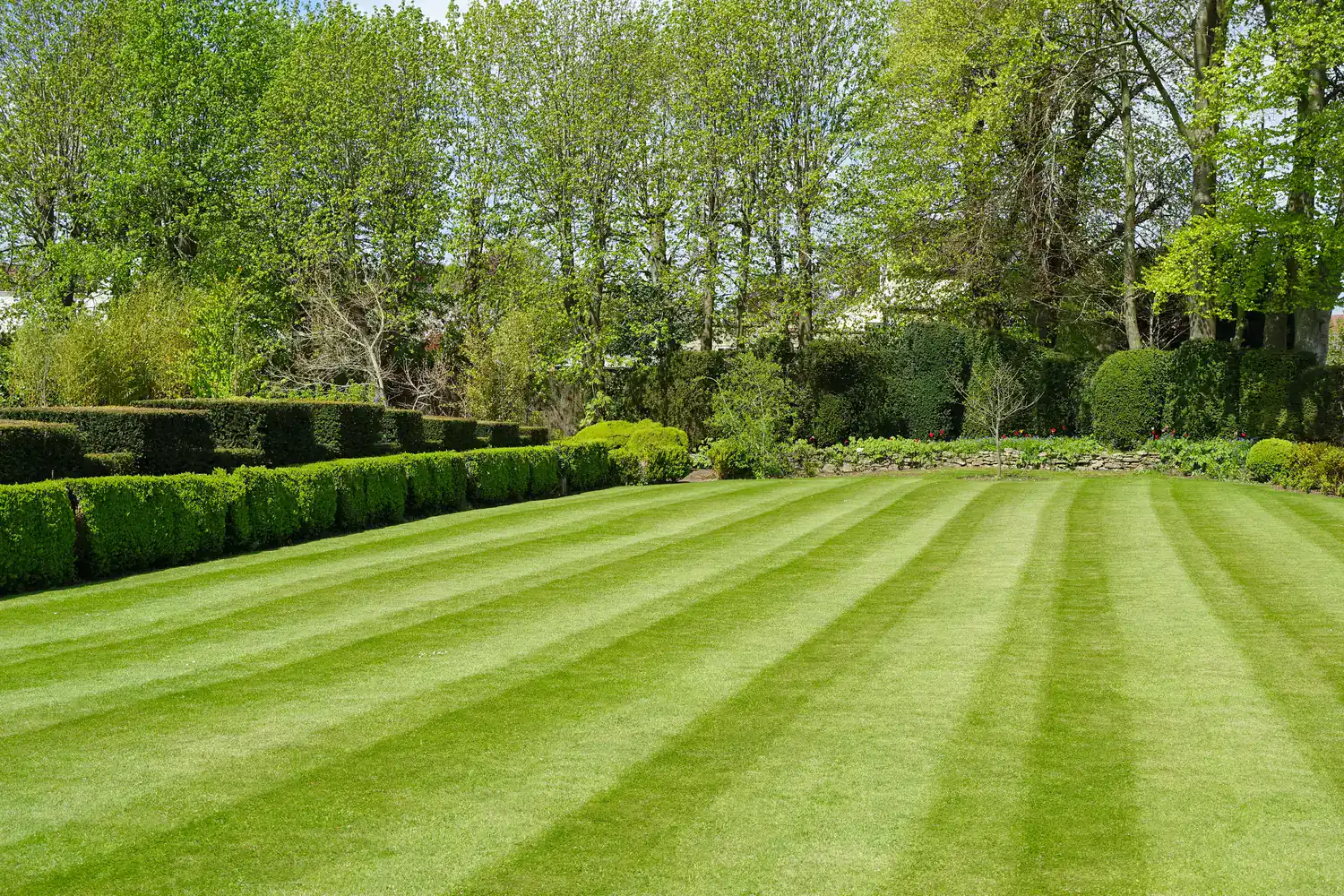
The right grass seed for a Stony Brook property depends on two things: how much sun the area gets and what the soil looks like. For open, sunny areas on well-drained Riverhead sandy loam which is the dominant soil type across much of Stony Brook a quality tall fescue blend with some Kentucky bluegrass performs well. It handles summer heat, recovers from drought stress, and holds through the cool-season swing that Long Island’s North Shore climate delivers.
Where mature oak trees create significant shade and that’s a real factor on many established residential lots in the Three Villages area and throughout Stony Brook shade-tolerant fine fescue varieties are the right call. Standard sun mixes will thin out under that canopy within a season or two, no matter how well the rest of the installation was done. Properties near Stony Brook Harbor that deal with salt air exposure may also benefit from salt-tolerant variety selection. The short answer: there’s no single right answer, and any installer who gives you one without looking at your property first isn’t giving you the full picture.
Fall is the better window for new lawn installation in the Stony Brook area specifically late August through October. During that stretch, soil temperatures are still warm enough to support germination, air temperatures are cooling down, and the natural rainfall pattern helps establishment without constant irrigation. Weed competition is also at its lowest in fall, which means your new lawn isn’t competing for resources right out of the gate.
Spring installations are possible, but they come with a real risk on Long Island’s North Shore. Stony Brook’s Riverhead sandy loam drains quickly and dries out fast in summer heat. If a spring-installed lawn hasn’t developed a strong root system before July, it’s going to go through significant drought stress before it’s fully established. That doesn’t mean spring is off the table it means the timeline and irrigation plan need to account for it. If you’re working from a new construction completion date that lands in spring, we’ll walk you through exactly what that means for your project and what steps reduce that risk.
New construction is one of the most common reasons homeowners in Stony Brook end up with bare, unworkable ground. Heavy equipment compacts the subsoil during the build process, and the topsoil that was there before often stripped early in construction rarely gets replaced properly. What’s left behind looks like dirt but is typically compacted fill that drains poorly in some spots, dries out in others, and lacks the organic matter that grass roots need to establish.
Before any seed or topsoil goes down on a new construction site, the compaction problem has to be addressed. That usually means mechanical aeration or tilling, followed by topsoil installation to the correct depth typically four to six inches minimum for cool-season grasses and organic amendment to bring the soil structure and pH to where it needs to be. In Stony Brook, where new builds are regularly completing in the $700,000 to $3.5 million range, this prep work is what separates a lawn that matches the quality of the home from one that’s visibly struggling by the end of the first summer. Skipping it to save money upfront almost always costs more in the long run.
Seeding sometimes called seeding is a method where a mixture of seed, fertilizer, mulch, and water is sprayed across the prepared ground in a single application. The mulch layer retains moisture around the seed during germination, which is especially useful on Long Island’s sandy loam soils that dry out quickly between waterings. It’s a faster way to cover large areas evenly compared to hand-broadcasting seed, and it produces root systems that establish in place rather than being transplanted like sod.
For larger Stony Brook properties half-acre and above, which are common in the S-Section and surrounding residential areas seeding typically delivers excellent results at a significantly lower cost than sod. The trade-off compared to sod is time: a hydraulically seeded lawn takes four to eight weeks to reach the point where it’s visibly filling in, versus the instant coverage sod provides. For most homeowners who aren’t on a hard deadline, that trade-off is worth it. The root system that develops from seed installed in place tends to outperform transplanted sod over the long term, particularly in Stony Brook’s fast-draining soil conditions where deep root development matters.
New lawn installation cost in Stony Brook, NY varies based on lot size, the condition of the ground going in, and the installation method. For a seed-based or seeding installation on a prepared surface, pricing generally runs from a few hundred dollars for a small area to several thousand for a half-acre or larger property. When significant soil work is involved grading, topsoil delivery, compaction correction that adds to the total, and on new construction sites in Stony Brook where the ground has been heavily disturbed, that prep work is almost always necessary.
Sod installation costs more per square foot than seed or seeding, and on larger Stony Brook lots, that difference adds up quickly. The more useful frame for most homeowners here isn’t “what’s the cheapest way to get grass down” it’s “what’s the right installation for this property that won’t need to be redone.” In a market where median home values are above $635,000 and property taxes run over $10,000 a year, a failed lawn installation that has to be restarted costs more than doing it right the first time. We provide specific quotes after reviewing your property the contact form on the site lets you set a start date and get the conversation going.
In most cases, yes. The Riverhead sandy loam and Haven loam soils common across Stony Brook and the broader Three Villages area tend to run slightly acidic and cool-season grasses perform best in a pH range of 6.0 to 6.5. Below that range, nutrients become less available to the grass even when they’re present in the soil, which means a lawn can struggle not because of bad seed or poor watering, but because the soil chemistry is working against it.
The oak trees throughout Stony Brook’s established neighborhoods make this more pronounced. Acidic oak leaf litter accumulates over time and gradually lowers soil pH, which is part of why thin, struggling turf under oak canopy is such a common issue in this area. On new construction sites, where the original soil profile has been disturbed and fill material introduced, pH can be unpredictable and should always be tested before installation begins. A simple soil test tells you exactly what the ground needs lime rate, organic amendment, and any other corrections before the first seed goes down. It’s a small step that makes a significant difference in how the lawn establishes and how it performs in year one and beyond.
Useful Links
Other Services we provide in Stony Brook