
Hear from Our Customers
The most frustrating part of dealing with lawn fungus isn’t watching the patches spread it’s doing something about it and watching it come back anyway. You reseed. It looks better for a few weeks. Then the same spots die again the following summer. That cycle doesn’t end until the disease itself is identified and treated with the right chemistry at the right time.
Centereach sits in a part of central Suffolk County where the conditions are almost ideal for fungal disease. The sandy loam soils that run through Brookhaven Town drain fast, which stresses turf in summer and makes it prime territory for dollar spot. The humidity that builds between Long Island Sound to the north and Great South Bay to the south creates the warm, moist nights that brown patch needs to spread and in July and August, those conditions are just the normal weather in Centereach. Your lawn isn’t struggling because you’re doing something wrong. It’s struggling because the environment is working against it.
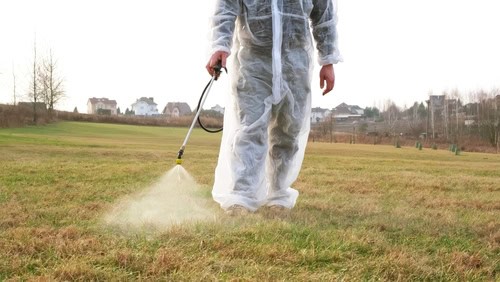
Once the right fungicide program is in place timed to your lawn’s specific disease history and the seasonal windows that Centereach actually experiences the difference shows. Patches stop returning. New grass actually establishes. You stop throwing money at seed that dies before it takes root. That’s what a properly diagnosed and treated lawn looks like.
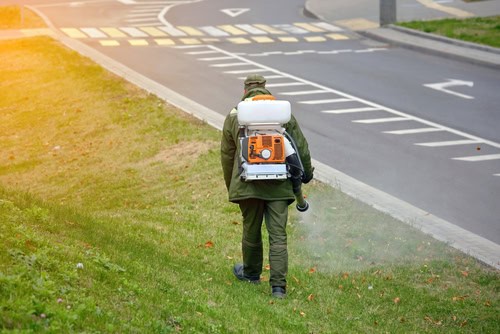
Lawn Master is a NYS Department of Environmental Conservation licensed commercial pesticide applicator serving Centereach and the broader central Suffolk County area. That license isn’t a background credential it’s a legal requirement to do this work professionally, and a lot of operators in this market quietly don’t have it.
Holding a NYSDEC commercial pesticide applicator license means passing state examinations, meeting experience requirements, and renewing with continuing education every three years. It also means we have access to restricted-use professional fungicides the same active ingredients used on golf courses and commercial turf throughout Long Island that simply aren’t available at any retail store. If you’ve tried store-bought products on your lawn off Middle Country Road in Centereach and they didn’t hold, that’s likely part of the reason.
We serve Centereach, Selden, Lake Grove, and the surrounding Tri-Hamlet area. This is the market we know, and these are the lawns we work on.
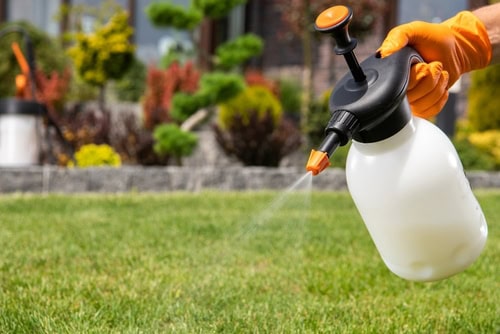
It starts with diagnosis. Before anything gets applied, we identify what’s actually affecting your lawn brown patch, dollar spot, red thread, or something else entirely. These diseases look similar in early stages, but they require different chemistry, different timing, and different approaches. Treating dollar spot like it’s brown patch doesn’t work. Getting the identification right is the whole foundation.
Once we know what we’re dealing with, we select the appropriate professional-grade fungicide and time the application to the disease’s active window. Brown patch treatment in Centereach needs to happen before or during the high-humidity stretch of late June through August, when nighttime temperatures in central Suffolk County regularly stay above 70°F. Red thread treatment is timed to the cooler shoulder seasons spring and early fall when that disease peaks in nitrogen-deficient turf. Applying fungicide outside of the disease’s active window is largely wasted effort.
After the application, you receive written documentation of exactly what was applied, at what rate, and when. This is a legal requirement under the NYSDEC framework for licensed commercial applicators and it matters in a community like Centereach where many homes rely on septic systems and residents are thoughtful about what goes into the ground. You always know what was used on your property.
Ready to get started?
The three fungal diseases that do the most damage to Centereach lawns are brown patch, dollar spot, and red thread and each one has its own profile. Brown patch (Rhizoctonia solani) is the most destructive in summer. Under the warm, humid conditions that are routine in central Suffolk County from late June through August, it can visibly spread within 24 to 48 hours. Circular patches expand fast, and waiting to see if it resolves on its own is rarely a good strategy.
Dollar spot thrives in drought-stressed turf exactly the condition that Centereach’s sandy, fast-draining soils produce in summer. It shows up as small, silver-dollar-sized dead spots and tends to cluster in areas where the lawn is already nitrogen-deficient or underwatered. Red thread is a cool-season disease that peaks in spring and again in early fall, spreading up to eight feet from a single infected area and leaving a distinctive pink-red tinge on affected grass blades.
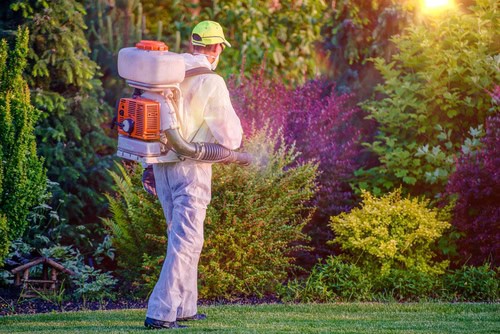
Our fungicide programs use professional-grade active ingredients including triazoles and strobilurins and rotate chemistry across applications to prevent resistance buildup. This is standard practice in professional turf management and something that single-chemistry DIY programs almost never account for. If your lawn has been treated before and the disease keeps coming back, resistance may be part of why. A rotating professional program breaks that cycle.
Recurring brown patch almost always means the disease was never fully eliminated just suppressed enough to look better for a while. The fungal pathogen that causes brown patch, Rhizoctonia solani, lives in the soil and in thatch layers year-round. When conditions turn favorable warm nights, elevated humidity, wet grass blades it activates again. In Centereach, those conditions arrive reliably every summer, which is why the same spots tend to die in the same places, year after year.
The other common reason it keeps coming back is that the lawn was reseeded without treating the disease first. New grass planted into actively infected soil doesn’t stand a chance the pathogen is already there waiting. A proper fungicide treatment program eliminates the active disease before any reseeding happens, which is the only way new growth actually establishes and holds. If you’ve reseeded the same spots more than once, this is almost certainly what’s happening.
Brown patch typically shows up as larger circular or irregular patches often a foot or more in diameter with a darker, water-soaked border around the edge in the early morning. It spreads fast in warm, humid conditions and is most aggressive in July and August in central Suffolk County. Dollar spot, by contrast, creates smaller, roughly silver-dollar-sized dead spots scattered across the lawn, often in a pattern that follows low-nitrogen or drought-stressed areas.
The distinction matters because the two diseases respond to different fungicide chemistry. Applying a brown patch treatment to a dollar spot problem or vice versa won’t produce meaningful results. On Centereach’s sandy soils, dollar spot is especially common in summer because those soils drain quickly and turf dries out faster than it would on heavier clay-based soils. If your lawn tends to dry out quickly in summer and you’re seeing small scattered spots rather than large circles, dollar spot is the more likely culprit.
You can try, and a lot of Centereach homeowners do but the results are usually inconsistent, and here’s why. Consumer-grade fungicides sold at retail stores contain lower concentrations of active ingredients than professional formulations, and the chemistry options available over the counter are limited. More importantly, they don’t include the restricted-use fungicides that licensed commercial applicators can access the professional-grade active ingredients like azoxystrobin and propiconazole that are used on golf courses and commercial turf throughout Long Island.
There’s also the identification problem. If you’re not certain which disease you’re treating, you’re essentially guessing at which product to buy. Brown patch, dollar spot, and red thread all look similar in early stages and require different chemistry. Buying the wrong product wastes money and time while the disease continues to spread. Professional diagnosis followed by targeted, professional-grade treatment is a different category of service than what’s available at a hardware store and the results reflect that difference.
Yes. Under New York State law, any business applying pesticides including fungicides for hire must be registered with the NYSDEC and employ at least one certified commercial pesticide applicator. This is not a technicality. It’s a legal requirement that involves passing state examinations, meeting experience standards, and renewing the credential every three years with continuing education. Operating without this license is illegal, and a meaningful number of lawn care operators in Suffolk County do not hold it.
Beyond the legal requirement, the license carries practical weight. Licensed applicators are required to comply with the NYS Neighbor Notification Law before applications, maintain written records of every treatment, and apply products at label-compliant rates. For homeowners in Centereach where many properties rely on septic systems and groundwater sensitivity is a real consideration knowing that your lawn care provider is operating under a documented, regulated framework matters. When you hire us, that credential is verifiable through the NYSDEC’s public database.
Timing depends entirely on which disease you’re dealing with, and Centereach has two distinct disease windows to plan around. The warm-season window late June through August is when brown patch is most active. Nighttime temperatures in central Suffolk County routinely stay above 70°F during this stretch, and the humidity that builds in this part of Long Island creates near-ideal conditions for Rhizoctonia. Preventative applications made before this window opens are more effective than emergency treatments applied after disease is already spreading.
The cool-season windows May through early June and again in September through October are when red thread peaks. Dollar spot can run through both windows depending on how drought-stressed the turf is. For lawns with a history of recurring disease, a preventative program that covers both the spring and summer windows is the most cost-effective approach. Curative treatment after disease is visible works, but it always costs more and takes longer to show results than prevention does.
Red thread rarely causes permanent turf death, but calling it minor undersells the damage it does. Left untreated, it spreads quickly spores can travel up to eight feet from a single infected area and the affected grass blades die back significantly before the disease runs its course. In a densely settled community like Centereach, where lawns are visible from the street and neighbors are close, a red thread outbreak is hard to ignore and slow to recover from without treatment.
The disease also tends to recur in the same areas because it thrives in nitrogen-deficient turf, and Centereach’s fast-draining sandy soils are prone to nitrogen loss. Without addressing both the active infection and the underlying turf health, you’re likely to see it return in the same spots the following spring or fall. A fungicide application timed to the cool-season window combined with a nutrition program that addresses the nitrogen deficiency is the way to break the cycle rather than just wait it out and deal with it again next year.
Useful Links
Other Services we provide in Centereach