
Hear from Our Customers
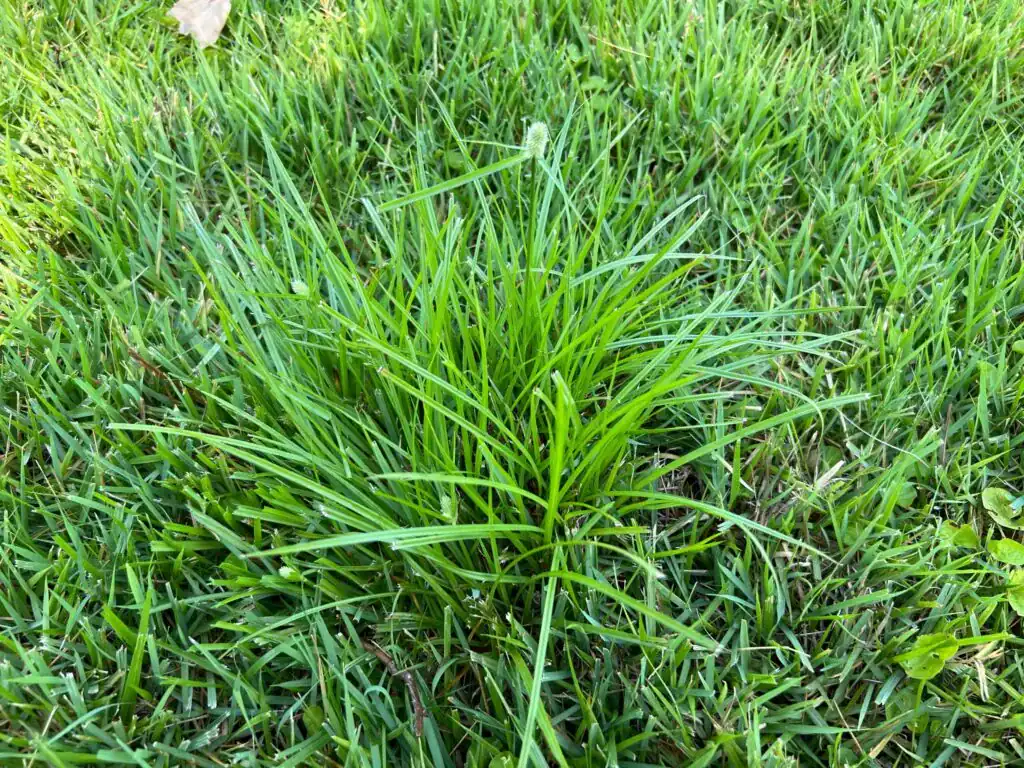
Kyllinga doesn’t blend in. It stays dark green and keeps pushing while the rest of your lawn slows down in summer heat and on a well-maintained Fort Salonga property, that contrast is impossible to ignore. Once it’s properly treated, you get back a uniform lawn that actually looks like the investment you’ve made in it.
The bigger win is stopping the spread before it becomes a renovation-level problem. A small patch in July can colonize a significantly larger area by the following summer through both rhizome spread and seed dispersal. Early, targeted treatment is what separates a manageable fix from a full lawn overhaul.
Fort Salonga’s coastal moisture from Long Island Sound, combined with the clay-influenced soils left behind by the hamlet’s historic brickworks, creates drainage conditions that kyllinga thrives in. If you’re also running an in-ground irrigation system which is common on properties here there’s a real chance your watering schedule is feeding the problem. Effective kyllinga control in Fort Salonga means treating the weed and addressing what allowed it to establish in the first place.
We’re a Suffolk County lawn specialist not a generalist landscaping company that added a weed program as an upsell. Every property we treat is in this county, which means we know the soil conditions, the seasonal timing, and the regulatory requirements that come with working on Long Island’s North Shore.
We hold a NYSDEC Commercial Pesticide Applicator License, Category 3a, which is the credential required to purchase and apply the professional-grade herbicides that actually work on kyllinga. Those products aren’t available at any store in Smithtown or Northport they’re restricted to licensed applicators for a reason.
Fort Salonga sits across two town lines Huntington to the west, Smithtown to the east and we’re familiar with both. We’re also fully up to date on Suffolk County’s pesticide buffer zone requirements under Local Law 41-2007, which matters for properties near protected groundwater areas in this part of the county. The clay soils and drainage patterns that define Fort Salonga’s landscape are exactly what make kyllinga such a persistent problem here, and that’s exactly why we’ve built our approach around the conditions you’re actually dealing with. To thicken sparse turf, we offer Fort Salonga lawn seeding as a follow-up step.
The first thing we do is confirm what you’re actually dealing with. Kyllinga and nutsedge are both sedges and they look similar, but they’re different plants. Kyllinga doesn’t have the underground nutlets that nutsedge does it spreads through rhizomes and seeds. Treating one like the other produces inconsistent results, so identification comes before any product goes down.
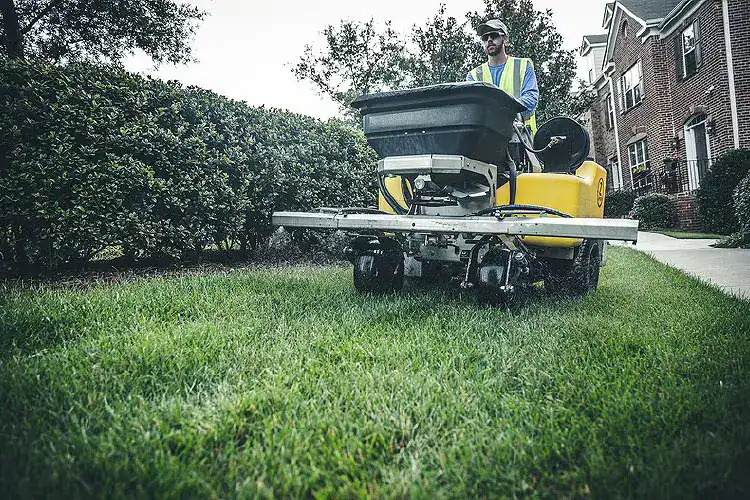
Once we’ve confirmed the species, we apply a sedge-active herbicide either halosulfuron-methyl or sulfentrazone, depending on your turf type and infestation level. These are professional-grade chemistries that require our NYSDEC license to use. The first application targets the visible plant tissue, but the rhizome network underground survives a single treatment. That’s not a flaw in the program it’s just how this plant is built.
That’s why a properly designed kyllinga control program for Fort Salonga requires a minimum of two to three applications spaced four to six weeks apart. On Long Island, the active treatment window runs from late May through late August, when kyllinga is growing and most vulnerable. We schedule around that window specifically not around a generic regional calendar. After the final application, we assess the treated areas and make recommendations for overseeding where the weed has left bare patches, because open soil is the next entry point for reinfestation.
Ready to get started?
Every kyllinga program starts with an on-site assessment of your Fort Salonga property. We look at the infestation size, the turf type, the drainage conditions, and whether irrigation patterns are contributing to the problem. Properties near Crab Meadow Beach or bordering Sunken Meadow State Park tend to have higher moisture pressure from surrounding terrain, and that affects how we approach the program.
From there, you get a minimum of two targeted herbicide applications using professional-grade sedge-active chemistry the kind that isn’t sold over the counter because it requires a licensed applicator to use. Each application is documented and applied in full compliance with Suffolk County’s SCDHS buffer zone requirements, which is a real regulatory consideration for properties in this part of the county.
We also include cultural recommendations after each application: irrigation adjustments if overwatering is a factor, drainage observations if low spots are creating wet soil conditions, and overseeding guidance once the treated areas are ready. The goal isn’t just to knock the weed back it’s to restore a dense, healthy lawn that doesn’t give kyllinga an easy way back in. That’s what a complete perennial kyllinga treatment in Fort Salonga, NY actually looks like.

Kyllinga is a sedge, not a broadleaf weed or a grassy weed and that distinction matters more than most people realize. The herbicides in standard weed control programs, including the ones that handle dandelions, clover, and crabgrass, have no meaningful effect on sedge. They’re not formulated for it. So if your existing lawn program has been treating everything else successfully but kyllinga keeps spreading, that’s not a failure of the program overall it’s a gap in the chemistry.
The only herbicides with proven efficacy against kyllinga are sedge-active products like halosulfuron-methyl and sulfentrazone. These require a NYSDEC Commercial Pesticide Applicator License to purchase and apply in professional formulations. They aren’t available at any retail location in Fort Salonga or anywhere else in Suffolk County. If your current lawn service hasn’t specifically mentioned sedge-active chemistry, there’s a good chance kyllinga control simply isn’t part of what they’re applying.
It does matter, and here’s why. Both kyllinga and nutsedge belong to the sedge family, and they look similar enough that they’re frequently confused even by lawn care providers who aren’t specifically trained in sedge identification. But kyllinga lacks the underground nutlets, or tubers, that nutsedge produces. Instead, kyllinga spreads primarily through a rhizome network and by seed, producing up to 5,000 seeds per plant per year.
The practical difference is in how the infestation behaves and how you approach it. A treatment protocol calibrated for nutsedge may produce inconsistent results on kyllinga, and vice versa. On Long Island’s North Shore, both green kyllinga and false green kyllinga have been confirmed as growing problems Rutgers Extension specifically identifies false green kyllinga as expanding into the Northeast. Getting the identification right before any product goes down is the first step in a program that actually works.
The short answer is the rhizome network. When a single herbicide application damages the visible plant tissue, the underground root system often survives and regenerates new growth from what’s left. This isn’t unique to a specific product it’s the biology of the plant. Kyllinga is a perennial sedge that has evolved to survive single-event disturbances, whether that’s a drought, a mowing, or a one-time spray.
This is also why pulling or digging kyllinga rarely works. Rhizome fragments left in the soil will regrow, and disturbing the soil can actually spread the problem by moving root material around. A properly structured program requires a minimum of two to three targeted applications spaced four to six weeks apart during the active growing season. On Long Island, that window runs late May through late August. If you’ve only had one application or if the timing was off that’s most likely why you’re still seeing regrowth.
Yes, and it’s more common than most homeowners expect. Kyllinga is a moisture-dependent sedge it establishes and spreads most aggressively in wet, poorly drained, or chronically overwatered soil. Fort Salonga properties with in-ground irrigation systems running on fixed schedules, especially schedules that don’t adjust for rainfall, are often creating the exact soil conditions that kyllinga needs to thrive.
This is especially relevant in the lower-lying areas of Fort Salonga properties closer to Crab Meadow Beach or in areas with the clay-influenced soils tied to the hamlet’s historic brickworks tend to drain more slowly to begin with. Add irrigation on top of that, and you’ve got persistent moisture in the root zone. Herbicide treatment alone will reduce the infestation, but if the underlying moisture conditions don’t change, reinfestation pressure stays high. Part of what we look at during the initial property assessment is whether irrigation frequency or drainage issues are contributing factors and we’ll tell you plainly what we find.
The active treatment window for kyllinga control on Long Island runs from late May through late August. That’s when kyllinga is growing actively and most metabolically vulnerable to herbicide uptake. Applications made before the plant breaks dormancy in spring, or after it begins going dormant in fall, are significantly less effective the chemistry needs the plant to be actively moving nutrients through its system to work properly.
For Fort Salonga specifically, the North Shore’s proximity to Long Island Sound moderates the local climate enough that active growth begins reliably in May and extends through late August. Most homeowners notice kyllinga in July or August, when it stays visibly dark green while surrounding cool-season turf slows down in the heat. That’s actually a good identification window, but it also means the first-application opportunity earlier in the season has already passed. Starting a program in late May or early June before the infestation is visually obvious gives you the best outcome. If you’re seeing it now, the right move is to start the program immediately rather than wait until next spring.
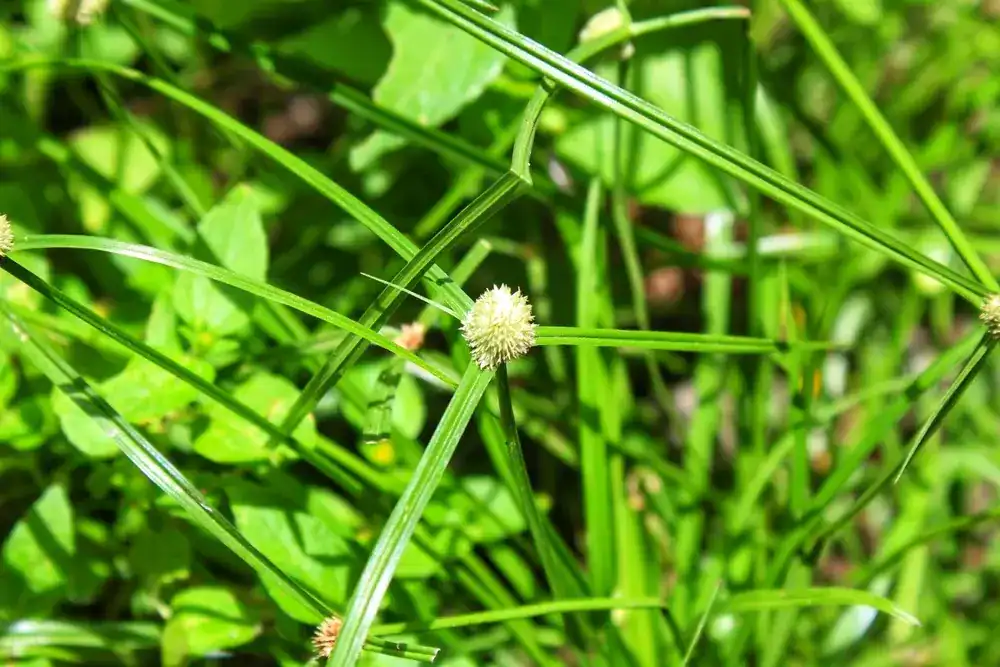
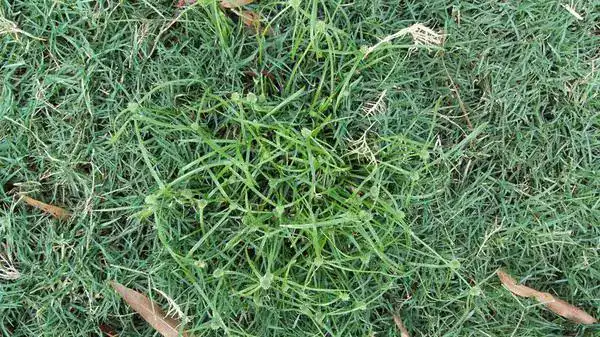
There are a few things to look for. Kyllinga is a low-growing, mat-forming plant with very dark green, glossy leaves. It grows faster than the surrounding turf and tends to stay green and vigorous when cool-season grasses slow down in summer heat that visual contrast is often the first thing Fort Salonga homeowners notice. The seed head is the clearest identifier: kyllinga produces a small, round or oval, white to greenish seed head at the top of a triangular stem. Nutsedge seed heads, by comparison, are more elongated and branching.
The triangular stem is the family-wide identifier for sedges roll the stem between your fingers and you’ll feel it. Grasses have round stems. If the stem is triangular and the seed head is round and compact, you’re almost certainly looking at kyllinga rather than nutsedge or a grassy weed. That said, species-level confirmation matters before any treatment decision is made, because the two most common kyllinga species on Long Island green kyllinga and false green kyllinga can look nearly identical to each other and to certain nutsedge varieties. When in doubt, get a professional assessment before spending money on a product that may not be right for what you have.
Useful Links
Other Services we provide in Fort Salonga