
Hear from Our Customers
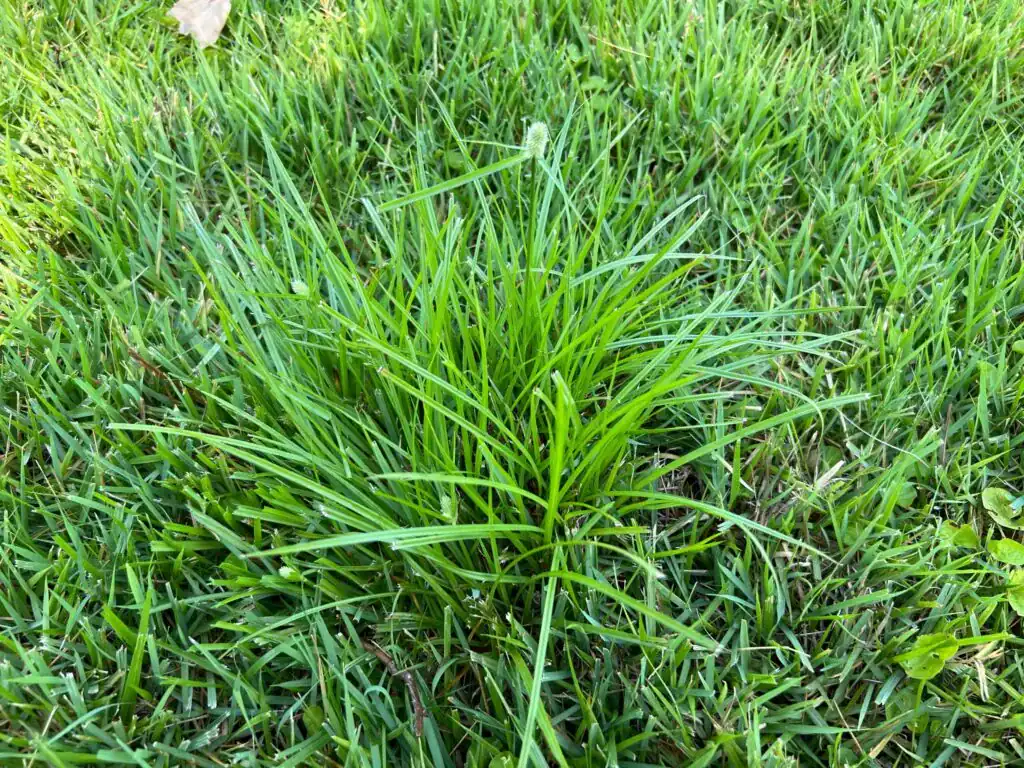
If you’ve watched a dark green, mat-forming patch slowly take over your lawn while every product you’ve tried did nothing, you’re not imagining things. Kyllinga is a sedge not a grass, not a broadleaf weed and the standard weed killers you’ll find at any garden center along Route 25A have zero activity against it. That’s not a product quality issue. It’s a category mismatch. You’ve been using the wrong tool for the job.
What changes after a properly structured kyllinga control program is straightforward: the infestation stops spreading, the affected areas begin to recover, and your lawn stops looking like two different plants are fighting for the same space. For Stony Brook properties specifically, that matters more than it might in other parts of Suffolk County. The harbor watershed creates elevated soil moisture throughout the surrounding neighborhoods exactly the conditions kyllinga exploits most aggressively so without targeted treatment, an infestation here doesn’t plateau. It keeps moving.
The older housing stock in Stony Brook South and the established lots near the village center also tend to have compacted soil profiles and irrigation systems that stay on longer than they need to. Both of those factors feed kyllinga. A real fix addresses the weed with the right chemistry and the right timing, and follows up with overseeding so the areas that were colonized don’t just become the next entry point.
We’re based out of Port Jefferson Station, a few miles up Route 25A from Stony Brook Village. That proximity isn’t a marketing line it means the people treating your lawn have driven past the Long Island Museum, know what North Shore soil behaves like after a wet spring, and understand the drainage dynamics that come with being in the Stony Brook Harbor watershed. This isn’t a regional chain routing calls through a dispatch center somewhere else.
We hold a New York State DEC Commercial Pesticide Applicator License (Category 3a Ornamental and Turf). That credential is what separates a company that can actually buy and apply the herbicides that work on kyllinga from everyone else. It also means every application we make in Stony Brook is handled in full compliance with Suffolk County’s pesticide buffer zone regulations which matter here given the proximity to the harbor and the Long Island sole-source aquifer.
Our work is built around renovation, not maintenance. Getting kyllinga out of a Stony Brook lawn and restoring what was there is the goal not just spraying and moving on.
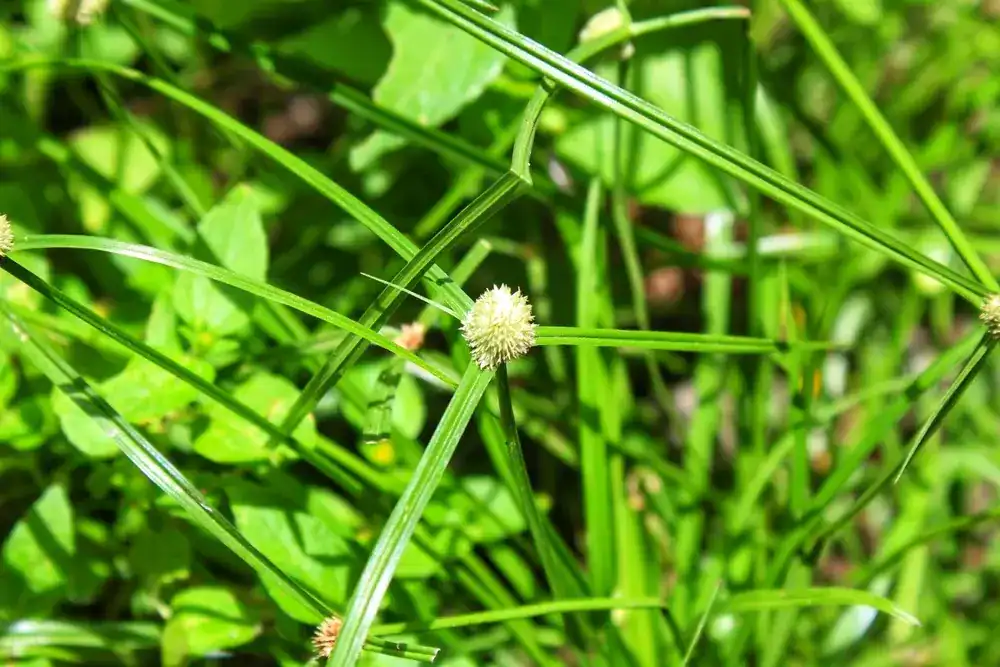
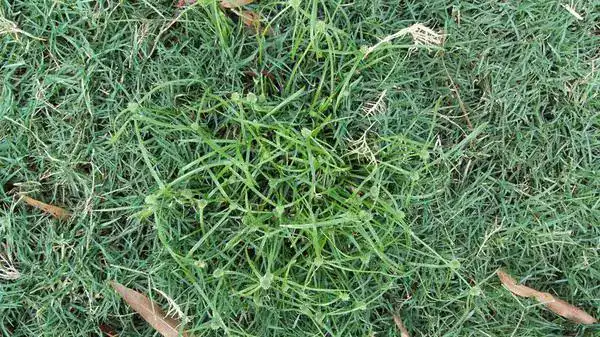
The first step is identification. Kyllinga and nutsedge are both sedges, and they’re frequently confused but they’re not the same plant, and the distinction affects how the treatment is structured. Green kyllinga grows in a dense, low mat with a compact, rounded seed head. Nutsedge grows taller with a branched, open structure and produces underground tubers that kyllinga doesn’t. Getting this right before anything is applied is what separates a targeted program from a guess.
Once the species is confirmed, treatment begins during the active growing window on Long Island’s North Shore, that typically opens in mid-to-late May and runs through late August. Stony Brook’s coastal position, moderated by proximity to Long Island Sound, means active growth can start slightly earlier here than in inland Suffolk County towns. The first application targets emerging kyllinga directly. Follow-up applications, spaced four to six weeks apart, address any regrowth from the rhizome network that survives the initial treatment. One application is not a program it’s a start. Kyllinga’s underground structure requires multiple passes to break the cycle.
After the sedge is controlled, the affected areas are thin and bare. That’s expected. We overseed with appropriate cool-season turf varieties to close those gaps before they become re-entry points for new weed pressure. Before any application is made on a Stony Brook property, we verify buffer zone compliance under Suffolk County Local Law 41-2007 particularly relevant for properties near the harbor or with private wells.
Ready to get started?
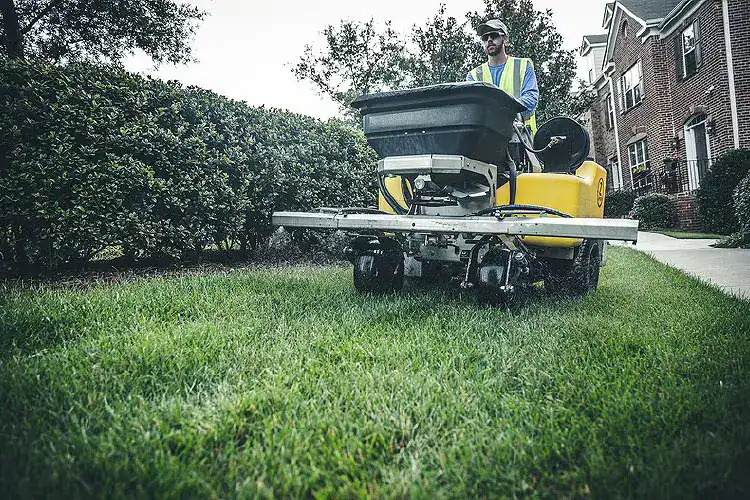
The herbicides that actually control kyllinga halosulfuron-methyl and sulfentrazone, sold under professional trade names like Sedgehammer and Dismiss are not available at any hardware store or garden center in Stony Brook. They require a state pesticide applicator license to purchase in professional formulations, and they need to be applied at the right rate, at the right time, by someone who knows what they’re treating. That’s the core of what we bring to a kyllinga problem that nothing else has solved.
Every kyllinga control program we offer includes species-level identification before treatment begins, a structured multi-application schedule timed to the North Shore growing season, and post-treatment overseeding to restore the areas the sedge occupied. Properties near Stony Brook Harbor, in Old Field, or in areas with private wells receive additional attention to Suffolk County buffer zone requirements before any product is applied that compliance step is built into our process, not an afterthought.
For Stony Brook lawns on larger lots particularly the established properties in Stony Brook South or the higher-value parcels in Old Field catching kyllinga at an early or moderate stage is significantly more cost-effective than waiting until it has spread across a substantial portion of the lawn. At that point, the conversation shifts from targeted control to full renovation. The difference between those two outcomes is usually one season.

Kyllinga survives most single applications because the herbicide damages the visible plant tissue but leaves the rhizome network underground largely intact. Those rhizomes regenerate new growth, and within a few weeks the patch looks like it was never treated. This is not a product failure it’s a biological reality that requires a structured, multi-application program to address properly.
In Stony Brook specifically, the moist soil conditions created by the harbor watershed give kyllinga a persistent advantage. The plant thrives in the kind of consistently damp, compacted soil that’s common in older established lawns with irrigation systems that run more than they need to. Even after successful treatment, if those underlying conditions aren’t addressed through adjusted irrigation habits, aeration, or overseeding to restore competitive turf density kyllinga can re-establish from seed the following season. The treatment program handles the active infestation. The cultural follow-up is what keeps it from coming back.
Yes, it matters. Both are sedges, and both are immune to the broadleaf and grass herbicides that make up most standard lawn care programs. But they’re different plants with different growth habits, and a provider who treats them interchangeably without identifying which one is present is making an assumption that can cost you time and money.
Green kyllinga grows in a low, dense mat and produces a small, compact, rounded seed head. It spreads primarily through rhizomes and seed. Nutsedge grows taller, has a branched and more open seed head, and produces underground tubers called nutlets that kyllinga does not. Those nutlets make nutsedge particularly persistent and may influence how aggressively a follow-up program needs to be structured. On Long Island properties where both species sometimes appear in the same lawn, correct identification before treatment begins is the step that determines whether the program actually works or just looks like it’s working for a few weeks.
The effective treatment window for kyllinga in the Stony Brook area opens when the plant breaks dormancy and begins active growth typically mid-to-late May on Long Island’s North Shore. Because Stony Brook’s climate is moderated by its proximity to Long Island Sound and Stony Brook Harbor, active growth here can begin a few days earlier than in inland Suffolk County towns like Holbrook or Medford. That’s worth knowing if you’re trying to time the first application correctly.
The window for effective treatment runs through late August. Applications made outside of this period either too early in spring before the plant is actively growing, or in fall when it’s entering dormancy will produce poor results regardless of the product used. The herbicides that control kyllinga work by disrupting active metabolic processes in the plant. If the plant isn’t actively growing, the chemistry doesn’t move through the tissue the way it needs to. Timing the first application to coincide with vigorous early-season growth, and spacing follow-up applications four to six weeks apart within that window, is what drives consistent results.
This is a legitimate concern for Stony Brook properties, and it’s one that a licensed applicator should be prepared to answer specifically not generically. Suffolk County Local Law 41-2007 establishes pesticide-free buffer zones around public drinking water supply wells, and the Suffolk County Department of Health Services requires licensed applicators to verify compliance with those zones before any application. For properties in and around Stony Brook particularly those near the harbor, in Old Field, or on lots with private wells this isn’t a formality. It’s a real regulatory requirement.
We verify buffer zone compliance before every application in the Stony Brook area. The herbicides used for kyllinga control halosulfuron-methyl and sulfentrazone are applied at label-specified rates by a licensed applicator, which is the standard that governs safe and legal use. If your property is in or near a designated buffer zone, that’s identified before anything is applied, and the application is handled accordingly. Any company treating your lawn in Suffolk County without a state pesticide applicator license is not equipped to navigate these requirements.
The short answer is that the products available at retail including the Home Depot on Route 347 or any garden center along Route 25A do not contain the active ingredients that control kyllinga. Broadleaf herbicides, crabgrass preventers, and weed-and-feed products have no meaningful activity against sedge species. If you’ve already tried something from a store shelf and watched the weed come back within weeks, that’s why.
The herbicides that actually work on kyllinga, primarily halosulfuron-methyl and sulfentrazone, are professional-grade formulations that require a New York State DEC Commercial Pesticide Applicator License to purchase. They are not sold to the general public in the concentrations and formulations that produce reliable results. This isn’t a gap in the retail market it’s a regulatory structure designed to ensure that potent chemistry is applied correctly, at the right rate, by someone trained and licensed to use it. For a Stony Brook homeowner who has already spent time and money on products that didn’t work, this is the explanation for why and the reason a licensed applicator is the practical path forward.
After the first application, you’ll typically see visible stress on the kyllinga yellowing, browning, and a noticeable reduction in growth within two to three weeks. The plant won’t disappear immediately, and that’s normal. What you’re watching is the herbicide working through the plant’s tissue and beginning to break down the rhizome network underground. Full suppression from a single application takes time, and in most cases the plant will show some regrowth before the follow-up application is made.
By the end of a properly structured two-to-three application program, the active infestation should be significantly reduced or eliminated in the treated areas. What you’ll be left with are thin or bare patches where the kyllinga was growing because kyllinga crowds out desirable turf grasses, and those areas need to be overseeded to recover fully. In Stony Brook, where established lawns on larger lots have often been dealing with kyllinga pressure for more than one season, realistic expectations matter. A patch that has been spreading for two or three years won’t be gone after a single visit. But a complete program, run through the active growing season with proper follow-up, produces real and lasting results.
Useful Links
Other Services we provide in Stony Brook