
Hear from Our Customers
Most Blue Point homeowners who’ve been fertilizing for years and still seeing thin, patchy turf aren’t dealing with a fertilizer problem. They’re dealing with a compaction problem. When the soil surface is sealed off whether from foot traffic, mowing, or the sandy-loam conditions common along the South Shore nutrients sit on top instead of reaching the root zone. Core aeration physically removes small plugs of soil across the entire lawn, opening up pathways for water, air, and fertilizer to get where they need to go. Research shows fertilizer uptake efficiency can increase by 30 to 40 percent after a proper aeration treatment. That means the program you’ve already been paying for starts working the way it was supposed to.
Living on the Great South Bay side of Suffolk County adds another layer to this. Salt air from the bay deposits on grass blades and into the soil throughout the growing season, stressing roots and disrupting nutrient absorption in ways that inland towns like Smithtown or Stony Brook simply don’t experience. When those roots are already working harder just to survive the salt exposure, compaction that limits their access to oxygen compounds the damage. Aeration gives salt-stressed roots the best possible environment to recover and for Blue Point lawns coming out of a full summer near the water, that recovery window in the fall is everything. We also treat for pests with flea and tick treatment in Blue Point.
We’re a locally owned lawn care company serving Suffolk County, including the South Shore corridor from Sayville through Patchogue and into Blue Point and Bayport. There’s no franchise behind our name, no call center routing your job to whoever’s available. The people who show up know Long Island’s soils and there’s a real difference between the sandy-loam coastal plain around the Great South Bay and the heavier inland soils you find further north in the county.
All of our applicators are licensed through the New York State DEC, which is a legal requirement for commercial applicators in New York and one that a surprising number of local operators can’t confirm. That matters more in a community like Blue Point, where Suffolk County’s fertilizer restrictions near waterways are directly relevant to every lawn within reach of the bay. You get compliant, knowledgeable service from a team that actually understands what’s under your grass.
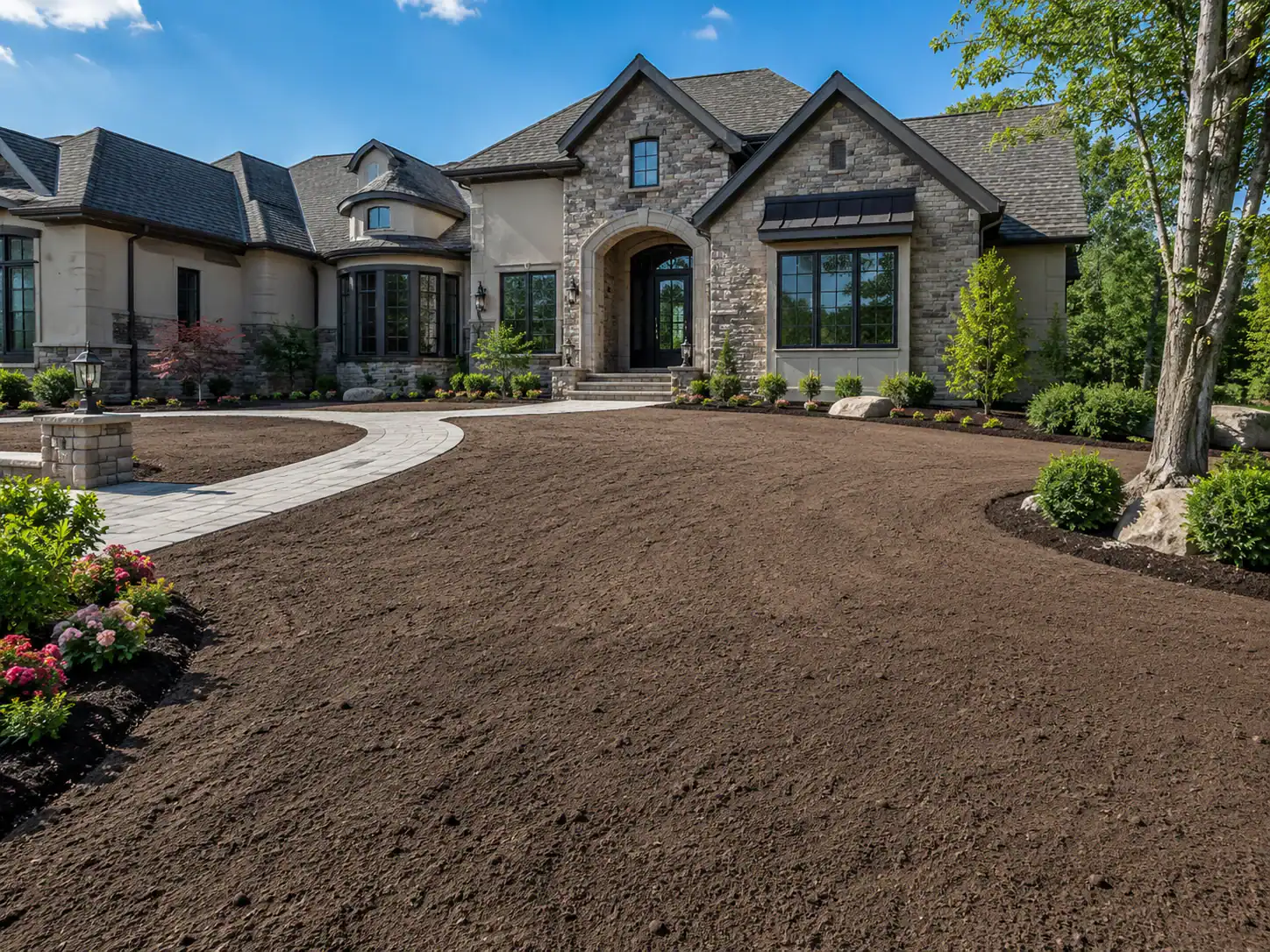
The process starts with an assessment of your lawn’s current condition how dense the thatch layer is, where compaction is most visible, and whether overseeding makes sense alongside aeration. On South Shore properties like those in Blue Point, that assessment also accounts for soil moisture levels. Blue Point’s flat, bayside terrain means the water table can sit closer to the surface than in inland areas, particularly during fall and spring wet seasons. Aerating saturated ground can do more harm than good, so timing and soil conditions are evaluated before any equipment rolls.
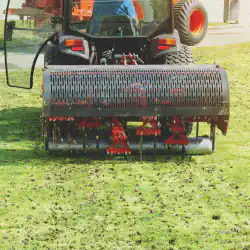
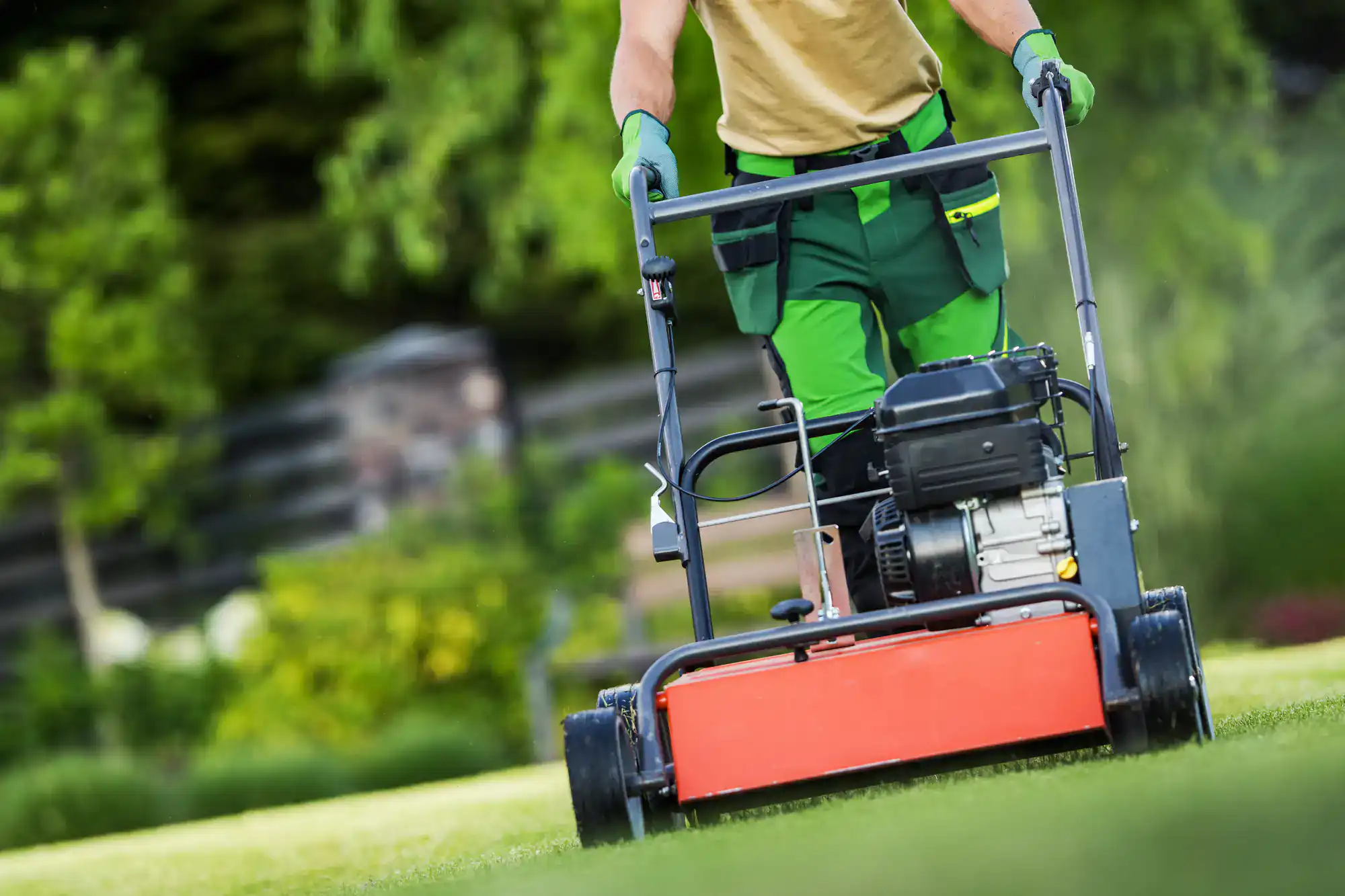
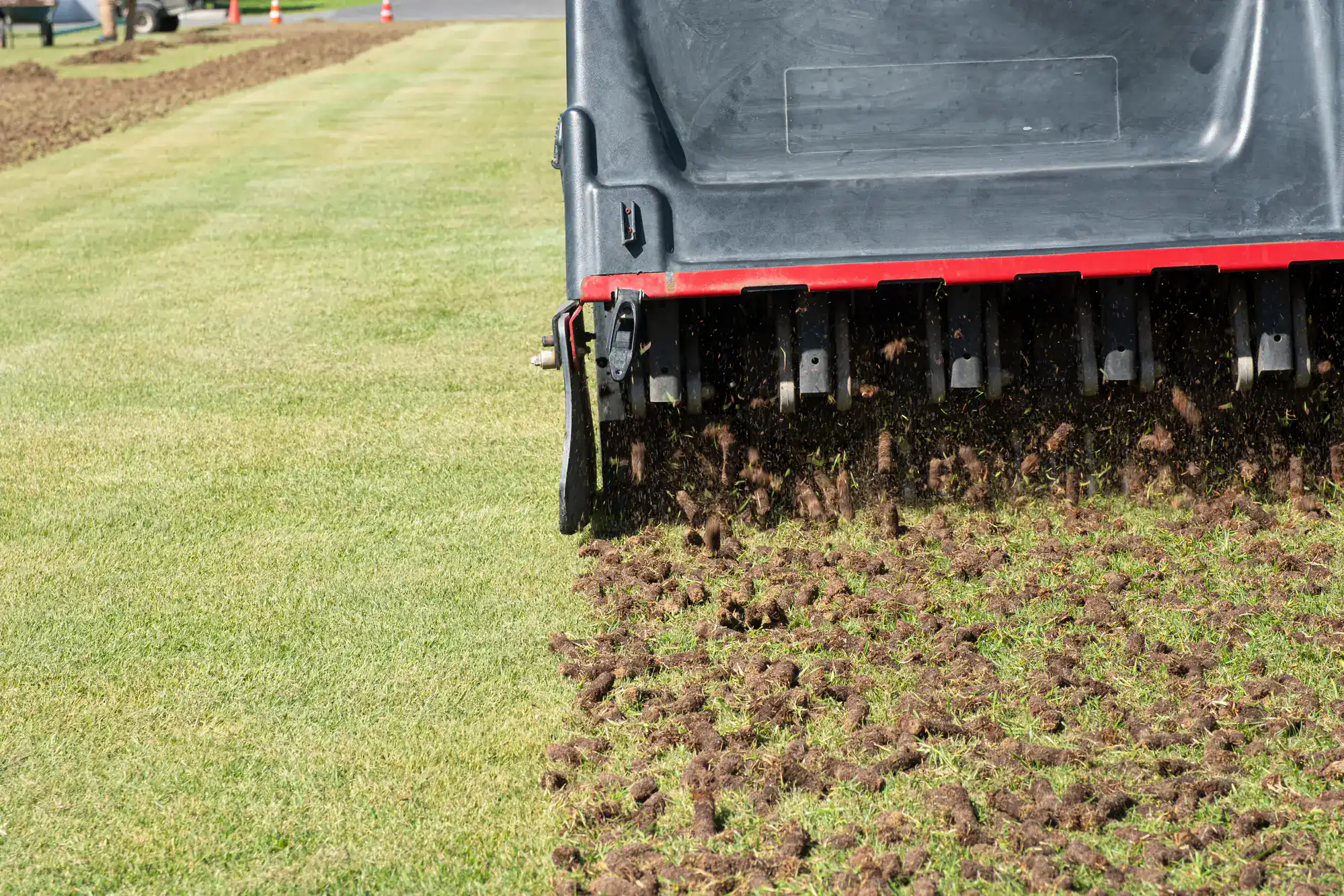
When conditions are right, we use a hydraulic aerator not the drum-style rental units most homeowners have seen or tried. The difference is depth. Standard rental aerators typically reach 1.5 to 2 inches on a good day. Our hydraulic aerator drives tines 3 to 4 inches deep, which is where the actual compaction layer lives on most Blue Point lawns. That depth is what separates a real result from a cosmetic pass.
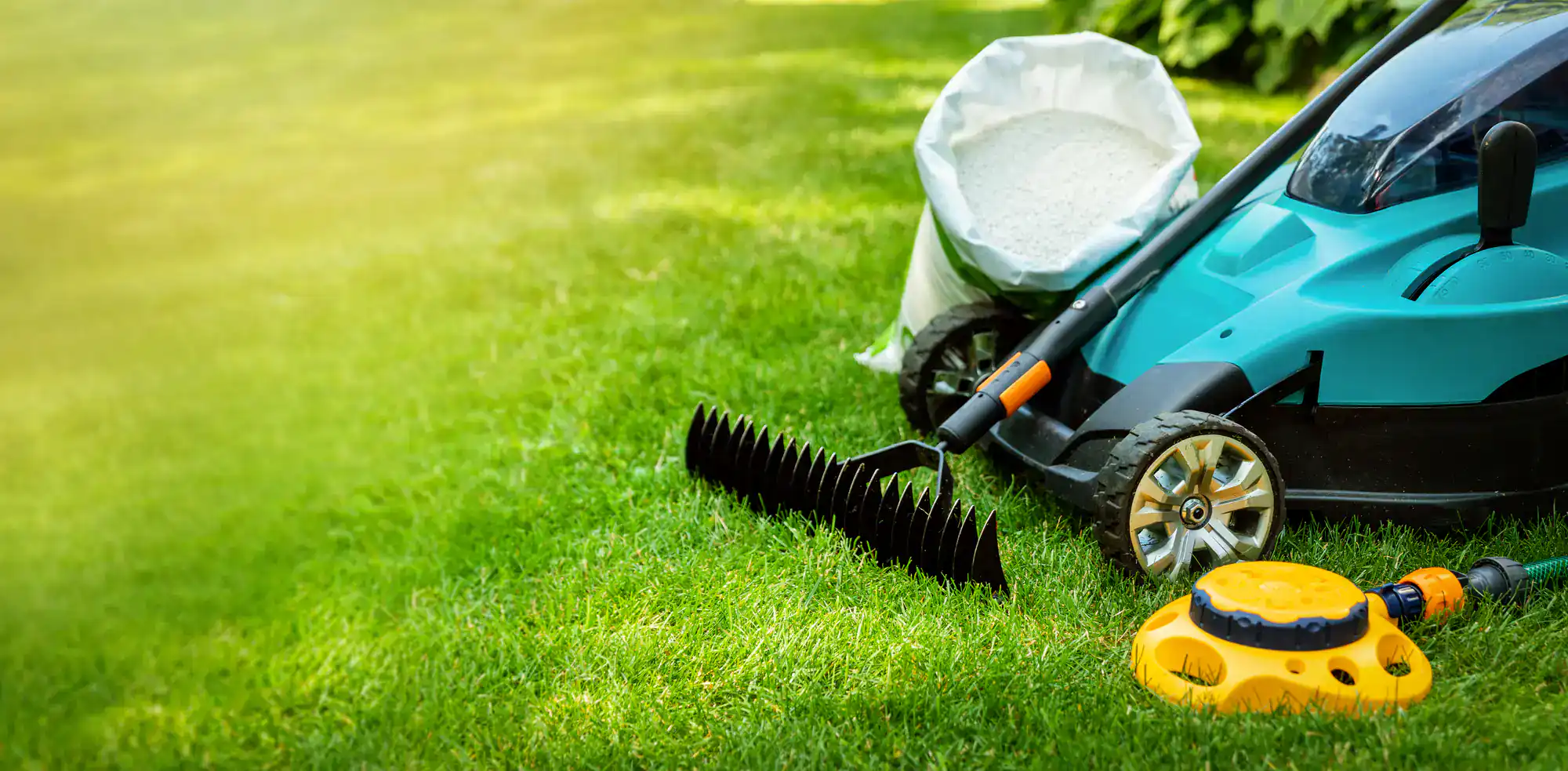
After aeration, the soil cores pulled from the ground are left on the lawn’s surface. They look a little rough for a week or two, but they break down on their own returning organic matter and beneficial microbes back into the soil as they do. If overseeding is part of the plan, seed is applied immediately after aeration so it falls directly into those open channels and makes soil contact. That’s why overseeded lawns following core aeration germinate at rates 30 to 50 percent higher than seed scattered on un-aerated turf.
Ready to get started?
Core aeration through our service isn’t a standalone punch on a checklist. It’s the foundation that makes the rest of your lawn program work. On the sandy-loam soils common to Blue Point and the surrounding South Shore communities, a thatch layer builds up at the surface and becomes hydrophobic over time meaning water and fertilizer bead off instead of soaking in, even when the sand below is loose and would otherwise drain well. Aeration breaks that layer open. Everything applied after seed, fertilizer, water has a direct path to the root zone.
For Blue Point lawns, the fall window from late August through October is the right time. The bay’s moderating influence on South Shore temperatures keeps soil warm slightly longer than inland areas, which extends the effective overseeding window. But it still closes, and September books fast across Suffolk County. If you’re also dealing with bare patches, thin turf, or areas that just don’t fill in, aeration paired with overseeding in the fall is the most effective correction available for cool-season grasses like tall fescue, Kentucky bluegrass, and perennial ryegrass the varieties that dominate lawns in this area.
Our service also stays within Suffolk County’s fertilizer regulations, including nitrogen rate limits near waterways and phosphorus-free requirements under New York State’s Nutrient Runoff Law. For a community with as direct a connection to the Great South Bay as Blue Point has, that compliance isn’t a footnote it’s part of what responsible lawn care looks like here.
This is one of the most common frustrations on the South Shore, and the answer is almost always soil compaction. When the surface layer of your lawn becomes compacted from foot traffic, mowing equipment, and the repeated wet-and-dry cycles that sandy soils go through fertilizer can’t penetrate to the root zone. It sits on top, gets washed away with the next rain, and delivers almost no benefit to the grass below. On Blue Point lawns near the Great South Bay, that runoff concern is real: nitrogen washing off a compacted lawn doesn’t just waste your investment, it ends up in a waterway that the entire community cares about.
Core aeration solves this by physically removing plugs of soil across the lawn, creating open channels for nutrients, water, and air to reach the roots directly. Once that pathway is restored, the fertilizer program you’ve already been running starts performing the way it was designed to. Most homeowners notice a visible difference within one growing season after their first proper aeration treatment.
It matters more than most people realize, especially on the sandy-loam soils common to Blue Point and the South Shore. Spike aeration pushes solid tines into the ground to create holes but it doesn’t remove any soil. That means the ground around each hole actually becomes more compacted as the soil is pushed aside and compressed. On sandy soils where the compaction layer is relatively shallow, spike aeration can push that compacted material deeper while creating the appearance of treatment at the surface.
Core aeration removes a physical plug of soil typically 2 to 4 inches deep which creates genuine decompression rather than just displacing the problem. If you’ve rented a spike aerator in the past and seen little improvement, this is likely why. The hole is there, but the compaction isn’t gone. Core aeration is the only method that actually reduces soil density, and on South Shore soils, that distinction is the difference between a lawn that responds and one that doesn’t.
For most Long Island lawns, the fall window late August through October is the right time for core aeration, especially if you’re combining it with overseeding. Cool-season grasses like tall fescue and Kentucky bluegrass, which are the most common varieties in Blue Point, thrive when aeration and seeding happen as summer heat fades and soil temperatures are still warm enough to support germination. The Great South Bay’s influence on South Shore temperatures means that warmth lingers slightly longer here than in inland areas like Hauppauge or Smithtown, which can extend your effective window into mid-October.
That said, September is when demand peaks across Suffolk County and schedules fill up quickly. Spring aeration April through May is a reasonable secondary option for lawns with severe compaction that can’t wait, but it’s less effective for overseeding because of weed competition in the spring. If your goal is both aeration and a thicker lawn by next summer, fall is the window to work with, and booking early is the most reliable way to get on the schedule.
Yes, and it’s one of the factors that makes lawn care in Blue Point genuinely different from what works in towns further inland. Salt deposits from bay air accumulate on grass blades throughout the growing season, pulling moisture out of the blades and building up in the soil over time. In the soil, salt interferes with the way roots absorb water and nutrients a process called osmotic stress which means your grass is working harder just to stay alive, regardless of how much you fertilize or water.
Core aeration doesn’t remove salt from the soil, but it gives salt-stressed roots the best possible environment to function in. By opening up the soil structure and improving the movement of water through the root zone, aeration helps flush some of that accumulated salt deeper into the profile and away from the active root zone. Combined with proper irrigation and a calibrated fertilization program, fall aeration is the most practical tool available for helping a South Shore lawn recover from a full season of bay-side exposure.
Depth is where most DIY and rental aeration attempts fall short. Standard drum aerators available at equipment rental centers typically penetrate 1.5 to 2 inches under ideal conditions and often less on the variable sandy-loam soils found along the South Shore, where surface resistance changes from one area of the lawn to the next. At that depth, you’re disturbing the thatch layer but not reaching the actual compaction zone where the real restriction lives.
We use a hydraulic aerator that drives tines 3 to 4 inches deep with dynamically adjusted pressure. On a Blue Point lawn where the compaction layer sits just below the thatch, that extra depth is what produces a real result rather than a surface-level pass. If you’ve aerated before either yourself or through another provider and didn’t see much improvement, equipment depth is the first question worth asking. The process only works when the tines actually reach the problem.
Core aeration itself poses no risk to the bay or to lawns near it in fact, it’s one of the most environmentally responsible lawn treatments available in a waterfront community. By improving the soil’s ability to absorb water and nutrients, aeration directly reduces the surface runoff that carries nitrogen and other compounds toward the bay. A compacted lawn sheds water; an aerated lawn absorbs it. That difference matters in a community where Suffolk County’s fertilizer law specifically limits nitrogen application rates near waterways, and where organizations like Save The Great South Bay have pushed for responsible lawn care practices for years.
What does matter near the bay is who’s applying any fertilizer that follows. Our applicators hold New York State DEC pesticide applicator licenses and follow Suffolk County’s fertilizer regulations, including phosphorus-free requirements under the NYS Nutrient Runoff Law. For Blue Point homeowners who care about what ends up in the Great South Bay and given this community’s history with the water, many do that licensing and compliance is worth asking any provider about before they set foot on your lawn.
Useful Links
Other Services we provide in Blue Point