
Hear from Our Customers
If you’ve been on a fertilization program for a few seasons and your lawn still looks thin, patchy, or washed out, the problem probably isn’t the product. Fort Salonga sits on the Harbor Hill Moraine the same glacially deposited clay-heavy till that once supported a thriving brickworks industry right here in this hamlet. That soil compacts severely under mowing equipment and foot traffic, forming a dense layer that nutrients, water, and air simply can’t push through. Your fertilizer is sitting on the surface and washing off with the first rain.
Core aeration changes that. By pulling physical plugs out of the ground, the process opens channels directly into the root zone channels that didn’t exist before. Water infiltrates instead of running off toward Crab Meadow Beach. Nutrients reach the roots instead of the storm drain. On North Shore clay soils like those under Fort Salonga properties, the difference in fertilizer uptake efficiency after a proper aeration can be 30 to 40 percent. That’s a meaningful return on an investment you’ve already been making.
The estate-scale lots and mature tree canopy throughout Fort Salonga also create above-average thatch buildup over time. Decades of leaf litter, organic debris, and established lawn growth layer up into a barrier that compounds the compaction problem. Aeration works on both fronts at once decompressing the soil and physically disrupting the thatch layer so your lawn can breathe again.
We’re a Suffolk County–based lawn care company serving the North Shore communities along Route 25A including Fort Salonga, Smithtown, Kings Park, Northport, and Stony Brook. This isn’t a national franchise routing your call to a subcontractor. The same licensed team that answers the phone is the team that shows up at your property.
Every applicator on our crew holds a New York State DEC pesticide applicator license a legal requirement in New York that not every operator in this area actually meets. That matters in Fort Salonga specifically, where properties border Smithtown Bay and Long Island Sound, and where the state’s fertilizer law restricts phosphorus use near coastal waterways. You’re not just protecting your lawn you’re protecting the shoreline your neighborhood is built around.
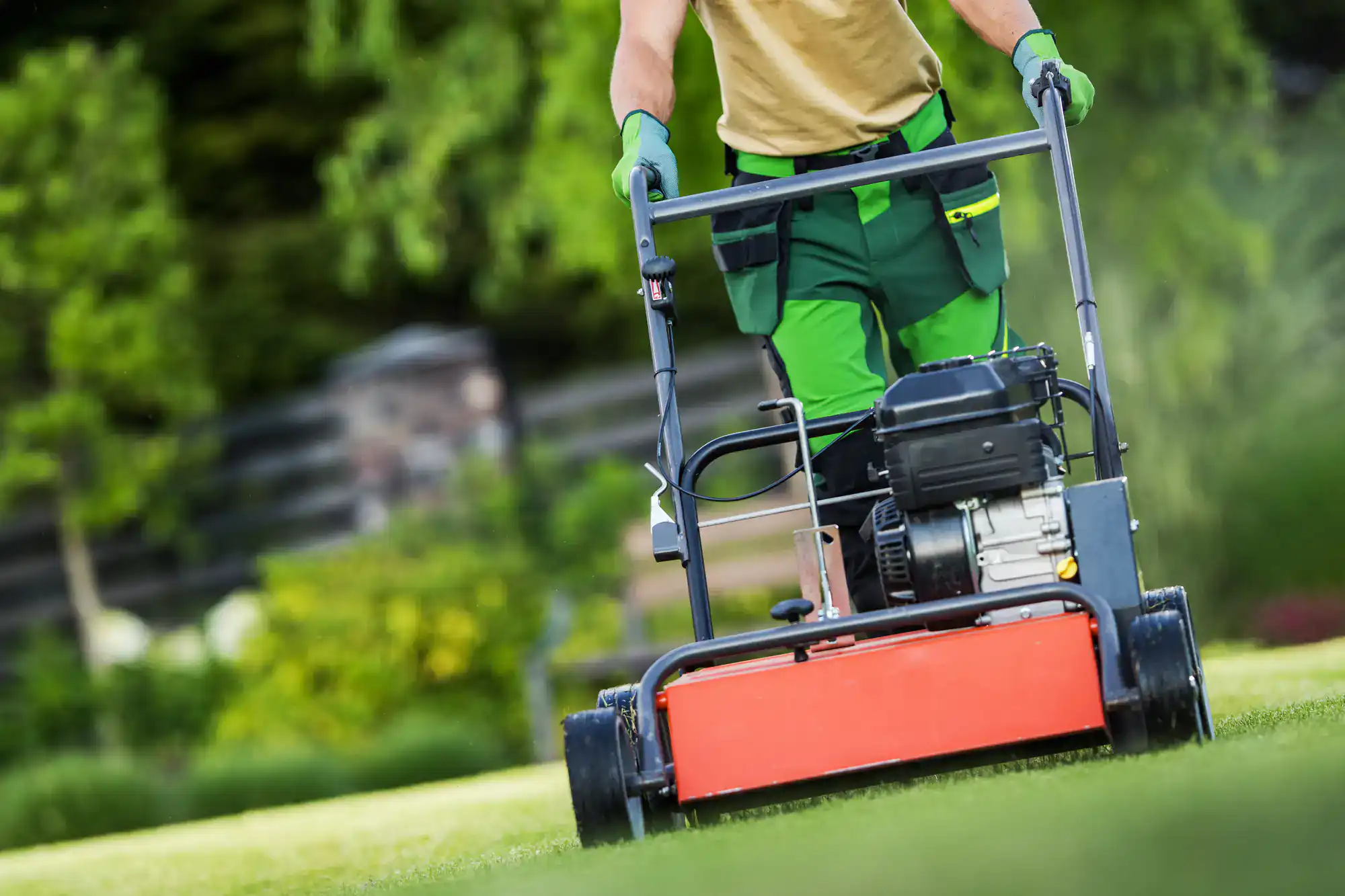
The equipment matters too. We use a commercial hydraulic aerator, not the drum-style machine available at the Home Depot on Route 25. On the clay-heavy glacial till soils that run beneath Fort Salonga’s lawns, that depth difference 3 to 4 inches versus 1.5 to 2 is the difference between real relief and surface-level treatment. Aeration pairs naturally with our lawn seeding service in Fort Salonga for better germination.
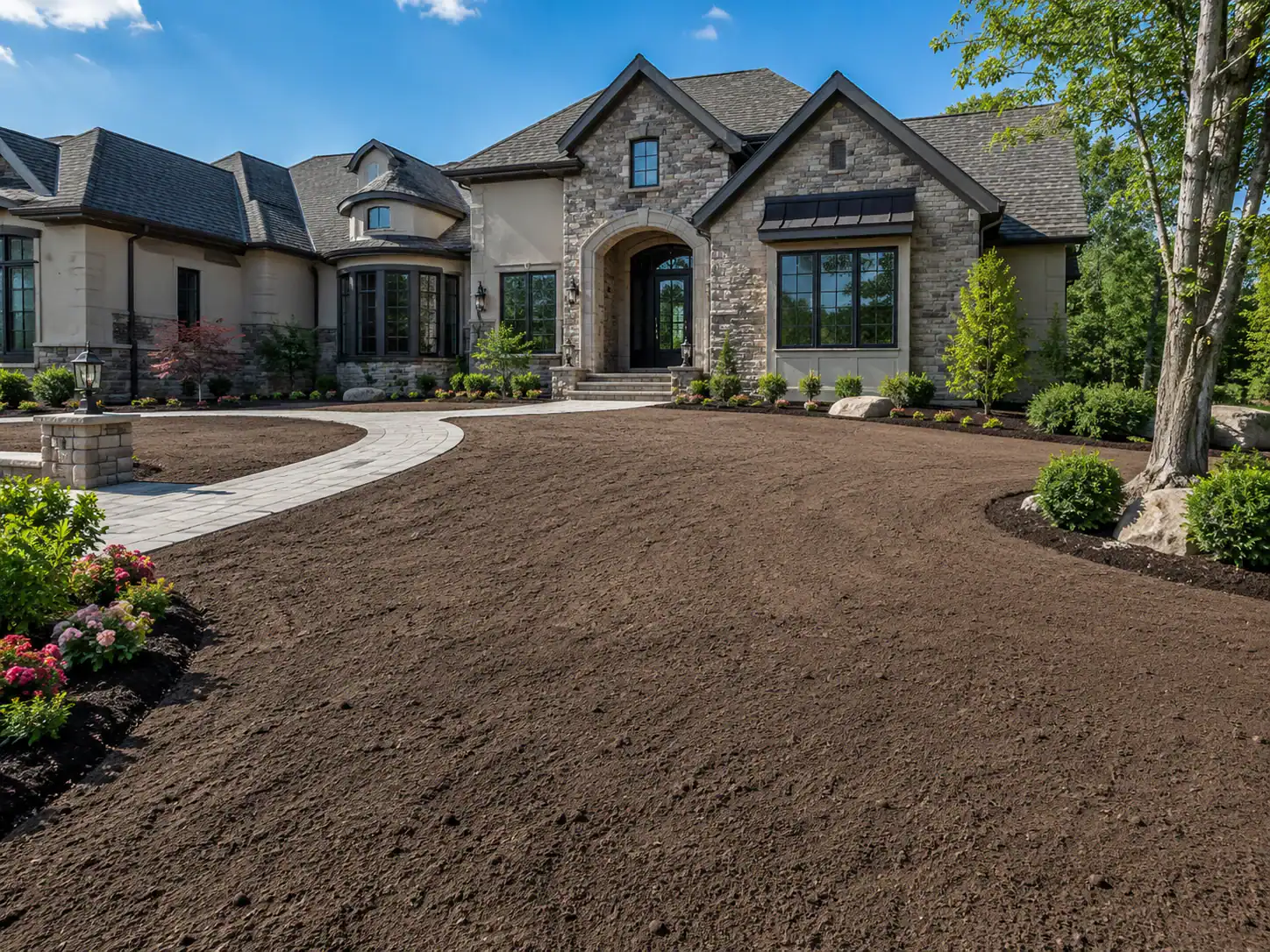
It starts with a free estimate. One of our crew members walks your property, looks at the turf condition, assesses thatch depth, and identifies the compaction pattern which on Fort Salonga’s larger lots often varies from the open lawn areas to the shaded zones under mature tree canopy. From there, you get a clear price with no guesswork.
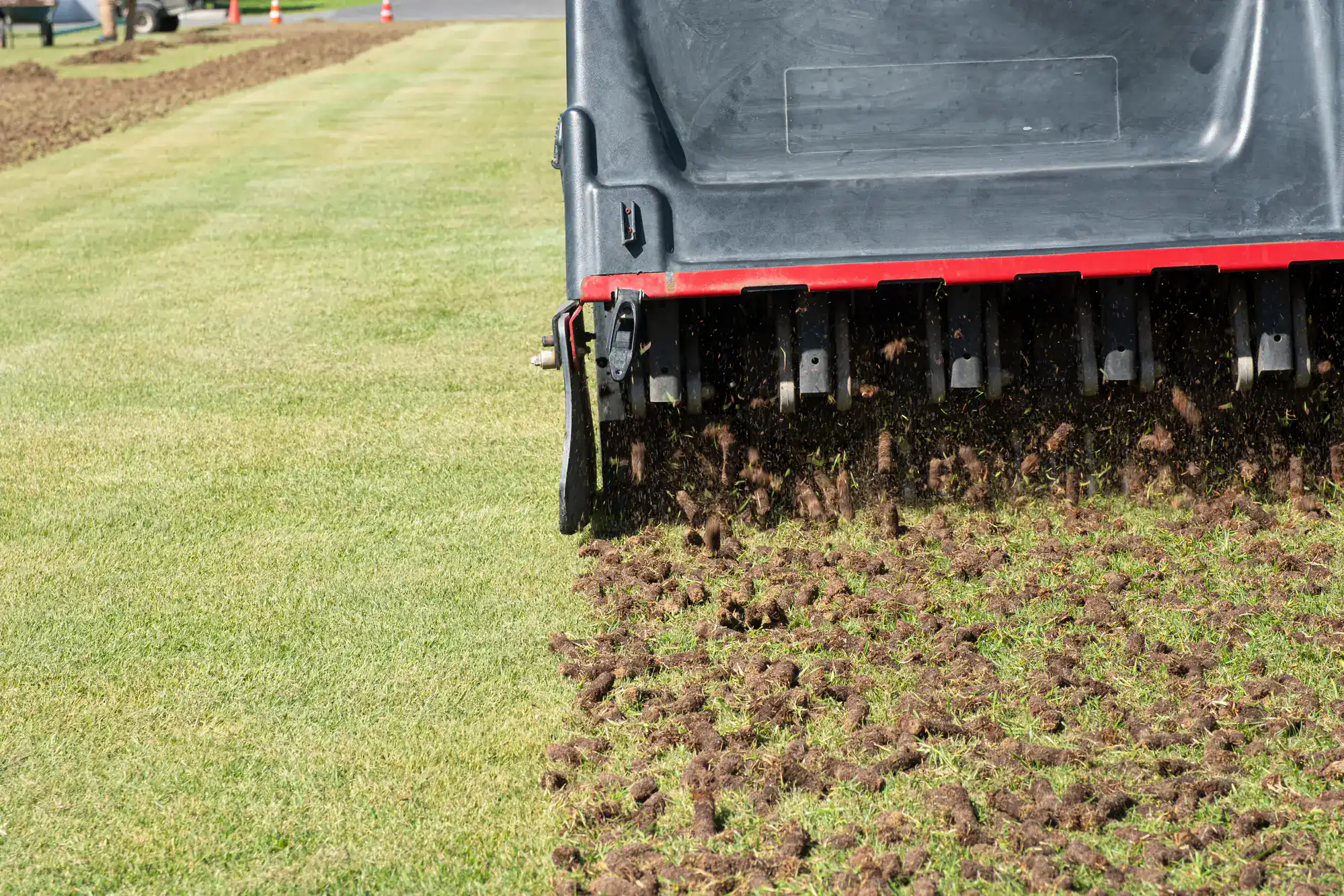
On service day, our hydraulic aerator makes passes across the lawn, pulling cylindrical cores plugs of compacted soil out of the ground and depositing them on the surface. The holes left behind are typically 2 to 3 inches apart and 3 to 4 inches deep. Those channels are now open pathways for water, oxygen, and fertilizer to reach the root zone. If you’re combining aeration with overseeding, seed goes down immediately after directly into those holes, where it makes soil contact and germinates at a significantly higher rate than seed dropped onto an un-aerated surface.
The plugs stay on the lawn. That’s intentional. They contain soil biology and organic matter that break down within two to four weeks, returning nutrients to the surface and helping to reduce the thatch layer in the process. The lawn will look temporarily disrupted that’s normal. Within a few weeks, especially with the Long Island Sound’s moderating effect keeping soil temperatures warm into October, you’ll see the results of what the soil was capable of all along.

Ready to get started?
Our core aeration service is designed around the cool-season grasses that dominate Fort Salonga lawns tall fescue, Kentucky bluegrass, and perennial ryegrass. These grasses have a specific optimal window: late August through October. The North Shore’s proximity to Long Island Sound keeps soil temperatures warm slightly later into fall than inland Suffolk County communities, which gives Fort Salonga homeowners a marginally extended window but it still closes. September books fast, and once the soil cools below the germination threshold, overseeding has to wait another year.
Core aeration pairs naturally with overseeding and fertilization. If your lawn has bare patches under the mature tree canopy that’s typical of the Gold Coast–character lots in this hamlet, aeration followed by overseeding gives seed the best possible environment to establish. Without it, seed dropped onto compacted, thatch-covered clay soil has almost no chance of making root contact. Aeration creates the conditions; overseeding fills the gaps.
For properties in the Smithtown portion of Fort Salonga east of Bread and Cheese Hollow Road we operate in full compliance with Town of Smithtown landscaper registration requirements. For the Huntington side, the same NYS DEC licensing and fertilizer law compliance applies. Wherever your property sits in the hamlet, the service is delivered by licensed professionals who know exactly what’s required here.
For Fort Salonga’s cool-season lawns, late August through October is the window you’re working with. This is when soil is still warm enough to support germination if you’re overseeding, air temperatures have dropped enough to reduce stress on new growth, and the grass has time to recover and establish before winter dormancy sets in.
Fort Salonga’s position on the North Shore gives you a slight advantage here. The Long Island Sound moderates the local microclimate, keeping soil temperatures warm a bit later into October than you’d see in inland communities like Hauppauge or Commack. That said, September is still peak demand our fall schedule fills up quickly, and waiting until late October narrows your window significantly. If you’re combining aeration with overseeding, earlier in the fall window is always better.
On Fort Salonga’s clay-heavy glacial till soils, core aeration and spike aeration are not interchangeable. Spike aeration pushes soil aside to create a narrow hole it doesn’t remove anything. On sandy soils, that can work reasonably well. On the dense, clay-rich moraine deposits beneath Fort Salonga lawns, pushing soil aside compresses the material around each hole, creating a ring of even denser compaction surrounding a narrow channel that closes back up within weeks.
Core aeration removes a physical plug of soil. That plug is gone. The hole stays open. Water, air, and nutrients can move through it. For North Shore Long Island soils specifically where the clay content is high enough that this hamlet once supported a commercial brickworks operation core extraction is the only method that delivers real, lasting decompression. If a provider can’t tell you specifically what type of aerator they’re using and how deep it penetrates, that’s worth asking before you book.
Surface pooling and runoff on Fort Salonga lawns is almost always a compaction problem, not a drainage design problem. The clay-heavy soils in this area compact to the point where water infiltration slows to a near standstill water hits the surface, can’t penetrate, and either pools or runs off. On properties near Crab Meadow Beach or along the Sound corridor, that runoff carries whatever nutrients are sitting on the surface straight toward the water.
Core aeration restores permeability by removing plugs of compacted soil and opening vertical channels through the hardpan layer. After aeration, water that previously ran off the surface begins moving down into the root zone where it’s actually useful. It’s a meaningful change and on a property near the Sound, it’s also the environmentally responsible fix. Our NYS-licensed applicators understand the state’s fertilizer restrictions near coastal waterways, so the service is delivered in a way that protects both your lawn and the shoreline.
On a Fort Salonga lawn with any meaningful thatch accumulation which describes most established lawns in this hamlet overseeding without prior aeration produces poor results. Grass seed needs direct soil contact to germinate. When you drop seed onto a thatch layer sitting over compacted clay, most of it never reaches the soil. It sits in the thatch, dries out, and fails to establish. You’ve spent money on seed and labor for very little return.
Aeration first changes the equation entirely. The holes left by our aerator are direct pathways into the soil seed falls in, makes contact, and germinates at a significantly higher rate. University extension research consistently shows germination rates 30 to 50 percent higher following aeration compared to overseeding on un-aerated ground. For Fort Salonga homeowners trying to fill in bare patches under mature tree canopy or along high-traffic areas of larger estate lots, that difference is the line between a lawn that fills in and one that doesn’t.
The standard depth for most drum-style rental aerators is 1.5 to 2 inches. On the South Shore’s sandy outwash soils, that’s often sufficient those soils don’t compact as severely, and the compaction layer tends to be shallower. Fort Salonga’s North Shore glacial till is a different material entirely. The clay-heavy moraine deposits here compact into a dense, nearly impermeable layer that typically sits deeper than a rental machine can reach.
Our hydraulic aerator penetrates 3 to 4 inches, adjusting tine pressure dynamically to work through the resistance of clay-heavy soil. That depth is what separates a service that produces visible, lasting results from one that treats the surface and leaves the actual problem intact. If you’ve had aeration done before whether by a competitor or with rental equipment and didn’t see the improvement you expected, equipment depth is very likely the reason.
Core aeration pricing in Fort Salonga typically ranges from around $150 to $400 for a standard residential lawn, depending on the size of the property. Fort Salonga’s lots tend to run larger than average for Suffolk County the estate-character of the hamlet means many properties have significantly more turf area than a typical Kings Park or Smithtown subdivision lot, which affects the final price. We provide a free, no-obligation estimate based on your specific property, so you know the number before anything is scheduled.
The more useful way to think about cost is against what you’re already spending. If you’re running a fertilization program even a basic one and compacted soil is preventing those nutrients from reaching the root zone, you’re already losing money every application. One aeration treatment that improves fertilizer uptake by 30 to 40 percent pays for itself quickly, and the results compound with each subsequent application. On a property worth close to a million dollars, the lawn is part of the asset. Maintaining it properly isn’t an added expense it’s protecting what you already have.
Useful Links
Other Services we provide in Fort Salonga