Hear from Our Customers
There’s a cycle a lot of Commack homeowners know too well. Brown patches show up in July. You water more. They spread. You reseed in fall. The new grass barely takes. Then next summer, same spots, same problem. That’s not a watering issue that’s a fungal disease that never got treated, and it’s living in your soil right now.
Commack’s climate creates near-perfect conditions for the three most common lawn diseases on Long Island. July averages a nighttime low above 71°F with humidity sitting around 75% that’s the exact combination that triggers brown patch outbreaks and can turn a small infected area into a large damaged one within 48 to 72 hours. The sandy, fast-draining soils throughout Commack also create the dry-root, wet-leaf conditions that make dollar spot a chronic mid-summer problem, especially in lawns that sit between rainstorms without enough nitrogen in the soil.
Once the disease is correctly identified and treated with the right chemistry at the right time, the cycle breaks. Your lawn recovers, holds through the season, and the reseeding you do in fall actually works. That’s the outcome not just a greener lawn, but one that stops costing you money to fix every year.
Lawn Master of Suffolk holds a New York State DEC commercial pesticide applicator license a credential that’s legally required for any business applying pesticides for hire in New York, and one that many operators working in Commack simply don’t have. That license isn’t a marketing badge. It’s verifiable through the NYSDEC’s public database, and it means every application we make is documented, legally accountable, and performed with professional-grade products that aren’t available at any retail store.
We serve communities across Suffolk County, and we know Commack specifically the older 1960s housing stock near Hoyt Farm, the mature, compacted soil that comes with decades-old lawns, and the seasonal disease windows that hit this area every year without fail. When you call us, you’re not getting a franchise technician following a national spray schedule. You’re getting a licensed professional who knows what’s actually happening in your lawn and treats it accordingly.
The first thing we do is look at your lawn not apply something to it. We assess the visible symptoms, evaluate the conditions present, and identify the specific disease at work. Brown patch, dollar spot, and red thread each look different, respond to different chemistry, and require different timing. Treating one like it’s another doesn’t work, and applying a broad-spectrum product without knowing what you’re dealing with is how resistance develops over time.
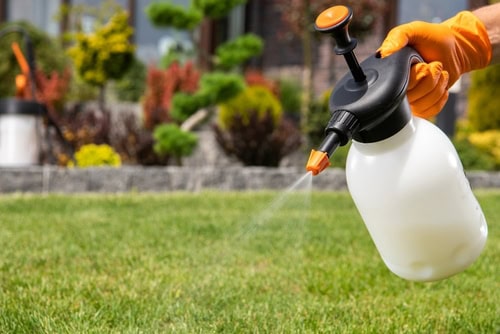
Once we’ve confirmed the diagnosis, we select the appropriate fungicide and apply it at the right rate for the conditions in your yard. For Commack lawns, that means accounting for your soil type, your irrigation habits, thatch depth, and where you are in the season. A lawn near the Sunken Meadow Parkway corridor with sandy, fast-draining soil is going to behave differently than one with compacted clay-heavy ground, and the treatment reflects that.
After the application, you’ll receive written documentation of exactly what was applied the product name, the rate, the date, and your re-entry interval. That’s a requirement under New York State law, and it’s also just what a professional does. If a follow-up application is needed to complete the program, we’ll tell you upfront why and when.
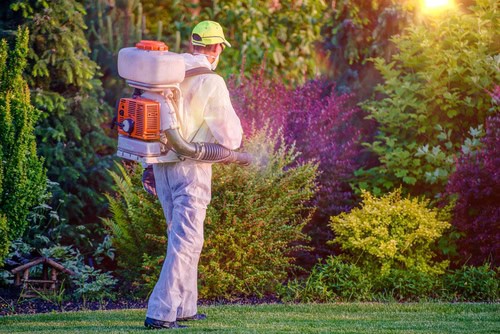
Ready to get started?
The three fungal diseases we treat most often in Commack are brown patch, dollar spot, and red thread and each one has a distinct window, a distinct look, and a distinct treatment approach. Brown patch is a warm-season disease that peaks in Commack’s July and August heat, when nighttime temperatures stay elevated and the humidity after a thunderstorm keeps leaf surfaces wet for hours. Dollar spot runs from late spring through early fall, thriving in the dry-soil, moist-air conditions that Commack’s sandy soil profile creates naturally. Red thread shows up in spring and fall, when temperatures cool into the 60s and 70s and nitrogen levels in cool-season turf drop you’ll notice pinkish-red threads extending from the grass blades, and it spreads faster than most homeowners expect.
As a licensed pesticide applicator under New York State DEC regulations, we have access to restricted-use fungicide formulations professional-grade products with active ingredients like azoxystrobin and propiconazole that aren’t sold at Home Depot or any garden center. These are the same chemistries used on golf courses and professional sports turf, and they deliver meaningfully better results against established disease than anything available over the counter. We also rotate chemistry across applications to prevent resistance from developing something that matters a lot if you’re dealing with recurring disease pressure year after year, which most Commack lawns with sandy soil and mature thatch layers are.
Every application comes with the neighbor notification and written documentation required under NYS commercial pesticide law. You’ll always know what went on your lawn, when it’s safe to re-enter, and what to expect next.
The most likely answer is brown patch a fungal disease caused by Rhizoctonia solani that thrives in exactly the conditions Commack experiences every July. When nighttime temperatures stay above 70°F and humidity sits around 75%, the fungus spreads rapidly, often turning a small infected circle into a large damaged area within two or three days. Most homeowners assume it’s drought stress and respond by watering more, which actually makes things worse by extending the period of leaf wetness that the disease needs to spread.
The other reason it keeps coming back is that the pathogen overwinters in your soil and thatch layer. If you’ve been reseeding the same spots in fall without treating the underlying disease, the new grass is going in infected ground. A licensed fungicide application with the right chemistry timed to Commack’s specific seasonal conditions breaks that cycle. The disease gets treated, the soil recovers, and the reseeding you do in fall actually establishes.
They’re three separate diseases with different causes, different appearances, and different treatment windows. Brown patch creates large, irregular brown or tan circles often with a darker outer ring and is most active in Commack during July and August when heat and humidity peak. Dollar spot produces small, straw-colored patches roughly the size of a silver dollar, and it thrives in the dry-soil, moist-air conditions that Commack’s sandy, fast-draining soil creates naturally between rainstorms. Red thread shows up as pinkish-red threads extending from grass blades and is most active in spring and fall when temperatures cool into the 60s and 70s.
Misidentifying one for another is common and leads to ineffective treatment. Dollar spot and brown patch require different fungicide chemistry, and applying the wrong product wastes money while giving the disease more time to spread. That’s the core reason professional diagnosis matters especially on Long Island, where all three diseases are active at different points in the same season and the soil conditions in Commack create vulnerability to more than one at a time.
You can try, but the results are usually disappointing and there’s a straightforward reason for that. The fungicide products available at retail stores are consumer-grade formulations with lower concentrations of active ingredients than what a licensed professional can apply. They’re designed for preventative use on lightly affected lawns, not for treating an established disease outbreak. By the time most homeowners notice brown patch or dollar spot spreading across their Commack lawn, the disease load is already beyond what an over-the-counter product can handle effectively.
There’s also the misidentification problem. If you buy a product labeled for brown patch and you actually have dollar spot, you’re applying the wrong chemistry entirely. Beyond effectiveness, repeated use of the same product which is what most DIY applicators do accelerates the development of fungicide-resistant strains. We rotate chemistry across applications to prevent that from happening, which requires both the technical knowledge and the legal access to multiple restricted-use product classes that only a certified commercial applicator holds under New York State law.
Under New York State law, any business that applies pesticides for hire including fungicides must be registered with the NYSDEC and employ at least one certified commercial pesticide applicator. Becoming certified requires passing state-administered exams, meeting education or experience requirements, and renewing every three years with continuing education. It’s not a simple process, and it’s not optional. Operating without this credential is illegal, and plenty of seasonal operators working in Commack don’t have it.
The practical difference for you goes beyond legal compliance. Licensed applicators have access to restricted-use pesticides professional-grade formulations that are not available to unlicensed operators or homeowners at any price. We’re also required to provide written documentation after every application and to notify neighbors before treating, per NYS commercial lawn care law. When you hire a licensed applicator, you get accountability that’s built into the regulatory framework, not just promised on a website. Our NYS DEC license is publicly verifiable you don’t have to take our word for it.
Timing depends entirely on which disease you’re dealing with, and in Commack, that means thinking about the full season not just summer. Brown patch treatment is most critical from late June through August, when Commack’s nighttime temperatures stay elevated and humidity is consistently high. Preventative applications before the peak heat window are more effective than reactive ones after the disease is already spreading. Dollar spot treatment runs from late spring through early fall, with the highest-risk windows during dry spells when the soil drains quickly but dew keeps leaf surfaces wet overnight.
Red thread is a spring and fall disease, most active in Commack during April and May and again in September and October when temperatures drop into the 60s and 70s. A lot of homeowners don’t connect the pinkish threads they see in early spring to a fungal disease they assume it’s winter damage or nutrient deficiency. It can look like both, which is why diagnosis matters before treatment. A well-timed fungicide program accounts for all three windows and uses the right chemistry at each stage rather than applying one product and hoping it covers everything.
This is a real and well-documented problem in turf management, and it comes down to fungicide resistance. When you apply the same active ingredient repeatedly even a good one the fungal population in your soil gradually develops resistance to that mode of action. The surviving strains reproduce, and within a few seasons, the product that used to work stops working. It’s not that your lawn got worse; it’s that the pathogen adapted to what you were throwing at it.
This is especially common in Commack lawns where homeowners have been self-treating with the same store-bought product year after year. The consumer-grade options at retail stores are limited in variety, so most DIY applicators are cycling through the same chemistry without realizing it. We rotate between different modes of action across the season using one chemistry class in early summer and a different one later which prevents any single strain from gaining the upper hand. That rotation requires access to multiple restricted-use product classes and the technical knowledge to sequence them correctly, both of which are part of what we bring to the job as a licensed commercial applicator.
Useful Links
Other Services we provide in Commack