
Hear from Our Customers
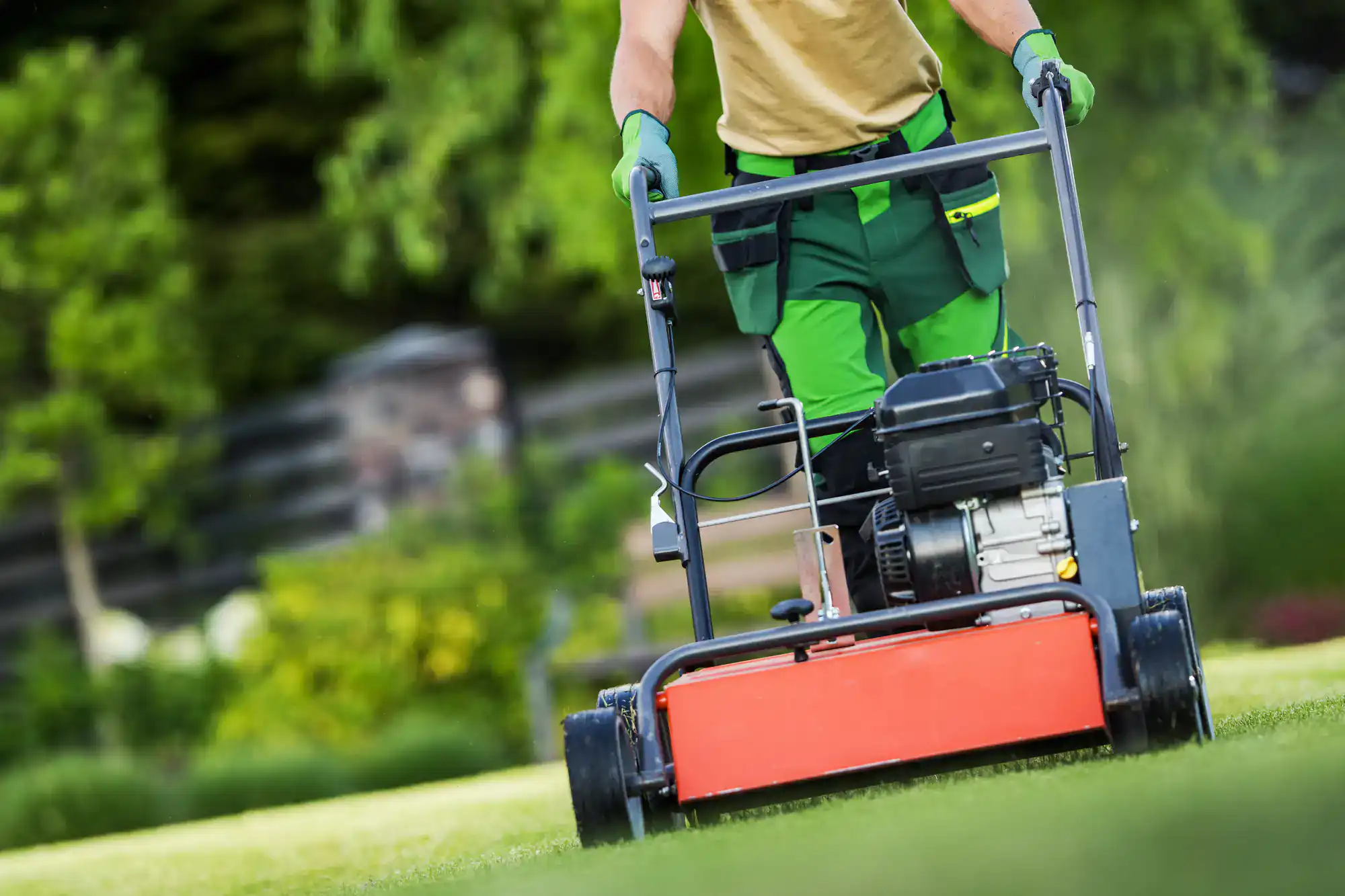
Compacted soil doesn’t announce itself. It just slowly makes everything you do to your lawn less effective. Fertilizer sits on the surface instead of feeding the roots. Water pools near the driveway instead of soaking in. Grass thins out in patches, and no amount of overseeding seems to stick. That’s not bad luck. That’s compaction, and it’s extremely common in Commack.
The soil beneath most Commack properties has been compressed for fifty to sixty years through mowing seasons, freeze-thaw winters, and foot traffic that adds up year after year. When you add the clay-influenced zones that show up throughout central Suffolk County, you get soil that holds compaction stubbornly. Core aeration pulls plugs from the ground and opens channels so that water, oxygen, and nutrients can actually get where they need to go.
Once that happens, everything else works better. The fertilizer you’re already paying for starts performing the way it’s supposed to. Overseeding takes hold instead of washing away. And come spring, you’re not starting from scratch you’re building on a lawn that had a real fall behind it. For a home worth what Commack homes are worth, that’s not a minor detail.
We’ve been treating lawns in Commack and throughout Suffolk County since 1987. That’s not a number we throw around for marketing purposes it means we’ve been working in this soil, through these winters, under these county regulations, longer than most of our competitors have been in business. We know what Haven Loam does under pressure. We know what Commack clay zones look like after a wet spring. That kind of familiarity doesn’t come from a training manual.
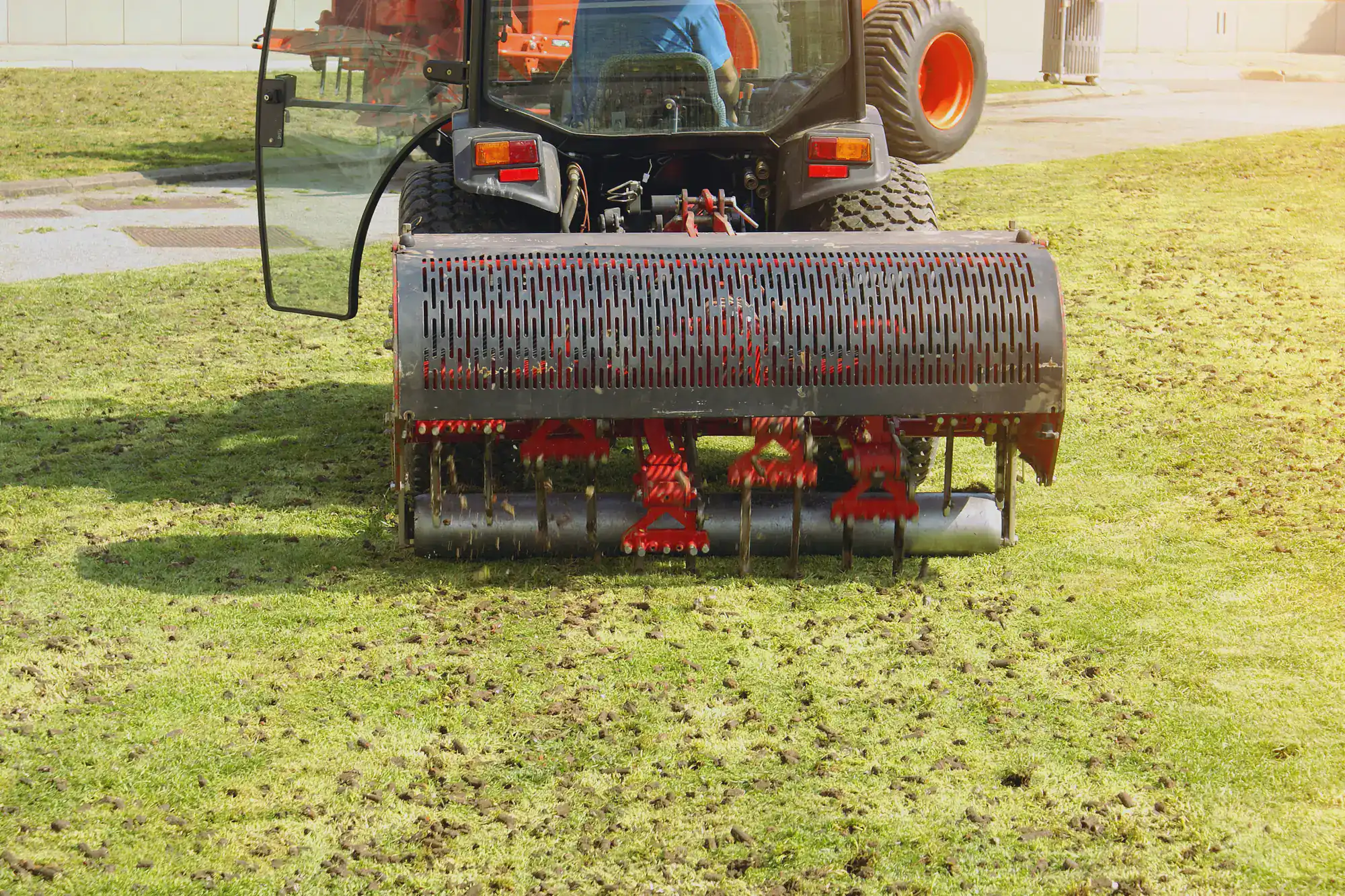
Every job gets a licensed pesticide professional not a seasonal crew member handed a machine and a schedule. We use hydraulic aerators built for the kind of compaction that decades of suburban use creates, and a custom-blended fertilizer formulated specifically for our programs. Five fully wrapped trucks run throughout Suffolk County, and the standard on every one of them is the same.
If you’re near The Hamlet or anywhere else in Commack, you’re not getting a generic lawn program. You’re getting a prescription written for your specific property. Commack yards near wooded areas often need flea & tick control in Commack as well.
It starts with an assessment. Before anything touches your lawn, we look at what’s actually going on soil compaction level, thatch depth, grass type, shade patterns, and any areas with drainage issues. In Commack, that often means paying close attention to spots near driveways and hardscaping where compaction concentrates, and to shaded corners that hold moisture differently than the rest of the yard. A quarter-acre lot can have three or four distinct microclimates, and a one-size-fits-all approach misses all of them.
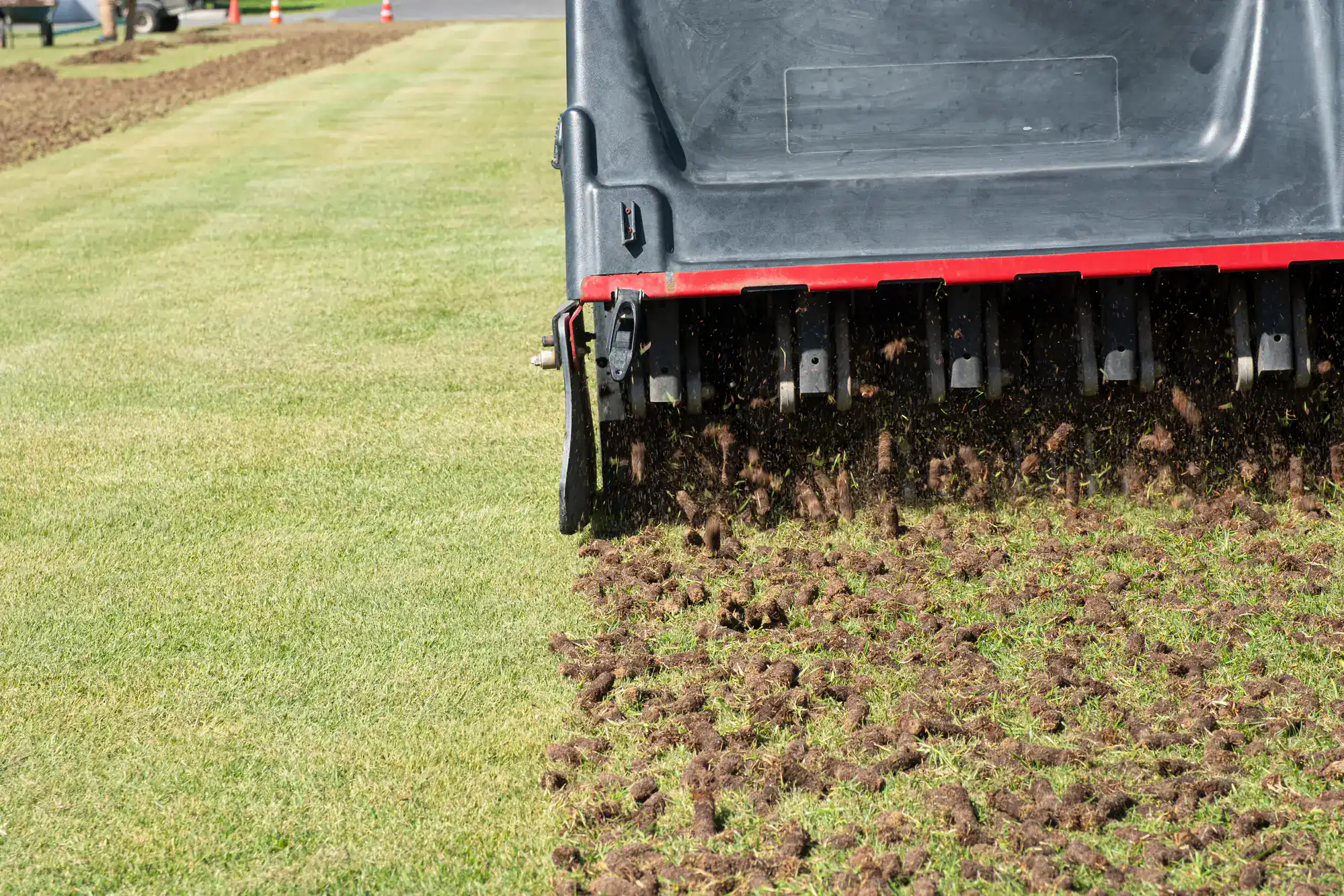
From there, we run the hydraulic core aerator across your lawn. This pulls clean plugs from the ground typically two to three inches deep and leaves channels that stay open long enough to make a real difference. You’ll see the cores on the surface after we’re done. That’s normal, and they break down on their own within a week or two. If overseeding is part of your program, it goes in right after aeration, while those channels are still open and ready to receive seed.
One thing worth knowing: Suffolk County’s fertilizer ban takes effect on November 1st. That means fall aeration, overseeding, and post-aeration fertilization all need to happen before that deadline. If you’re thinking about scheduling in late October, you’re cutting it close. Earlier in the fall window late August through early October gives your lawn the best chance to respond before the ground hardens and the season closes.
Ready to get started?
Every aeration program we run starts with a real assessment not a clipboard checklist, but an actual read of your lawn’s specific conditions. For Commack properties, that means accounting for the clay-influenced soil zones that show up throughout this part of Suffolk County, the compaction patterns that come with 1960s-era housing lots, and the cool-season grasses Kentucky bluegrass, perennial ryegrass, fine fescue that dominate the area and respond best to fall treatment timed ahead of the November 1st fertilizer ban.
The aeration itself is done with professional hydraulic equipment, not the kind of walk-behind rental machine that struggles in compacted clay. You get full coverage, consistent tine depth, and clean core removal not one pass and a handshake. If your program includes overseeding, that’s done immediately after aeration while the soil channels are still open. Post-aeration fertilization uses our custom-blended formula, designed for Long Island soil chemistry, not a generic product off a regional shelf.
As for lawn aeration cost, most residential properties in Commack fall in a range that reflects lot size, soil condition, and whether overseeding or fertilization is bundled in. We don’t publish a flat rate because your lawn isn’t flat it has specific needs, and the program should reflect that. What you won’t find is a rushed job, a different crew every time, or a program that ignores what your property actually requires.
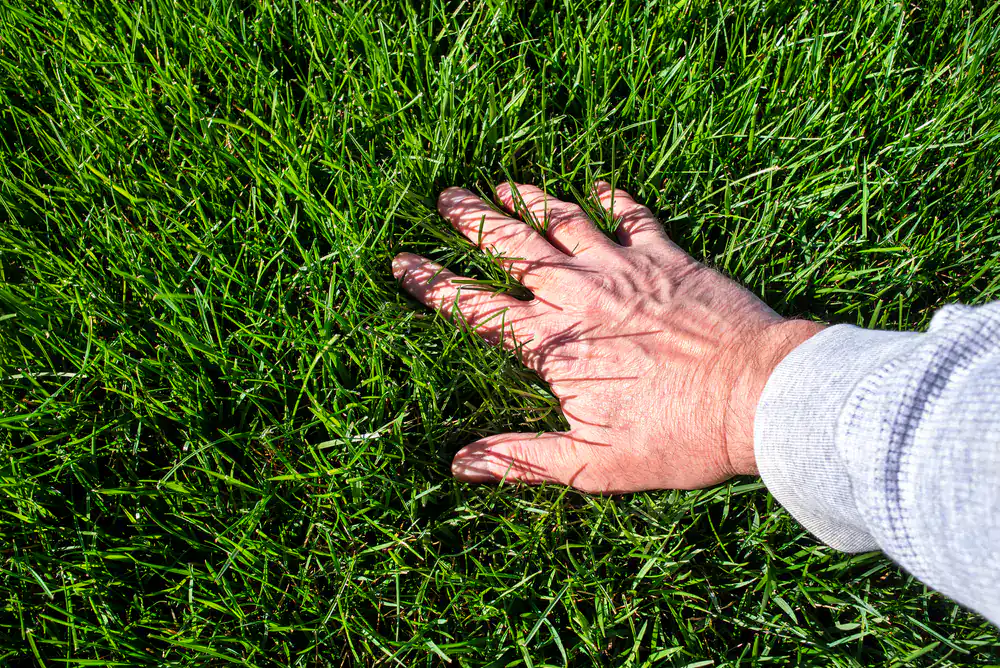
For Commack, fall is the clear answer specifically late August through mid-October. The cool-season grasses that cover most Commack lawns, including Kentucky bluegrass, perennial ryegrass, and fine fescue, are wired to grow aggressively in fall. Soil temperatures are still warm enough to support root development, but the air has cooled down enough that new grass isn’t immediately stressed. That combination makes fall aeration significantly more effective than spring treatment for this grass type.
There’s also a hard deadline to keep in mind. Suffolk County’s fertilizer ban goes into effect on November 1st, which means your aeration, overseeding, and post-aeration fertilization all need to be completed before that date. If you wait until late October to schedule, you’re working against the calendar and the county law at the same time. Booking earlier in the fall window gives your lawn the full benefit of the treatment and keeps everything compliant with Suffolk County regulations.
The simplest test you can do at home: after a rain, push a standard screwdriver into your lawn. If it won’t go three inches without real effort, your soil is compacted. That’s not a minor issue it means your grass roots are being physically restricted from growing deeper, and everything you put on your lawn, fertilizer, water, seed, is performing well below its potential.
Beyond the screwdriver test, there are visual signs that are common in Commack specifically. Water pooling on the lawn after rain instead of soaking in is a strong indicator. Thin patches that don’t recover despite reseeding, a lawn that looks dull and tired despite regular fertilization, and grass that struggles through summer heat and never fully bounces back these are all symptoms of compaction. Given that most Commack homes were built in the 1960s and the soil underneath has been compressed for fifty to sixty years, compaction is more the rule than the exception here. If you haven’t aerated in the last two to three years, there’s a reasonable chance your lawn needs it.
Core aeration physically removes plugs of soil from the ground, leaving open channels that allow air, water, and nutrients to penetrate the root zone. Spike aeration just pokes holes it doesn’t remove anything. In loose, sandy soil, spike aeration can provide some benefit. But in the compacted, clay-influenced soil that’s common throughout central Suffolk County, spike aeration often makes things worse by compressing the soil sideways around the hole rather than opening it up.
For Commack lawns that have been dealing with compaction for decades, core aeration is the only method that actually addresses the problem. The plugs you see left on the surface after the job aren’t a mess they’re proof that soil was removed and space was created. Those plugs break down on their own within a week or two and return organic matter to the lawn. It’s also worth noting that professional hydraulic core aerators pull cleaner, deeper plugs than consumer-grade or rental equipment, which matters significantly in dense clay zones. The equipment used for the job is just as important as the method.
You can rent one, yes. But there’s a meaningful gap between what a rental machine does and what a professional hydraulic aerator does especially in Commack’s soil conditions. Rental aerators are typically lighter walk-behind units that struggle to penetrate compacted clay zones consistently. They often bounce or skip in harder areas, which means you get uneven coverage and shallow plugs that don’t open the soil the way they need to. Running one of these machines properly also takes more physical effort and time than most homeowners expect.
Beyond the equipment itself, the assessment matters. Knowing where compaction is concentrated on your specific property, which grass types you’re working with, how deep the thatch layer is, and whether overseeding and fertilization should be bundled in those decisions affect the outcome significantly. A professional who has been treating Commack and Suffolk County lawns for nearly four decades brings that knowledge to every job. For a property in Commack where home values are what they are, the cost difference between a DIY rental and a professional program is a small fraction of what’s at stake.
Yes, and doing them together is almost always the right call. Aeration creates open channels in the soil, and overseeding immediately after takes advantage of those channels while they’re still fresh. Seed that falls into an aeration hole has direct soil contact, moisture access, and protection from wind and foot traffic conditions that dramatically improve germination rates compared to overseeding on a non-aerated lawn.
For Commack’s cool-season grasses, the timing works out perfectly in fall. Aerate in late August or September, overseed right after, and the seed has several weeks of warm soil and moderate air temperatures to germinate and establish before the ground hardens. Post-aeration fertilization done before Suffolk County’s November 1st ban gives the new grass an additional push. If you skip aeration and just overseed, a meaningful percentage of that seed will sit on the surface, struggle to make root contact, and either wash away or fail to germinate. Aeration is what makes overseeding actually work.
For a standard residential lot in Commack typically a quarter to a third of an acre professional core aeration generally runs in the range of $150 to $300, depending on lawn size, soil condition, and what’s bundled into the program. If overseeding and fertilization are included, the total investment goes up, but so does the return. A standalone aeration without any follow-up treatment leaves value on the table, because the open channels are most productive in the first few days after the job.
What affects the final number more than anything is the condition of your soil and what your lawn actually needs. A Commack property with significant clay compaction and a heavy thatch layer requires more thorough treatment than a lawn in better baseline condition. That’s why a real assessment matters before any program is quoted not to upsell you, but because a program that doesn’t match your lawn’s actual conditions isn’t worth paying for at any price. For a home worth what Commack homes are worth, the cost of professional aeration is a small number relative to the property investment it’s protecting.
Useful Links
Other Services we provide in Commack