
Hear from Our Customers
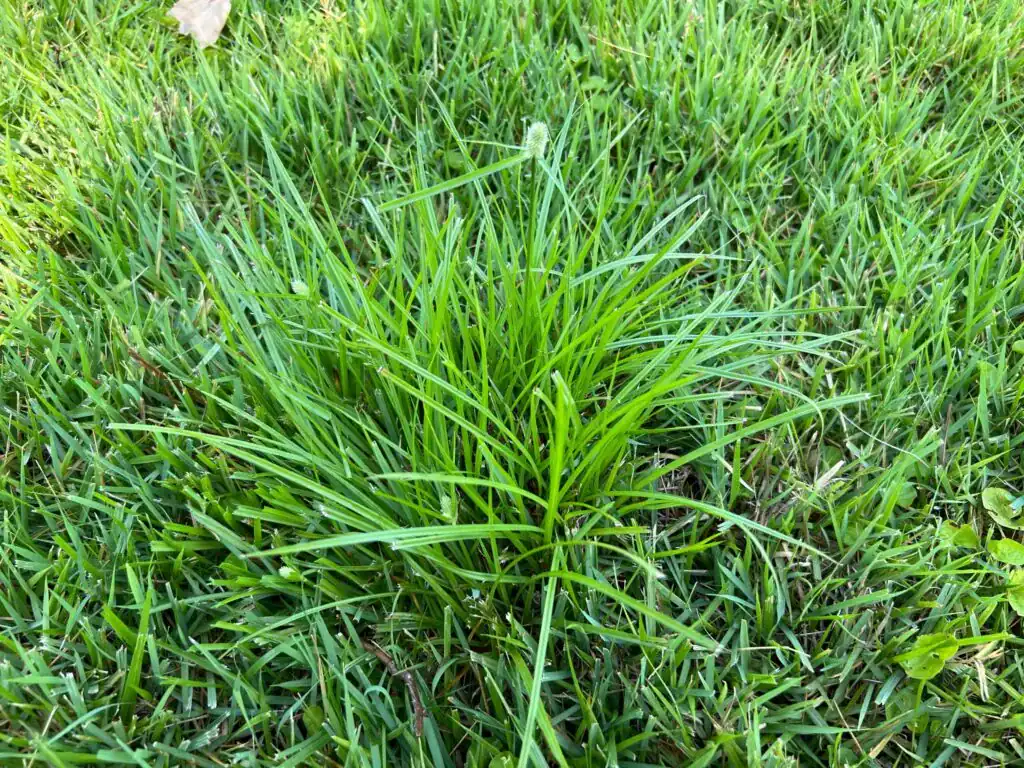
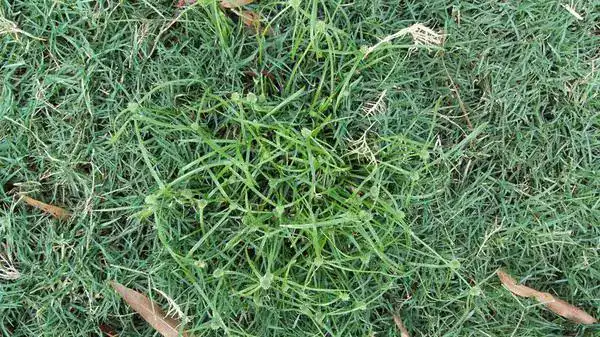
Kyllinga doesn’t look dramatic at first. It just shows up a slightly darker, lower-growing patch that stays green and active while the rest of your lawn slows down in July heat. Then it spreads. By the time most Nesconset homeowners realize what they’re dealing with, it’s already moved well beyond where it started.
Here’s what changes when it’s handled correctly: the infestation stops spreading, the desirable turf recovers, and you’re not watching the same patch double in size every summer. For established lawns along Smithtown Boulevard or off Southern Boulevard, where irrigation systems have been running for decades and mature trees create shaded, moist corners, that kind of persistent moisture is exactly what kyllinga feeds on. Removing it properly means the lawn you’ve maintained for years actually looks the way it should.
The other thing worth knowing kyllinga stays green when your cool-season turf goes brown under summer stress. That visual contrast is usually the moment people notice it. But by then, it’s been underground and spreading for at least one full season. Earlier treatment is dramatically more cost-effective than trying to reclaim a lawn that’s been overtaken.
We’re based in Port Jefferson Station and operate throughout Suffolk County, including the Route 347 corridor that runs directly through Nesconset. This isn’t a national chain routing calls through a regional office. We’re a locally operated lawn care company that works in these neighborhoods, on these soil types, and understands the specific conditions that drive weed pressure in this part of the county.
We hold a New York State Department of Environmental Conservation Commercial Pesticide Applicator License the credential required to purchase and apply the professional-grade herbicides that actually work on sedges. That’s not a detail buried in fine print. It’s the reason our program works when retail products haven’t.
Nesconset sits above the Long Island sole-source aquifer, and we take Suffolk County’s pesticide buffer zone regulations seriously. Every application we make here is compliant with both NYSDEC licensing requirements and Suffolk County Local Law 41-2007. That matters in a community like this one.
It starts with an honest assessment of your property. Kyllinga and nutsedge are both sedges triangular stems, similar appearance but they’re not the same plant, and treating one like the other produces incomplete results. Before anything gets applied, we identify what’s actually growing in your lawn. That identification step is something most homeowners never get from a generalist provider, and it’s the foundation of a program that works.
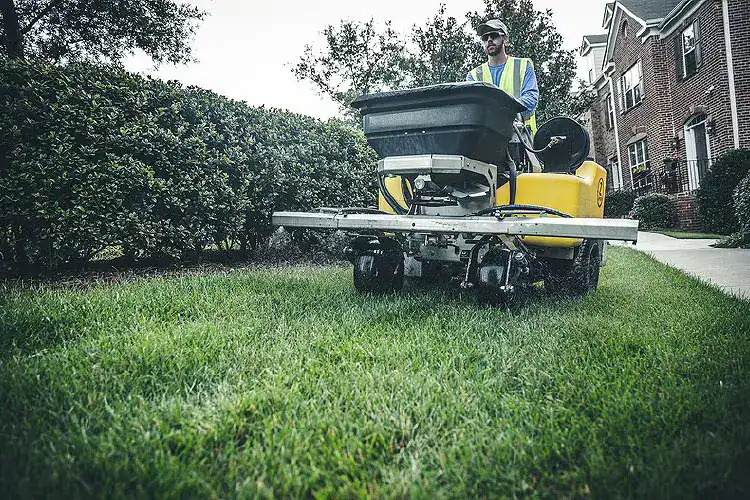
Once we’ve confirmed the species and mapped the infestation, we apply professional-grade sedge-active herbicides halosulfuron-methyl or sulfentrazone timed to the plant’s active growth window, which in Nesconset typically runs from late May through late August. A single application will damage visible tissue, but kyllinga’s underground rhizome network survives one treatment and regenerates. That’s why a properly structured program requires a minimum of two to three applications spaced four to six weeks apart. We build that into the program from the start, not as an upsell after the first visit fails.
After the kyllinga is eliminated, the areas it occupied are often thin or bare. We don’t leave it there. Overseeding and soil restoration are part of the process because bare patches become re-entry points for new weeds, and a Nesconset lawn with a $639,000 property behind it deserves better than a patchy finish.
Ready to get started?
The core of what we do here is sedge-specific not a general weed control spray that covers twenty things at once and handles none of them completely. Kyllinga requires its own chemistry, its own timing, and its own program structure. The herbicides that work on it Sedgehammer and Dismiss are not available in the formulations that matter without a NYSDEC Commercial Pesticide Applicator License. That’s the starting point.
What you get is a multi-application treatment program timed to the active growing season in Nesconset, with each visit targeting the plant when it’s most metabolically active and most susceptible to uptake. We account for the drainage and irrigation conditions on your specific property because kyllinga thrives in saturated soil, and a lawn with a wet corner or an overwatered zone will keep producing favorable conditions until that’s addressed. If drainage is contributing to the problem, we’ll tell you directly.
We also handle what comes after. Once the kyllinga is gone, the turf underneath needs to recover. Overseeding, soil health restoration, and follow-up monitoring are part of the service not extras you have to ask for. The goal isn’t just to kill the weed. It’s to leave your Nesconset lawn in better shape than we found it, with the conditions that invited kyllinga in the first place identified and addressed.
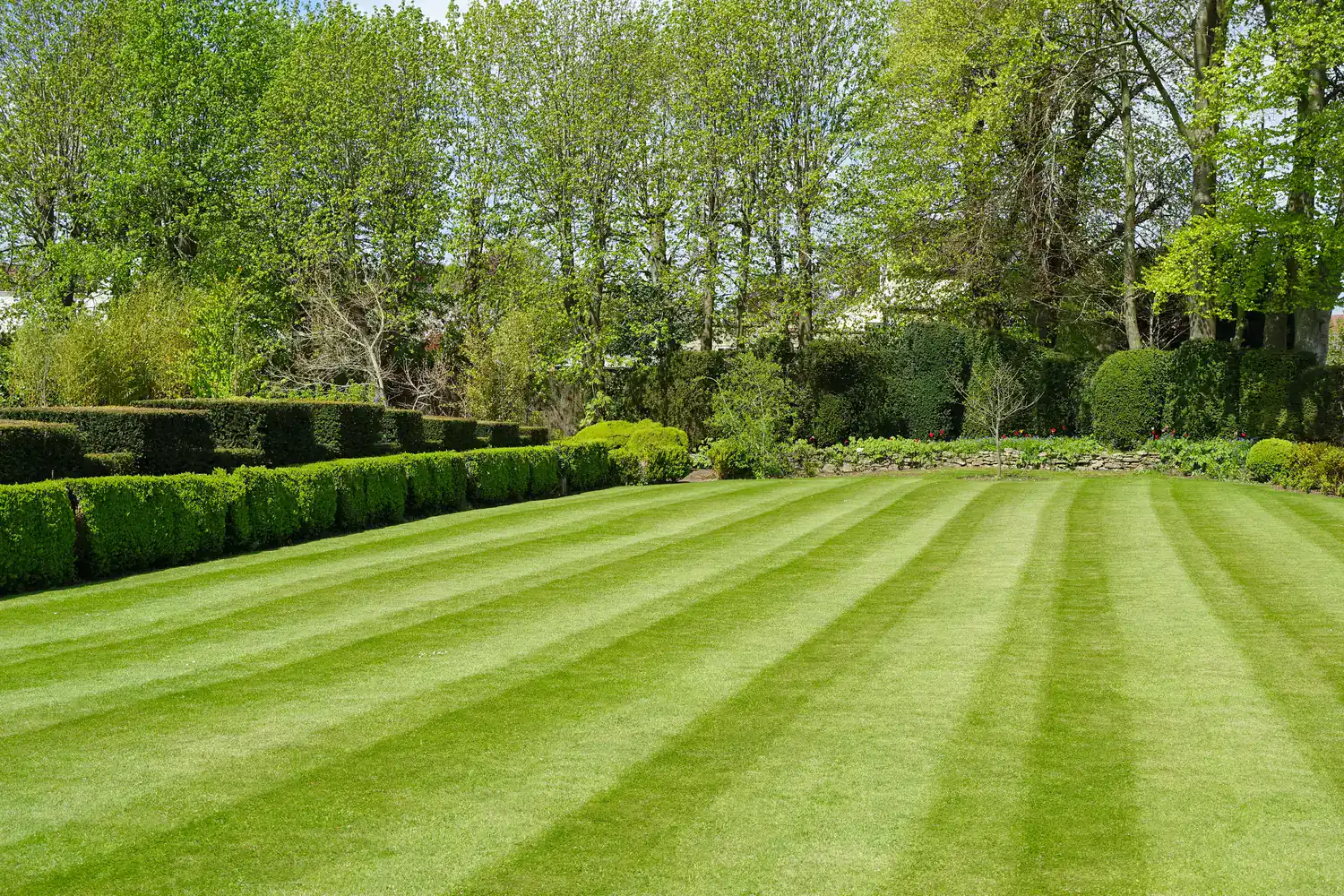
Kyllinga is a sedge not a broadleaf weed and not a grass. The herbicides sold at retail stores are formulated to target broadleaf weeds or grassy weeds, and they have no meaningful activity against sedges. That’s not a matter of concentration or how much you apply. It’s a chemistry mismatch. The products simply don’t affect the biological pathways that kyllinga uses.
The herbicides that actually work on kyllinga halosulfuron-methyl and sulfentrazone require a New York State Department of Environmental Conservation Commercial Pesticide Applicator License to purchase in professional-grade formulations. They are not on the shelf at Home Depot or Lowe’s in the form that produces real results. This is the single most common reason Nesconset homeowners cycle through multiple retail products and watch the kyllinga keep spreading. It’s not a failure of effort. It’s a product access problem that only a licensed applicator can solve.
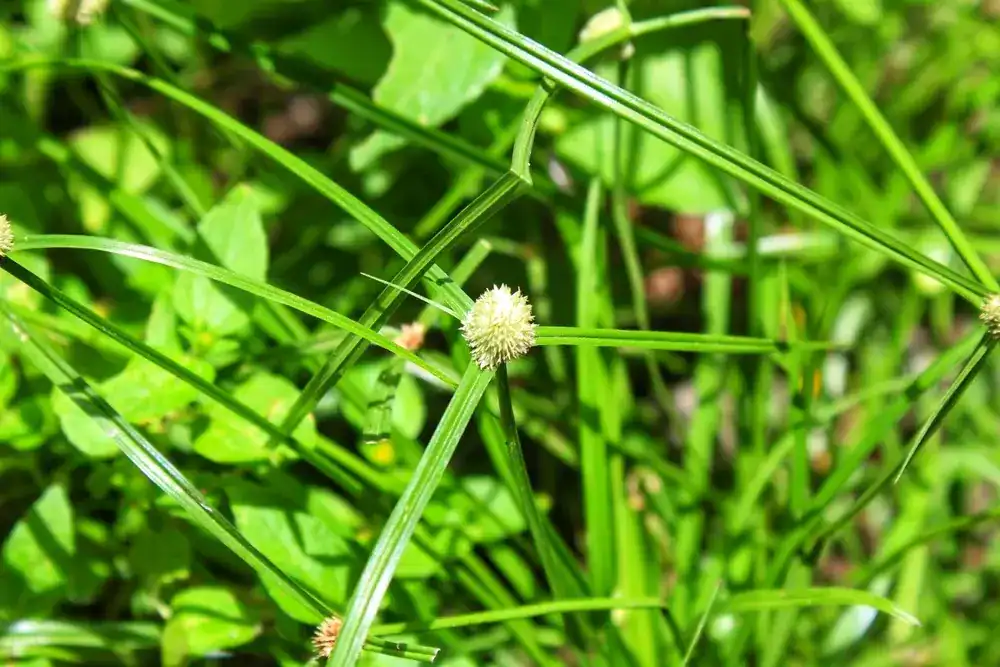
Both kyllinga and nutsedge are sedges they share the triangular stem cross-section and the same general growth environment but they’re distinct plants with different growth habits. Nutsedge grows taller and more upright, with a visible nutlet underground that makes it particularly persistent. Kyllinga grows lower and denser, forming tight mats across the turf surface with small, round seed heads. It spreads aggressively via rhizomes and can colonize a significant area within one or two growing seasons.
In Nesconset specifically, the moist, irrigated conditions common in the hamlet’s established residential neighborhoods favor both species. But kyllinga’s mat-forming habit makes it visually distinct it stays lower than the surrounding turf and tends to look darker green, especially during summer when cool-season grasses slow down. Correct identification before treatment matters because while both require sedge-specific herbicides, the growth pattern and infestation behavior differ. Treating kyllinga like nutsedge or vice versa can produce incomplete results and waste a full season of treatment.
A single application will visibly damage kyllinga the plant browns and appears to die. But the underground rhizome network survives one treatment and regenerates new growth within a few weeks. This is the part most homeowners don’t hear until after a single-spray program fails to hold. A properly structured kyllinga control program requires a minimum of two to three applications spaced four to six weeks apart during the active growing season.
In Nesconset, that active window typically runs from late May through late August the period when kyllinga is most metabolically active and most vulnerable to herbicide uptake. Timing each application correctly within that window is just as important as the number of visits. For established infestations in lawns that have been dealing with the problem for more than one season, annual treatment may be necessary for the first two to three years as the rhizome network is progressively eliminated. We tell you this upfront because a program that doesn’t account for it will fail, and you’ll be starting over next summer.
Yes and it’s one of the most overlooked parts of the conversation. Kyllinga is a plant of saturated soil. It establishes and spreads in areas where moisture lingers: low spots, zones near irrigation heads that run too long, shaded areas under mature trees where the ground dries slowly. Nesconset’s established residential neighborhoods have all of these conditions. The hamlet’s historical soil base is sandy and variable, and decades of irrigation layered over it have created drainage inconsistencies in many mature lawns particularly in properties developed during the post-war suburban build-out of the 1950s and 1960s.
Herbicide treatment alone will reduce the infestation, but if the conditions that invited kyllinga in the first place aren’t addressed, the pressure to re-establish remains. Drainage remediation is a recognized and documented need in Nesconset local contractors specifically serve the hamlet with drainage solutions. If we identify a drainage issue contributing to your kyllinga problem during our assessment, we’ll point it out. Eliminating the weed and addressing the wet conditions together produces significantly better long-term results than treatment alone.
It is. Kyllinga has been expanding its range northward, and Long Island sits directly in the active expansion corridor. Penn State Extension has documented kyllinga spreading as far north as southern New England, and Rutgers NJAES has flagged false green kyllinga as an increasingly problematic weed across the Northeast. What was once considered primarily a Southern turf problem is now showing up regularly in Suffolk County lawns, including in the Smithtown corridor.
Part of what’s driving this locally is the combination of warming summer temperatures and the irrigation habits of established residential neighborhoods. Nesconset’s mature, irrigated lawns many of them decades old provide exactly the sustained moisture conditions kyllinga needs to get a foothold. New construction and renovation activity in the hamlet also plays a role: disturbed soils, fresh sod installations, and new irrigation systems create conditions where kyllinga can establish quickly. If you’re seeing it in your yard now, your neighbors are likely dealing with it too it doesn’t stay contained to one property for long.
Yes, and they’re worth understanding before you hire anyone to apply anything on your property. Suffolk County Local Law 41-2007 establishes pesticide-free buffer zones around public drinking water supply wells throughout the county. The Suffolk County Department of Health Services maintains a compliance map that licensed commercial applicators are required to consult before making any pesticide application in Suffolk County. This isn’t optional it’s a legal requirement for anyone operating commercially in this area.
Nesconset sits above the Long Island sole-source aquifer, the single underground water source that supplies drinking water to all of Long Island. That’s the reason these regulations exist and why they’re enforced. Every application we make in Nesconset is compliant with both the NYSDEC licensing requirements and the SCDHS buffer zone rules. If you’re considering hiring a provider any provider it’s reasonable to ask whether they hold a current NYSDEC Category 3a Commercial Pesticide Applicator License and whether they’ve checked the SCDHS compliance map for your property. A company that can’t answer both questions clearly isn’t operating the way they should be in Suffolk County.
Useful Links
Other Services we provide in Nesconset