
Hear from Our Customers

There’s a specific reason Nesconset lawns struggle the way they do. This area was developed out of pine barrens sandy, acidic soil that was often stripped down to subgrade during the post-war building boom and never properly replaced. What’s left under most Nesconset properties is low in organic matter, tends to run acidic, and drains so fast in summer that grass roots can’t hold on during a dry stretch. You can throw seed and fertilizer at it every year and still end up with the same patchy, thin result come August because the soil itself is working against you.
Restoration fixes that. Not with a quick green-up treatment, but by addressing the actual conditions underneath. Proper pH correction, aeration to break up decades of compaction, and slice seeding that puts seed into the soil instead of on top of it that’s what produces a lawn that actually fills in and stays that way. In a community where median home values are pushing past $744,000 and climbing, a lawn that looks like it belongs to the house isn’t a luxury. It’s part of protecting what you’ve invested in.
The other thing that sets Nesconset properties apart is the grub pressure. Japanese beetles thrive in sandy suburban soils, and if you’ve had spongy patches, dead areas appearing in late summer, or noticed wildlife digging at your turf, there’s a good chance grub damage is part of the story. Restoring a lawn after grub activity requires a specific sequence you can’t just reseed over the damage without addressing what caused it. That’s the kind of thing 38 years in Suffolk County teaches you.
We’ve been operating in Suffolk County since the late 1980s. That’s not a marketing number it’s the amount of time it takes to truly understand what Long Island lawns need and why standard programs often fall short here. We’ve worked on properties all along the Route 347 corridor through Nesconset and into Lake Grove, and the soil conditions along that stretch are something we know from the ground up.
We’re NYS-licensed, which matters more than most homeowners realize. In Suffolk County, applying soil amendments, herbicides, and certain fertilizers commercially requires a state pesticide applicator license. A lot of smaller operators in this area don’t carry it. We do and we operate in full compliance with Suffolk County’s fertilizer application regulations, which are among the strictest in the state.
What that means for you is straightforward: when we come to your Nesconset property near Great Hollow or anywhere else in the area, you’re getting a licensed, experienced company that knows this specific region not a national call center running a generic program on your lawn.
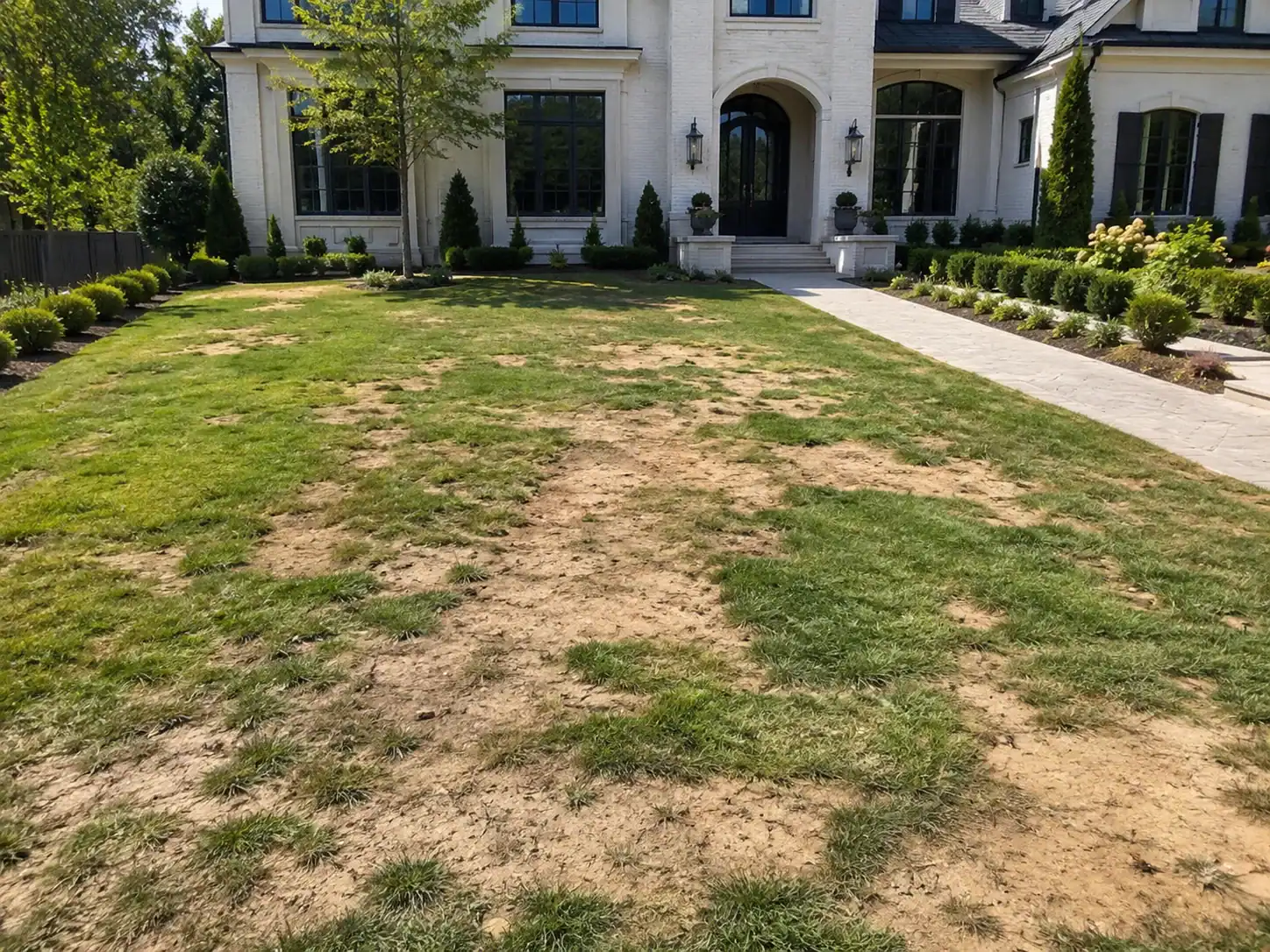
It starts with a proper assessment. Before anything goes on your lawn, we walk the property and look at what’s actually happening thin areas, bare patches, weed pressure, signs of pest damage, drainage patterns, and overall turf density. This is where we identify whether you’re dealing with a soil issue, a pest issue, a compaction issue, or some combination of all three. That diagnosis drives everything that follows.
From there, soil correction comes first. In Nesconset, that almost always includes lime application to bring the pH up from the acidic range that pine-barrens-origin soils naturally drift toward. Without correcting pH, fertilizer doesn’t absorb properly and seed establishment suffers regardless of how good the seed is. We also address compaction through core aeration, which opens the soil up and creates the conditions that roots actually need to grow deep.
Once the soil is ready, we use slice seeding to introduce new grass. This isn’t broadcast seeding it’s a process that cuts directly into the soil and deposits seed at the right depth for contact and germination. The timing matters too. In Suffolk County, the fall window roughly mid-September through early October is when soil temperatures, air temperatures, and typical rainfall patterns align for the best establishment results. We build our restoration programs around that timing, not around what’s convenient for us.
Ready to get started?
Lawn restoration at our company is not a fixed package applied the same way to every property. What’s included depends on what your lawn actually needs after we assess it. Most Nesconset restoration programs involve some combination of soil pH correction, core aeration, slice seeding with a cool-season mix suited to Long Island’s growing conditions, and a structured fertilization plan that complies with Suffolk County’s nitrogen and phosphorus application rules.
If grub damage is part of the picture which it frequently is on properties along the central Suffolk corridor we address the pest pressure first before any seeding takes place. Reseeding over active grub damage without treating the underlying issue is one of the most common reasons DIY restoration attempts fail. We sequence the work correctly so the investment in new turf actually holds.
What you won’t get from us is a renovation when restoration is what you need. Those are two different things. Restoration means bringing your existing lawn back to health working with what’s there, correcting the conditions that caused the decline, and rebuilding density through seeding and soil rehabilitation. Renovation means stripping the lawn and starting over. If your assessment reveals that a full rebuild is the right call, we’ll tell you that honestly and connect you with our lawn renovation program. But if restoration can get the job done and in most cases it can that’s exactly what we’ll recommend.
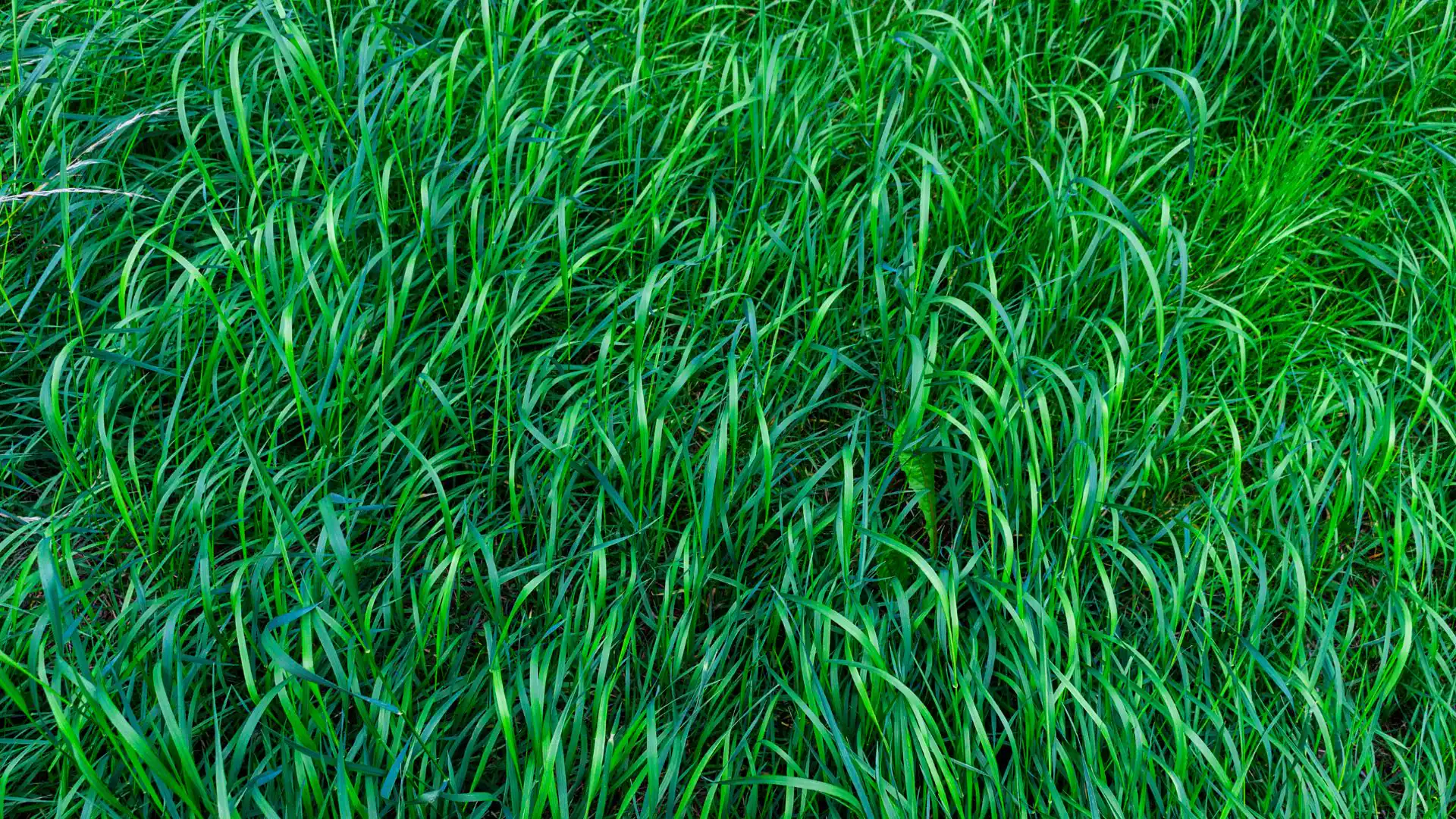
Restoration means working with the lawn you have. The goal is to bring it back to health by correcting the conditions that caused it to decline soil pH, compaction, thatch buildup, pest damage and then rebuilding density through aeration and slice seeding. The existing grass stays in place, and the program is designed to revive and thicken it over time.
Renovation is a different scope entirely. That’s when the existing lawn is killed off, removed, and the area is rebuilt from scratch with new seed or sod. It’s the right call when a lawn has deteriorated beyond the point where restoration can realistically recover it severely dead turf with no viable root system, heavily contaminated soil, or extensive grub damage that’s left nothing to work with.
For most Nesconset homeowners dealing with thin, patchy, or stressed lawns, restoration is the appropriate starting point. The sandy, acidic soil conditions common in this area create chronic stress on cool-season grass, but that’s a correctable problem not a reason to tear everything out. We’ll tell you honestly after the assessment which direction makes sense for your specific property.
In most cases, yes but the answer depends on why the bare patches are there in the first place. If the damage is from drought stress, grub activity, soil compaction, or low pH, those are all correctable conditions. Once the underlying cause is addressed, slice seeding into properly prepared soil can fill those areas back in effectively. The key word is “prepared” dropping seed onto compacted, pH-acidic ground without correcting the soil first is why so many DIY repair attempts produce disappointing results.
Where restoration becomes a harder case is when the turf crowns themselves are dead with no viable root system remaining, or when the soil has been so severely degraded that there’s genuinely nothing to work with. That’s a smaller percentage of the lawns we assess than most homeowners expect. Even lawns that look completely gone after a rough Suffolk County summer one with extended drought, heat stress, and grub pressure often have more recoverable turf than they appear to. A proper assessment is the only way to know for certain, which is why we start there before recommending anything.
The honest answer is that meaningful results take a full growing season to develop, and that’s a good thing it means the turf is establishing properly rather than just getting a temporary green flush from a quick nitrogen hit. If a restoration program starts in the fall which is the optimal window for Long Island you’ll typically see solid germination and early fill-in within three to five weeks of seeding, assuming soil temperatures are still in the right range and there’s adequate moisture.
By the following spring, a well-executed restoration should be visibly denser, more uniform, and significantly more resistant to the summer stress that caused the decline in the first place. The second summer is usually when the difference becomes most obvious a restored lawn with corrected soil pH and improved root depth handles drought and heat in a way that a thin, compacted lawn simply can’t.
Shortcuts that promise faster results heavy quick-release fertilizer applications, surface broadcast seeding without soil preparation tend to produce a short-term visual improvement followed by the same decline pattern. Restoration done correctly takes time, but it’s time that produces a lawn that actually holds up through the conditions Suffolk County throws at it every year.
Cost varies based on the size of the property, the extent of the damage, and what the assessment reveals about the soil and pest conditions. A standard Nesconset residential lot typically a quarter acre or less with moderate thinning and soil correction needs will generally fall in a different range than a larger property with significant grub damage, heavy compaction, and multiple bare zones that need full slice seeding coverage.
What we can tell you is that the factors driving cost in this area are fairly consistent. Soil pH correction through lime application, core aeration, and slice seeding are the foundation of most restoration programs here. If grub treatment is needed before seeding can begin, that adds a step. If multiple visits are required to complete the program within the optimal fall window, that’s factored in as well.
The best way to get an accurate number is through the estimate process, where we assess your specific property rather than quoting a flat rate that may not reflect what your lawn actually needs. What we won’t do is quote low to win the job and then add to it later the estimate you get reflects the actual scope of work.
Yes, but the sequence matters. Grub damage creates dead patches because the larvae feed on grass roots below the soil surface, severing the root system and killing the turf from underneath. By the time the damage is visible usually late summer or early fall when the patches turn brown and the turf pulls up like loose carpet the active feeding has often already peaked. That means restoration can begin, but only after confirming that the pest pressure is under control.
Seeding into an area with active or unaddressed grub populations is a waste of seed and money. The new roots will face the same feeding pressure that killed the original turf. We assess the grub situation first, apply appropriate treatment if needed, and then proceed with soil correction and slice seeding once conditions are right for establishment.
Grub damage is one of the more common reasons Nesconset homeowners contact us in the fall. The sandy soil conditions in central Suffolk County are ideal for Japanese beetle egg-laying, and properties that haven’t been on a preventive grub control program are particularly vulnerable. If you’ve had recurring dead patches in the same areas year after year, grubs are worth investigating before you invest in restoration.
For cool-season grasses which is what the vast majority of Nesconset lawns are seeded with fall is the single best window for restoration work. The reason comes down to soil temperature and competition. In September and early October on Long Island, soil temperatures are still warm enough to support germination (ideally above 50°F), air temperatures are dropping to a range that cool-season grass actually thrives in, and the summer annual weeds that compete aggressively with new seedlings are dying back. That combination creates conditions where new seed can establish quickly and with far less competition than a spring seeding faces.
Spring restoration is possible, but it comes with trade-offs. Soil temperatures take longer to warm up, weed pressure is higher, and new seedlings that establish in spring have to survive their first summer the most stressful period for cool-season grass in Suffolk County before they’re fully mature. Fall-seeded turf has a full cool season to develop a root system before facing that stress.
If you’re looking at your lawn right now and wondering whether it’s too late in the season to do anything, that depends on where we are in the calendar. The window closes when soil temperatures drop consistently below 50°F, which on Long Island typically happens in late October to early November. Getting an assessment scheduled sooner rather than later gives you the most options.
Useful Links
Other Services we provide in Nesconset