
Hear from Our Customers

Most lawn care programs fail Nesconset homeowners for one reason: they’re not designed for this area. Long Island’s sandy, fast-draining soils a direct result of glacial geology leach nutrients out of the root zone before your grass ever absorbs them. A fertilizer program built for average American soil doesn’t account for that. The result is a lawn that looks the same in October as it did in April, no matter how many treatments you paid for.
When your program is built around what your specific lawn actually needs the right fertilizer, the right timing, the right equipment you start seeing real change. Thicker turf. Fewer weeds crowding in. Grass that holds its color through the stress of a Suffolk County summer instead of thinning out by August.
With home values in Nesconset approaching $870,000, your lawn isn’t just something you look at it’s part of what you’ve built. A lawn that looks like it belongs on your property adds to that. One that looks neglected works against it. The difference usually comes down to whether someone actually knows what they’re doing when they show up.
We’ve been treating lawns in Nesconset and throughout Suffolk County since 1987 which means we were working in the Town of Smithtown before most of our current customers bought their homes. That kind of tenure isn’t a marketing angle. It’s 37-plus years of learning exactly how Long Island soil behaves, what grub pressure looks like in a high-cycle year, and what it takes to get a Nesconset lawn through a brutal July without losing ground.
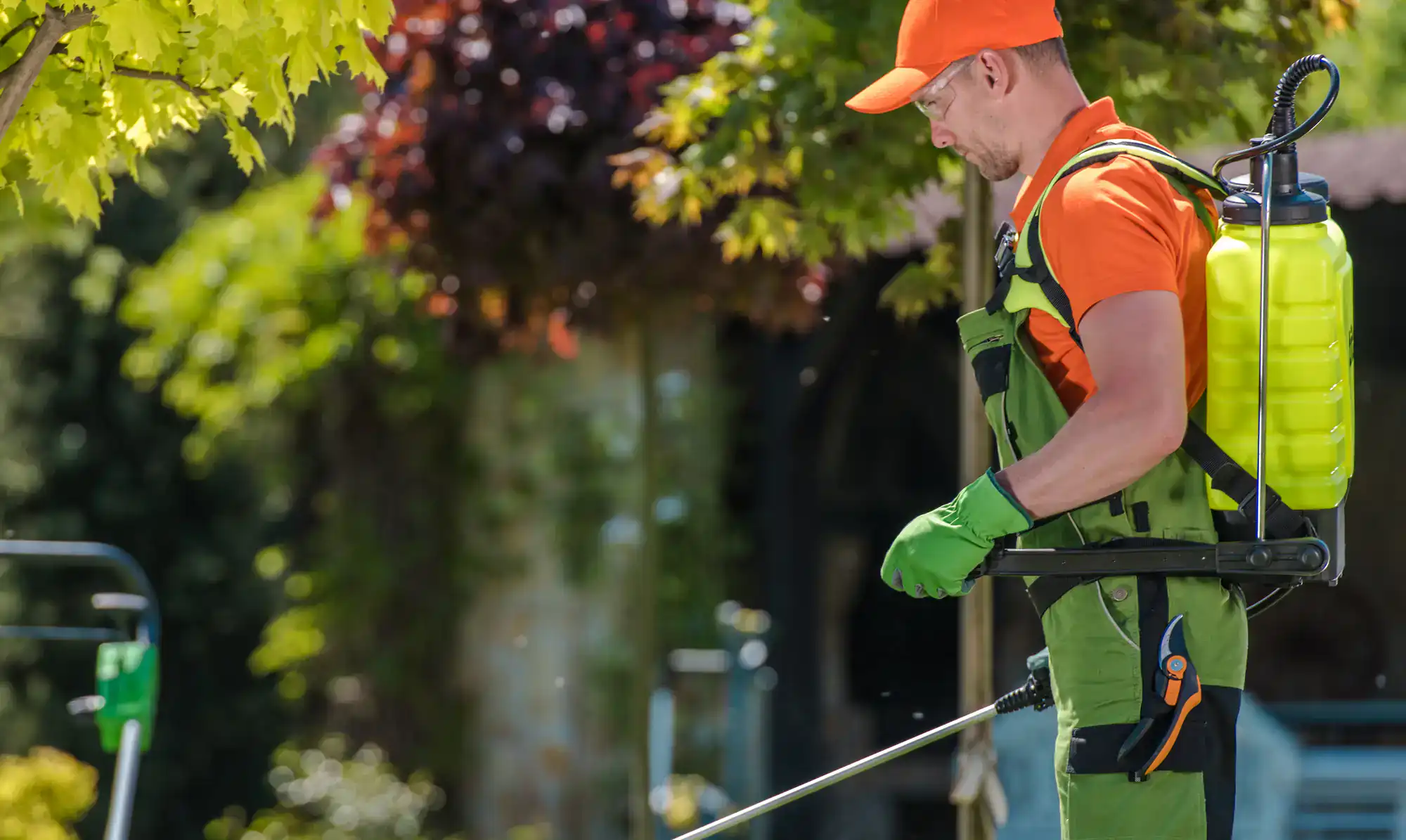
Every technician who visits your property holds a valid NYS DEC Commercial Pesticide Applicator Certificate Category 3A, Ornamental and Turf. That’s not a formality. It means the person treating your lawn, near your kids and your pets, is trained, tested, and licensed by the state of New York. Not supervised on paper by someone who never shows up.
You’ve probably seen our trucks on Nesconset Highway. Five fully wrapped vehicles, running routes throughout Suffolk County. That visibility isn’t accidental it’s what 37 years of consistent work in one market looks like.
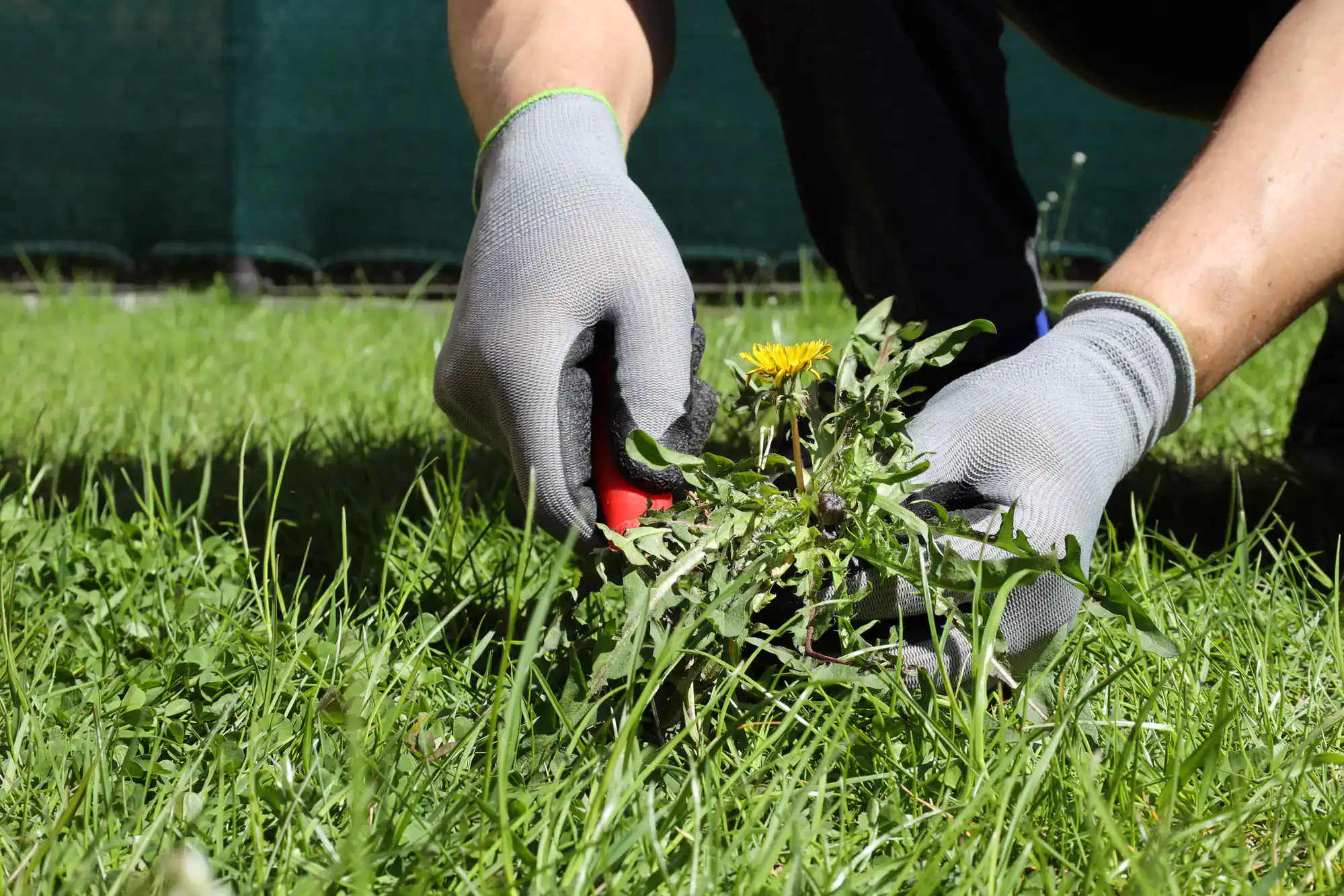
It starts with your lawn, not a package. Before anything gets applied, we assess the condition of your turf, the soil type, the shade coverage, and any visible problem areas. All of that factors into what your program looks like. Nesconset lawns under mature oak canopy need a different approach than a full-sun front yard on a corner lot and a program that doesn’t account for that difference is going to underperform on one of them.
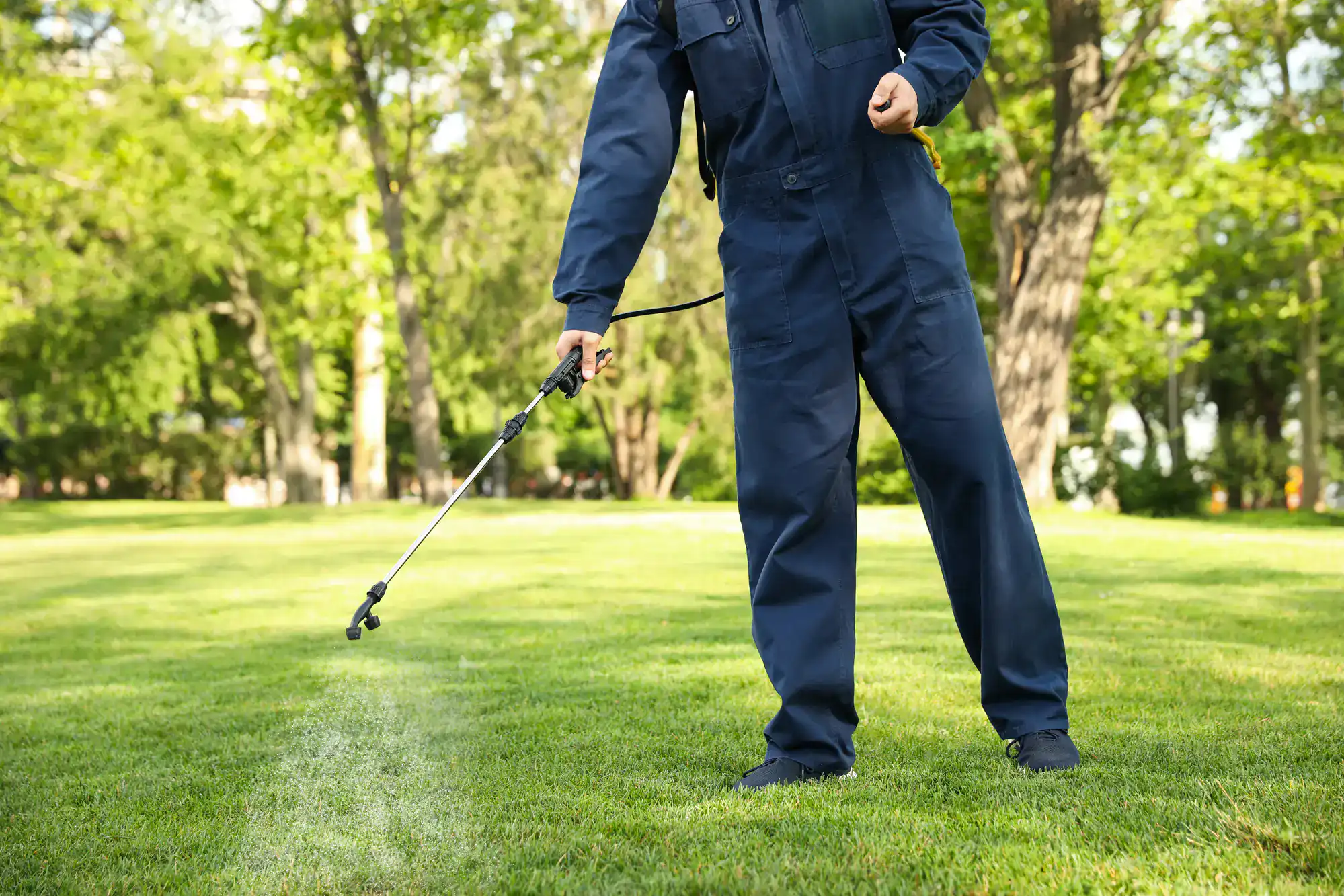
From there, treatments are scheduled and timed around what your lawn actually needs and what Suffolk County regulations allow. The county’s fertilizer blackout runs from November 1 through April 1, with fines up to $1,000 per violation so every program we build is constructed around that window from the start. Spring pre-emergent goes down before soil temperatures hit 55°F to stop crabgrass before it germinates. Summer treatments address grub pressure and disease. Fall is where the real restoration work happens aeration, overseeding, and winterizer because cool-season turf responds to fall treatment better than anything else on the calendar.
You don’t have to track any of this. That’s the point. We manage the timing, the compliance, and the adjustments. You just watch the lawn improve.
Ready to get started?
The fertilizer we use isn’t something you can buy at a home improvement store or find in a wholesale distributor’s catalog. It’s a custom-blended product formulated specifically for our programs and Long Island’s soil conditions. That matters here because Nesconset’s sandy, low-organic-matter soils drain fast nutrients pass through the root zone quickly, and a standard fertilizer blend doesn’t compensate for that. This one does.
Weed control, grub prevention, disease management, and lime applications for pH correction are all part of how we build out the program depending on what your lawn needs. Nesconset’s pine barrens heritage means soils here tend toward acidity oak leaf decomposition drives pH down over time, and a lawn getting fertilized on acidic soil won’t respond the way it should regardless of what’s being applied. Correcting pH is one of the things generic programs routinely skip.
For lawns that need more than maintenance grub damage, bare patches, years of thinning we offer full restoration and new lawn installs from seed. Aeration is done with hydraulic equipment, not the lightweight drum aerators most companies use, which means actual penetration into compacted suburban soil rather than a surface-level pass. If you’ve had aeration done before and wondered why it didn’t seem to do much, the equipment was likely the reason.
Summer thinning in Nesconset usually comes down to a combination of factors working against each other at the same time. Sandy Long Island soils drain quickly, so moisture and nutrients don’t stay in the root zone long grass under heat stress in July and August is already working harder than it would on denser soil, and if the fertilization program isn’t accounting for that drainage rate, the turf runs out of what it needs right when conditions are hardest.
Grub pressure is the other major factor. Japanese beetle and European chafer larvae feed on grass roots through late summer, and the damage looks like drought stress until you pull back a section of turf and find the roots are gone. A preventive grub control application in early summer timed correctly and applied at the right rate by a licensed professional is what separates a lawn that comes through August intact from one that needs serious restoration in the fall. If you’ve been skipping grub control or working with a company that doesn’t time it properly, that’s likely a significant part of what you’re seeing.
A standard program for a Nesconset lawn typically runs five to seven applications across the season, timed around the key windows for cool-season turf in the Northeast. That usually includes a spring pre-emergent and fertilizer application, a late-spring broadleaf weed control treatment, a summer application that addresses grub pressure and ongoing fertilization, and fall treatments focused on aeration, overseeding, and winterizer fertilization.
The exact number of visits depends on what your lawn needs, not what fits a standard package. A lawn with significant weed pressure or pH problems may need additional treatments early in the program. A lawn coming out of grub damage may need a full restoration sequence in fall before a standard maintenance schedule makes sense. Suffolk County’s fertilizer blackout which prohibits applications from November 1 through April 1 also shapes the calendar, so every program we build is constructed around that window from the beginning rather than adjusted after the fact.
In New York State, anyone applying pesticides commercially is required to hold a valid NYS DEC Commercial Pesticide Applicator Certificate specifically Category 3A for ornamental and turf work. Getting that license requires 30 hours of approved training, passing a state exam, and two years of supervised experience. It’s not a rubber stamp. It means the person treating your lawn understands what they’re applying, what the risks are, and how to handle it correctly around people, pets, and groundwater.
The practical difference matters more than most homeowners realize. An unlicensed crew applying chemical products on your property near your children, your pets, and Suffolk County’s groundwater supply is operating illegally and without the training to know what they’re doing. Many lower-cost lawn care companies employ unlicensed labor supervised on paper by a single license holder who may never actually visit your property. With us, every technician who shows up holds that credential. It’s not a technicality it’s the baseline standard for doing this work responsibly.
For cool-season turf which is what grows in Nesconset and throughout Long Island fall is genuinely the most effective window for restoration work, and the gap between fall results and spring results is significant. Soil temperatures in September and October are still warm enough for seed germination, but air temperatures have dropped enough that new grass isn’t fighting summer heat stress while it’s trying to establish. That combination produces faster germination, stronger root development, and better survival rates than spring seeding.
Fall aeration also works better because the soil is typically more workable after summer, and the cores pulled by a hydraulic aerator create ideal conditions for seed-to-soil contact during overseeding. If you’re looking at a lawn right now that has bare patches, grub damage, or years of thinning, a fall restoration program aeration, overseeding, and winterizer fertilization can produce a dramatically different result by the following spring. Waiting until spring to address it means losing the best window and spending another full season looking at a lawn that didn’t have to stay that way.
The fertilizer available at home improvement stores is formulated for a national average it’s designed to work acceptably across a wide range of soil types in a wide range of climates. That’s fine if your lawn happens to match that average. Nesconset lawns generally don’t. The sandy, fast-draining soils throughout the Town of Smithtown leach nutrients out of the root zone faster than denser soils would, which means a standard fertilizer release rate isn’t calibrated for what’s actually happening underground here.
We use a custom-blended fertilizer made specifically for our programs and Long Island’s soil conditions. The blend accounts for that drainage rate, the nutrient needs of cool-season turf, and the pH tendencies of soils in this area including the acidity that builds up over time from oak leaf decomposition in Nesconset’s mature tree canopy. That’s not something you can replicate by buying a bag off a shelf. It’s also one of the reasons lawns on our program tend to respond differently than lawns that have been on generic programs for years.
Yes we service properties throughout Nesconset, including areas along the hamlet’s southern edge near Lake Ronkonkoma. It’s worth knowing that Suffolk County has specific buffer zone requirements for fertilizer applications near water bodies, and Lake Ronkonkoma the largest natural freshwater lake on Long Island falls under those rules. Properties close to the lake’s perimeter are subject to restrictions on phosphorus-containing fertilizers and require careful attention to application boundaries near storm drains and drainage areas.
This is exactly the kind of compliance detail that gets missed when you’re working with a company that doesn’t know the area or isn’t operating with licensed applicators who understand local regulations. Our programs are built around Suffolk County’s fertilizer rules from the start the blackout period, the phosphorus restrictions, the buffer zone requirements so if your property is near the lake, that’s already factored in. You’re not going to get a fine or a compliance issue because someone didn’t know the rules for this part of Nesconset.
Useful Links
Other Services we provide in Nesconset