
Hear from Our Customers
Most lawns in Nesconset don’t have a fertilizer problem. They have a compaction problem. When the soil is dense and hard packed down by years of mowing, kids playing, and Long Island’s freeze-thaw cycles working on it every winter water sits on the surface, fertilizer runs off before it reaches the roots, and grass thins out no matter what you put on it. Core aeration is what breaks that cycle.
Once the ground is open, everything changes. Water gets where it needs to go. Nutrients reach the root zone instead of washing away. Grass starts filling in because it finally has the space and resources to do it. For homes throughout the 11767 zip code, where properties have been settled and heavily used for decades, that compaction layer is almost always there and it’s almost always the reason a lawn isn’t responding the way it should.
The timing matters too. Nesconset’s cool-season grasses the tall fescue and Kentucky bluegrass that cover most lawns here do their best growing in the fall. Aerating during that window, before Suffolk County’s November 1 fertilizer ban closes the treatment season, means we’re opening the soil right when the grass is most ready to use it. That’s not a coincidence. That’s how you actually get results.
We’ve been operating in Suffolk County since 1987 out of Port Jefferson Station, about eight miles up Route 347 from Nesconset. We’re not a franchise, not a national chain, and not a company that learned Long Island lawns from a training manual. We learned them by working them, season after season, in the same communities we still serve today, including Nesconset and the surrounding Smithtown area.
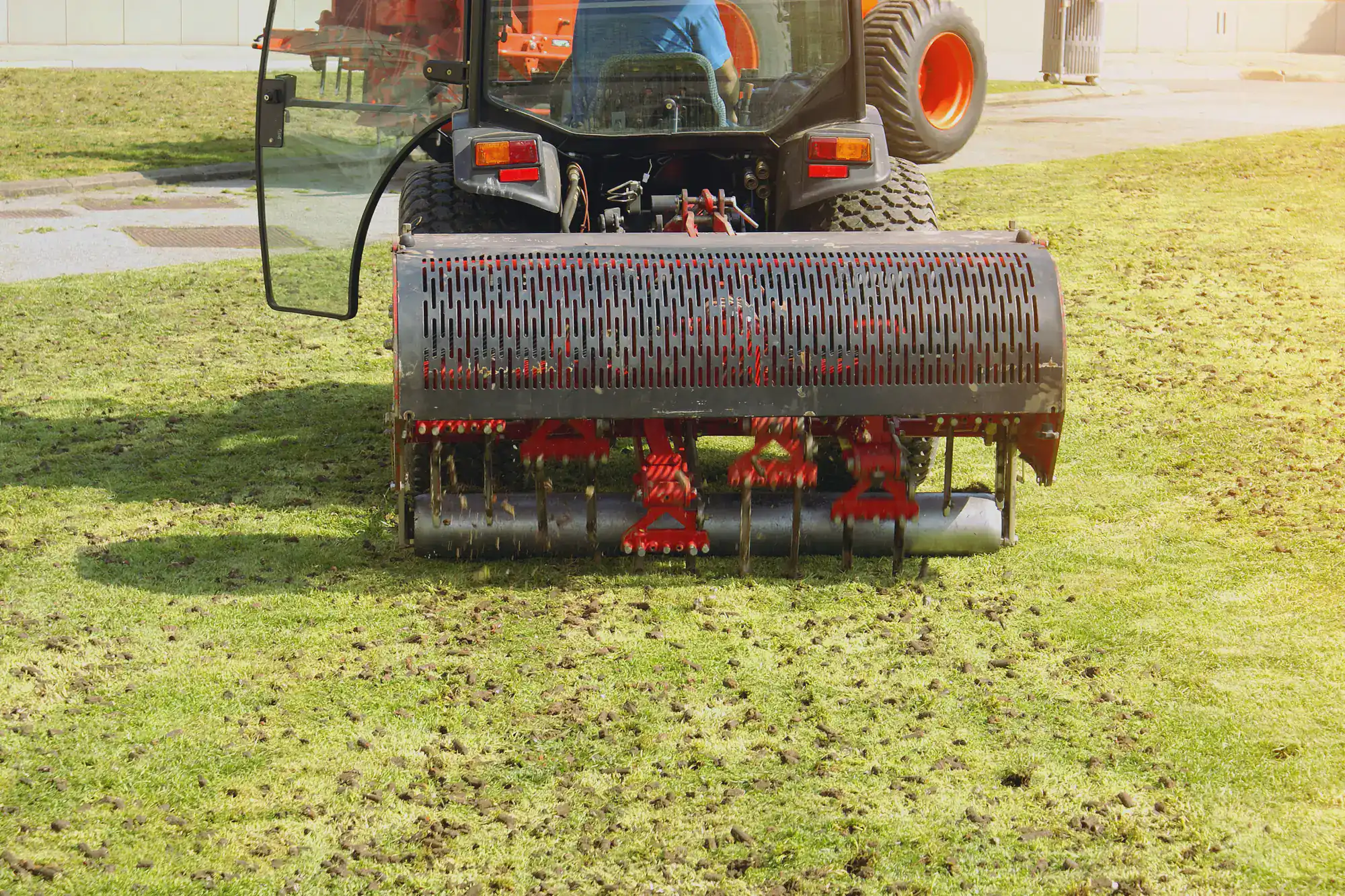
Every job involves a licensed pesticide professional not a seasonal hire working under someone else’s credentials. We run hydraulic core aerators that outperform anything available at a rental counter, and our fertilizer is custom-blended specifically for Long Island soil, not pulled off a generic distributor shelf. Five fully wrapped trucks cover Suffolk County, and you’ll see them on Nesconset Highway regularly.
If you’ve hired a lawn company before and felt like no one really knew what they were doing with your specific property, that’s the experience we’re built to replace.
Before anything happens, we assess your lawn. Compaction shows up differently on every property a shaded side yard that won’t grow, a high-traffic strip near the driveway, a clay-heavy patch that stays soggy after rain. We look at what’s actually going on before we make any recommendations, because a program that works for one Nesconset property might not be right for the next one.
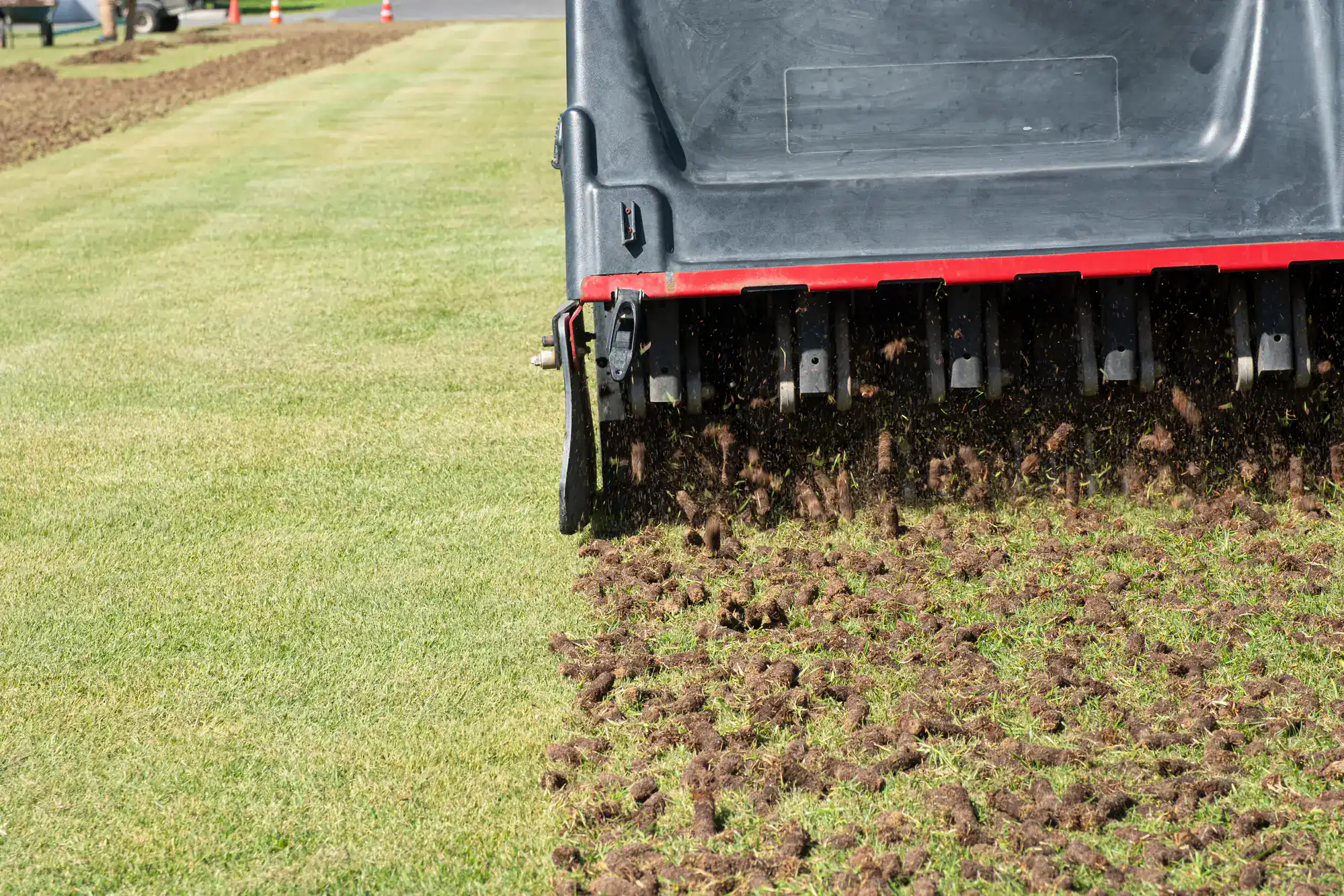
When we aerate, we’re using hydraulic equipment that pulls clean cores roughly three-quarters of an inch wide and three inches deep. Those plugs come out of the ground and break down on their own within a week or two you don’t need to do anything with them. What’s left behind are open channels running straight down into the root zone. Air gets in. Water gets in. Fertilizer gets in. That’s the whole point.
From there, we’ll typically recommend overseeding directly into those open channels while the soil is receptive, followed by a fertilizer application timed to stay within Suffolk County’s legal window. Everything is sequenced on purpose. The fall treatment window here is roughly late August through October after that, the fertilizer ban kicks in and the grass is heading toward dormancy. We plan around that calendar because we’ve been working within it for decades, and getting the timing right is what separates a lawn that actually improves from one that just got poked with a machine.
Ready to get started?
What you get from us isn’t a package pulled off a menu. It’s a program built around what your specific property needs. That starts with a real assessment soil type, compaction level, grass variety, thatch depth, shade patterns, and whatever history the lawn has. Nesconset sits at the Smithtown-Brookhaven border, and the soil profile here reflects that transitional character. Some properties have well-draining loam that responds quickly. Others have heavier, more compaction-prone conditions, especially on older lots that haven’t been properly aerated in years or ever. We account for that difference.
Every aeration job uses professional-grade hydraulic equipment, not the kind of machine you’d rent for an afternoon. The fertilizer we apply afterward is custom-blended for Long Island soil chemistry not a national formula that wasn’t designed for this region. And because Suffolk County law prohibits fertilizer applications between November 1 and April 1, with a $1,000 fine per violation, we schedule everything to stay within that window and maximize what the fall growing season can deliver.
Lawn aeration cost in Nesconset varies by property size and condition, so we quote based on what we actually see not a flat rate that ignores the specifics. If your lawn needs more than aeration, we also handle overseeding, full lawn restoration, and new lawn installs from seed. Whatever state your lawn is in right now, there’s a path forward.
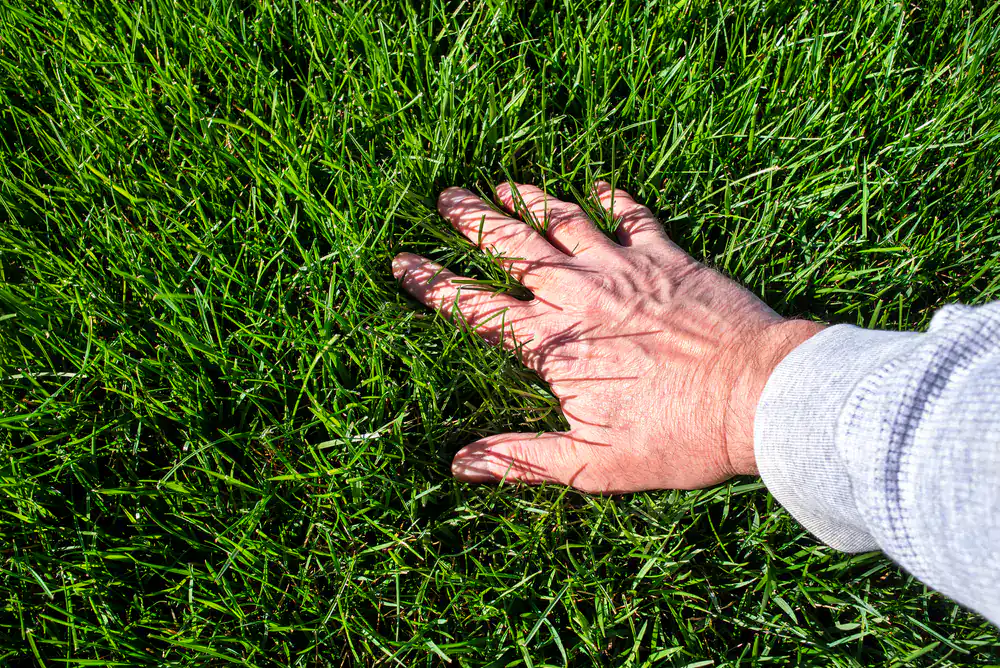
The most reliable test you can do yourself is the screwdriver test. After watering your lawn, push a standard screwdriver straight into the soil. If it takes real effort to get three inches down, your soil is compacted and your roots are being strangled. You can also look at how your lawn responds to rain if water pools or runs off instead of soaking in, that’s compaction at work. Thin or patchy grass despite regular fertilizing is another sign.
In Nesconset specifically, most properties that haven’t been professionally aerated in the last two to three years are dealing with some level of compaction. The combination of regular mowing, active family use, and Long Island’s freeze-thaw winters works on the soil constantly. Older lots and there are many throughout the 11767 that have been settled since the mid-20th century often have compaction layers that have never been addressed. If your lawn has been underperforming despite normal care, compaction is usually the first thing worth ruling out.
Fall is the right window for the vast majority of Nesconset lawns, and that’s not just a general preference it’s based on the grass types that grow here and the regulatory calendar that governs lawn care in Suffolk County. Tall fescue, Kentucky bluegrass, and perennial ryegrass are cool-season grasses, meaning their most vigorous root growth happens in the fall. Aerating during that period roughly late August through October means the grass is actively growing and can fill in the channels quickly.
There’s also a hard deadline to work around. Suffolk County’s fertilizer ban takes effect November 1 and runs through April 1. That ban applies to both homeowners and professional applicators, with a $1,000 fine per violation. Since the most effective aeration programs pair aeration with fertilization and overseeding, you need all three done before that window closes. Spring aeration is possible but complicated it conflicts with pre-emergent crabgrass control applications, which can reduce effectiveness if the timing isn’t carefully managed. For most Nesconset properties, fall is the clear answer.
Core aeration physically removes plugs of soil from the ground, creating open channels that allow air, water, and nutrients to reach the root zone. Spike aeration just pokes holes without removing anything and in compacted soil, it can actually make things worse by pushing the surrounding soil even tighter around the hole. For lawns dealing with real compaction, spike aeration is mostly ineffective.
The equipment we use for core aeration also matters more than most people realize. A consumer-grade rental machine produces shallow, inconsistent cores that don’t penetrate deep enough to make a meaningful difference, especially in the heavier soil conditions found on older properties throughout Nesconset. We use hydraulic core aerators professional equipment that pulls clean, deep plugs and handles the full range of Suffolk County soil conditions. The cores that come out of the ground tell you a lot about what’s happening below the surface, and we know how to read them. That’s a level of insight you don’t get from a rental machine and a YouTube tutorial.
Yes and if your lawn has been underperforming despite consistent fertilization, aeration is probably the reason why. Compacted soil acts as a physical barrier. Fertilizer applied to a compacted lawn sits near the surface, runs off with rain, or leaches past the root zone before the grass can use it. You’re spending money on product that never reaches where it needs to go.
Core aeration removes that barrier. Once the channels are open, the same fertilizer you’ve been applying becomes dramatically more effective because it can actually reach the roots. This is especially relevant in Nesconset, where many homeowners have been fertilizing for years without seeing the results they expected. The lawn isn’t failing because of the fertilizer it’s failing because the soil won’t let the fertilizer work. Aeration is what changes that equation. After a proper aeration and a quality fertilizer application timed to the fall growing window, most lawns in this area respond noticeably within a few weeks.
Professional core aeration for a residential property in Nesconset generally runs somewhere in the range of $100 to $300, depending on the size of the lawn and its current condition. Larger lots, heavier compaction, or lawns that need additional services like overseeding or fertilization will affect the final number. Any company giving you a firm price without knowing your property’s square footage and condition is guessing.
What’s worth keeping in mind is the cost of not aerating. Fertilizer applied to compacted soil is largely wasted. Thin turf invites weed pressure and bare patches that become harder and more expensive to fix over time. For a home in Nesconset where median property values are pushing $750,000, a professional aeration program is a modest investment relative to what it protects. We quote based on what we actually see at your property not a flat rate that ignores the specifics. Reach out and we’ll give you a straightforward number based on your lawn.
You can rent an aerator and do it yourself, but there are a few real limitations worth knowing before you go that route. Consumer rental machines are heavier and harder to maneuver than most people expect, they produce inconsistent core depth, and they struggle with compacted soil which is exactly the condition you’re trying to fix. On a hot fall Saturday, it’s a significant amount of physical work for results that are often noticeably less effective than what professional equipment delivers.
Beyond the equipment, the timing and sequencing of aeration, overseeding, and fertilization require some working knowledge of how Suffolk County’s regulatory calendar affects your options. Getting the order wrong or missing the fall window before the November 1 fertilizer ban means waiting a full year for your next best opportunity. A licensed professional who’s been working Nesconset and the surrounding Smithtown area for decades knows that calendar, knows the local soil, and brings equipment that actually does the job correctly the first time. For most homeowners, the professional cost is worth it simply because the results are reliably better and the work gets done in the right window.
Useful Links
Other Services we provide in Nesconset