
Hear from Our Customers
Most Sayville lawns aren’t struggling because of bad seed or cheap fertilizer. They’re struggling because the soil underneath is too compacted to let anything in. Water runs off instead of soaking through. Fertilizer sits on the surface and washes away. Roots stay shallow because there’s nowhere for them to go. That’s what compaction does and it’s more common here than people think.
Living along the Great South Bay means your lawn deals with things inland properties don’t. Salt air off the water stresses turf at the surface level. The milder winters along the South Shore don’t freeze the ground deeply enough to break up compaction naturally the way colder inland areas sometimes benefit from. And if your yard sees any real foot traffic through the warmer months kids, entertaining, backyard access to the bay you’re adding to that compaction all season long.
Core aeration pulls plugs of soil out of the ground and opens up channels so water, air, and nutrients can actually get where they need to go. You’ll see the difference in how your lawn responds to everything else you’re doing thicker growth, better color, less bare patches. It doesn’t happen overnight, but it happens.
We’ve been working Suffolk County lawns since 1987. That means we’ve spent nearly four decades learning exactly how South Shore soil behaves, how the Great South Bay’s coastal conditions affect turf health, and how to build programs that actually hold up through the seasons. A lot of companies have come and gone in that time. We’re still here.
Every job is handled by a licensed pesticide professional not a seasonal crew member supervised from a distance. We use hydraulic aerators that outperform anything you’d rent from a hardware store, and a custom-blended fertilizer made specifically for our programs. Five fully wrapped trucks run across Suffolk County, and the level of attention you get reflects someone who’s genuinely invested in the outcome, not just the invoice.
If you’re in Sayville or anywhere along the South Shore corridor, you’re getting a company that knows this specific environment not one applying the same template we use everywhere else. Some properties are best served by a full new lawn installation service in Sayville.
It starts with an honest look at your lawn. Before anything gets scheduled, we assess your property compaction level, thatch depth, grass type, shade patterns, and existing conditions. Sayville’s sandy loam soil compacts differently than heavier clay soils you’d find in other parts of Long Island, so the assessment matters. A program built for your lawn is different from a program built for someone else’s.
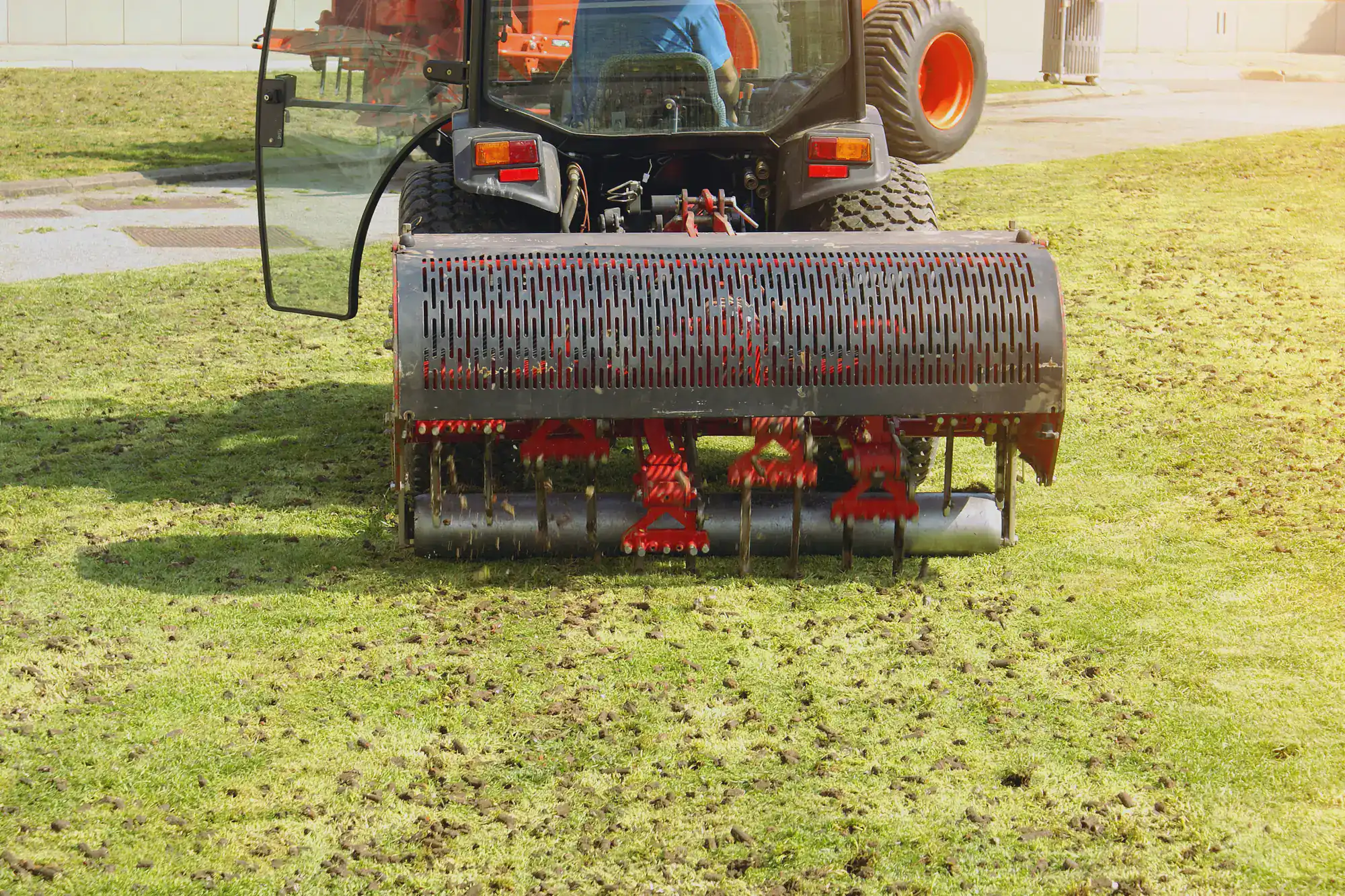
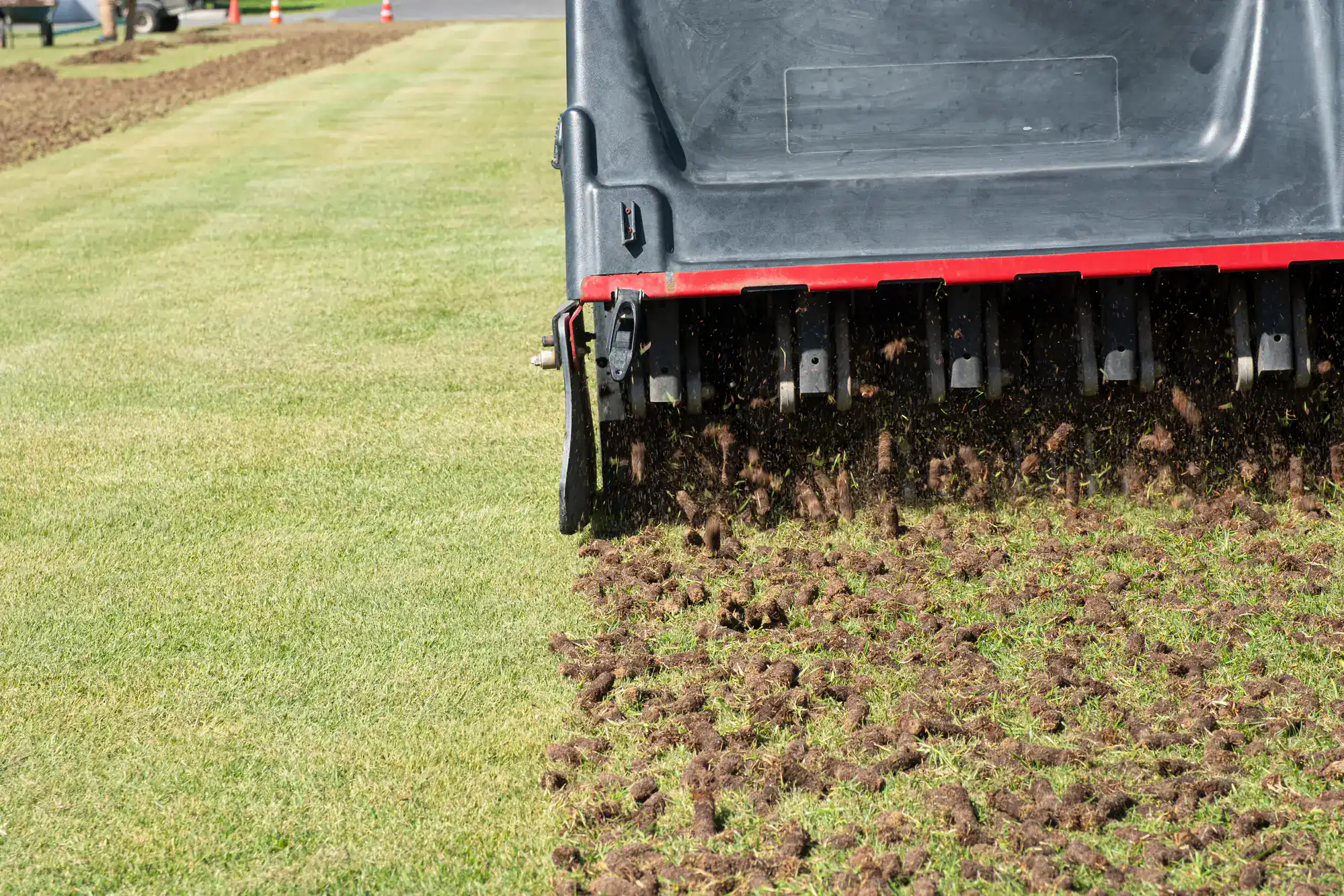
When our crew arrives, we’re running hydraulic core aerators equipment that pulls clean plugs consistently, even in areas where compaction is significant. The plugs get left on the surface, which is intentional. They break down over a few weeks and return organic matter back into the soil. If overseeding is part of your program, it goes down right after aeration while the soil channels are open and seed-to-soil contact is at its best.
Timing is a real factor here. Suffolk County’s fertilizer ban kicks in every November 1st, which means the fall window late August through October is when a combined aeration, overseeding, and fertilization program needs to happen. Miss that window and you’re waiting another year. We plan our fall schedule around this calendar and deliver when it actually counts.
Ready to get started?
We don’t sell packages off a shelf. Every program is built around what your specific property needs and in Sayville, that means accounting for the South Shore’s sandy loam soil profile, coastal humidity that accelerates thatch buildup, and the tight fall service window that Suffolk County’s fertilizer regulations create. The goal isn’t to check a box. It’s to produce a lawn that actually looks and performs the way it should given what you’re investing in your property.
The core aeration service itself uses professional hydraulic equipment not the walk-behind rental units most companies bring. That distinction matters in compacted or coastal-condition soil where lighter equipment doesn’t penetrate consistently. If your lawn needs overseeding alongside aeration, that gets layered in at the right moment in the process. If a custom fertilizer application fits within the regulatory window, that’s part of the conversation too.
We also handle new lawn installs from seed and full lawn restoration for properties that are starting from a difficult baseline. Whether you’re dealing with years of neglect, a newly purchased Sayville home with a lawn that needs a complete reset, or just a once-healthy yard that’s been declining and you can’t figure out why the approach is the same: assess it honestly, build a program around what it actually needs, and use the right equipment to do the work properly.
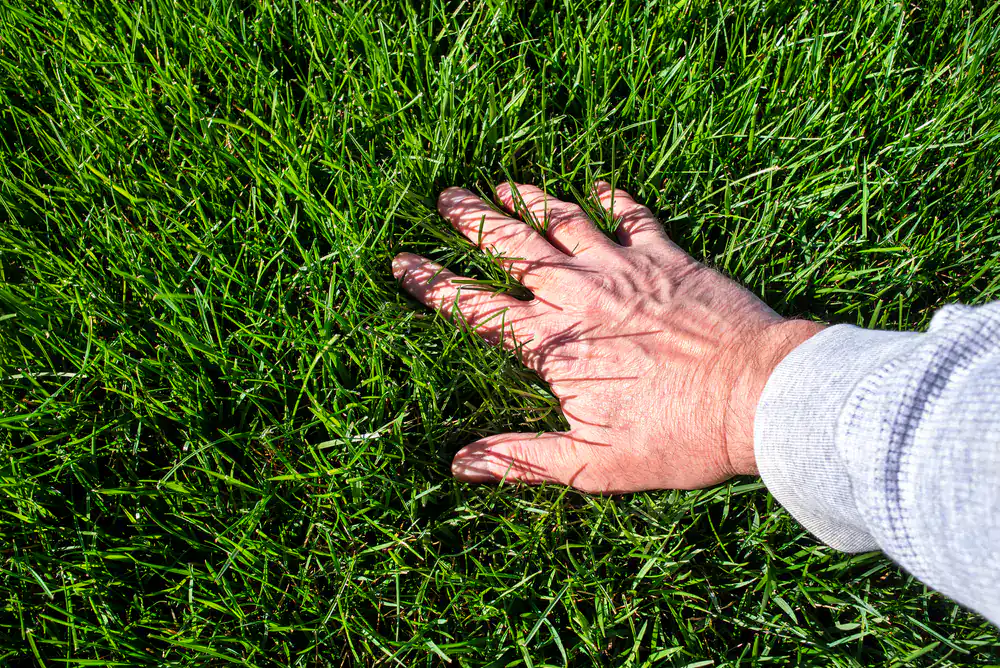
For most Sayville lawns, late August through October is the window you’re working with. The cool-season grasses that dominate the South Shore fescue, bluegrass, and ryegrass respond best to aeration when the soil is still warm enough to support recovery but the air is cooling down. That combination means less stress on the turf and better conditions for any overseeding that follows.
There’s also a hard deadline to keep in mind: Suffolk County’s fertilizer ban takes effect every November 1st. That’s a county law, not a guideline, and it carries fines up to $1,000 for violations. If you want to complete an aeration, overseeding, and fertilization program as a package which is the most effective approach all of it needs to happen before that date. The fall window is real and it closes every year. Getting on a schedule early matters more than most people realize until they’ve missed it once.
It’s a fair question, and the short answer is yes probably more than you’d expect. Sandy soil drains quickly, which sounds like a benefit, but it also compacts readily under foot traffic, mowing equipment, and seasonal pressure. When it compacts, you lose the drainage advantage. Water starts pooling at the surface instead of moving through the profile. Nutrients applied at the surface can’t reach the root zone. Roots stay shallow because the compressed soil doesn’t give them room to grow deeper.
The South Shore soil profile what the Cornell Cooperative Extension of Suffolk County identifies as Plymouth loamy sand is exactly this type. It’s common across Sayville and the surrounding area. Core aeration opens channels through that compacted layer and restores the soil’s ability to move water and nutrients where they need to go. On sandy loam specifically, the results are often more visible than homeowners expect, because the soil responds quickly once the compaction is relieved.
There are a few things to look for. If water puddles on your lawn after rain instead of soaking in, that’s a compaction sign. If your grass looks thin or patchy despite regular watering and fertilizing, compaction is often the reason the inputs aren’t reaching the roots. You can also do a simple screwdriver test: push a standard screwdriver into your lawn by hand. If it goes in easily to about six inches, your soil is in decent shape. If you’re struggling to push it past two or three inches, you’ve got compaction worth addressing.
In Sayville specifically, lawns that see regular foot traffic through the warmer months backyard entertaining, kids, bay access tend to accumulate compaction faster than properties with lighter use. The same goes for lawns near the waterfront where coastal humidity accelerates thatch buildup. Thatch the layer of dead organic matter between the grass and the soil compounds the compaction problem by blocking water and air movement at the surface. Core aeration addresses both issues at once.
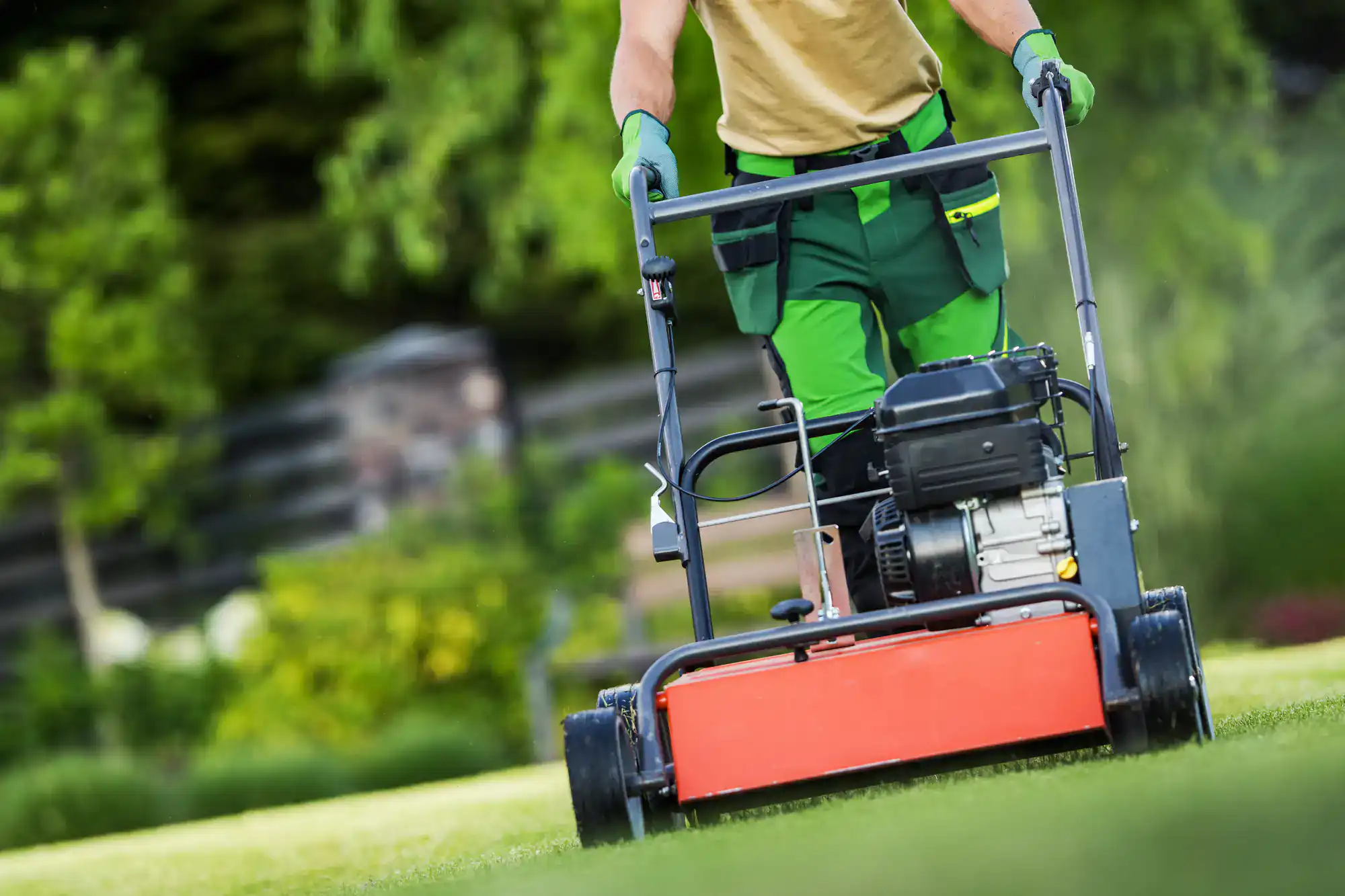
Core aeration physically removes plugs of soil from the ground typically about three-quarters of an inch wide and three inches deep. Those plugs get left on the surface, where they break down over a few weeks and return organic matter to the soil. The holes they leave behind are real open channels that allow water, air, and nutrients to reach the root zone directly.
Spike aeration, by contrast, pushes solid tines into the ground without removing anything. The problem with that approach is that it can actually increase compaction around the spike holes by pressing the surrounding soil tighter. It doesn’t create the same open channels, and the results are noticeably less effective especially in the compacted sandy loam that’s common across Sayville and the South Shore. If a company is offering aeration at a significantly lower price point, it’s worth asking which method they’re using. The equipment and the approach matter as much as showing up.
For a standard residential property, professional core aeration typically runs somewhere in the range of $100 to $300, depending on the size of the lawn, the condition of the soil, and whether services like overseeding or fertilization are being added at the same time. Larger properties or lawns with significant compaction issues may fall toward the higher end of that range.
In a market like Sayville where median home values sit around $667,000 and property taxes run close to $10,000 a year most homeowners aren’t making this decision based on finding the lowest possible price. They’re looking for a company that will actually deliver results on a property they’ve invested significantly in. The cost of professional aeration done right is a small fraction of what you’re already putting into your home. The cost of aeration done poorly, or skipped entirely while your lawn declines, tends to show up later in more expensive restoration work. We provide custom quotes based on your specific property call to get an accurate number for your lawn.
Yes, and it’s one of the more underappreciated reasons why aeration matters specifically for South Shore properties. Salt air off the Great South Bay deposits salt at the soil surface over time, which creates osmotic stress for grass roots essentially making it harder for roots to absorb water even when moisture is present. Compacted soil makes this worse, because shallow roots have no way to grow below the salt-affected surface layer to access better conditions deeper in the profile.
Core aeration doesn’t eliminate salt exposure, but it does give your lawn a better chance of managing it. By opening channels through the compacted layer, you allow roots to grow deeper past the zone where surface salt accumulation is most concentrated. Combined with a fertilization program timed before Suffolk County’s November 1st ban, aeration gives coastal Sayville lawns a meaningful recovery window each fall. It’s not a one-time fix, but as part of an annual program, it’s one of the most effective things you can do for a lawn dealing with the specific conditions that come with living near the bay.
Useful Links
Other Services we provide in Sayville