
Hear from Our Customers
When your lawn’s pH is off, it doesn’t matter how much fertilizer you put down or how often you water. The nutrients are there they’re just chemically locked in the soil and your grass can’t reach them. Correcting the pH doesn’t just improve your lawn, it makes every other service you’re already paying for actually deliver results.
Sayville’s position right on the Great South Bay creates a specific set of conditions you won’t find a few miles inland. The soil here is sandy and porous, it drains fast, and between the salt air off the bay and the coastal leaching, nutrients disappear from the root zone quicker than they would in heavier inland soils. That’s not a maintenance failure it’s just the reality of living on the South Shore. But it does mean your lawn needs a stronger foundation than most, and pH correction is where that foundation starts.
Once the pH is dialed in to the right range typically between 6.3 and 6.5 for Long Island turf you’ll start to see the difference in your lawn’s color, density, and ability to hold up through the season. Moss and stubborn weeds that keep coming back despite treatment? Those thrive in acidic conditions. Fix the pH, and your grass finally has the competitive edge it needs to crowd them out naturally.
We’re a Suffolk County-based lawn care company not a franchise running a national playbook. There are franchise operations serving the Sayville area that do solid work, but there’s a real difference between a standardized system and an independent operator who’s built their entire approach around Long Island’s specific soil conditions, seasonal patterns, and local regulations.
Sayville’s South Shore soils are not the same as what you’d find in Smithtown or Hauppauge. The sandy, salt-influenced, rapidly draining soil along the bay has its own chemistry, and it needs to be treated accordingly. We understand that and the approach we bring to Sayville lawns reflects it.
When you call, you reach a real person. Our team is accessible, communicative, and focused on building a program that actually fits your lawn not a generic tier applied to every property on the block.
It starts with a soil test. Before any lime touches your lawn, we need to know where your pH actually stands. Hardware store test kits can give you a rough number, but they won’t tell you how much lime is needed to close the gap and applying the wrong amount either does nothing or pushes your soil in the wrong direction. A proper soil test removes that guesswork entirely.
Once we have your results, we calculate the correct lime application for your specific lawn the right product, the right rate, applied at the right time. For Sayville lawns, fall is the ideal window, typically September through November. The winter rain, freeze-thaw cycles, and snowmelt work the lime into your sandy South Shore soil over the colder months, so by the time your lawn starts pushing growth in spring, the pH is already where it needs to be. Homeowners who wait until spring to treat are already a full growing season behind.
After treatment, we’ll walk you through what to expect and when. Lime isn’t instant the full effect builds over several months but the spring green-up on a properly treated Sayville lawn is noticeably different from one that’s been fighting acidic soil all season. We also keep track of your lawn’s history so that when it’s time to retest usually every two to three years you’re not starting from scratch.
Ready to get started?
Every lawn pH treatment we provide is built on a confirmed soil test, not an assumption. That matters more in Sayville than almost anywhere else in Suffolk County. The sandy, coastal soil along the South Shore leaches nutrients faster than inland areas, salt air off the Great South Bay adds an additional stress layer, and pH levels in untreated South Shore lawns commonly fall in the 4.8 to 5.5 range well below the 6.3 to 6.5 target that Cornell Cooperative Extension recommends for Long Island turf. The gap between where your soil is and where it needs to be isn’t small, and closing it requires a precise, calibrated application not a bag of lime from the hardware store spread by hand.
The treatment itself uses professional-grade lime applied at rates calculated specifically for your lawn’s test results. We account for your soil’s current pH, the depth of the deficiency, and the sandy drainage characteristics common to Sayville properties. Because Suffolk County’s fertilizer laws restrict how nutrients can be applied near surface water and Sayville sits right on the bay we operate in full compliance with Chapter 459 and New York State’s nutrient runoff regulations. That means every application we make is responsible, documented, and calibrated to minimize leaching toward the Great South Bay.
After treatment, pH correction becomes part of your ongoing lawn program. Soil pH drifts over time, especially in high-drainage coastal soils, and retesting every two to three years keeps your lawn from quietly sliding back into the acidic range that’s been holding it back.
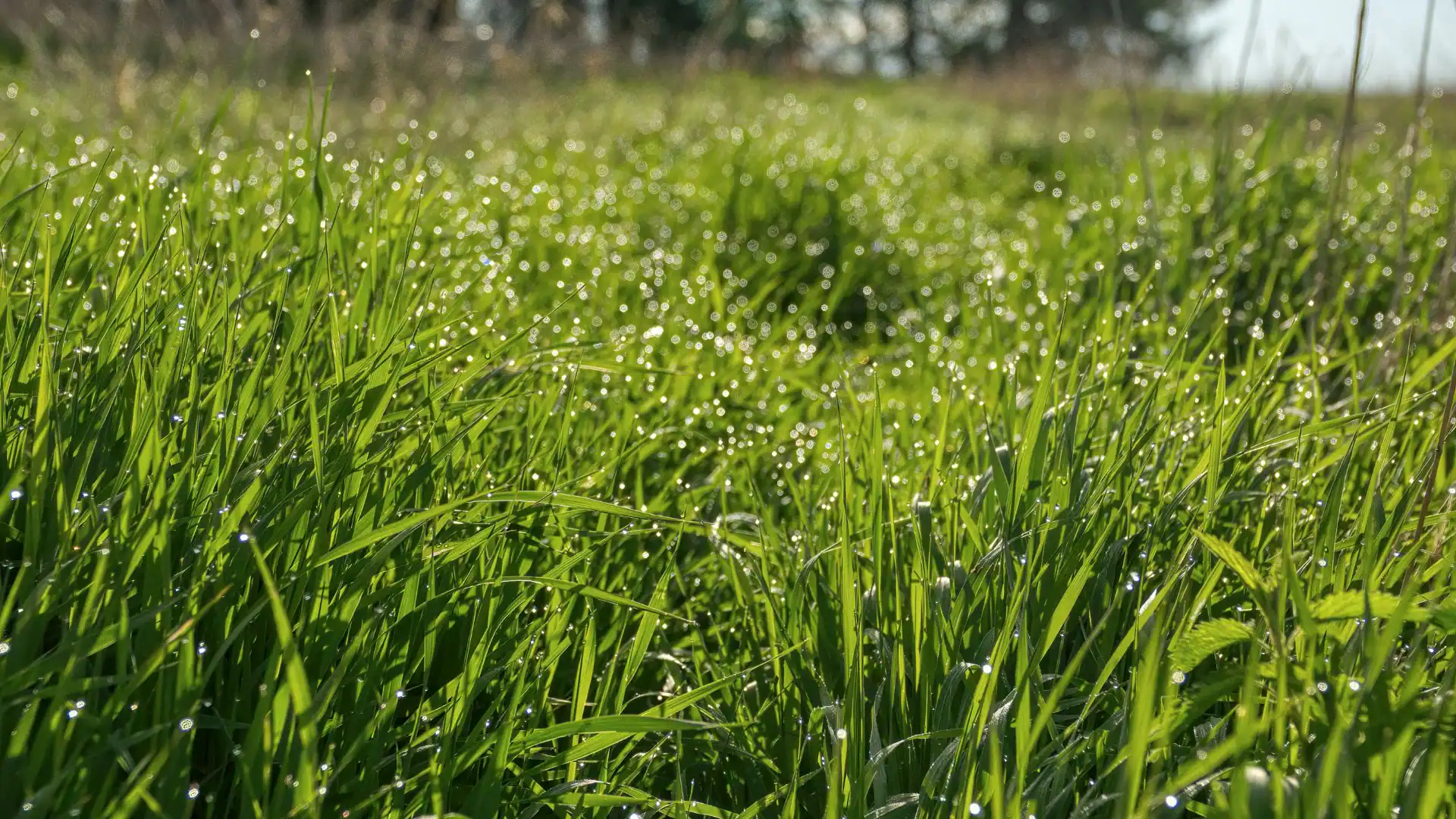
The most reliable way to know is a soil test but there are signs that show up well before you test. If your lawn stays thin or pale despite regular fertilizing, if moss is creeping in from the edges, or if certain weeds keep returning no matter how many times you treat them, those are all classic signs of acidic soil. Moss and many common lawn weeds thrive in low-pH conditions, and they’ll keep coming back as long as the soil chemistry favors them over your grass.
In Sayville specifically, the combination of sandy coastal soil and salt air off the Great South Bay creates conditions that naturally push soil toward acidity faster than you’d see in inland Suffolk County towns. Untreated South Shore soils commonly test in the 4.8 to 5.5 pH range, which is significantly below the 6.3 to 6.5 target for healthy Long Island turf. If you’ve been maintaining your lawn for a few years and can’t figure out why it won’t respond the way it should, soil pH is almost always worth testing first.
pH controls whether your grass can actually access the nutrients in the soil. When the pH is too acidic, essential nutrients like nitrogen, phosphorus, and potassium get chemically bound to soil particles and become unavailable to grass roots even if you just applied a full round of fertilizer. The fertilizer is technically in the soil, but your lawn can’t use it.
What makes this especially relevant for Sayville homeowners is that the problem compounds quickly in sandy, fast-draining coastal soil. Nutrients that aren’t absorbed by the grass don’t just sit there they leach through the porous South Shore soil and can eventually reach the groundwater and the Great South Bay. Correcting your lawn’s pH isn’t just a lawn health decision here, it’s also the more environmentally responsible approach for a community living adjacent to the bay. A pH-corrected lawn absorbs what you put down. An acidic one wastes it.
Fall is the best window ideally somewhere between September and November. The reason is timing: lime doesn’t work instantly. It needs moisture and temperature cycles to break down and integrate into the soil, and Long Island’s winter rain, snow, and freeze-thaw patterns do exactly that over the colder months. By the time soil temperatures start climbing in spring and your grass begins actively growing, a fall lime application has had months to raise your pH to where it needs to be.
Spring applications work too, but they put you behind. Your lawn spends the first half of the growing season still fighting acidic conditions, which means weaker spring green-up, reduced fertilizer efficiency, and more stress heading into summer. For Sayville lawns especially where the sandy South Shore soil already creates a challenging environment getting the pH right before spring growth starts makes a visible difference. If you’re thinking about it now, fall is the time to move.
You can, but you’re essentially guessing and with lime, guessing in either direction creates a problem. Apply too little and nothing changes. Apply too much and you push your soil alkaline, which locks out a different set of nutrients and creates a new issue to correct. Basic pH test strips from the hardware store can give you a rough reading, but they don’t calculate how much lime your specific soil needs to reach the target range. That calculation depends on your current pH, how far off you are, and your soil’s buffering capacity factors that a proper soil test accounts for and a strip test doesn’t.
In Sayville’s sandy coastal soil, this matters more than it would in heavier loam soils further inland. Sandy soil has a lower buffering capacity, which means pH can shift more sharply with lime applications. A professional soil test takes the guesswork out entirely and ensures you’re applying the right amount to actually move the needle without overshooting it.
It’s a fair question, and it’s one more Sayville homeowners are starting to ask. The short answer is that properly applied lime calibrated to your soil’s actual needs is not a water quality risk. Lime raises soil pH, which actually helps your lawn absorb fertilizer more efficiently. That means less unused nitrogen and phosphorus leaching through Sayville’s sandy soil toward the groundwater and the bay. In that sense, correcting soil pH is the more environmentally responsible approach, not a less responsible one.
What does create water quality concerns is over-application which is exactly why a soil-test-first approach matters here. Suffolk County’s fertilizer law, Chapter 459, restricts how nutrients can be applied near surface water, and New York State’s nutrient runoff regulations add another layer of compliance. We operate within both frameworks. Every application we make is calibrated to your soil’s confirmed needs, documented, and applied in compliance with the regulations that exist specifically to protect water bodies like the Great South Bay.
Lime works on a timeline measured in months, not days and setting that expectation upfront is part of doing this honestly. After a fall application, the lime spends the winter integrating into your soil as rain and freeze-thaw cycles work it down through the root zone. The payoff shows up in spring: better color, improved density, stronger response to fertilizer, and less pressure from the moss and weeds that thrive in acidic conditions.
For Sayville lawns, the spring green-up is usually where the difference becomes most visible. Because the South Shore’s sandy soil drains so quickly, a lawn that’s been fighting acidic conditions often looks noticeably different after one properly timed treatment not because lime is a miracle product, but because the soil chemistry is finally allowing your grass to do what it’s supposed to do. If you retest in late spring or early summer, you’ll typically see the pH shift confirmed in the numbers. From there, retesting every two to three years keeps the progress from quietly reversing.
Useful Links
Other Services we provide in Sayville