
Hear from Our Customers
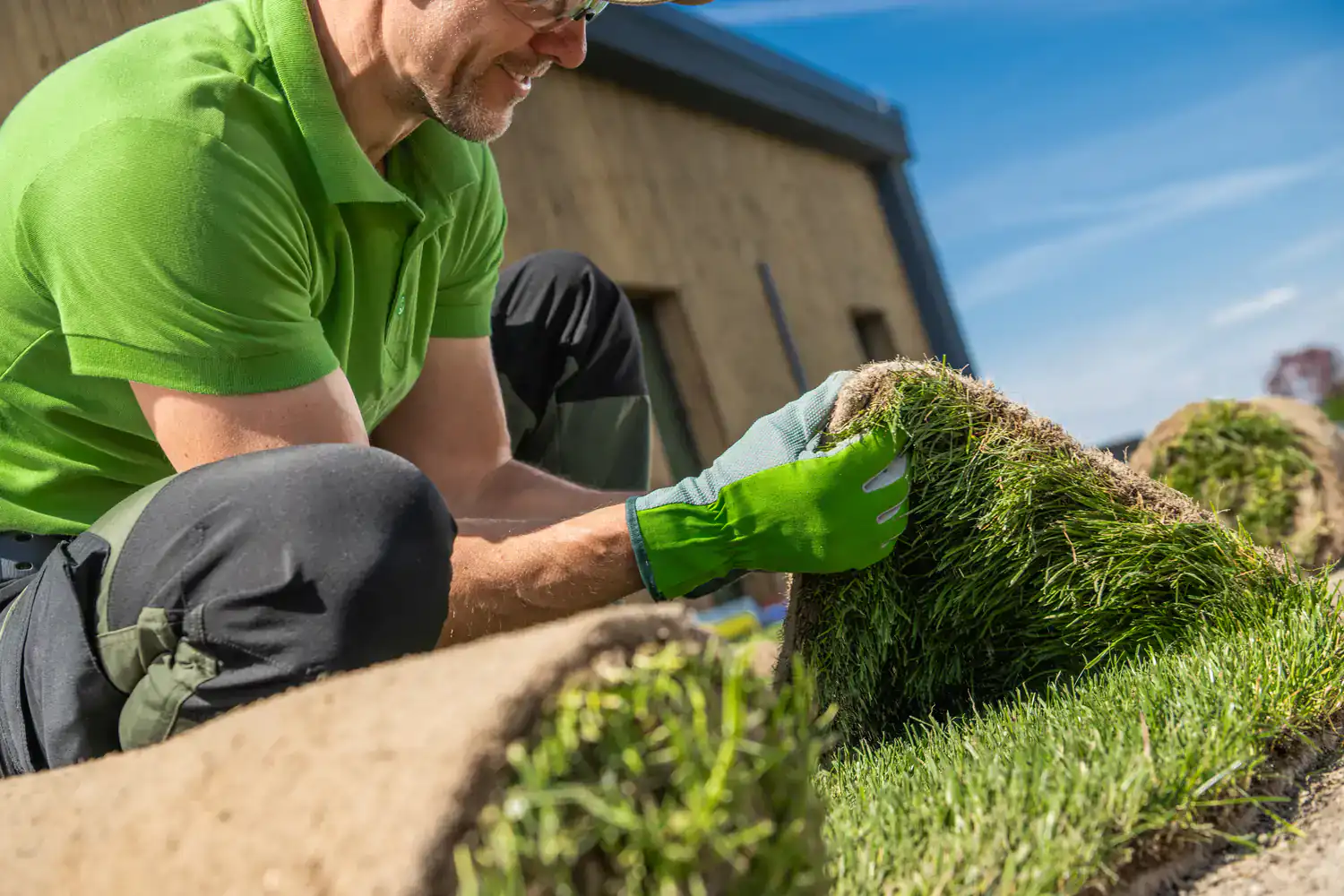
When lawn seeding is done right for a South Shore property in Sayville, the results aren’t just visual they hold. You get a dense, thick stand of grass that doesn’t thin out by August, doesn’t wash away after a heavy rain, and doesn’t leave you reseeding the same bare patches every fall. That’s the difference between a program built for your specific conditions and a generic approach that ignores them.
Sayville’s sandy, fast-draining soils are one of the main reasons DIY seeding fails here. Nutrients leach through quickly, moisture doesn’t stick around long enough for new seedlings to establish, and the salt air coming off the Great South Bay stresses grass varieties that weren’t selected with coastal exposure in mind. Our professional lawn seeding program in Sayville accounts for all of that the soil profile, the salt influence, the drainage patterns before a single seed goes down.
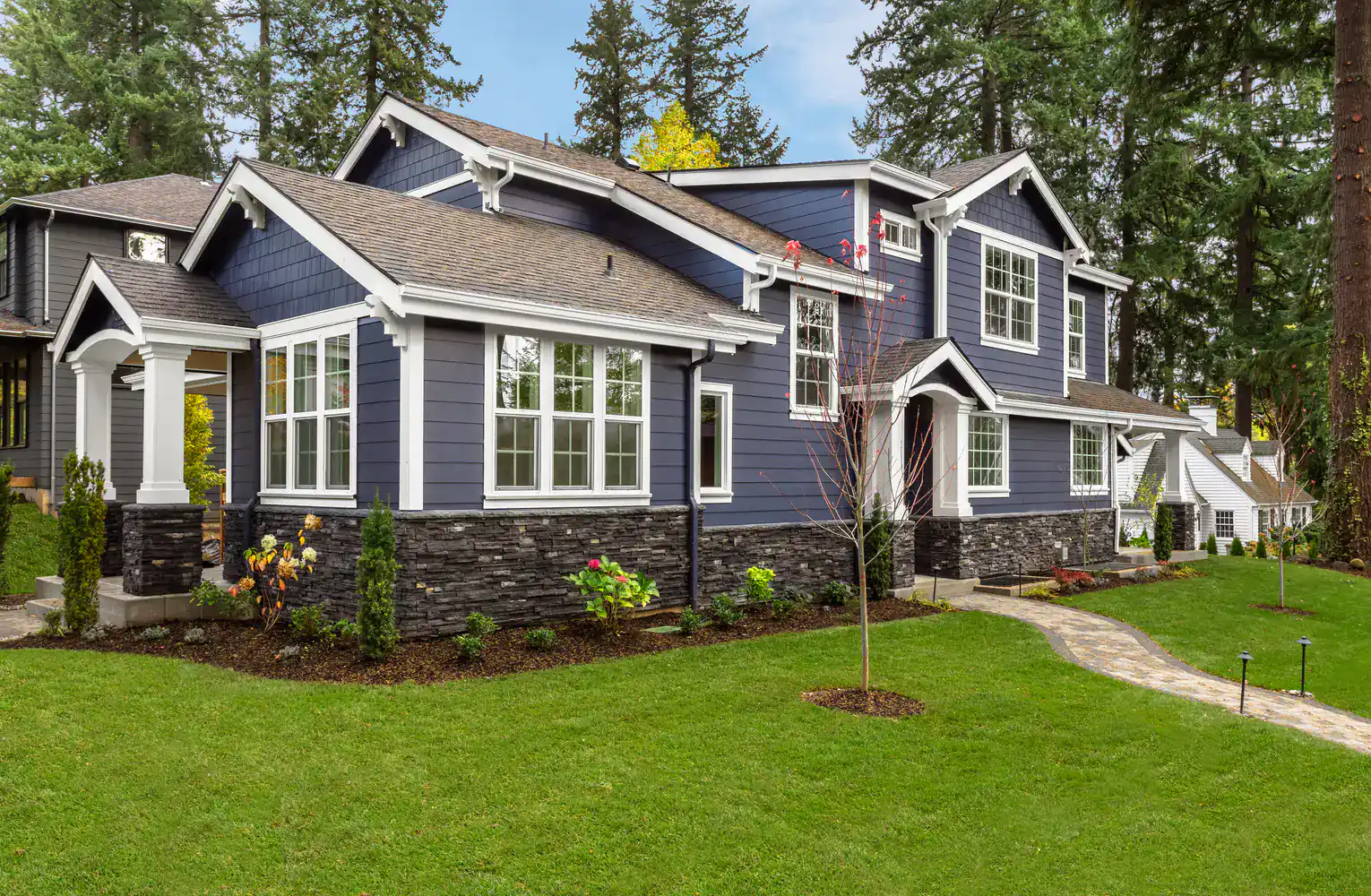
The result is a lawn that actually fills in. Bare spots that have been bare for years. Thin areas near the water side of your property that never seemed to recover. A front lawn that looks like it belongs on a street where homes are worth what yours is. That’s what the right seeding program delivers and it starts with understanding what’s actually working against your grass.
Lawn Master is a Suffolk County lawn care company that works specifically in the communities along Long Island’s South Shore including Sayville, West Sayville, Bayport, Blue Point, and Oakdale. We’re not a national franchise routing calls through a regional office. We work in the same soil conditions you’re dealing with in Sayville, on properties with the same sandy loam profile and salt air exposure that comes with living between Sunrise Highway and the Great South Bay.
We understand the Town of Islip’s regulatory environment, including New York State’s fertilizer restrictions near coastal waterways something that matters for Sayville properties close to Brown Creek, Greenes Creek, or the bay itself. We’re fully licensed in New York State and design every program around what’s actually happening on your property, not a one-size-fits-all plan pulled from a national playbook.
When you call us about lawn seeding in Sayville, you’re talking to people who know this area not a call center.
It starts with an assessment of your property not a quick glance, but an actual look at your soil conditions, drainage, sun and shade patterns, and what’s causing the thinning or bare spots in the first place. On South Shore properties in Sayville, that often means identifying how sandy the soil is, whether salt air stress is affecting specific areas, and whether compaction is restricting root development. We don’t skip this step, because treating the symptom without understanding the cause is exactly why most lawn seeding attempts don’t hold.
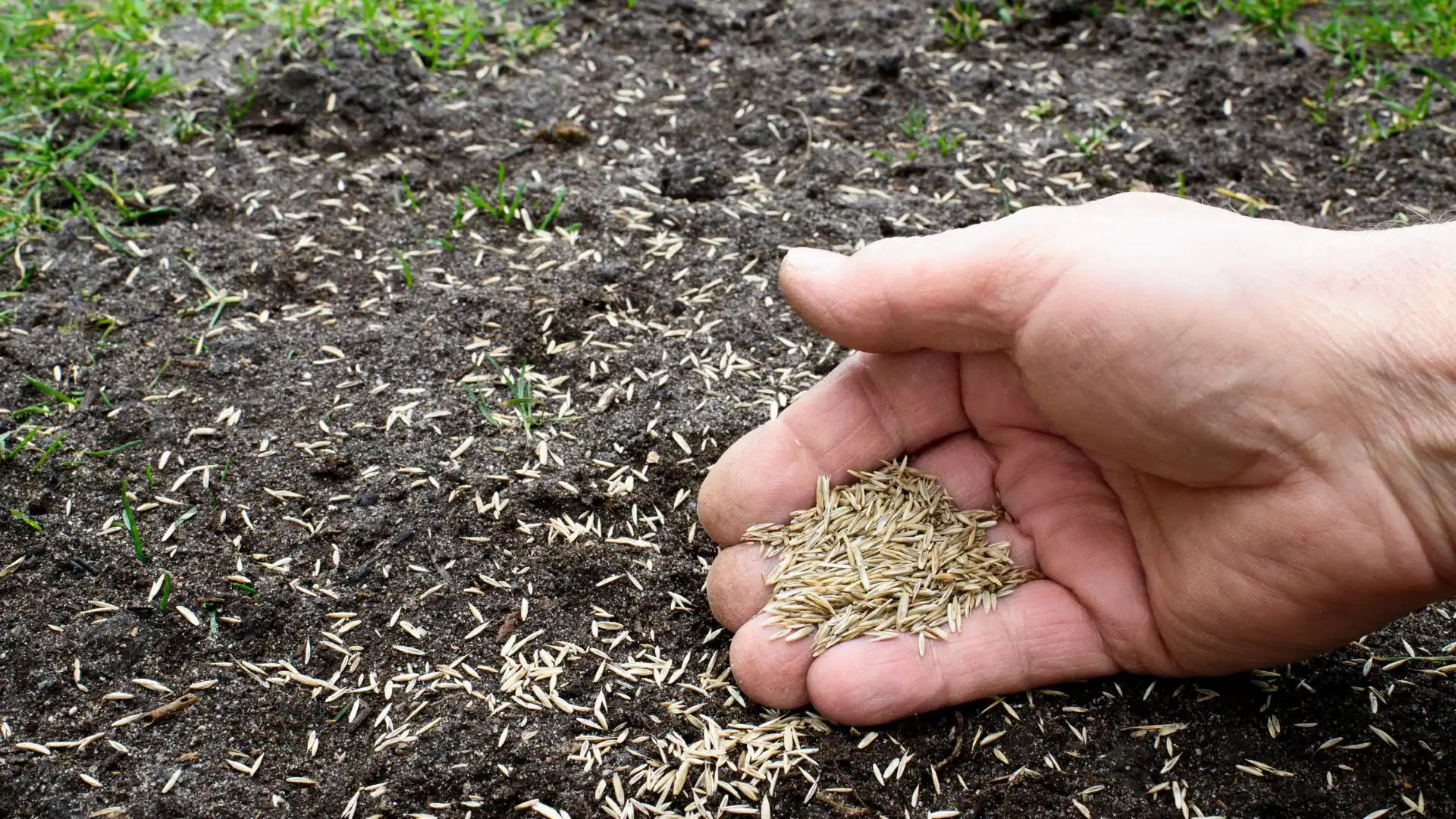
Once we know what we’re working with, we prepare the surface. For overseeding programs, that typically means core aeration first pulling plugs from the compacted soil to open channels for seed-to-soil contact, water, and oxygen. For new lawn establishment on bare ground, it means proper grading, soil amendment where needed, and a starter fertilizer timed to support root development, not just top growth. The seed we use is professional-grade turf-type tall fescue, Kentucky bluegrass, and perennial ryegrass blends selected for Long Island’s cool-season climate and, where relevant, salt tolerance for coastal Sayville properties.
Timing is everything on Long Island. The optimal fall seeding window runs from late August through mid-October, with the first three weeks of September being the prime target. Soil temperatures are still warm enough to drive germination, but the heat has backed off enough to give new seedlings a real chance. We schedule Sayville seeding programs around that window not around what’s convenient, but around what actually works.
Ready to get started?
Our lawn seeding programs in Sayville cover both ends of the spectrum full new lawn establishment from bare ground and professional overseeding for existing lawns that have thinned over time. Both programs are built around the same core principle: the right seed variety for your specific conditions, applied at the right time, on properly prepared soil.
For Sayville properties specifically, we prioritize cool-season grass blends with documented salt tolerance a factor that simply doesn’t come up for inland Suffolk County towns but is genuinely relevant here. Turf-type tall fescue is the backbone of most South Shore seeding programs because of its drought tolerance, root depth, and resilience under the conditions that Sayville lawns face. Kentucky bluegrass and perennial ryegrass are blended in depending on sun exposure, traffic patterns, and the specific look the homeowner wants. Every program also includes a properly timed starter fertilizer application phosphorus for root establishment during germination, followed by nitrogen timed to feed the turf without burning new growth.
For homeowners near Brown Creek or Greenes Creek, or anywhere close to the bay, we design fertilization components in compliance with New York State’s Lawn Fertilizer Law, which restricts phosphorus application near water bodies. You get a program that produces results and respects the waterways your community actually cares about.
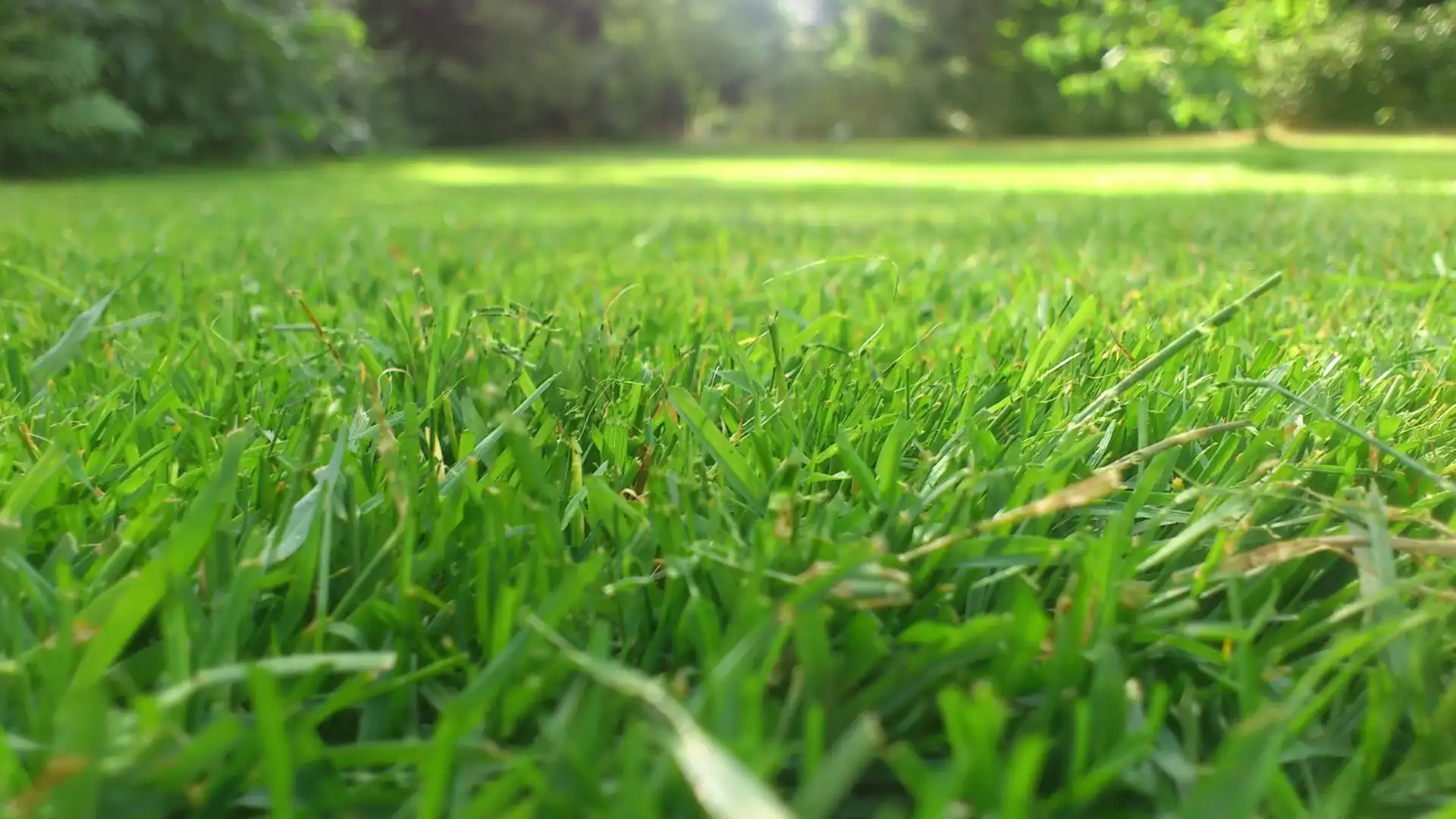
The best time to seed a lawn in Sayville is late August through mid-October, with the first three weeks of September being the strongest window. During that period, soil temperatures are still above 50°F warm enough to drive germination but the intense summer heat has dropped enough that new seedlings aren’t immediately stressed. That combination is what gives cool-season grasses like tall fescue and perennial ryegrass the best possible start.
Spring seeding is possible, but it’s a narrower, riskier window on Long Island. The gap between “warm enough to germinate” and “hot enough to damage new seedlings” closes fast here, and Sayville’s sandy soils dry out quickly once summer arrives. Seedlings that haven’t fully established by June often struggle through their first summer and thin out before fall. For most Sayville homeowners, fall seeding is the right call and booking early matters because the window fills up fast.
If you’ve reseeded the same areas in Sayville more than once and they keep thinning, the seed isn’t the problem the conditions are. In Sayville, the most common culprits are sandy soil that doesn’t hold moisture long enough for seedlings to establish, compacted ground that prevents roots from developing properly, and in some cases, salt air stress affecting grass varieties that weren’t selected with coastal exposure in mind. Throwing more seed at those conditions without addressing them produces the same result every time.
A professional assessment looks at what’s actually happening below the surface. Compaction is common on South Shore properties and restricts the air, water, and nutrient flow that roots need. Core aeration before overseeding opens the soil and dramatically improves establishment rates. If salt air is a factor especially on the south-facing side of your property toward the bay switching to a more salt-tolerant tall fescue blend can make a significant difference in long-term density. Fix the conditions, and the seed holds.
For most Sayville properties, a turf-type tall fescue blend is the strongest choice. Tall fescue develops a deep root system that handles Sayville’s sandy, fast-draining soils better than shallow-rooted varieties, and it has solid drought tolerance for Long Island summers when those sandy soils dry out quickly. It also performs reasonably well under salt air stress, which matters more here than it does for inland Suffolk County towns.
Depending on your specific property, a Kentucky bluegrass and perennial ryegrass blend may be added to the mix. Kentucky bluegrass fills in laterally over time, which helps repair bare spots and improve overall density. Perennial ryegrass establishes quickly, which is useful if you need visible coverage fast. The right blend depends on your sun and shade conditions, how much foot traffic the lawn gets, and how close you are to the water. That’s why a property assessment before seeding matters the same seed program doesn’t work equally well on every Sayville lawn.
You can skip aeration, but for most Sayville lawns, you’ll get noticeably worse results if you do. Core aeration pulls plugs from the soil and creates direct channels for seed-to-soil contact which is one of the most important factors in germination success. Seed sitting on top of compacted or thatch-covered ground has a much lower establishment rate than seed that falls into an aerated surface and makes real contact with the soil beneath.
On South Shore properties specifically, compaction is a documented issue. Years of foot traffic, the natural settling of sandy loam soils, and the weight of lawn equipment all contribute to a surface that restricts root development. Aeration addresses that directly. When you pair core aeration with professional overseeding in the fall the right window for Suffolk County you’re giving the seed the best possible environment to germinate, establish, and survive through its first winter. For lawns that have thinned significantly, this combination is typically the difference between results that hold and results that fade by spring.
Professional lawn seeding costs in Sayville vary based on property size, what the soil needs, whether the program includes core aeration, and which seed blend is appropriate for your conditions. For a standard residential overseeding program with aeration on a typical Sayville single-family property, you’re generally looking at a range of $350 to $700 depending on square footage and soil preparation requirements. New lawn establishment from bare ground which involves more prep work, possible soil amendment, and a full starter fertilizer program typically runs higher.
What’s worth keeping in mind is the cost of not doing it right. Sayville homeowners who invest in a property worth $500,000 or more have a direct financial interest in maintaining curb appeal and turf quality. A professional seeding program that actually holds is a better investment than two or three rounds of DIY seeding that thin out by summer. We provide straightforward pricing based on your specific property no teaser rates, no surprise add-ons after the first visit.
Yes and this is something we take seriously for properties near the Great South Bay, Brown Creek, or Greenes Creek. New York State’s Lawn Fertilizer Law restricts phosphorus application on established lawns and sets buffer requirements near water bodies. For new lawn establishment where starter fertilizer with phosphorus is genuinely needed for root development applications must be handled carefully and in compliance with state guidelines. Our programs are designed with these regulations built in, not treated as an afterthought.
Beyond regulatory compliance, the broader point is that responsible lawn seeding near coastal waterways is good for your lawn and for the bay. Proper soil preparation reduces bare ground runoff during the establishment period. Appropriate seed selection means the turf establishes faster and more completely, which stabilizes the soil sooner. Sayville residents who care about the health of the Great South Bay and most do can have a thick, professionally seeded lawn without compromising the waterways that make this community what it is.
Useful Links
Other Services we provide in Sayville