
Hear from Our Customers
A restored lawn isn’t just green it’s dense, rooted, and built to hold up through the seasons. No more bare patches spreading toward the driveway. No more thin strips of grass that look fine in April and give up by July. When the underlying problems are actually fixed, the results don’t just look better they last.
For homeowners in East Islip, that means a lawn that can handle what this area throws at it. The sandy, fast-draining soils along the South Shore don’t hold nutrients the way inland Suffolk County soils do, and the salt air coming off the Great South Bay adds a layer of stress that most off-the-shelf products aren’t designed to address. A restored lawn here isn’t treated like any lawn it’s treated like your lawn, in your location, with your specific soil profile.
The payoff goes beyond curb appeal. In a community where median home values sit above $625,000 and neighborhoods like The Moorings set a visible standard, a healthy lawn is a real asset. Restoration done right protects that investment and it costs a fraction of what a full rebuild would run.
We’ve been working Suffolk County lawns since 1986 long before most homeowners in East Islip moved into their current homes. That’s not a number we throw around for effect. It means our technicians have seen every soil condition, every seasonal pattern, and every lawn problem this region produces including the specific challenges that come with living on the South Shore near the Great South Bay.
We hold a valid New York State pesticide applicator license, and we operate in full compliance with Suffolk County’s Healthy Lawns, Clean Water fertilizer regulations including the November through April application ban designed to protect Long Island’s sole-source aquifer. That’s not a footnote. It’s a legal requirement that a lot of local operators quietly ignore.
We’re not a franchise. We’re not reading from a national playbook. We’re a Suffolk County operation that knows this ground literally and we bring that knowledge to every estimate we give in East Islip and surrounding communities.
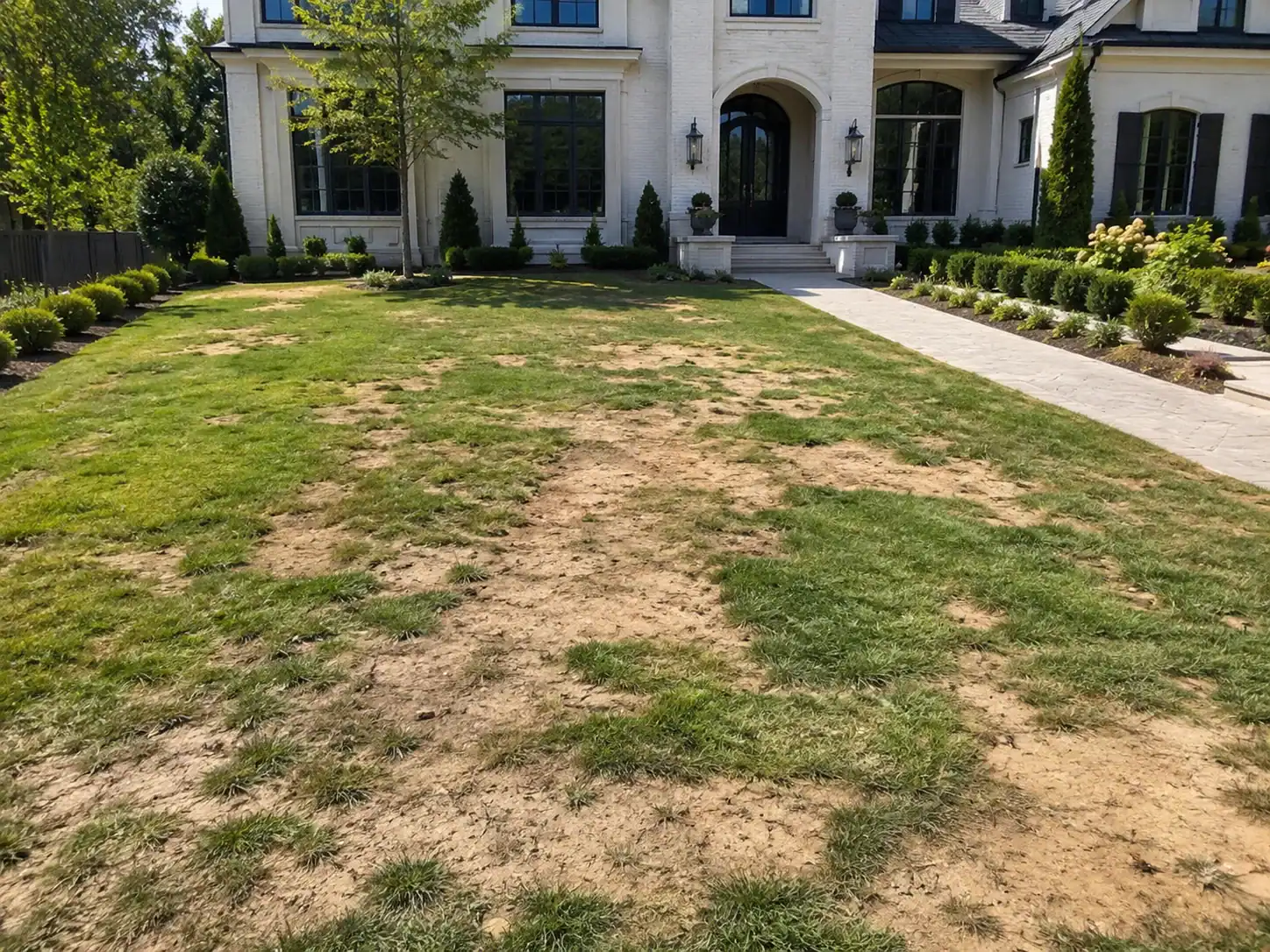
It starts with a proper look at your lawn not a glance from the truck window. We assess the extent of bare patches, check for grub activity, evaluate soil compaction, and look for signs of fungal disease or salt stress. In East Islip, that last one matters more than people realize. Lawns near the bay, especially in waterfront neighborhoods, can show salt damage that looks almost identical to drought stress. If you treat the wrong problem, you waste the whole season.
If the soil needs it, we test it. Sandy loam soils common to the South Shore drain fast and deplete quickly and a soil test tells us exactly what’s off before we apply anything. From there, we build the corrective plan: aeration to break up compaction, slice seeding to get seed into the soil at the right depth rather than sitting on top of it, pH adjustment, and a targeted fertilization program timed to Long Island’s growing calendar.
The best restoration window on Long Island is late August through October when the soil is still warm enough for cool-season grass to germinate but the summer heat has backed off enough to let it establish. We plan around that window, not around a national template. By the time your neighbors are raking leaves, your lawn is already filling back in.
Ready to get started?
Lawn restoration in East Islip covers the full range of what it takes to bring an existing lawn back to health without tearing it out and starting over. That distinction matters. Restoration assumes your lawn’s foundation is still viable: the soil can be corrected, the root structure can recover, and the turf can be revived with the right intervention. If your lawn is truly beyond saving, we’ll tell you that honestly and point you toward our lawn renovation service instead. We’d rather lose a smaller job than set you up for disappointment.
What restoration typically includes: on-site assessment and diagnosis, soil testing where indicated, core aeration to relieve compaction, slice seeding for bare and thin areas, overseeding for overall density, pH correction and lime application, targeted fertilization calibrated to your soil results, and grub damage evaluation before any seeding takes place. Every application we make complies with Suffolk County’s phosphorus restrictions and the seasonal fertilizer rules that protect the Great South Bay watershed because your lawn sits in a community that borders one of Long Island’s most environmentally sensitive bodies of water.
If you’re in Deer Run, Country Village, or anywhere along the bay-facing streets near Percy Williams Cove, we already know the conditions your lawn is dealing with. The diagnosis we give you reflects that not a generic checklist.
Restoration means bringing your existing lawn back to health working with what’s already there. The soil gets corrected, bare patches get seeded, compaction gets relieved, and the turf that’s still viable gets the support it needs to recover. Renovation is a different job entirely: it means stripping out the existing lawn and rebuilding from the ground up, usually because the damage is too extensive or the turf is too far gone to save.
For most East Islip homeowners, restoration is the right starting point especially if the lawn has thinned gradually over time, taken grub damage in isolated patches, or been stressed by salt air and sandy soil depletion. The honest answer is that we can’t tell you which one you need until we’ve looked at your lawn in person. What we can tell you is that we’ll give you a straight assessment, not an upsell. If restoration can get you where you want to be, that’s what we’ll recommend.
Salt damage is one of the most commonly misdiagnosed lawn problems in coastal East Islip and it’s easy to see why. The symptoms look a lot like drought stress: browning at the tips, thinning turf, patches that don’t respond to watering. The difference is that salt damage doesn’t get better when you water more. In fact, overwatering a salt-stressed lawn can make conditions worse by compounding the stress on an already depleted root system.
Lawns in waterfront neighborhoods particularly along the bay-facing streets and in communities like The Moorings are most exposed, but salt stress from bay winds and road salt runoff from Sunrise Highway and Montauk Highway affects lawns well inland throughout East Islip too. The corrective process typically involves flushing the soil to reduce salt concentration, followed by targeted rehabilitation to restore nutrient balance. We assess for salt stress as part of every East Islip lawn evaluation because it’s that common here.
The honest answer is that it depends on where you’re starting from and when the work happens. If restoration is done during the optimal fall window late August through October on Long Island you can expect to see meaningful germination and fill-in within three to four weeks of seeding. Full density typically takes one full growing season, with the lawn continuing to thicken and establish through the following spring.
Spring restoration is possible, but the timeline is tighter. Cool-season grasses need to establish before summer heat arrives, and on the South Shore, that window closes faster than homeowners expect. A lawn seeded in April has roughly eight to ten weeks to root before the stress of a Long Island summer kicks in. Fall restoration gives the grass a full season of mild weather to establish before it faces its first real test. We time our recommendations around what’s actually going to work for your lawn not just what’s convenient to schedule.
This is the most important question to answer before any money changes hands and the answer requires a real look at your property, not a phone estimate. In general, a lawn is a good candidate for restoration if at least 40 to 50 percent of the existing turf is still viable, the soil can be corrected without a full rebuild, and the root damage isn’t so extensive that there’s nothing left to work with.
Where East Islip lawns often land in a gray area is grub damage. If Japanese beetle grubs have been active for more than one season without treatment, the root destruction can be widespread enough that restoration alone won’t produce lasting results. We check for grub activity before recommending any seeding program because seeding into a lawn with an active grub population underneath it is money wasted. If your lawn genuinely needs renovation, we’ll tell you that directly and explain why. There’s no benefit to us recommending restoration on a lawn that needs a rebuild.
Restoration cost in Suffolk County varies based on the size of your lawn, the extent of the damage, and what the diagnostic process turns up. A straightforward aeration and overseeding program for a moderately thinning lawn will run significantly less than a full restoration that includes soil testing, pH correction, slice seeding of multiple bare areas, and a grub remediation step. Most residential restoration programs in the East Islip area fall somewhere between a few hundred dollars for targeted work and upward of a thousand or more for larger properties with more complex issues.
What we can tell you is that restoration almost always costs less than renovation and considerably less than what you’ve likely already spent on products that didn’t fix the underlying problem. The soil conditions in this part of Suffolk County, combined with the salt air exposure and the fast-draining sandy loam that dominates the South Shore, mean that generic box-store programs frequently fail here. Getting a proper diagnosis first is the most cost-effective thing you can do. We provide estimates before any work begins, so there are no surprises.
Yes, and it’s worth understanding before you plan your restoration timeline. Suffolk County law prohibits nitrogen fertilizer applications between November 1 and April 1 with fines up to $1,000 for violations. The regulation exists because Long Island relies entirely on groundwater for drinking water, and nitrogen runoff from lawn fertilizers is a documented contamination risk. The Great South Bay, which borders East Islip directly, is also protected under these rules.
What this means practically is that fertilization as part of a restoration program needs to be timed carefully. The good news is that the optimal restoration window late summer through fall aligns well with the legal application period. Aeration, slice seeding, and soil correction can all be done in September and October, with fertilization applied before the November cutoff to support germination and early root development. We build our restoration schedules around Suffolk County’s regulatory calendar as a matter of standard practice, so you’re never in a position where the timing works against the results.
Useful Links
Other Services we provide in East Islip