
Hear from Our Customers
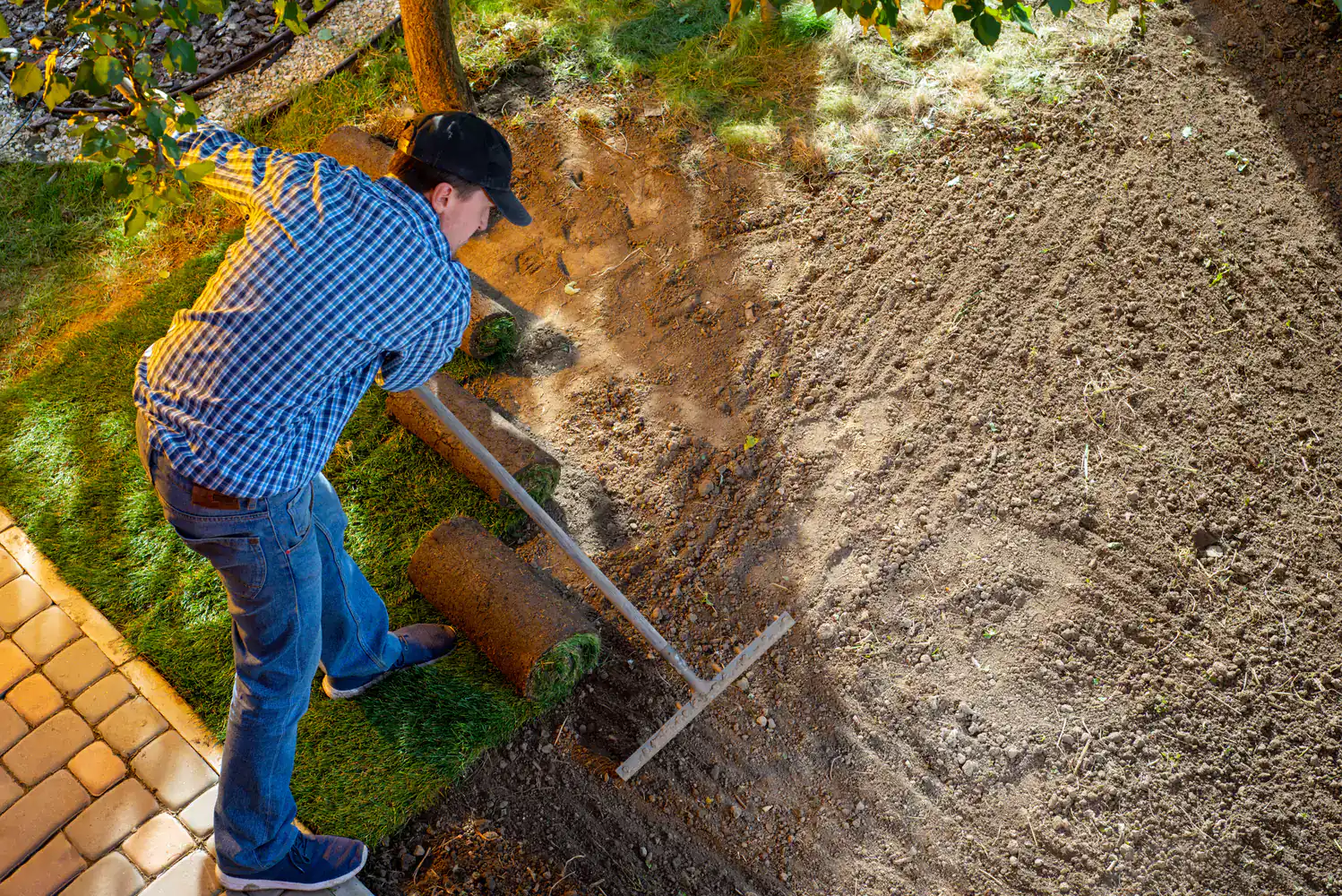
There’s a specific kind of frustration that comes with standing in front of a finished house or a finished renovation and looking at bare, compacted dirt where a lawn should be. The construction is done. The investment is real. But the property still doesn’t look like what you paid for. That’s the moment most Bayport homeowners call us.
What you get on the other side of a proper installation isn’t just grass. It’s a lawn that holds up against the conditions that make South Shore properties uniquely demanding. Bayport’s sandy, fast-draining coastal soil loses moisture and nutrients faster than inland Suffolk County communities. Without the right soil preparation and seed selection up front, new grass struggles to establish in the first critical weeks and you’re starting over by spring. We address that before a single seed goes down.
Salt air is real out here. Properties along the Great South Bay and Browns River face coastal exposure that inland towns simply don’t deal with. The wrong grass variety in that environment declines faster, thins out under stress, and never quite looks right. The right variety selected specifically for Long Island’s South Shore conditions establishes strong root systems, handles coastal stress, and produces the thick, even lawn that a Bayport property at this price point should have. That’s the difference between a lawn that lasts and one that doesn’t.
We are not a landscaping company. We don’t mow, we don’t plant shrubs, and we don’t run a maintenance route. We install and renovate lawns that’s our entire focus, and it has been since 1986. That kind of specialization is rare in this market, and it’s exactly what a from-scratch installation on a Bayport property actually requires.
We’ve worked on South Shore properties from the Great South Bay waterfront to the Bayport-Blue Point school district neighborhoods for nearly four decades. We know what the soil looks like after a new construction project on a large South Bayport lot. We know what happens to a lawn near the bay when the wrong seed goes down. We know the difference between a property that needs grading work before installation and one that’s ready to go and we’ll tell you honestly which one you’re dealing with before we quote you anything.
Thirty-eight years doesn’t just mean experience. It means we’ve seen what fails on Long Island, and we build every installation specifically to avoid it.

It starts with a site assessment, not a sales pitch. Before anything else, we look at what you’re actually working with soil condition, grading, drainage, compaction level, and any issues left behind by construction or renovation. On Bayport properties, especially those near the bay or along Browns River, that assessment often catches drainage challenges or salt-affected soil conditions that would cause a rushed installation to fail. Getting this step right is what separates a lawn that establishes cleanly from one that patches and dies.
Once we know what the site needs, we handle soil preparation which on most Bayport new construction or post-renovation sites means proper topsoil sourcing, organic matter amendment, and grading correction before any seed is applied. Sandy South Shore soil doesn’t hold water or nutrients the way heavier inland soils do, so skipping this step isn’t an option if you want real results. We also take into account Suffolk County’s nitrogen and fertilizer regulations, including the county’s restrictions on synthetic nitrogen application between November and April, so the starter fertilization for your new lawn is handled in full compliance from day one.
After prep, we select and apply the right cool-season seed blend for your specific site factoring in sun exposure, salt air proximity, and soil type. The optimal installation window for Bayport is late August through mid-October, when soil is still warm but air temperatures are cooling and weed competition drops sharply. We’ll walk you through the establishment care schedule watering, first mow timing, traffic restrictions because the job isn’t finished when the seed goes down. It’s finished when you have a lawn.
Ready to get started?
New lawn installation in Bayport isn’t a standard suburban job. The properties here waterfront estates along the Great South Bay, historic colonials being renovated, large-lot new construction near Montauk Highway and South Country Road each come with their own set of conditions that a generalist landscaper isn’t equipped to read. Our process is built around that reality.
For new construction sites, which are among the most demanding scenarios we handle, the work includes a full site assessment, debris identification, grading evaluation, topsoil sourcing and installation, soil amendment for organic matter, and seed-based or seeding depending on the size and character of the property. Larger Bayport lots particularly in South Bayport where parcels tend to be more generous are often strong candidates for seeding, which delivers excellent coverage at a fraction of the cost of full sod on a large footprint. We’ll give you a straight comparison of both options so you can make the right call for your property and your budget.
For post-renovation or tearout scenarios, the process begins the same way with an honest assessment of what the construction or excavation left behind and is scoped specifically to what that site needs. No upselling steps you don’t need. No skipping steps that matter. Properties near wetland buffers or tidal areas along the bay may also require awareness of NYSDEC setback considerations, and we factor that into the project plan from the start. The result is a lawn installation that’s built for this specific property, in this specific community, done correctly once.
For Bayport and the South Shore in general, late August through mid-October is the best window for new lawn installation using cool-season grasses, which is the standard for Long Island. During this period, soil temperatures are still warm from summer which supports germination but air temperatures are cooling down, weed competition drops significantly, and fall rain patterns help keep new seed consistently moist without requiring constant irrigation.
Spring is a workable secondary window, roughly April through May, but it comes with more challenges. Crabgrass and broadleaf weeds germinate at the same time as your new lawn grass, and summer heat arrives before the turf is fully established. On Bayport’s sandy, fast-draining coastal soil, that combination puts a lot of stress on a young lawn. If you have flexibility on timing, fall is the right call. If you’re working with a spring window, we’ll adjust the process accordingly but it’s worth knowing the difference going in.
Cost depends on a few key variables: the size of the area being installed, the condition of the soil and whether grading work is needed, the method used (seed-based vs. seeding vs. sod), and how much topsoil preparation the site requires. For a typical Bayport residential property coming out of a renovation or new construction, you’re generally looking at a range that reflects the full scope of proper site preparation not just throwing seed on bare ground.
On larger South Bayport lots or waterfront properties where full sod coverage would be cost-prohibitive, seeding is often the most cost-effective path to a premium result. Sod gives you an instant lawn but comes at a significantly higher price per square foot, and on a large footprint, that gap is substantial. Seed-based and seeding take more time to establish but produce grass that grows in place and, when properly installed, performs just as well long-term. We’ll give you a clear, itemized quote after the site assessment so you know exactly what you’re paying for and why.
Sandy soil drains fast faster than most homeowners realize until they watch a new lawn struggle through its first dry stretch. Bayport’s South Shore soil is predominantly sandy loam with low organic matter content, which means water and nutrients move through the root zone quickly. For a newly seeded lawn that hasn’t yet developed a deep root system, that drainage rate can be the difference between successful establishment and a patchy, uneven result.
The fix isn’t complicated, but it has to happen before the seed goes down. Proper soil amendment adding organic matter to improve water retention and nutrient availability is a non-negotiable step on most Bayport sites. Topsoil depth matters too; a minimum of four to six inches of quality topsoil gives new roots somewhere to grow. We assess the existing soil condition during the site visit and build the amendment plan around what’s actually there, not a generic formula. Properties closer to the bay also tend to have higher salt content in the soil, which affects pH and can impact germination if it’s not accounted for.
There’s no single right answer it depends on the property, the timeline, and the budget. Sod gives you an established lawn surface immediately, which is appealing after months of looking at bare ground. But on a large Bayport waterfront lot, full sod coverage can be a very significant cost, improperly prepared ground fails just as quickly as seed does. The preparation work matters regardless of which method you choose.
Seed-based and seeding are typically the better fit for larger South Bayport properties. Seeding in particular which combines seed, mulch, and a tackifier applied under pressure provides excellent coverage on large or sloped areas, establishes well in Bayport’s coastal conditions when the soil prep is done correctly, and costs considerably less than sod at scale. For smaller areas, tight timelines, or high-visibility spots where you need instant coverage, sod makes more sense. We’ll walk through both options with you after the site assessment and give you a straight comparison so you can decide based on your actual situation.
For most standard residential lawn installations in Bayport, no permit is required. But there are situations where it becomes relevant, and it’s worth knowing about them before you start. Bayport sits within two town jurisdictions the Town of Islip and the Town of Brookhaven, depending on your specific property location and both towns have provisions for grading permits when significant soil disturbance is involved on larger projects.
More importantly for Bayport’s waterfront and near-bay properties, the New York State Department of Environmental Conservation administers tidal and freshwater wetland setback requirements under Articles 24 and 25. If your property is close to the Great South Bay, a tidal creek, or a wetland area, any grading or soil disturbance within those buffer zones may require NYSDEC review before work begins. We factor this into the project assessment from the start it’s not something that should be discovered after the grading equipment is already on site. If your property has any proximity to regulated areas, we’ll identify it early and make sure the installation plan accounts for it properly.
Initial germination for cool-season grasses typically begins within seven to fourteen days under good conditions meaning consistent moisture, appropriate soil temperature, and no extended heat events. By the four to six week mark, you’ll generally have visible coverage across most of the seeded area. Full establishment, meaning a lawn with a developed root system that can handle normal foot traffic and mowing, typically takes one full growing season.
In Bayport specifically, the establishment timeline is influenced by a few local factors worth knowing. Sandy soil dries out faster than heavier inland soils, so consistent watering in the first four to six weeks is more critical here than it would be in a community with heavier clay content. Salt air exposure on properties near the Great South Bay can also slow establishment slightly if the seed variety isn’t well-suited to coastal conditions which is why variety selection matters as much as the seeding itself. We provide a specific establishment care schedule with every installation: when to water, how much, when to hold off on the first mow, and when the lawn is ready for normal use. Following that schedule is what closes the gap between a lawn that looks good at six weeks and one that’s genuinely established by the end of the season.
Useful Links
Other Services we provide in Bayport