
Hear from Our Customers
Most homeowners in Bayport have dealt with at least one lawn care company that looked good on paper and underdelivered in the yard. The lawn gets treated, the season passes, and nothing really changes. That’s usually not a coincidence it’s what happens when a generic program meets a lawn it was never designed for.
Bayport’s soils are sandy and fast-draining by nature. That’s a direct result of the glacial deposits that shaped Long Island’s south shore thousands of years ago. Fertilizer applied at standard rates on these soils doesn’t behave the same way it does on heavier soils further inland nutrients move through the root zone faster, drought stress sets in sooner, and a program that works fine in Holbrook or Ronkonkoma will consistently underperform here. When your lawn care is built around what your soil actually does, the results are different. Visibly different.
There’s also the bay to consider. Bayport’s southern edge runs right along the Great South Bay, and Suffolk County’s fertilizer regulations exist largely because of it. We understand the November 1 through April 1 blackout period, the buffer zone requirements near water, and why phosphorus restrictions matter in Bayport. That level of awareness is built into every program we run in this area, and it shows in both the results and the way the work gets done.
We’ve been treating lawns across Suffolk County since 1987. That’s not a rounded number it’s a specific founding year that predates most of the companies currently showing up in local search results for Bayport. A lot changes in four decades. The grub pressure cycles, the drought years, the disease outbreaks. What doesn’t change is what it takes to produce a consistently healthy lawn on Long Island’s south shore.
Every technician who comes to your Bayport property holds a NYS DEC Commercial Pesticide Applicator Certificate. That’s a state-issued credential requiring formal training, a written exam, and supervised field experience not something you get from watching a company orientation video. The fertilizer we apply isn’t sourced off a distributor’s standard pallet either. It’s custom-blended specifically for our programs and for Long Island’s soil conditions. And the equipment we bring hydraulic aerators, professional-grade seeders is chosen because it actually works on compacted suburban soil, not because it was the cheapest option available.
Bayport is a tight-knit community. Neighbors talk. Word travels fast between Bayport and Blue Point, and a company that’s been visible on Montauk Highway and the surrounding south shore streets for nearly four decades has earned its reputation one lawn at a time.
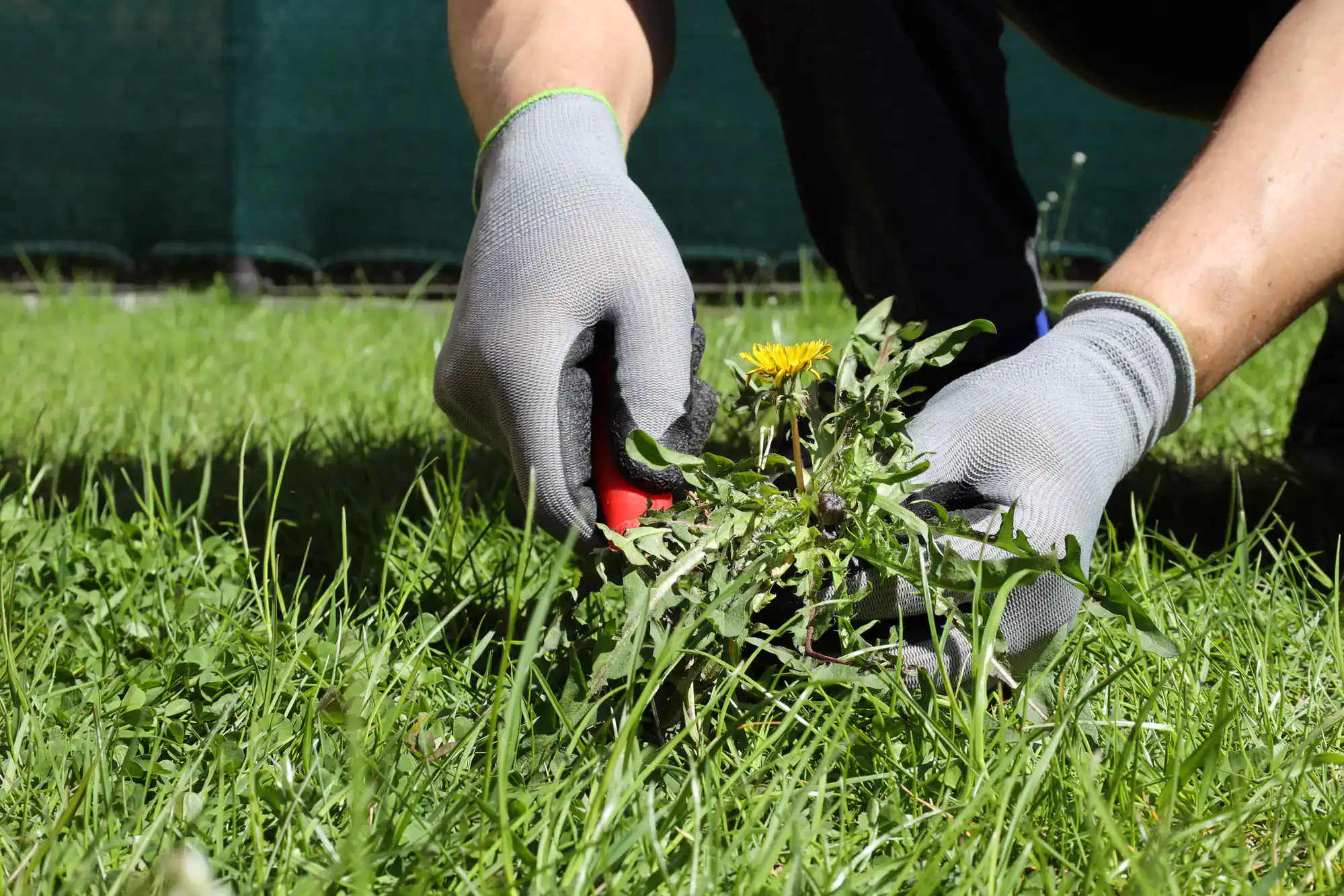
It starts with understanding what your lawn is actually dealing with. Bayport properties vary more than people expect a shaded lot near the bay behaves differently from a full-sun corner lot on well-drained sandy soil a few streets north. Before anything gets applied, we assess the condition of your turf, the soil type, the sun exposure, and any visible problem areas. That assessment determines what your program looks like. That’s not a sales pitch it’s just how we avoid wasting product on a lawn that needs something different.
From there, your program is built around the seasonal windows that actually matter on the south shore. Spring treatments focus on pre-emergent crabgrass control, which needs to be timed carefully because Bayport’s sandy soils warm faster than heavier soils and can trigger earlier germination than most people expect. Summer is when we apply grub preventive treatments typically June through mid-July targeting Japanese beetle and European chafer larvae before they hatch and start feeding on roots. Miss that window and you’re dealing with turf damage that takes a full season to recover from.
Fall is the most important window of the year for a Bayport lawn. Aeration, overseeding, and fertilization during August through October determine what your lawn looks like the following spring. We use hydraulic aerators that penetrate three to four inches into compacted soil not the lightweight drum aerators that barely scratch the surface. That depth is what makes the difference between aeration that works and aeration that doesn’t. Once the program is running, you get written service records after every visit so you always know exactly what was done and when.
Ready to get started?
We offer full-season programs covering everything a Bayport lawn needs across the year fertilization, weed control, grub prevention, aeration, overseeding, and lawn restoration for properties that need to be rebuilt rather than just maintained. If your lawn has been thinning for a few years, has patches that never recovered from grub damage, or has been on a generic program that never addressed the real problem, restoration from seed is an option that most companies in this area don’t actually offer well.
The fertilizer we use in every program is custom-blended specifically for Lawn Master formulated for the nutrient-leaching rates and pH ranges common to south shore Suffolk County soils. That matters in Bayport because standard fertilizer applied to sandy, fast-draining soil doesn’t hold in the root zone long enough to do its job. Our formulation accounts for that. Every application also stays within Suffolk County’s fertilizer regulations, including the November 1 through April 1 blackout period and the buffer zone requirements that apply to properties near the Great South Bay. For waterfront and near-waterfront Bayport properties, those buffer rules aren’t a formality they’re genuinely relevant to how and where product gets applied.
If you’ve been using a national franchise or a door-to-door operator and haven’t seen the results you expected, the program design is usually where the problem starts. Lawn care built around your specific property not a route-wide standard treatment is what changes the outcome.
It comes down to soil. Bayport sits on the south shore of Long Island, and the soils here are sandy and coarse-textured a direct result of the glacial deposits that formed this part of the island. Sandy soils drain fast, which sounds fine until you realize that nutrients move through the root zone quickly too. Fertilizer that would feed a lawn for weeks on heavier inland soil can leach past the roots in a fraction of that time here. That means timing, formulation, and application rate all matter more in Bayport than they do in communities with denser soil profiles.
Add in the bay proximity, which creates mild salt air exposure for properties near the water, and the grub pressure that’s consistent throughout the south shore, and you’ve got a lawn environment that genuinely requires a different approach than what works in Holbrook or Smithtown. Generic programs applied at standard rates don’t account for any of this. That’s why so many Bayport homeowners have been paying for lawn care for years and still aren’t seeing the results they expected.
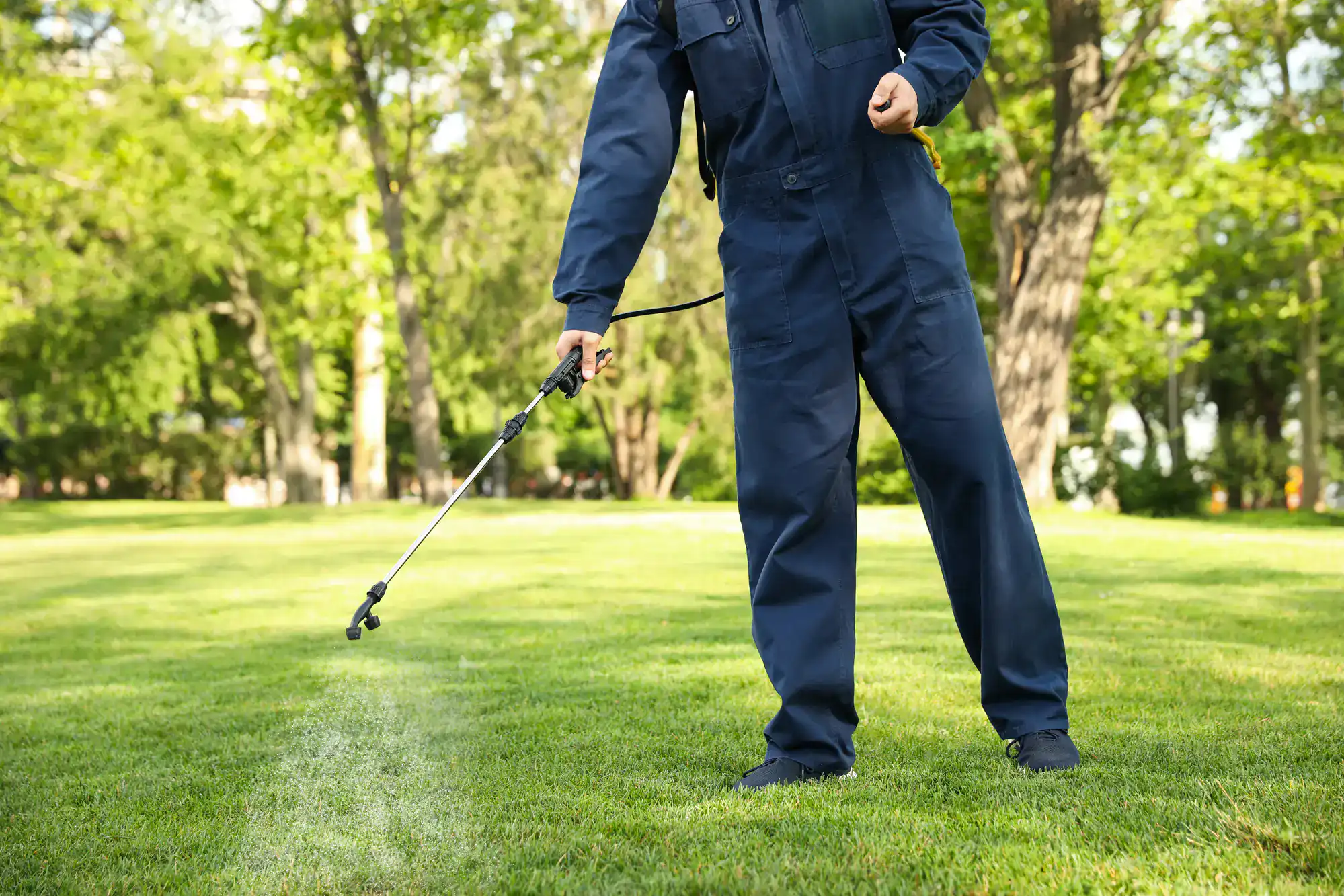
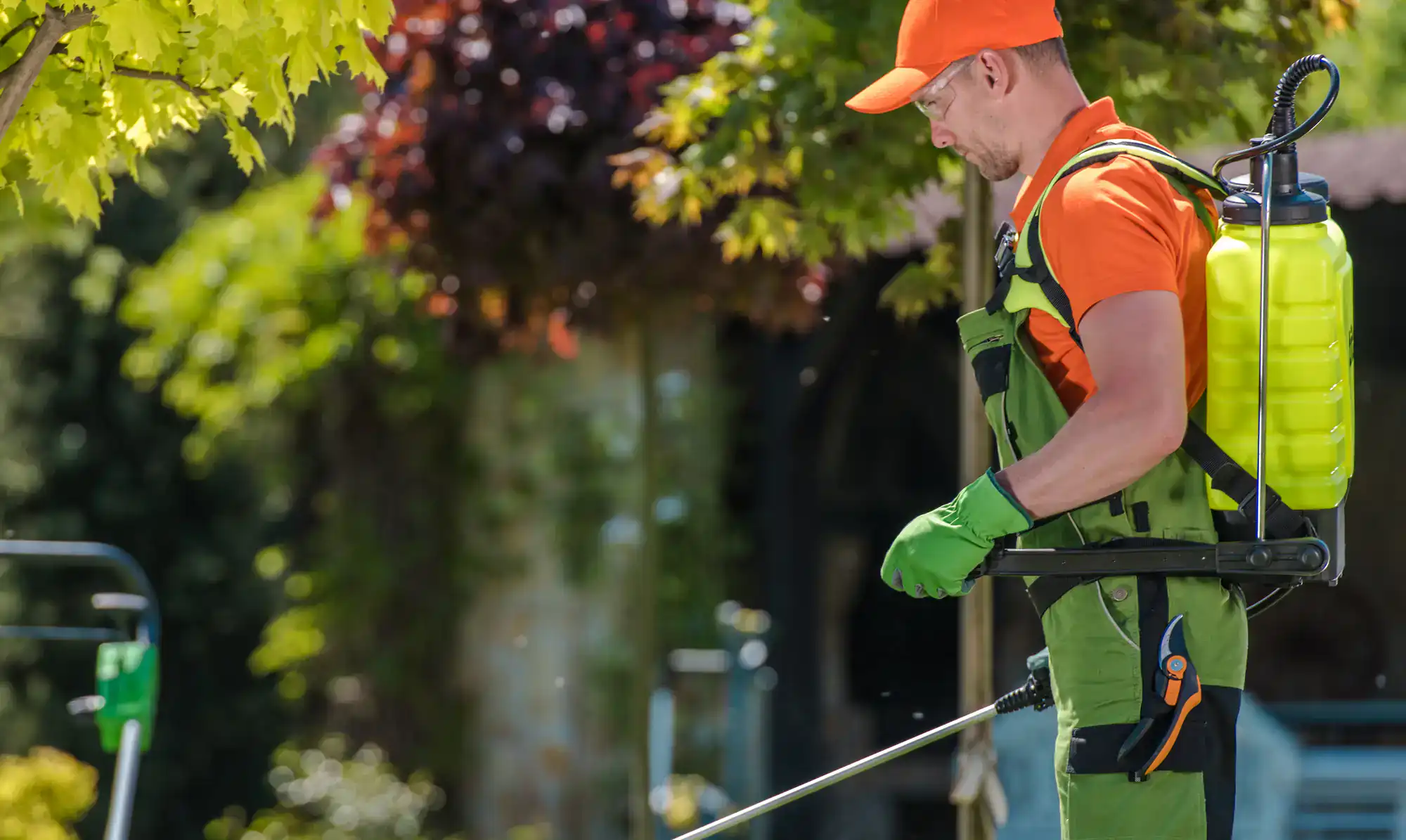
In New York State, any commercial application of pesticides including weed control, grub treatments, and insect control requires a valid NYS DEC Commercial Pesticide Applicator Certificate. The business also needs a NYS DEC Pesticide Business Registration. These aren’t optional credentials. Applying pesticides commercially without them is illegal, and the training requirements behind them exist for a reason: they cover product knowledge, application rates, environmental protection, and how to keep chemicals out of storm drains and water bodies.
In Bayport, that last point isn’t abstract. The Great South Bay is right at the community’s southern border, and the Save the Great South Bay organization has specifically flagged Bayport as an area where fertilizer and pesticide runoff is an active concern. An unlicensed applicator doesn’t have the training to understand buffer zone requirements, application rates near water, or how to comply with Suffolk County’s fertilizer regulations. Every technician we send to treat a property in Bayport holds the required NYS DEC certification and knows exactly what that means for properties near the bay.
There are two primary windows for fertilizing cool-season lawns on Long Island’s south shore, and they’re not equal. Spring fertilization typically late April through early June supports green-up and early growth, but it needs to be timed carefully. Bayport’s sandy soils warm faster than heavier soils, which means crabgrass can germinate earlier here than in inland communities. A pre-emergent application that goes down too late misses the window entirely.
The more important window is fall late August through October. This is when cool-season grasses like Kentucky bluegrass, tall fescue, and perennial ryegrass are actively growing and storing energy for winter. Fertilizing during this period, combined with aeration and overseeding, has a bigger impact on long-term lawn health than anything you can do in spring. It’s also when the results of a good program become most visible the following year. One important note: Suffolk County law prohibits fertilizer applications from November 1 through April 1, with fines up to $1,000 per application. Any company offering fertilizer treatments during that window is operating illegally that’s worth knowing before you sign anything.
The honest answer is that a lot of lawns marketed as “maintenance candidates” actually need restoration. If your lawn has large bare or thin patches that don’t fill in after treatment, weeds that keep coming back no matter what gets applied, or areas that died off in sections especially in late summer or fall there’s a good chance the turf itself is compromised and maintenance alone won’t fix it.
Grub damage is one of the most common culprits in Bayport. Japanese beetle and European chafer grubs feed on grass roots from late summer through fall, killing turf in expanding patches that can look like drought stress at first. If those patches don’t recover the following spring, the root system is gone and the turf needs to be rebuilt from seed. Lawn restoration full overseeding or new lawn installation is a different process than a standard maintenance program, and not every company does it well. We handle both, and the starting point is always an honest assessment of what the lawn actually needs, not what’s easiest to sell.
Yes and it’s one of the most time-sensitive treatments in the entire lawn care calendar. Japanese beetle and European chafer are both present throughout Suffolk County’s south shore, and the warm, sandy soils in communities like Bayport and Blue Point are hospitable environments for egg-laying beetles. Once the eggs hatch in mid-to-late summer, the larvae begin feeding on grass roots immediately. By the time the damage becomes visible usually as brown, spongy patches that lift like a loose rug the root system underneath is already gone.
Preventive grub treatment needs to go down in June through mid-July, before the eggs hatch. That’s the window when the product is effective. Curative treatments applied after the damage appears are less reliable and more expensive. If you’ve skipped grub control in previous years and noticed patchy turf in late August or September that didn’t recover the following spring, grubs are the likely explanation. A program that includes preventive grub treatment every season is the only way to stay ahead of it in this area.
A full-season lawn care program in Bayport covering fertilization, weed control, grub prevention, and seasonal treatments typically runs in the range of $500 to $800 or more annually for a standard residential property, depending on lot size, current lawn condition, and what the program includes. Properties that need restoration work or have significant weed or pest pressure will fall toward the higher end or require a separate restoration estimate before ongoing maintenance begins.
It’s worth putting that number in context. Bayport homeowners are paying close to $10,000 a year in property taxes on average. A lawn that’s visibly thin, weedy, or patchy isn’t just an aesthetic issue it affects the condition and perceived value of a property that carries real carrying costs. The homeowners in Bayport who’ve been through a cheaper option and watched it underdeliver understand this. The question usually isn’t whether professional lawn care is worth it. It’s whether the company you’re hiring actually knows what they’re doing with your specific lawn, in this specific soil, in this specific environment. That’s the part that determines whether you get results or just another season of disappointment.
Useful Links
Other Services we provide in Bayport