

Hear from Our Customers

On a one-to-two-acre North Shore property in Fort Salonga, the difference between a lawn that looks sharp and one that looks tired isn’t luck it’s whether someone actually assessed it before they treated it. Fort Salonga’s heavier, slower-warming soils behave differently than the sandy ground you’d find further south on Long Island. If your program isn’t accounting for that, you’re paying for applications that aren’t performing the way they should.
The proximity to Long Island Sound, Crab Meadow Beach, and the wetland preserves nearby also means what goes on your lawn matters beyond your property line. A properly designed program timed around Suffolk County’s fertilizer blackout period and applied with licensed professionals who understand buffer zone requirements protects both your investment and the environment you chose to live near.
When the program is right, the results are visible and they hold. Thicker turf that crowds out weeds naturally. Color that stays consistent through the season. No dead patches from grub damage that went unaddressed. No mystery thinning that nobody could explain. Just a lawn that looks like it belongs on a Gold Coast property because the work behind it was done correctly from the start.
We’ve been serving Suffolk County since 1987. That’s not a rounded number it means we were treating Long Island lawns before most of the competitors you’ll find online today even existed. The North Shore’s soil conditions, seasonal timing quirks, tick pressure corridors near Sunken Meadow State Park, and the county’s fertilizer regulations aren’t things we learned from a training manual. They’re things built into how every program we design is structured.
Every technician who steps onto your Fort Salonga property holds a NYS DEC Commercial Pesticide Applicator license not a crew supervised on paper by someone who never shows up. The fertilizer we use isn’t pulled off a commercial pallet; it’s a custom-blended formula made specifically for us and for Long Island’s soil profile. And the equipment hydraulic aerators, professional seeders is the kind that actually works on the heavier terrain you find on North Shore properties.
If you’re in the Kings Park Central School District side of Fort Salonga or the Northport-East Northport side, our service area and local knowledge covers both.
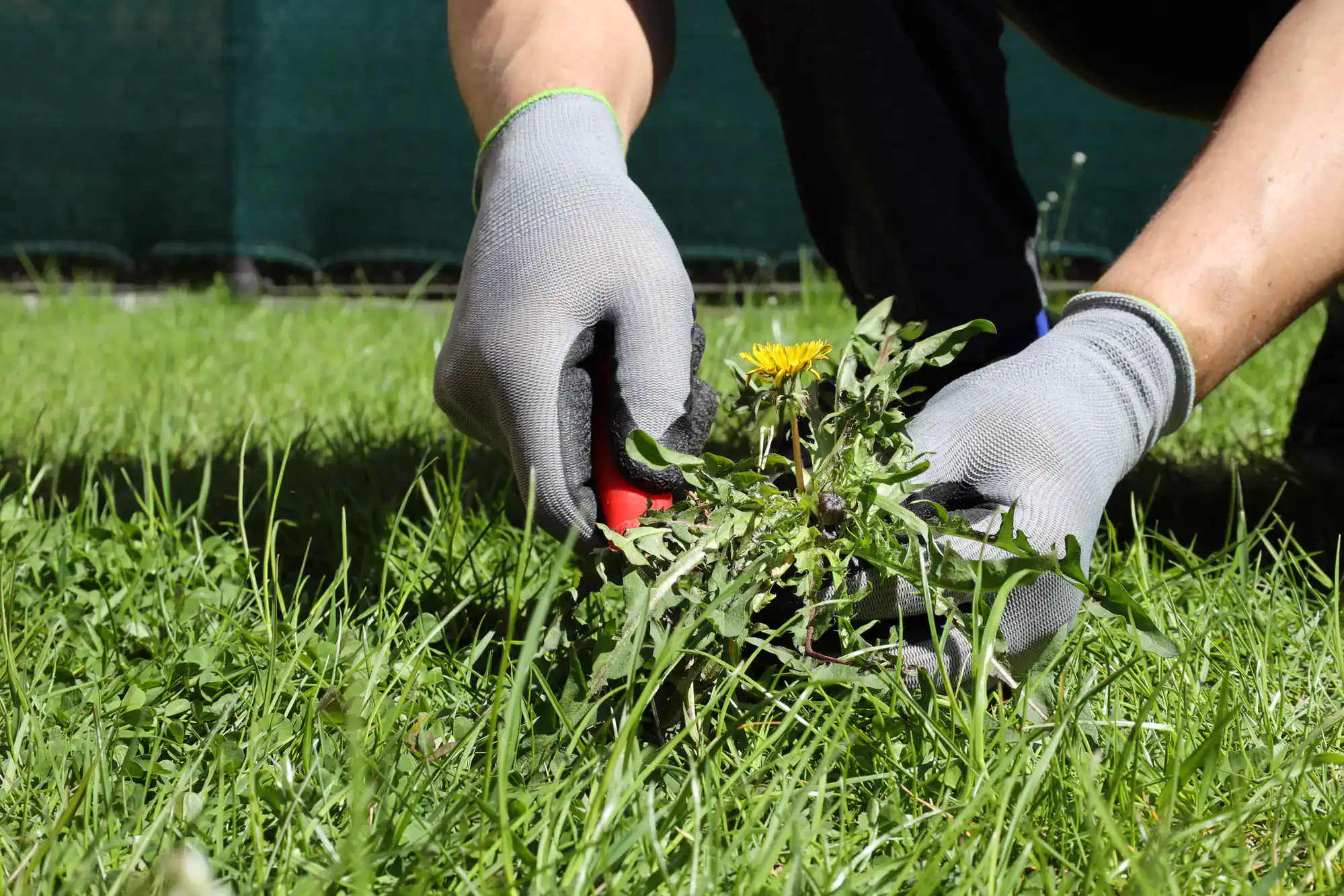
It starts with an actual assessment of your property not a glance from the truck window. Fort Salonga’s one-to-two-acre lots often have full sun in the front, shade from mature trees in the back, and microclimates created by the bluff terrain and proximity to the Sound. Those variations matter. What works on one section of your lawn may not be right for another, and a program that ignores that is going to produce uneven results.
Once the assessment is done, we build a custom program around what your lawn actually needs. Fertilizer applications are scheduled around Suffolk County’s blackout period nothing goes down between November 1 and April 1, and every application near your property’s water-adjacent areas respects the required buffer zones. If grub pressure is a concern (and on properties bordering wooded preserves, it often is), that’s addressed with licensed professional-grade products that aren’t available over the counter in Nassau or Suffolk County.
Aeration and overseeding if your lawn needs it is done with hydraulic aerators that reach three to four inches into compacted North Shore soil, not the lightweight drum equipment that barely scratches the surface. After that, you’re on a consistent schedule, treated by technicians who know your property and aren’t reading your address for the first time when they pull up.
Ready to get started?
The lawn care programs we run in Fort Salonga cover the full scope of what a North Shore property actually needs across the season. That includes multi-application fertilization using a proprietary custom-blended formula not a generic commercial product timed correctly for the slower-warming soils on this side of Long Island. Weed control, grub prevention, surface insect treatments, and core aeration are all part of the picture depending on what your lawn’s assessment calls for.
For lawns that have been neglected, damaged by grubs, or thinned out over time, we offer full restoration programs and new lawn installs from seed using hydraulic seeders that ensure actual seed-to-soil contact and germination rates you won’t get from a broadcast spreader. This matters especially on larger Fort Salonga properties where a thin or patchy lawn covers a lot of ground and a surface-level fix won’t hold.
Tick control is also available for properties near the wooded corridors that run through this area the deer population around Sunken Meadow State Park is significant, and the tick pressure that comes with it is real. Whether you need a full-season program or a targeted treatment, our approach is the same: assess first, then act. Online invoice payment is available, so managing your account doesn’t require tracking down paper bills or making phone calls just to pay.
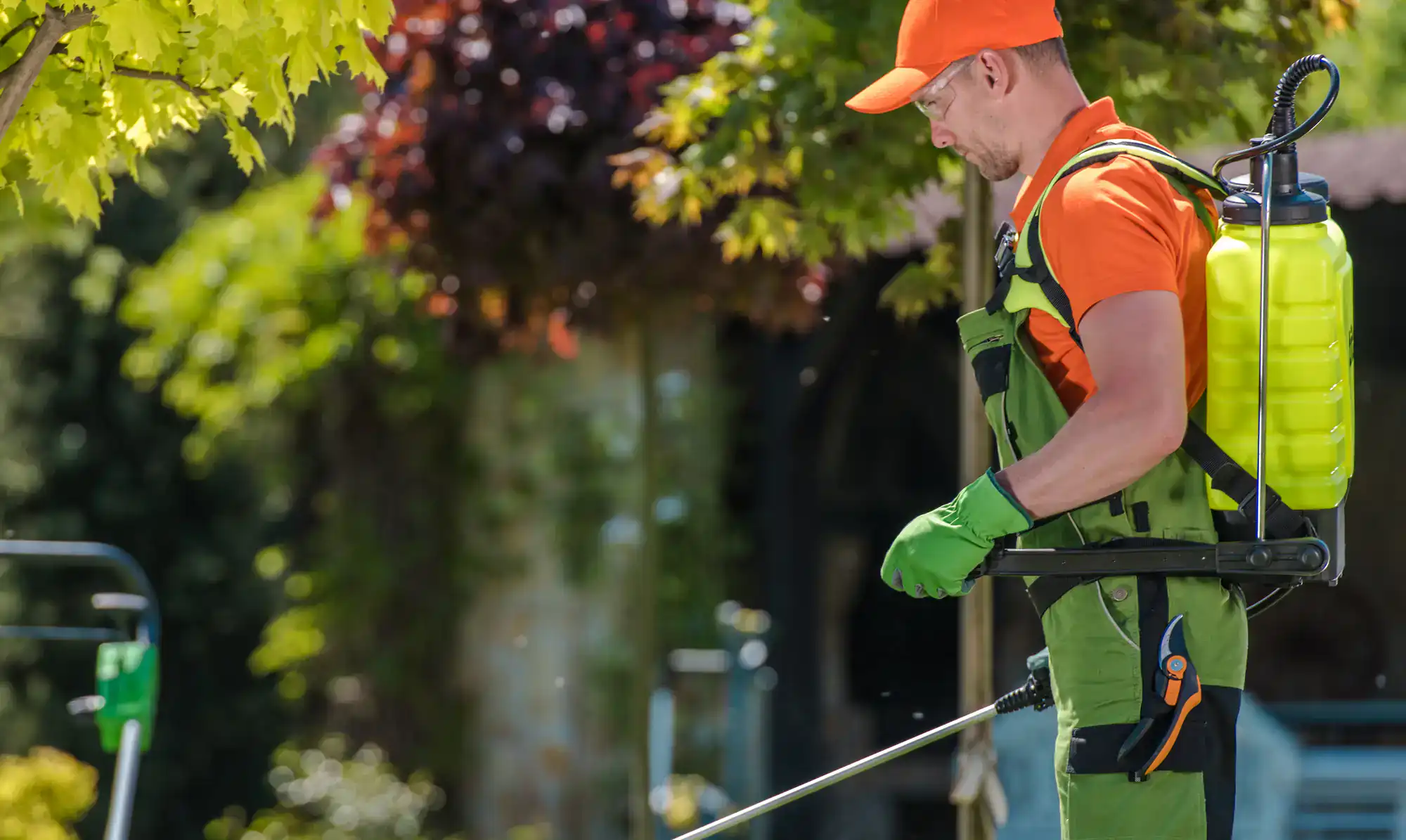
Thinning that keeps coming back despite fertilization usually points to one of a few underlying issues and fertilizer alone won’t fix any of them. The most common culprit on North Shore Long Island properties is grub damage. Japanese beetle and European chafer grubs feed on grass roots below the surface, and by the time you see dead or spongy patches in late summer, they’ve already done significant damage. The challenge in Suffolk County is that the consumer-grade imidacloprid products most people would reach for at a hardware store are actually restricted from sale here meaning effective grub control requires a licensed professional applying commercial-grade products.
Soil pH is another frequent factor that gets overlooked. Fort Salonga’s North Shore soils tend toward acidity, and when pH drops below 6.0, nutrients in your fertilizer get chemically locked up and the grass can’t access them so you’re applying product and seeing no response. A soil test and a properly timed lime application can change that. Compaction is the third piece: heavy, slow-draining North Shore soil that hasn’t been properly aerated limits root development and makes turf more vulnerable to heat and drought stress. Treating the symptom without addressing the cause is why a lot of Fort Salonga lawns stay stuck in the same cycle year after year.
A real program not just scheduled visits starts with understanding what your specific lawn needs before anything is applied. For a one-to-two-acre Fort Salonga property, that typically means a multi-application fertilization schedule using a formula matched to Long Island’s soil conditions, pre-emergent and post-emergent weed control timed to the season, grub prevention applied at the right window (early summer, before larvae hatch and establish), and surface insect control if needed. Aeration and overseeding in the fall is one of the highest-value treatments you can do for cool-season turf it’s the window when grass roots grow deepest and new seed establishes most successfully.
What separates a program from a maintenance visit is continuity. The technician treating your lawn should know what was applied last time, where your problem areas are, and what’s coming next. On a large property with varied terrain sun, shade, slopes, areas near wetland buffers that continuity is what makes the difference between a lawn that improves season over season and one that stays mediocre despite years of professional treatment.
That’s a question a lot of Fort Salonga homeowners ask usually after a season or two of inconsistent results. The core issue with large national operators is that their model is built around volume and standardized programs. The same treatment schedule gets applied across thousands of customers in different regions, on different soil types, with different pest profiles. On a North Shore Long Island property where the soils are heavier, the tick and grub pressure is specific to this area, and Suffolk County’s fertilizer regulations add a compliance layer that out-of-area operators sometimes don’t navigate correctly a standardized program often underperforms.
The other common complaint is technician turnover. When a different person shows up every visit with no real knowledge of your property’s history, problem areas, or what was applied last time, the program loses continuity. A company that has been operating in Suffolk County since 1987, uses a custom-blended fertilizer formulated for Long Island soil, and sends licensed applicators on every job is a fundamentally different model than a national franchise. Whether that difference matters enough to switch is something you’d see clearly after one season of comparison.
For cool-season turf on Long Island which is what you have on a North Shore property the fall window is by far the most effective time for aeration and overseeding. Late August through mid-October is the target range. Soil temperatures are still warm enough to support germination, but the cooler air slows weed competition and reduces the stress on newly seeded areas. This timing also aligns with the natural growth cycle of cool-season grasses, which put their energy into root development in the fall rather than in the spring.
On Fort Salonga’s heavier North Shore soils, aeration is especially impactful because compaction limits how deeply roots can develop. A hydraulic aerator which pulls cores three to four inches deep opens the soil profile in a way that lightweight drum equipment simply can’t on this type of terrain. Overseeding immediately after aeration takes advantage of the open channels for seed-to-soil contact, which is what drives germination rates. Spring aeration is possible but less effective here the soils warm slowly on the North Shore, the window before summer heat stress is short, and weed competition is at its peak. Fall is the right call for Fort Salonga properties.
Suffolk County prohibits the application of nitrogen and phosphorus fertilizers to turf from November 1 through April 1 and the fines for violations run up to $1,000 per application. This isn’t a minor technicality. It’s a regulation with real enforcement, and it exists specifically to protect the waterways that communities like Fort Salonga border. If you’re near Crab Meadow Beach, Callahan’s Beach, or any of the wetland preserves in the area, the buffer zone requirements add another layer no applications within 20 feet of water bodies or wetlands.
What this means practically is that your lawn care schedule needs to be designed around these windows, not retrofitted to them. A properly structured program front-loads the critical fall applications before November 1 and resumes in early April with the first spring treatments. Phosphorus applications also require a soil test confirming deficiency before they can be legally applied. A licensed operator like us builds all of this into the program automatically you don’t have to track the calendar or worry about compliance. An operator who isn’t familiar with Suffolk County’s specific regulations may inadvertently create problems for you, especially on a property adjacent to the sensitive coastal areas that define this part of the North Shore.
Grub damage usually shows up in late summer or early fall as irregular patches of dead or dying turf that feel spongy underfoot and if you pull back the grass, the roots are gone. On Fort Salonga properties near wooded areas and preserves, Japanese beetle and European chafer populations are consistently high. Populations of 10 or more grubs per square foot are enough to cause visible turf loss, and on a one-to-two-acre property, that damage can cover a significant area before it becomes obvious.
The important thing to understand about grub control in Suffolk County is that the most common consumer products specifically imidacloprid-based grub killers are restricted from retail sale in Nassau and Suffolk Counties. That means if you’ve tried to address this yourself with a store-bought product and it didn’t work, it may not have been available to you in the first place. Professional-grade applications by a licensed pesticide applicator are the practical path to effective grub management here. Preventive treatments applied in early summer before larvae hatch and establish are significantly more effective than curative treatments applied after damage is already visible. If your lawn has had recurring dead patches that seem to come back in the same areas, a grub assessment should be the first conversation you have with any lawn care company you’re considering.
Useful Links
Other Services we provide in Fort Salonga