

Hear from Our Customers

Holbrook sits on sandy, glacially deposited soil the kind that drains fast and leaches nutrients before your grass ever gets to use them. That’s why so many lawns in this area look decent in May and completely washed out by August. It’s not the heat alone. It’s that the fertilizer being applied wasn’t formulated for this soil to begin with.
When you’re on a program that’s actually calibrated for these conditions, the difference shows up and stays. Color holds through summer. Thin spots fill in. Weeds stop getting the foothold they usually find in stressed, nutrient-depleted turf. And because the applications are timed correctly around Suffolk County’s fertilizer blackout period November 1 through April 1 you’re not just getting a better-looking lawn, you’re getting one that’s managed legally and responsibly.
For homeowners in Holbrook’s established neighborhoods, where most of these homes were built in the 1960s and 70s and the soil has decades of compaction built up, that combination of the right product and the right timing makes a measurable difference. You’ll see it by the second season, and you’ll definitely feel it when your neighbors start asking what you changed.
We’ve been treating lawns in Holbrook and throughout Suffolk County since 1987. That’s not a rounded number or a marketing approximation it’s a specific, verifiable year that puts us in this market before most of our competitors had a business license. We know what Long Island soil looks like in March when the pre-emergent window opens, and we know what it looks like in October when you’re running out of time to overseed before the ground hardens.
We run a fleet of five fully wrapped trucks throughout central Suffolk County. If you live near Patchogue-Holbrook Road or anywhere in the 11741 zip code, you’ve probably already seen them. Every technician who treats your lawn holds a NYS DEC Commercial Pesticide Applicator license not a crew lead with a certificate and a team of unlicensed laborers. The person on your property knows exactly what they’re applying and why.
We keep the operation tight on purpose. Owner-level knowledge on every visit, custom-blended fertilizer made specifically for our programs, and a customer base that’s been with us for years because when a program actually works, people don’t leave.
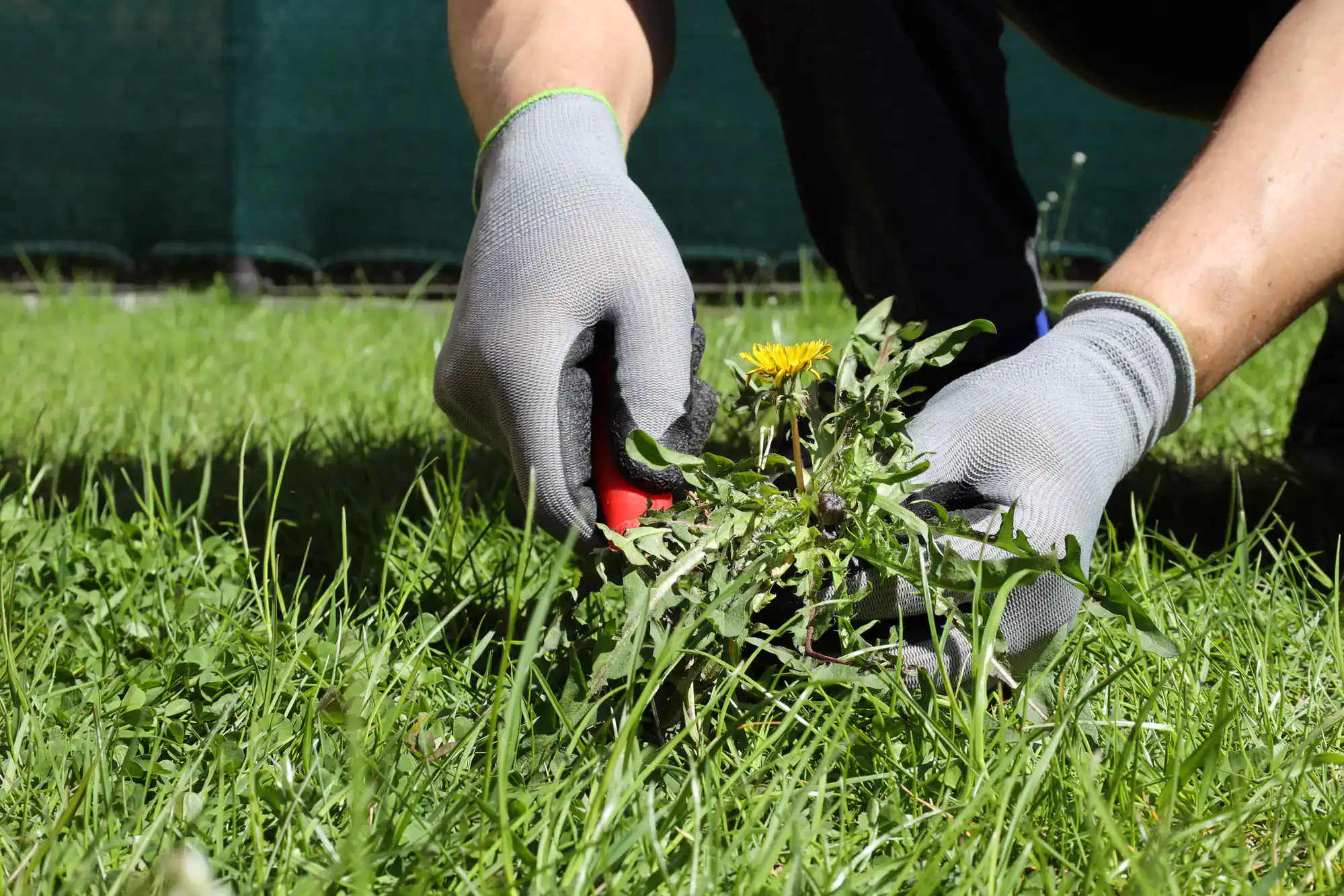
It starts with an honest assessment of what your lawn is actually dealing with. Holbrook lawns vary more than most people expect a sun-drenched front yard on a sandy lot near Veterans Memorial Highway has completely different needs than a shaded backyard on a heavier-soil section closer to the LIRR corridor. We look at sun exposure, soil condition, turf species, thatch depth, weed pressure, and pest history before we recommend anything.
From there, we build a program around your specific lawn not a menu item, not a package tier that fits most lawns. The applications are scheduled around Long Island’s seasonal windows: pre-emergent in early spring before soil temps hit 55°F, fertilization timed to what your turf can actually absorb given the soil’s leaching rate, grub prevention timed to the larval life cycle, and aeration and overseeding in the fall window when cool-season turf in Holbrook responds best. We use hydraulic aerators that penetrate 3 to 4 inches into compacted soil not the drum aerators you can rent at Home Depot that barely scratch the surface of a lawn that’s been walked on for 40 years.
You’ll know what was applied, when, and why. If something changes between visits a grub problem developing, a disease patch starting to show we catch it because we’re actually looking at your lawn, not just walking the perimeter with a spreader.
Ready to get started?
Every program we run in Holbrook includes fertilization with a custom-blended product made specifically for our programs and for Long Island’s soil conditions. You won’t find this fertilizer on a distributor’s pallet or at a big box store. It’s formulated to account for the fast-draining, nutrient-leaching reality of Suffolk County’s sandy soils which is exactly why it performs differently than what other companies are applying.
Depending on what your lawn needs, programs can include targeted weed control, grub prevention and treatment, core aeration with hydraulic equipment, overseeding with appropriate cool-season species for Holbrook’s hardiness zone 7a climate, and disease management. If your lawn is in rough shape thin, weed-dominated, grub-damaged, or neglected by a previous owner or a previous company that never addressed the root cause we also offer full lawn restoration and new lawn installs from seed. The fall window, late August through October, is the best time for restoration work in Holbrook, and a lawn that looks rough in August can look completely different by the following spring.
All programs are designed around Suffolk County’s fertilizer regulations. No applications during the November 1 through April 1 blackout period. No phosphorus applied without a documented deficiency. No ironite banned outright in Suffolk County. These aren’t optional considerations for us; they’re built into every program from the start.
Summer thinning in Holbrook is almost always a combination of two things: sandy soil that can’t hold nutrients long enough for the grass to use them, and cool-season turf species like Kentucky bluegrass and perennial ryegrass that are naturally under stress when temperatures climb into the mid-80s and above. If your fertilizer program isn’t accounting for how fast nutrients leach through Long Island’s glacially deposited soils, you’re essentially feeding your lawn on a schedule that doesn’t match what the soil can actually hold.
The fix isn’t just more fertilizer it’s the right fertilizer applied at the right time, combined with aeration to relieve the compaction that’s blocking water and nutrients from reaching the root zone. Holbrook’s established housing stock, with most homes built between the 1960s and 1980s, means most lawns have decades of compaction built up. That compaction doesn’t go away on its own, and it doesn’t respond to a lightweight drum aerator. Once you address both the soil structure and the nutrient timing together, summer thinning stops being an annual problem.
For most Holbrook residential lawns, a complete program runs five to seven visits across the growing season, depending on what your lawn needs. That typically includes a spring pre-emergent application timed before soil temperatures hit 55°F which in Holbrook usually falls somewhere in mid-to-late March through April followed by fertilization rounds through the summer, grub prevention timed to the Japanese beetle and Oriental beetle life cycle, and a fall application that includes winterizer fertilizer before the Suffolk County blackout period begins on November 1.
The exact schedule gets built around your specific lawn, not a fixed calendar. A lawn that’s coming off a grub infestation or a dry summer might need a different fall approach than one that’s been consistently maintained. What doesn’t change is the compliance piece no nitrogen or phosphorus goes down after November 1, and programs are structured so the final application of the season lands before that cutoff. That’s not something every company in the area gets right, and the fines for violations run up to $1,000 per application.
The honest answer is: it depends on what you’re buying. A bag of fertilizer from Home Depot and a spreader will do something. But the fertilizer you’re buying is formulated for a national average soil profile, applied at a rate printed for general use, and timed to whatever weekend you happen to have free. In Holbrook, where the soil drains faster than average and nutrient leaching is a documented challenge, that gap between generic and calibrated matters more than it does in other parts of the country.
Beyond the product itself, there’s the licensing piece. In New York State, applying pesticides commercially including weed control and grub treatments requires a NYS DEC Commercial Pesticide Applicator Certificate in Category 3A. That credential requires real training, a written exam, and documented experience. When you hire a licensed professional, the person treating your lawn has that background. When you DIY or hire an unlicensed operator, you’re working without that layer of expertise, and in Suffolk County, you’re also navigating a regulatory environment fertilizer blackout periods, phosphorus restrictions, buffer zones near storm drains that most homeowners aren’t fully aware of.
For Holbrook lawns, the fall window generally late August through mid-October is the best time to aerate and overseed. Cool-season grasses like tall fescue, Kentucky bluegrass, and perennial ryegrass, which are the dominant species in this area, germinate best when soil temperatures are between 50°F and 65°F. That range typically lines up with Holbrook’s early fall, when daytime temperatures are dropping but the ground is still warm enough to support germination.
Aerating first is important because Holbrook’s established suburban lots many of them built on and walked on for 40 to 50 years have significant compaction that prevents good seed-to-soil contact. A hydraulic aerator that penetrates 3 to 4 inches creates the kind of channel that seed can actually establish in. If you try to overseed without aerating first, or if the aeration equipment doesn’t go deep enough, you’ll get inconsistent germination and the thin spots will be back by the following summer. Spring overseeding is possible but less effective in this climate because the germinating seedlings run into summer heat stress before they’ve had a full season to establish.
Yes and it’s one of the more frustrating lawn problems because the damage often isn’t visible until it’s already significant. White grubs, the larval stage of Japanese beetles and Oriental beetles, feed on grass roots through the summer. By the time you see brown patches that lift like loose carpet, the root system underneath is already gone. In Suffolk County, Japanese beetle and Oriental beetle populations cycle in ways that make certain years significantly worse than others, and Holbrook’s suburban neighborhoods with the mix of turf, ornamental plantings, and mature trees that beetles favor create consistent pressure.
The treatment window is narrow. Grub preventives need to go down in late spring to early summer, before eggs hatch and larvae are small enough to be affected. Curative treatments applied later in the season are less effective and more expensive. If you’ve had grub damage in previous years and didn’t treat preventively, the cycle tends to repeat. A lawn that’s been grub-damaged also needs restoration work the dead areas won’t recover on their own, and without reseeding, those patches fill in with weeds before the grass has a chance to come back.
In New York State, any company applying pesticides commercially including herbicides for weed control and insecticides for grub treatment is required to hold a NYS DEC Pesticide Business Registration, and the technicians doing the actual work must hold a NYS DEC Commercial Pesticide Applicator Certificate in Category 3A, which covers ornamental and turf applications. Both of these credentials are searchable through the DEC’s public database, so you can verify any company’s licensing status before you hire them.
This matters more than it might seem on the surface. The licensing requirement exists because pesticide application involves real decisions about product selection, application rates, and timing decisions that affect your lawn, your soil, your groundwater, and your neighbors. Suffolk County’s groundwater sits directly below Holbrook’s residential neighborhoods, and fertilizer nitrogen is responsible for roughly half of the total nitrogen load to that groundwater. An unlicensed applicator isn’t just cutting a corner on paperwork they’re making chemical decisions without the training to back them up. When you ask a company directly whether their technicians are individually licensed under the NYS DEC Category 3A certification, the answer tells you a lot about how seriously they take the work.
Useful Links
Other Services we provide in Holbrook