Hear from Our Customers
Most lawns in Setauket aren’t struggling because of bad seed or poor watering habits. They’re struggling because the soil underneath is compacted and nothing you put on top of it can get through. Once that compaction is broken up with real core aeration, you start to see the difference within a single season. Thicker turf, better color, and grass that holds up through the summer instead of thinning out by July.
For properties near Setauket Harbor or along Strong’s Neck, there’s an added layer to this. Salt spray from Conscience Bay works its way into the soil over time, and compacted ground holds it there. Core aeration creates channels that help flush that salt from the root zone something that surface treatments simply can’t do. It’s one of those things that matters a lot more here than it would for a lawn ten miles inland.
Setauket’s older neighborhoods also come with mature oaks and maples that have been competing with lawn grass for water and nutrients for decades. Root competition, shade, and thatch buildup compound the compaction problem. Aeration doesn’t just address one of those issues it addresses all three at once, giving your lawn a real path forward instead of another season of mediocre results.
We’ve been working in Setauket and the surrounding Three Village area since 1987. That’s not a number we throw around lightly it means we’ve been aerating, seeding, and restoring lawns in Setauket through every drought, nor’easter, and season of change this part of Long Island has seen for nearly four decades. The companies that don’t deliver results don’t last that long. It’s that simple.
Every job is handled by a licensed pesticide professional not a seasonal laborer supervised from a distance. We bring hydraulic aerators and professional-grade seeders to every property in Setauket, and our fertilizer is custom-blended specifically for Long Island soil, not pulled off a national shelf. When we show up to a property in Setauket, we know what we’re working with: glacially deposited soils, coastal salt influence, mature tree canopy, and lawns that have been accumulating compaction since the Eisenhower era.
We also make it easy on your end. Online account management, credit card invoice payment, and five professionally wrapped trucks that show up on time and look the part. No surprises, no rotating crews, no guesswork.
It starts with a real assessment of your lawn’s condition. Before anything goes into the ground or comes out of it, we look at what you’re actually dealing with compaction depth, thatch buildup, shade patterns from your tree canopy, and any coastal exposure factors that affect how your soil behaves. A simple field test tells us a lot: if a screwdriver won’t push three inches into your lawn after watering, your roots are being suffocated and the problem is structural, not cosmetic.
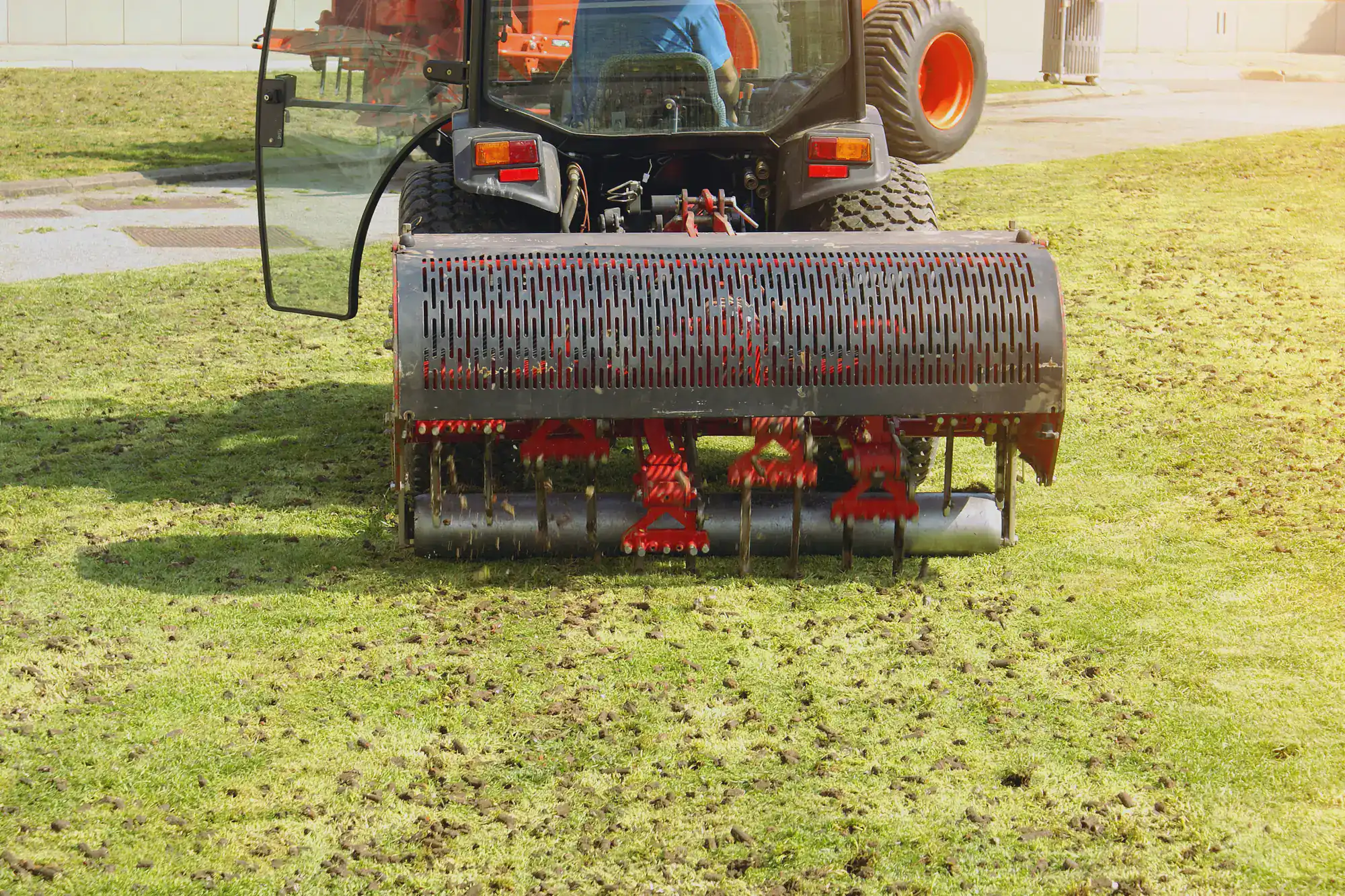
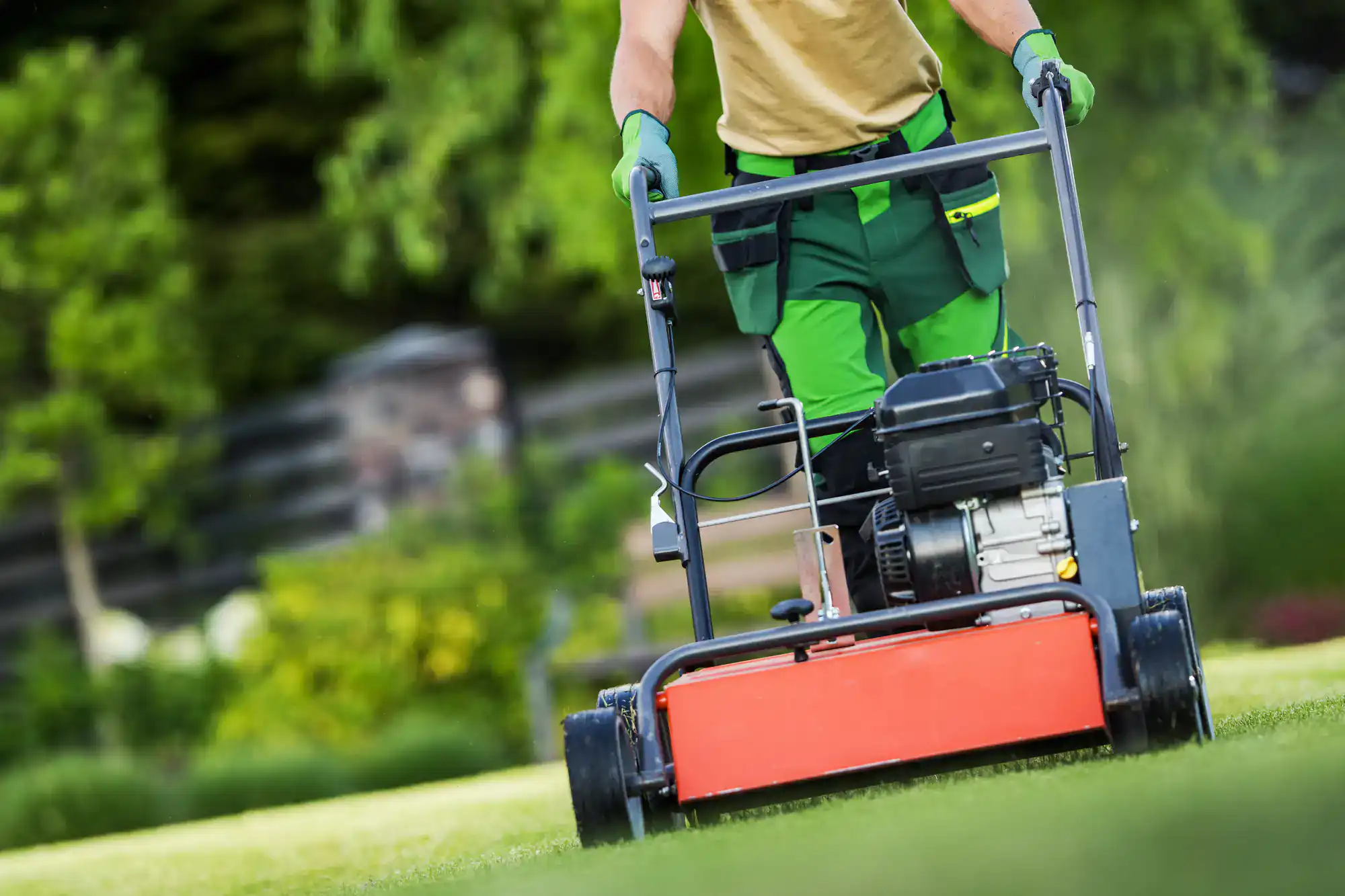
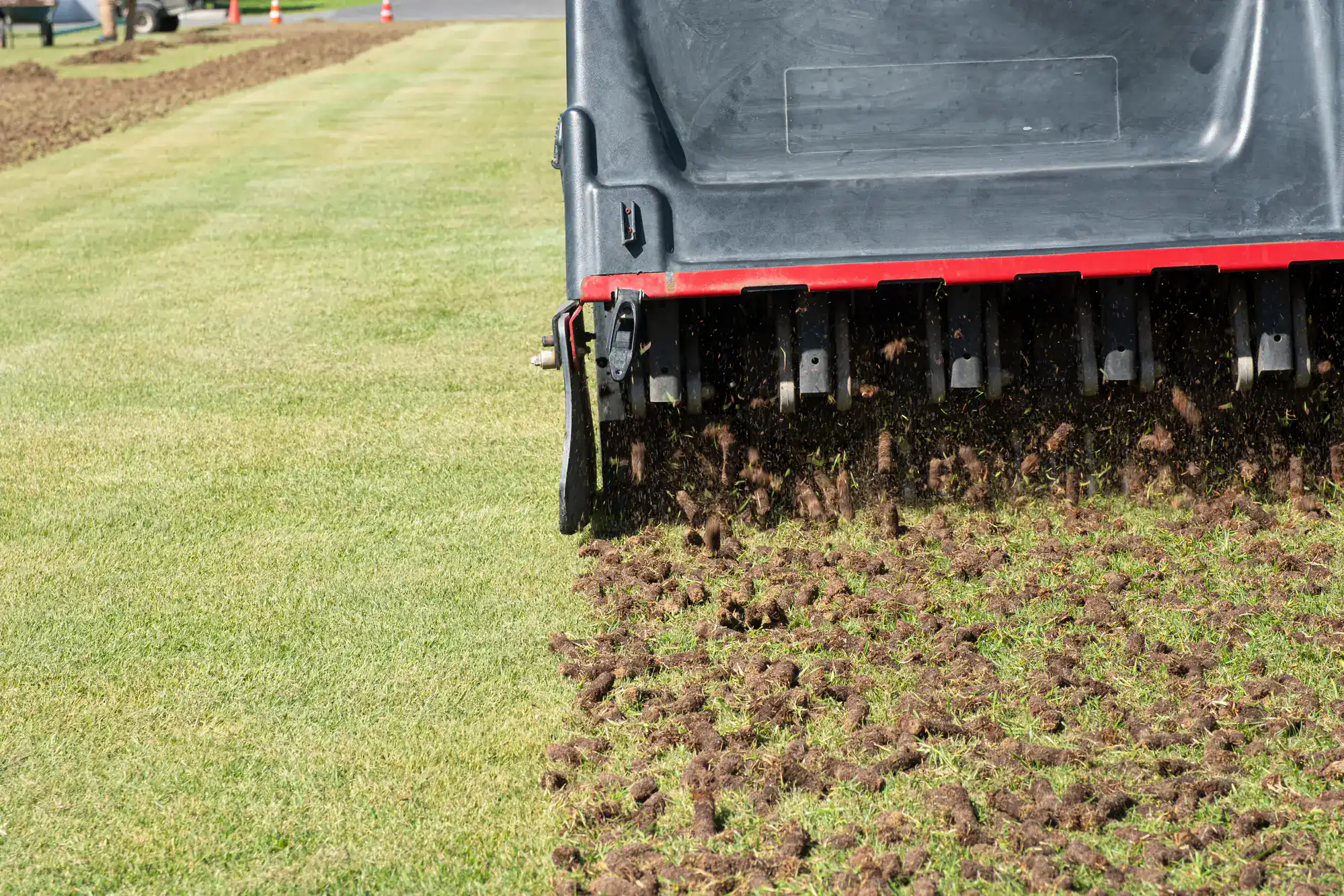
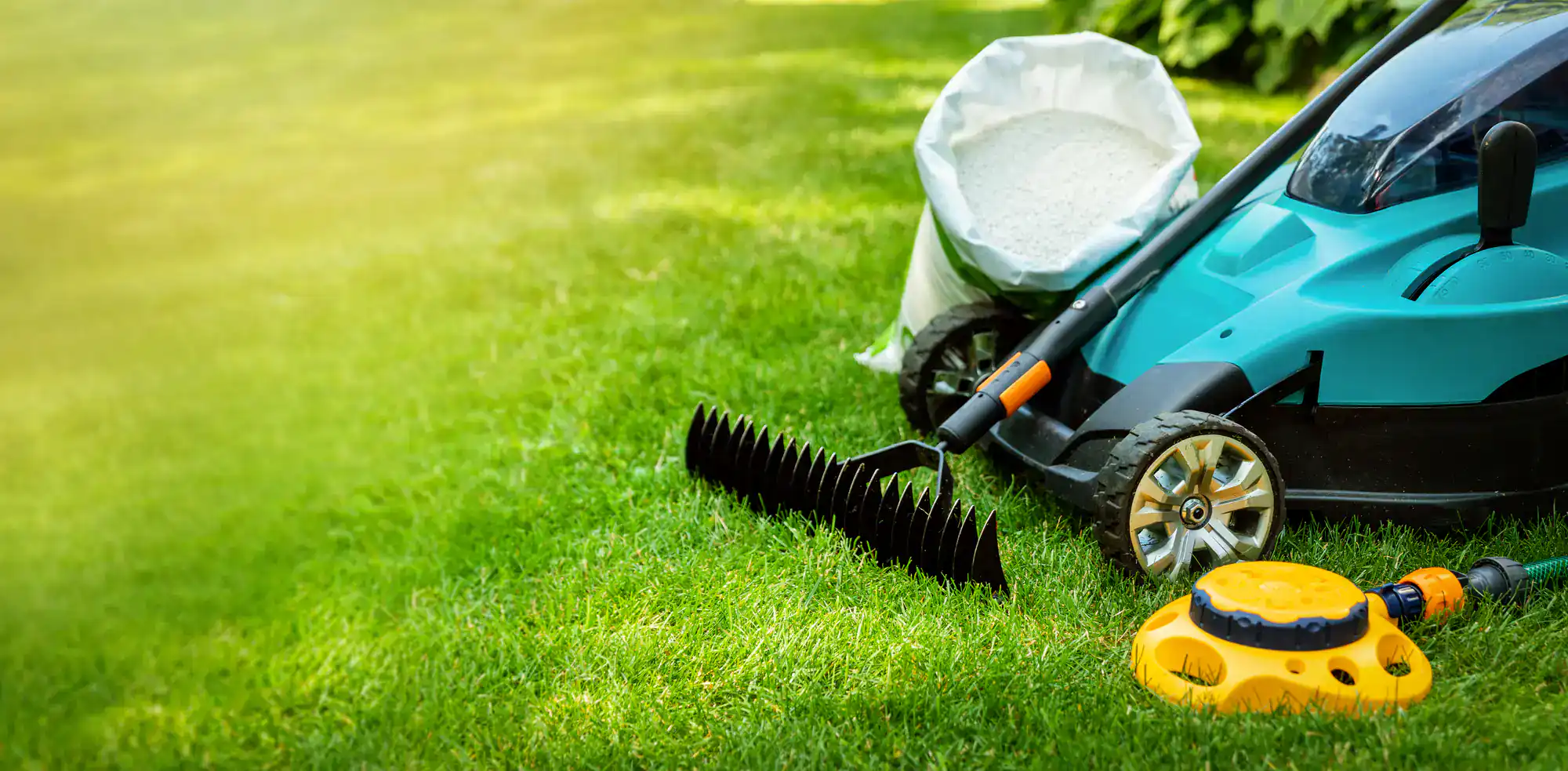
From there, we run our hydraulic core aerator across the property. This isn’t a walk-behind rental unit it’s professional equipment that drives hollow tines cleanly through compacted North Shore soil and pulls out intact cores, typically around three-quarters of an inch wide and three inches deep. Those cores break down naturally over a few weeks and return organic matter to the surface. The channels they leave behind are what make everything else you do for your lawn actually work.
Timing matters here more than most people realize. For Setauket’s cool-season grasses tall fescue, fine fescue, Kentucky bluegrass fall is the right window. Soil is still warm, air temps have dropped, and the grass has time to strengthen before winter. Keep in mind that Suffolk County’s fertilizer ban kicks in November 1st, so the fall treatment window is finite. If you’re thinking about it, sooner is better than later.
Ready to get started?
Our aeration program isn’t a package pulled from a menu. It’s built around what your specific property needs and in Setauket, that means accounting for things a generic lawn service wouldn’t even think to ask about. Waterfront and near-waterfront properties along Setauket Harbor deal with salt accumulation that changes how the soil behaves. Shaded lots under the old-growth oaks and maples near the historic district deal with root competition and thatch buildup that accelerates compaction faster than a standard suburban lawn. Properties closer to the Stony Brook University border tend to carry heavier, clay-influenced soils that hold water at the surface when compacted.
We assess all of it. Aeration is paired with overseeding using grass varieties selected for Long Island’s specific conditions salt-tolerant tall fescue for sunny, exposed areas and fine fescue for shaded spots where other grasses struggle. Our custom-blended fertilizer follows the aeration, going directly into the open channels where it can actually reach the root zone instead of sitting on top of compacted ground.
Every applicator on your property holds an active NYSDEC pesticide license. Suffolk County Chapter 647 requires advance notice before commercial pesticide applications near residential properties and we handle that correctly, every time. If your lawn needs a full renovation rather than a standard aeration cycle, we can do that too, including new lawn installs from seed on properties that have gone too far for a surface treatment to fix.
For the cool-season grasses that make up most Setauket lawns tall fescue, fine fescue, Kentucky bluegrass, and perennial ryegrass fall is the optimal window. Specifically, late August through mid-October gives you the best combination of warm soil temperatures for root recovery and cooler air temperatures that reduce heat stress on the grass. The turf has time to fill in and strengthen before going dormant for winter, which means it comes out of spring in significantly better shape.
There’s a hard deadline to be aware of in Suffolk County: the Chapter 459 fertilizer ban runs from November 1st through April 1st, with fines up to $1,000 for violations. That means your aeration, overseeding, and final fertilizer application all need to happen before November 1st. If you’re on the fence about timing, the honest answer is that waiting until late October is cutting it close. Scheduling early in the fall window gives the grass the full recovery period it needs and gives us the flexibility to work it into a proper program rather than a rushed last-minute visit.
The simplest test you can do yourself: water your lawn, wait an hour, then push a standard six-inch screwdriver straight down into the turf. If it won’t go three inches without significant force, your soil is compacted enough that water, air, and fertilizer can’t reach the root zone effectively. You’re essentially feeding a lawn that can’t absorb what you’re giving it.
Other signs are visible without any test. If your lawn thins out every summer despite regular watering, if you see water pooling after rain instead of soaking in, or if your grass feels hard and spongy underfoot at the same time that’s compacted soil with a thatch problem layered on top. In Setauket, where most homes were built in the 1950s and lawns have been mowed and trafficked for 70-plus years, compaction isn’t a maybe. It’s almost a given. The question is usually how severe it is, not whether it’s there.
Core aeration removes plugs of soil typically about three-quarters of an inch in diameter and three inches deep creating open channels for air, water, and nutrients to reach the root zone. Those plugs break down on the surface over a few weeks and return organic matter to the lawn. It’s a genuine decompression of the soil structure.
Spike aeration punches holes without removing anything. The tines push soil aside to create the hole, which actually compresses the surrounding soil and can worsen compaction over time. It’s the difference between removing a plug from a wall and just jamming a nail into it one opens the space, one just displaces material. For Setauket’s North Shore soils, which are already prone to compaction from decades of use and the natural characteristics of glacially deposited ground, spike aeration isn’t a solution. Core aeration is the professional standard, and it’s what we use on every job.
Yes, and it’s one of the more overlooked factors in lawn care along the North Shore. Properties near Setauket Harbor, Conscience Bay, and Strong’s Neck are exposed to salt spray and salt-laden wind, particularly after nor’easters and coastal storms. That salt works its way into the soil over time, and when the ground is compacted, it stays there creating a chemical environment that stresses grass roots even when everything else looks fine on the surface.
Core aeration helps address this directly. The channels created by hollow-tine aeration allow water to move through the soil profile and carry accumulated salt down and away from the root zone. It’s not a one-and-done fix, but regular aeration is one of the most effective tools for managing salt stress in coastal lawns. Grass selection matters too tall fescue is the right choice for sunny, exposed areas near the water because of its salt tolerance and drought resistance. Fine fescue handles the shaded spots. We factor all of this in when we assess a waterfront or near-waterfront property in Setauket.
Professional core aeration for a typical residential property generally runs somewhere in the $75 to $300 range nationally, but the actual cost depends on your lawn’s size, its current condition, and what services make sense to pair with the aeration overseeding and fertilization being the most common additions. In a market like Setauket, where cost of living runs about 50% above the national average and properties average well over $600,000 in value, professional lawn care pricing reflects the local economy and the quality of work involved.
What’s worth keeping in mind is what you’re actually comparing when you look at price. A licensed professional using hydraulic core aeration equipment and custom-blended fertilizer on your property is a fundamentally different service than a general landscaper with a rental aerator. The results are different, the longevity is different, and the impact on a property you’ve invested heavily in is different. We don’t quote a flat rate on the website because lawn size and condition vary too much to make that honest reach out and we’ll give you a real number based on your actual property.
It can but the approach matters. Thin turf under a mature tree canopy is usually dealing with three problems at once: compaction from root pressure and surface traffic, shade that limits photosynthesis, and root competition that pulls water and nutrients away from the grass. Aeration alone addresses the compaction piece, but it works best when it’s paired with overseeding using the right grass variety for shaded conditions.
In Setauket, where old-growth oaks and maples are a defining feature of the landscape especially in the historic district neighborhoods and along the older residential streets near the village green fine fescue is the grass that performs best under a dense canopy. It’s shade-tolerant, low-maintenance once established, and blends well with the surrounding turf. We overseed with varieties selected for Long Island’s specific conditions, not generic blends that aren’t calibrated for North Shore soil and climate. If the shaded area is too far gone for overseeding to take hold, we can also assess whether a full lawn renovation from seed makes more sense sometimes starting fresh on a difficult area is the more honest recommendation.
Useful Links
Other Services we provide in Setauket