
Hear from Our Customers
Most lawn care programs were built for somewhere else. They don’t account for the sodium that builds up in your soil from constant salt air off the bay, the way nutrients flush straight through East Islip’s sandy ground before the roots can absorb them, or the humidity that rolls in off Great South Bay and turns a nitrogen-heavy lawn into a breeding ground for fungal disease. When you get a program that actually fits those conditions, the difference is visible and it lasts.
Your grass gets thicker, your color holds through summer, and you stop dealing with the bare patches and weed pressure that come with treatments that were never designed for a coastal South Shore property. For homeowners near Heckscher State Park or in neighborhoods like The Moorings and Deer Run, where the standard of the surrounding properties is consistently high, that matters. You’re not just maintaining a lawn you’re protecting an investment in one of the most valuable residential markets in New York.
The other thing that changes is the guesswork. When a licensed professional who knows your property is building your program, you’re not wondering whether the right product went down at the right time. You know. That consistency season after season, from someone who actually understands what your lawn is dealing with is what most people in East Islip have been looking for and haven’t found yet.
We’ve been serving Suffolk County since 1987, and East Islip is where we built this company. That’s not a tagline it’s just the reality of what happens when a business consistently does what it says it’s going to do, year after year, in one of the most demanding lawn care environments on Long Island. The team has been maintaining lawns throughout East Islip and the Town of Islip through every coastal storm, every regulatory update, and every shift in the local market for nearly four decades.
What you won’t find here is a rotating crew of seasonal workers following a script. Every job is handled by a licensed pesticide professional someone who knows the difference between a lawn on Bayview Avenue with decades of established root systems and a newer property that needs a completely different approach. The program is built around your lawn, not a national template.
Five fully wrapped professional trucks run throughout Suffolk County, and the custom-blended fertilizer we use was formulated specifically for our company not purchased off a distributor shelf. When you see that truck pull up to your East Islip home, you’re getting the real thing.
It starts with understanding what you’re actually working with. East Islip’s coastal soil is predominantly sandy, which drains fast and holds nutrients poorly. Before anything goes down, we assess your lawn’s specific conditions sun exposure, drainage patterns, soil composition, and any history of pest or disease pressure. That assessment shapes everything that follows.
From there, applications are timed around what the lawn actually needs and what Suffolk County law requires. The county’s fertilizer blackout runs from November 1st through April 1st, so we don’t apply anything during that window and the first treatment of the season doesn’t go down until soil temperatures support active grass growth, typically mid-April. Rushing that timing wastes product and does nothing for your lawn. Getting it right means the nutrients are there when the roots are ready to use them.
Through the growing season, the program adjusts. Summer applications account for the heat and humidity that make East Islip lawns susceptible to fungal disease, so we manage timing and nitrogen rates carefully during those months. Fall is the most important window of the year mid-August through late September is when core aeration and overseeding deliver the best results on South Shore lawns, and that’s when we put in our most critical work. By the time the season closes, your lawn is set up to come back stronger in spring.
Ready to get started?
The fertilizer going down on your East Islip lawn isn’t a generic commercial product. It’s a custom-blended formula we developed specifically for our company calibrated for the nutrient retention challenges, soil chemistry, and drainage conditions found throughout Suffolk County’s South Shore. That distinction matters more here than it would in an inland community. Sandy coastal soil doesn’t forgive a poorly timed or poorly formulated application. The right product, applied at the right rate and the right time, is what separates a program that works from one that just looks like it should.
Beyond fertilization, our full program covers what your lawn actually needs to respond well to treatment. Core aeration with hydraulic equipment pulls deeper plugs than the tow-behind units most smaller operators use, opening the soil so air, water, and nutrients can reach the root zone instead of sitting on top of compacted ground. Crabgrass control, weed management, and disease prevention are built into the seasonal schedule not sold as add-ons after problems show up.
For properties that need more than maintenance, we also handle full lawn restoration and new lawn installation from seed. If salt air stress, grub damage, or years of improper treatment have left your lawn too far gone for a standard program to fix, that’s not a dead end it’s a starting point. Suffolk County phosphorus restrictions and the county’s application regulations are followed on every visit, so you’re covered on the compliance side without having to think about it.
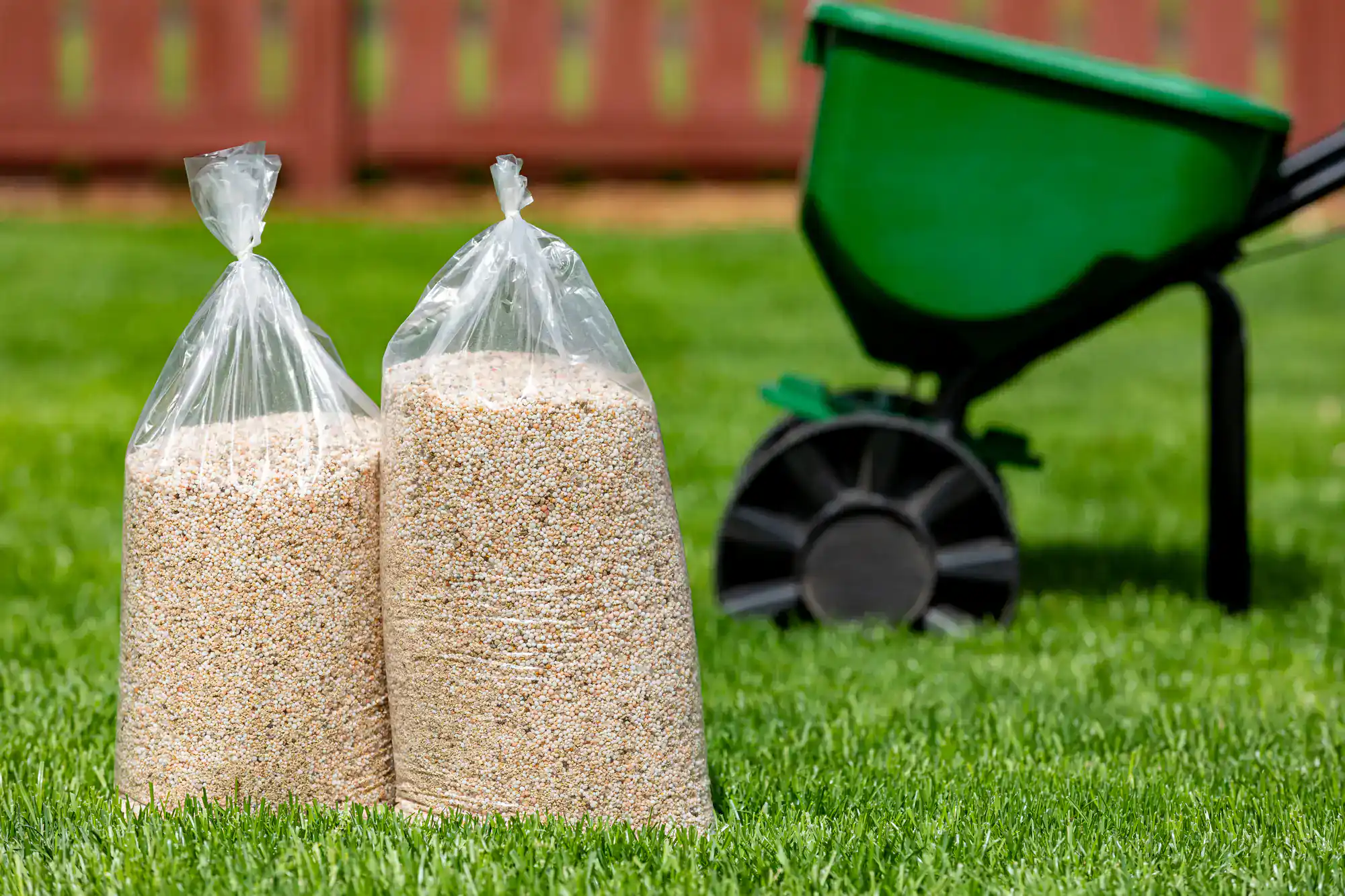
Suffolk County law prohibits fertilizer applications between November 1st and April 1st. That blackout period applies to the entire county, including East Islip, and violations carry a $1,000 fine. The restriction exists largely because of the county’s proximity to waterways like Great South Bay nitrogen and phosphorus runoff from lawn fertilizer is a documented threat to water quality, and the county takes enforcement seriously.
From a practical standpoint, the legal window and the agronomic window align reasonably well. Even if you could fertilize in March, you generally shouldn’t soil temperatures in Suffolk County don’t support active grass growth until mid-April, and applying fertilizer to a lawn that isn’t actively growing just wastes product and risks runoff. The effective season runs from mid-April through October, with fall applications ideally timed in early September per Suffolk County’s own Healthy Lawns Clean Water guidance.
There are a few things that commonly cause this on South Shore properties, and they tend to compound each other. Sandy soil drains quickly, which means nutrients especially nitrogen can leach out before the grass fully absorbs them. At the same time, salt air off Great South Bay gradually pulls moisture from grass blades and builds sodium levels in the soil over time, which disrupts soil structure and makes it harder for roots to take hold. Add in the summer humidity that creates favorable conditions for fungal diseases like dollar spot and brown patch, and you have a combination of stressors that a generic fertilizer program isn’t equipped to address.
The fix usually involves a custom-formulated slow-release fertilizer that delivers nutrients at a rate the sandy soil can actually retain, combined with proper timing that avoids heavy nitrogen applications during the most humid stretches of summer. Core aeration in late summer also helps significantly compacted soil is one of the most common reasons East Islip lawns thin out, and opening up the root zone makes a noticeable difference in how well the grass responds to treatment.
The window that consistently delivers the best results on Long Island’s South Shore is mid-August through late September. Cool-season grasses which is what most East Islip lawns are seeded with germinate best when soil temperatures are dropping from summer highs but still warm enough to support root establishment before the first frost. That window hits right in late summer and early fall, which is why it’s the most important service period of the year for this area.
Aeration before overseeding matters too, especially on coastal properties where soil compaction is common. Hydraulic aerators pull deeper plugs than lighter equipment, which creates better channels for seed-to-soil contact and allows the new turf to establish a stronger root system before winter sets in. Homes in East Islip with older lawns and a significant portion of the housing stock here dates to the 1950s or earlier often have compacted soil that hasn’t been properly addressed in years. Aeration alone can change how a lawn responds to fertilization, even before you factor in the overseeding.
It does, and it’s one of the more gradual problems to catch because it builds slowly over time. Salt air continuously deposits sodium on grass blades and into the soil. On the blade level, sodium draws moisture out of the plant the same osmotic process that makes saltwater harmful to drink. On the soil level, sodium accumulation degrades soil structure, reduces water infiltration, and creates conditions that are increasingly hostile to healthy root development.
For properties in East Islip with direct bay exposure particularly in waterfront neighborhoods like The Moorings this effect is more pronounced than it would be even a mile inland. The practical result is grass that looks stressed, grows unevenly, and doesn’t respond well to fertilization because the soil chemistry is working against it. Addressing sodium buildup requires specific knowledge of coastal soil conditions and the right amendments applied at the right time something a licensed professional with experience on South Shore properties is equipped to handle, and something a generic program typically misses entirely.
Most lawn care companies including national franchises operating in the East Islip area purchase fertilizer from commercial distributors and apply the same product across every property on their route, regardless of soil type, location, or local conditions. It’s a volume-driven model, and it works well enough in average conditions. East Islip’s conditions aren’t average.
We use a custom-blended fertilizer formulated specifically for our company. That means the product was developed with Long Island’s coastal soil chemistry in mind the sandy texture, the fast drainage, the nutrient retention challenges rather than being designed for the national median. The formulation affects how quickly nutrients become available to the grass, how long they stay in the root zone before leaching, and how the product behaves in the humidity and temperature swings that characterize a South Shore growing season. It’s not a dramatic sales pitch it’s just a product that was built for this environment rather than adapted to it after the fact.
For most East Islip properties, a well-structured program runs four to five applications per year, timed within Suffolk County’s legal window of April 1st through October 31st. The exact number depends on your lawn’s size, its current condition, and what the soil actually needs a property with significant compaction, thatch buildup, or a history of coastal salt stress may benefit from a more involved program in the first season before transitioning to standard maintenance.
Cornell Cooperative Extension recommends two to three pounds of nitrogen per 1,000 square feet annually for Long Island home lawns, and that guideline shapes how we structure the program across the season. Splitting that total across multiple applications rather than putting it all down at once is both more effective agronomically and more compliant with Suffolk County’s intent around protecting groundwater and bay water quality. The goal isn’t to hit a number of visits. It’s to give your lawn what it needs, when it needs it, without overloading the soil or contributing to the kind of runoff that affects the bay communities East Islip residents actually care about.
Useful Links
Other Services we provide in East Islip