
Hear from Our Customers
There’s a specific kind of frustration that comes from spending money on lawn care and watching your grass stay thin, fade out mid-summer, or develop brown patches you can’t explain. If that sounds familiar, the problem usually isn’t your lawn it’s that the program being applied to it wasn’t built for where you live.
East Islip sits right on the edge of the Great South Bay, and that geography matters more than most lawn care companies acknowledge. The sandy outwash soil that runs through this part of Suffolk County drains fast faster than standard fertilizer applications can keep up with. Nutrients wash through before your grass roots can absorb them, which is why lawns here often look okay for a few weeks and then stall out. Add the salt air coming off the bay, which pulls moisture from grass blades and gradually builds sodium in the soil, and you’ve got conditions that a one-size-fits-all program from a national chain simply isn’t calibrated for.
When the treatment matches the actual conditions slow-release fertilizer timed correctly, weed control that hits the right windows, aeration done with real equipment in the fall the difference shows. Thicker turf, better color through the summer heat, and a lawn that holds up instead of thinning out every August. That’s what a program built for East Islip looks like in practice.
We’ve been treating lawns in East Islip and across Suffolk County since 1987. That’s not a tagline it’s just the truth. Long before most of the national chains set up regional hubs on Long Island, we were already learning what South Shore soil actually needs, season after season, property after property.
Every technician who shows up to your East Islip home holds a New York State DEC pesticide applicator license a credential that requires a 30-hour training course and a state exam. That’s not the standard across this industry, and it matters when someone is applying product to the lawn where your kids and pets spend time. You’ll also recognize our trucks: five fully wrapped, professionally branded vehicles that are hard to miss on Montauk Highway or Carleton Avenue.
This isn’t a call center operation. We’re a local company with owner-level involvement on every job, a custom-blended fertilizer made specifically for Long Island’s soil chemistry, and nearly four decades of knowing exactly what East Islip lawns go through from the grub pressure in summer to the tight fertilizer blackout window Suffolk County enforces every November through April.
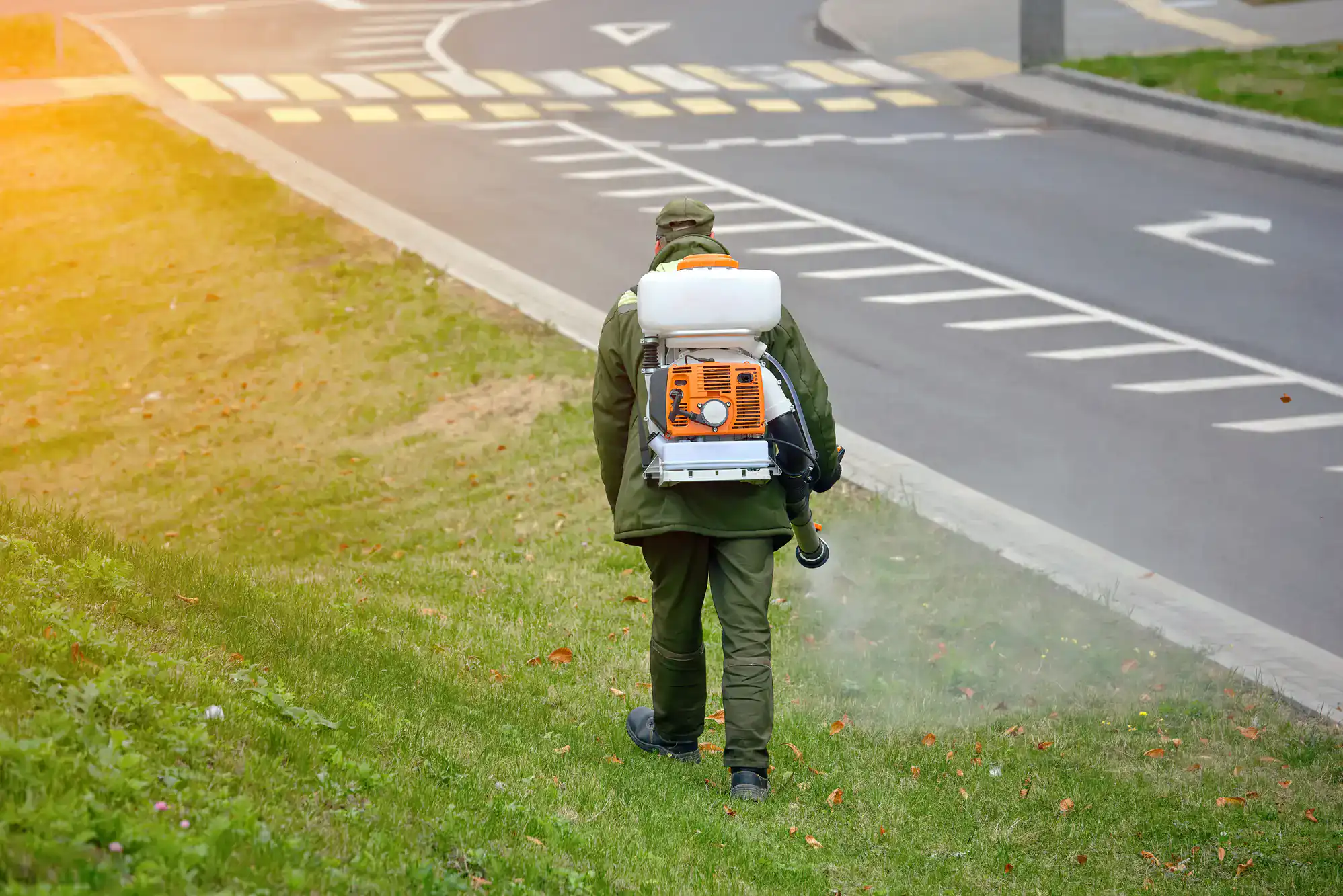
It starts with an honest assessment of what your lawn is actually dealing with. Not every East Islip property is the same a lawn in The Moorings with direct bay exposure faces different stress than a property on Saxon Avenue in a newer development, and a shaded lot near the mature oak canopy of Heckscher State Park needs a different seed mix and fertilizer approach than a sun-exposed corner lot. Before anything gets applied, we evaluate the condition of your turf, soil, and site.
From there, we build a treatment program around your specific lawn not a package pulled off a shelf. Suffolk County’s fertilizer blackout runs from November 1 through April 1, so the calendar matters. Spring applications are timed to when soil temperatures on the South Shore actually hit the threshold your grass needs to absorb nutrients, not just when the calendar says spring has arrived. Pre-emergent weed control goes down at the right window to stop crabgrass before it starts, because chasing it after the fact is a losing battle.
Through the season, we adjust treatments based on what’s happening fungal pressure in humid bay-influenced summers, grub control timed for Japanese beetle activity, and fall aeration and overseeding done with hydraulic equipment that actually pulls meaningful cores from compacted coastal soil. When fall comes, that’s when the real work that sets up next year gets done. You don’t have to manage any of it that’s the point.
Ready to get started?
The fertilizer we apply isn’t something you can buy at a hardware store or order from a national distributor. It’s a custom blend made specifically for us, formulated with East Islip’s sandy, fast-draining soil in mind. The slow-release nitrogen ratios are calibrated for the way nutrients move through South Shore soil which is faster than most people realize and faster than most off-the-shelf products account for. New York State also prohibits phosphorus in lawn fertilizer unless a soil test confirms a deficiency, so compliance is built into every application, not treated as an afterthought.
Beyond fertilization, our full program covers what East Islip lawns actually need through the year: pre-emergent and post-emergent weed control, grub prevention timed for the South Shore’s documented Japanese beetle pressure, and fungal disease management during the humid bay-influenced summer months. Core aeration and overseeding in the fall are done with hydraulic aerators and seeders professional equipment that makes a real difference in how well seed establishes in compacted coastal soil. For lawns that have been damaged by a prior company or years of neglect, we also offer full lawn restoration and new lawn installs from seed.
Everything is handled by licensed NYS DEC pesticide applicators. We offer online invoicing and credit card payment, so the administrative side stays simple on your end. The goal is a program you don’t have to think about one that just works.
Suffolk County law prohibits fertilizer applications from November 1 through April 1 that’s a hard cutoff with fines up to $1,000 for violations. So the season effectively opens on April 1, but that doesn’t mean you should rush an application the first week of the month. On Long Island’s South Shore, soil temperatures near the Great South Bay typically don’t reach the 55°F threshold that cool-season grasses need to actively absorb nutrients until mid-to-late April. Applying before that window means the product sits in the soil and risks washing into groundwater before your grass can use any of it.
The most impactful fertilization window for East Islip lawns is actually fall September through late October, before the blackout kicks in. Soil temperatures are still warm, the coastal humidity moderates, and cool-season turf like tall fescue and Kentucky bluegrass enters its most active growth phase. A well-timed fall program is what builds the root depth and turf density that carries your lawn through the following summer. Spring is important, but fall is where the real foundation gets laid.
This is one of the most common frustrations for homeowners on the South Shore, and the answer almost always comes back to soil type and application timing. East Islip sits on sandy outwash soil it drains quickly, which sounds like a good thing, but it also means nutrients move through the root zone faster than grass can absorb them. A standard fertilizer applied at a standard rate will leach out before it does much good, leaving you with a lawn that looks decent for two or three weeks and then stalls.
The fix isn’t applying more fertilizer it’s applying the right formulation at the right time. Slow-release nitrogen blends designed for fast-draining soils, split across the correct seasonal windows, give grass roots time to actually take up what they need. If your lawn is also dealing with salt air stress from the bay or compaction that’s blocking root development, no amount of fertilizer will compensate until those underlying issues are addressed. Core aeration in the fall, combined with overseeding with the right grass varieties for your specific sun and shade conditions, is usually what finally moves the needle for lawns that have been stuck in a cycle of thin and thin again.
For most East Islip lawns, aeration isn’t optional it’s the treatment that makes everything else work better. Here’s the practical reality: even sandy soil compacts over time from foot traffic, mowing, and the freeze-thaw cycles Long Island goes through each winter. When soil is compacted, water, air, and fertilizer can’t reach the root zone effectively. You end up with a lawn that’s being treated on the surface while the roots underneath are essentially starving.
Core aeration pulls plugs of soil out of the ground typically three to four inches deep and creates channels for nutrients and water to get where they need to go. Done in the fall with professional hydraulic equipment, it also opens the soil for overseeding, which is how you thicken a lawn that’s been thinning for years. Consumer-grade tow-behind aerators don’t pull consistent cores, especially in sandy coastal soil that shifts and compresses differently than inland clay-heavy ground. The equipment matters, and so does the timing fall aeration paired with the right seed mix for your property’s sun exposure is the combination that actually produces results you’ll see the following spring.
New York State requires any commercial applicator of fertilizers, herbicides, or pesticides to hold a valid NYS Department of Environmental Conservation pesticide applicator license specifically a Category 3A or 3B credential. Getting that license isn’t a formality. It requires completing a 30-hour training course and passing a state examination. It’s a real credential that ensures the person treating your lawn understands what they’re applying, at what rates, and under what conditions.
The problem is that not every company operating in Suffolk County meets this standard. Some use unlicensed labor crews, particularly during busy seasons when they’re scaling up quickly. You can ask a company directly whether their technicians are individually licensed not just whether the company holds a business license and a legitimate operation will be able to answer that clearly. It also matters for your own liability: if an unlicensed applicator is injured on your property, your exposure is different than if a licensed professional was on the job. For a home worth what East Islip properties are worth, it’s a question worth asking before you sign anything.
The dominant turf types across East Islip and the broader South Shore are cool-season grasses tall fescue, Kentucky bluegrass, and perennial ryegrass are the most common. Tall fescue tends to perform the best in this area because it has deeper root development than the other two, which helps it handle both the dry stretches of late summer and the salt stress that comes with proximity to the Great South Bay. It’s also more tolerant of the shade conditions you’ll find on older properties near mature oak canopy.
That said, the right seed mix depends on your specific property. A lawn in The Moorings with full bay exposure and maximum salt air stress needs a different approach than a shaded property near Heckscher State Park or a newer development on Saxon Avenue with younger soil history. Fine fescue blends work better in deep shade, while sun-exposed corner lots can support a higher percentage of bluegrass for a denser, darker appearance. Overseeding with the wrong variety for your conditions is one of the most common reasons East Islip lawns don’t thicken up the way homeowners expect the seed germinates, but it doesn’t establish well because it wasn’t matched to the site.
Yes and it happens more often than you’d think. East Islip homeowners who have been through a cycle of hiring a company, watching their lawn decline, and then trying another one sometimes reach a point where the turf is too far gone for a maintenance program to fix. Bare patches, compacted soil from years of improper treatment, weed populations that have taken over thin turf, or damage from incorrect pesticide applications these aren’t situations where a few rounds of fertilizer will turn things around.
Full lawn restoration starts with understanding what actually went wrong. Soil condition, existing weed pressure, grade, drainage, and sun exposure all factor into what the restoration approach looks like. In some cases, the right move is aggressive overseeding into aerated soil after the existing weed population is addressed. In others particularly when the damage is extensive or the soil has been severely depleted a new lawn install from seed is the more honest answer. It takes longer, but it gives you a clean foundation instead of layering new seed over a compromised base. Either way, the goal is a lawn that performs correctly going forward, not just one that looks okay for a season.
Useful Links
Other Services we provide in East Islip