

Hear from Our Customers
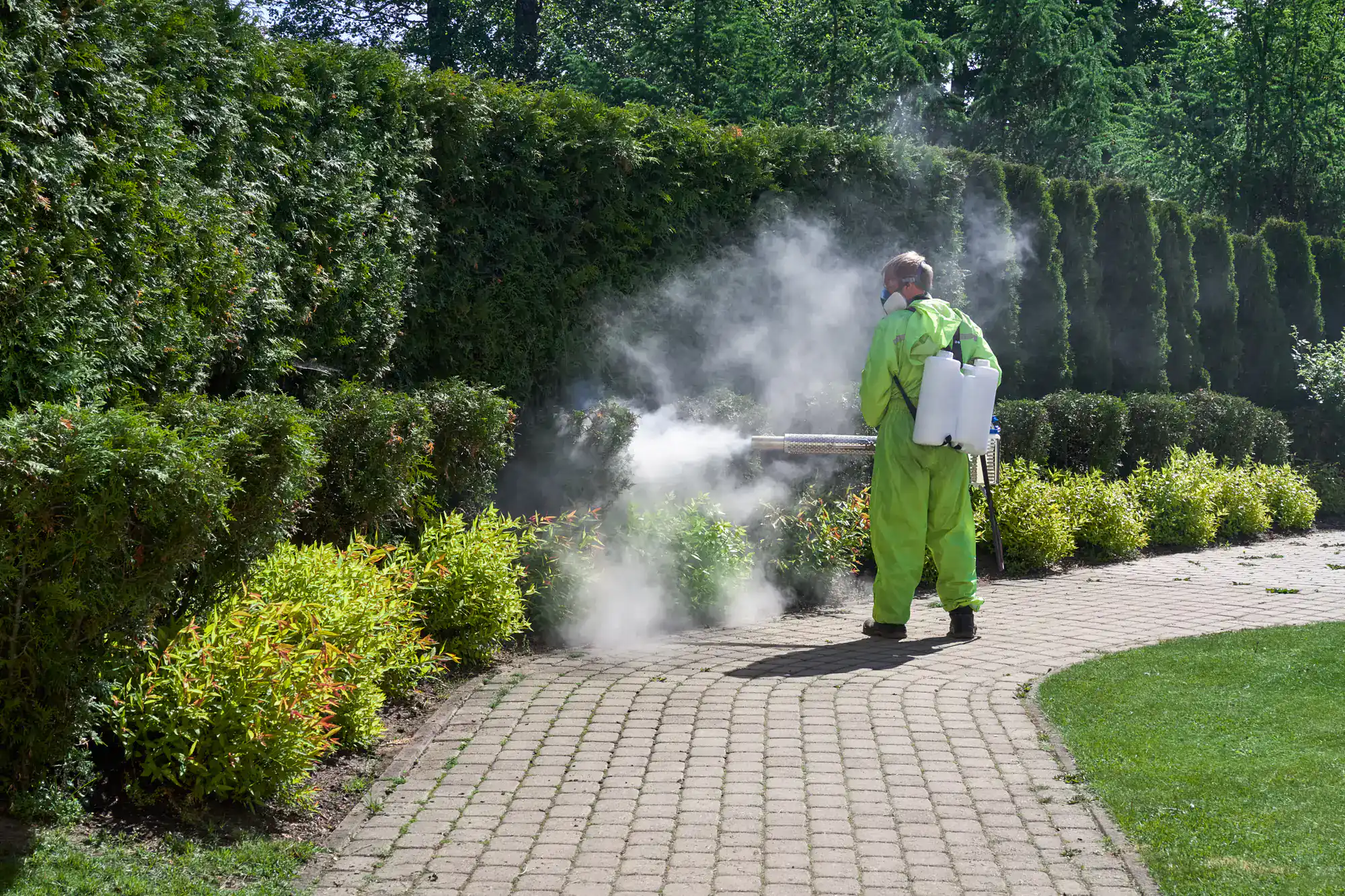
Nesconset sits in a genuinely unique position when it comes to tick pressure. You’ve got Blydenburgh County Park running right along NY-347 to the north, Walter S. Commerdinger, Jr. County Park embedded inside the hamlet, and Gibbs Pond sitting at the eastern edge of the neighborhood. That combination of wooded corridors, natural water features, and heavy deer traffic doesn’t stay contained to the parks it walks right into your yard. Professional treatment changes that equation.
When tick populations are actively managed on your property, your kids can play outside without you doing a full inspection every time they come in. Your dog can run the yard. You stop thinking twice about sitting on the back patio in June. That’s what consistent, properly timed treatment actually delivers not just fewer ticks, but fewer decisions made out of anxiety.
Fleas follow a similar pattern in Nesconset. The mature tree canopy, established landscaping, and shaded lot conditions that make these neighborhoods so appealing also create the cool, moist ground-level environments where flea populations explode in summer. A single yard treatment isn’t enough. What works is a program one that accounts for the full reproductive cycle, targets the harborage zones wildlife carries them into, and keeps up with Long Island’s long active season from April through October.
We’ve been serving Suffolk County since 1987, and that includes regular work throughout Nesconset. Our trucks travel NY-347 regularly to reach the communities along that corridor. If you’ve lived in Nesconset for any length of time, there’s a reasonable chance you’ve seen one of our vehicles on your street.
Every job is handled by a licensed pesticide professional NYSDEC-certified, not just trained on the job. New York State requires commercial applicators to pass a state exam and complete 30 hours of coursework before they ever touch a property. That’s the standard we hold to on every visit, not just the first one. The person treating your yard knows what they’re doing, knows why they’re doing it, and answers directly to our ownership.
Nesconset homeowners invest heavily in their properties the median home value here sits close to $700,000. That kind of investment deserves a lawn care company that treats it accordingly.
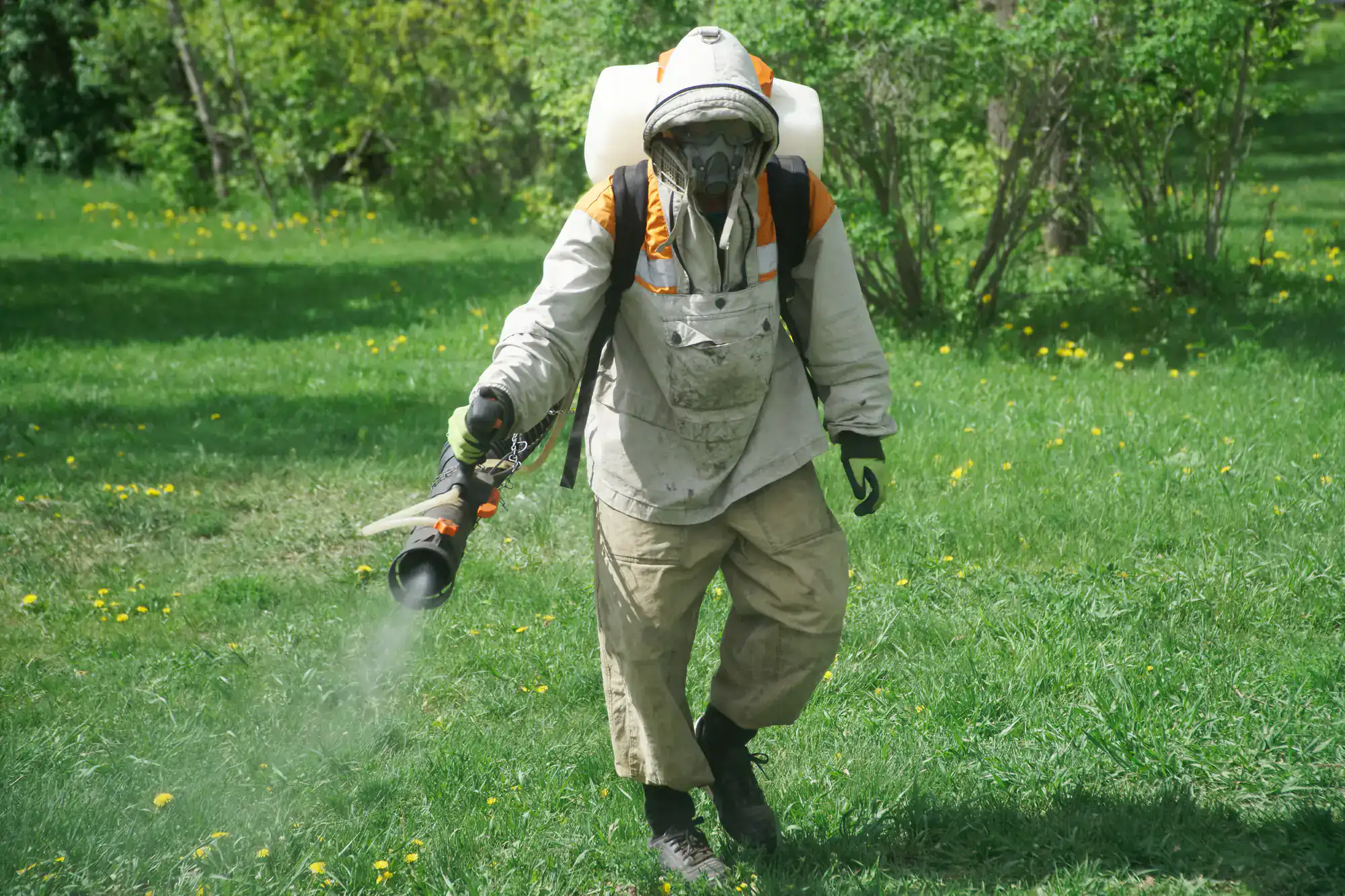
The process starts with an assessment of your specific property not a generic walk-around, but a real look at the conditions that matter. Where does your lot border wooded or vegetated areas? Is there leaf litter accumulation along the fence line? Shaded zones under mature trees? Proximity to Gibbs Pond or the Commerdinger Park corridor? Those details shape where we apply product and how we structure the program.
From there, timing is everything. Long Island’s tick season has two documented peaks nymphal deer ticks surge from May through June, and adult deer ticks come back strong in September and October. Our first application goes down in early April when temperatures consistently hit 50°F. Subsequent treatments follow every four to six weeks through the season, targeting the harborage zones where ticks actually live: wooded edges, under-deck spaces, ornamental bed borders, and shaded north-facing ground cover. For flea control, we include Insect Growth Regulators as part of the program they break the reproductive cycle at the larval stage, which is something store-bought products almost never include.
After each treatment, re-entry is typically safe within 30 to 60 minutes of drying. You’ll get advance notice before each visit, and billing is handled online no checks, no chasing anyone down. The program runs until the season winds down in late October, with a final application that reduces the overwintering population heading into the following spring.

Ready to get started?
Three tick species are active in the Nesconset area: the deer tick, the American dog tick, and the lone star tick. Each has a slightly different activity window and preferred habitat. Deer ticks the primary carrier of Lyme disease are most dangerous in their nymphal stage, when they’re roughly the size of a poppy seed and nearly impossible to spot before a bite occurs. A Columbia University study found that 56% of ticks on Long Island carry Lyme disease, and Suffolk County’s Department of Health Services has noted that rates on the north and south shores may run even higher. That’s the environment Nesconset families are navigating every spring and fall.
Our flea and tick control program is designed around that reality. We use professional-grade formulations higher active ingredient concentrations than anything available at a hardware store and we apply them using NYSDEC-licensed professionals who know how to target the specific zones where ticks harbor, not just broadcast-spray an open lawn. We also use custom blended products developed specifically for our applications, not off-the-shelf mixes.
Because Nesconset properties tend to feature mature landscaping, large established lots, and frequent deer pressure from the Blydenburgh corridor, we build the reapplication schedule with that reintroduction risk in mind. Wildlife doesn’t stop at the property line. Your treatment program shouldn’t either.
Yes and it’s worth understanding why, not just taking it on faith. Walter S. Commerdinger, Jr. County Park is a nature preserve located inside the hamlet of Nesconset, not just adjacent to it. That means wooded tick habitat exists within the residential footprint of the community. Blydenburgh County Park sits directly along NY-347 at Nesconset’s northern boundary and sees consistent deer traffic through its wooded trails. Deer are the primary reproductive host for adult deer ticks wherever deer roam freely through park land adjacent to neighborhoods, tick populations in those neighborhoods are correspondingly elevated.
Gibbs Pond on the eastern edge of Nesconset adds another layer. The vegetation and moisture surrounding natural water features are textbook tick habitat. If your property is anywhere near these areas or backs up to mature trees, shrubs, or fence lines with leaf litter you’re dealing with real, ongoing tick pressure, not a once-in-a-while problem. Professional treatment is the most practical way to manage it.
For most Nesconset properties, a minimum of three to four applications per season is the baseline for meaningful protection. Some properties particularly those near the Blydenburgh corridor or with dense landscaping and wooded borders benefit from five or six. Each application provides approximately four to six weeks of protection, which is why spacing matters as much as the product itself.
The reason one or two treatments fall short is simple: ticks don’t disappear between applications, and wildlife reintroduces them to your property continuously throughout the season. Deer, mice, and squirrels don’t respect the fact that you had your yard sprayed in May. A program that accounts for that ongoing reintroduction with treatments timed to Long Island’s two documented tick peaks in late spring and early fall is the only approach that actually holds up across a full season.
When applied by a licensed professional who knows what they’re doing, yes. The key distinction is targeted application versus broadcast spraying. Our NYSDEC-certified applicators identify the specific harborage zones on your property wooded edges, shaded ground cover, under-deck spaces, ornamental bed borders and apply product where ticks actually live. That’s fundamentally different from spraying the whole yard indiscriminately.
Re-entry is typically safe within 30 to 60 minutes of the application drying. After that window, your kids and pets can use the yard normally. It’s also worth putting the risk in perspective: the documented health consequences of Lyme disease, babesiosis, and Powassan virus all carried by ticks found in Suffolk County are significantly more serious than the minimal risk associated with properly applied, professionally managed pest control. The goal is to reduce the actual threat, not add a new one.
The gap is bigger than most people expect. Store-bought products sold at hardware stores carry lower active ingredient concentrations than professional-grade formulations that’s a regulatory distinction, not a marketing one. But the bigger issue is usually application, not just product. Most homeowners applying DIY sprays miss the critical harborage zones: the shaded north-facing sides of shrubs, the transition area between lawn and wooded border, the leaf litter along the fence line, the space under the deck. Ticks spend most of their time in those spots, not in the open lawn.
Professional programs also include Insect Growth Regulators for flea control compounds that interrupt the flea reproductive cycle at the larval stage. Without IGRs, you’re only addressing the adult population, and the infestation rebounds within weeks. If you’ve tried store-bought treatments and ended up frustrated with the results, the issue almost certainly wasn’t effort it was the product ceiling and the application approach.
The first application should go down in early April, as soon as temperatures consistently reach 50°F. That’s when tick activity resumes after winter, and getting ahead of the nymphal surge which peaks from May through June is the most important timing decision of the season. Nymphal deer ticks are the hardest to detect (they’re roughly the size of a poppy seed) and statistically the most responsible for Lyme disease transmission.
The season doesn’t end in summer. Adult deer ticks come back strong from September through November, and lone star ticks remain active through much of the fall as well. In Nesconset, where Blydenburgh Park and Commerdinger Park sustain wildlife populations through the colder months, tick reintroduction to residential properties continues well into October. A program that wraps up in July is leaving your yard exposed during the second major risk window of the year. The final treatment of the season typically goes down in late October, reducing the overwintering population ahead of the following spring.
A standalone exterminator treats the pest. We address the conditions that make your property attractive to pests in the first place. Ticks and fleas thrive in specific environments dense thatch, excessive moisture, overgrown ornamental borders, and poor turf health that creates the ground-level cover they need to survive. When your lawn is properly aerated, fertilized, and maintained, it’s inherently less hospitable to both.
We handle flea and tick control as part of a broader approach to your property’s health not as a separate service bolted on by a different company with no knowledge of your lawn’s condition. For Nesconset homeowners who’ve invested in properties valued near $700,000 and take their landscaping seriously, that integrated approach makes practical sense. You’re not managing your lawn and your pest problem in two separate silos you’re working with one company that understands how both connect.
Useful Links
Other Services we provide in Nesconset