
Hear from Our Customers
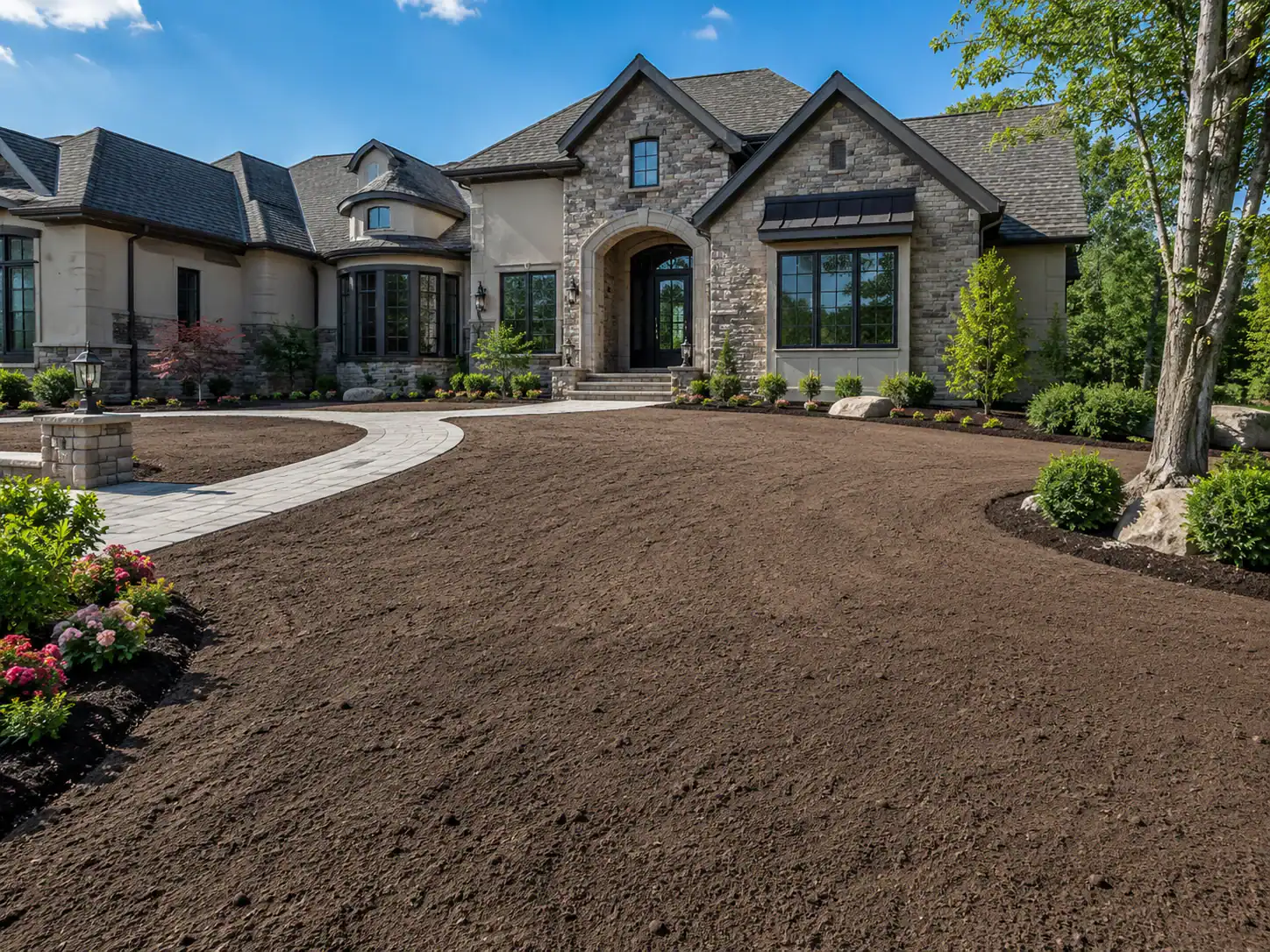
Most lawns in Commack don’t decline because of one bad season. They decline because the soil underneath has been compacted, stripped of nutrients, or thrown off in pH over years sometimes decades. When that gets corrected, the turf responds. You stop seeing bare patches spread. Grass fills back in where it looked like nothing would ever grow again.
Commack’s housing stock is largely postwar construction many of these lawns have been walked on, mowed, and fertilized for 40 to 70 years without the kind of deep soil work that actually sustains turf long-term. Add in the grub pressure that hits Long Island every summer, the fungal disease that thrives in the humidity, and the road salt runoff that creeps in from Jericho Turnpike and Veterans Memorial Highway, and you’ve got a lawn that’s been fighting an uphill battle for years.
What changes after proper restoration is simple: the lawn holds. It doesn’t thin out again by August. It doesn’t turn brown the second a dry stretch hits. The grass is rooted in soil that can actually support it and that’s a different outcome than anything you get from a bag of seed and a broadcast spreader.
We’ve been doing this work in Commack and throughout Suffolk County since before most of the current neighborhoods were fully built out. That’s not a number we throw around lightly 38 years means we’ve seen every version of what Long Island soil does to a lawn, and we know how to read it.
We’re NYS-licensed, which matters more than most homeowners realize. Soil correction and restoration involve pesticide applications, targeted amendments, and mechanical work that require real credentials not just a truck and a bag of seed. In a market where unlicensed operators advertise on neighborhood apps and local Facebook groups, that license is your protection.
We know Commack specifically the soil variability from one subdivision to the next, the grub cycles that hit the same streets year after year, the properties near Hoyt Farm Nature Preserve that drain differently than the ones closer to the parkway corridors. This isn’t a national chain routing a crew to your zip code. It’s a local operation that knows your area because we work here.
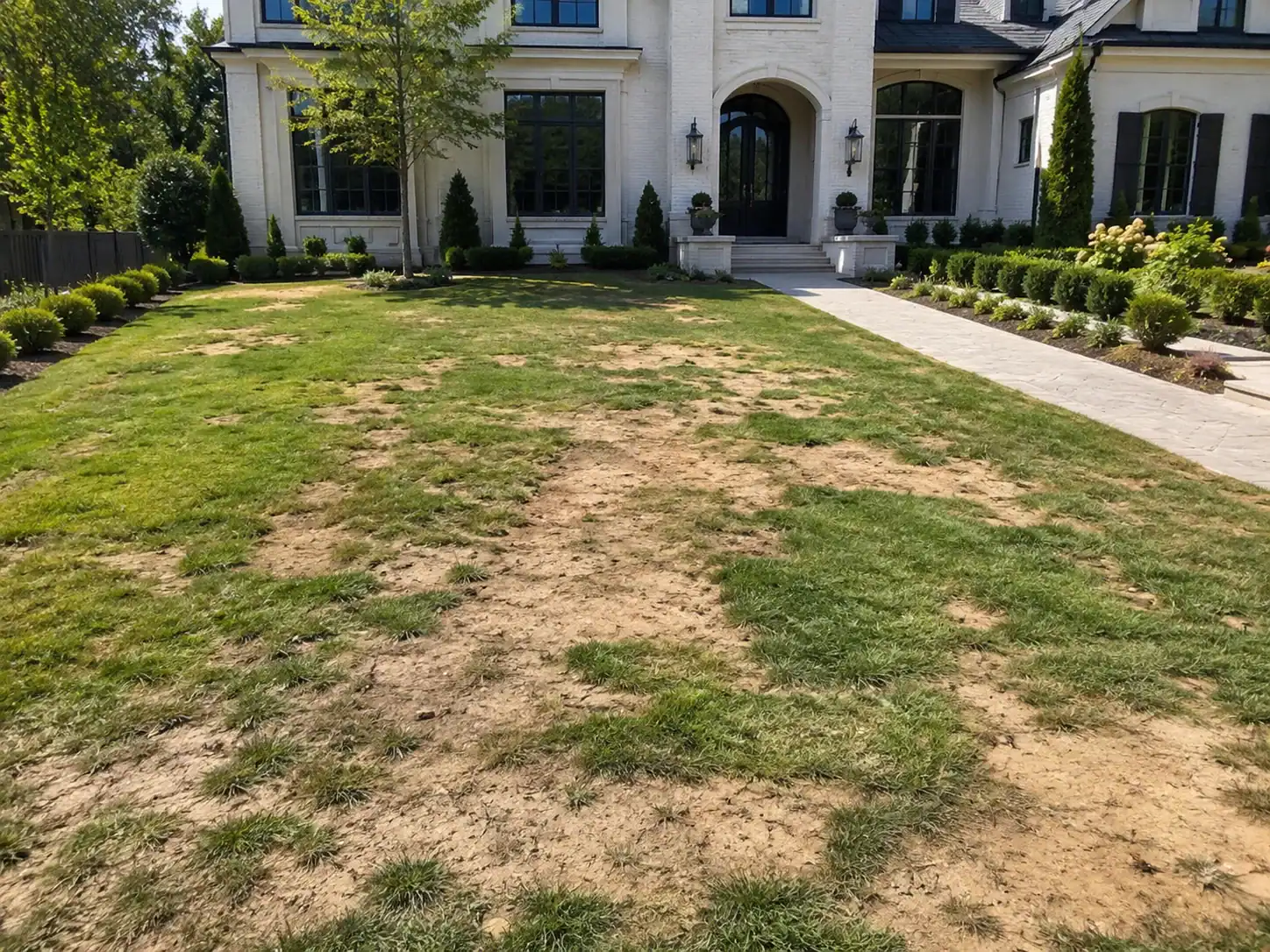
It starts with a real diagnosis. Before anything goes into your soil, we assess what’s actually wrong soil pH, compaction levels, nutrient deficiencies, drainage patterns, and signs of grub or fungal damage. Commack soil varies dramatically even within the same neighborhood, so a soil test isn’t optional here. It’s the whole foundation of a restoration that actually holds.
Once we know what we’re working with, we correct the growing environment first. That might mean lime applications to bring acidic Suffolk County soil back into the right pH range, core aeration to break up compaction that’s been building for years, or targeted amendments to improve water retention in the sandier areas of the property. We don’t seed into bad soil and hope for the best.
Then comes the seeding and we use slice seeding, not broadcast overseeding. A mechanical slicer cuts directly into the soil and deposits seed at root level, which is the only approach that consistently works on established Commack lawns where thatch and compaction prevent broadcast seed from ever making contact with the ground. Fall is the optimal window on Long Island soil temperatures support germination, weed competition drops off, and cool-season grasses get the establishment period they need before winter. If you’re seeing damage now, the time to get on our schedule is before that window fills up.
Ready to get started?
Our lawn restoration isn’t a single-visit service it’s a corrective process. It covers the full cycle from diagnosis through establishment: soil testing, pH correction, mechanical aeration, targeted fertilization based on actual test results, and slice seeding with cool-season grass varieties suited to Long Island’s climate. Every step addresses a specific reason your lawn is in the condition it’s in.
For Commack properties specifically, that often means dealing with compaction from decades of use on mature residential lots, grub damage that severed root systems and left behind dead zones that won’t recover on their own, or fungal disease scarring that spread through the humid summer months. We also see a fair amount of post-construction disturbance homeowners who completed additions, pool installs, or hardscape projects and are left with destroyed turf around the perimeter. All of that falls within what restoration can address.
One thing worth being clear about: restoration is the process of bringing an existing lawn back to health. It’s not the same as lawn renovation, which involves tearing out and rebuilding from scratch. If your lawn has reached the point where restoration isn’t the right answer, we’ll tell you that directly and walk you through what a full rebuild would look like instead. We’re not going to sell you a restoration program on a lawn that needs something different.
Restoration means working with the lawn you have correcting the soil, eliminating what caused the damage, and re-establishing turf density through seeding and amendment. The existing grass and root system are still viable enough to build on. Renovation is a full rebuild: the existing turf gets removed and the lawn is reconstructed from the ground up with new soil prep and seeding.
For most Commack homeowners, the question comes down to how far the damage has progressed. A lawn with significant bare patches, grub damage, or compaction issues but still with living turf in portions of the yard is typically a restoration candidate. A lawn that’s been completely overtaken by weeds, stripped during construction, or dead across the majority of the property is usually a renovation situation. We assess that honestly at the estimate, and we’ll tell you which one applies to your property without steering you toward the more expensive option if it isn’t warranted.
In most cases, yes but it depends on what caused the damage and how long it’s been left untreated. The most common scenario we see in Commack is a lawn that looks completely dead but still has a viable root zone in parts of the yard. Grub damage, fungal disease, drought stress, and compaction all look similar on the surface, but they respond differently to treatment. That’s why diagnosis matters before anything else.
The lawns that are genuinely too far gone for restoration are usually ones where the soil has been severely disturbed stripped during construction, completely overtaken by weeds with no desirable grass remaining, or damaged so extensively that there’s no living turf left to work with. If that’s what we find, we’ll tell you. But if there’s viable turf to build on, even a lawn that looks like a lost cause in September can look dramatically different by the following spring with the right correction and seeding approach.
The first signs of germination typically appear within 10 to 21 days after slice seeding, depending on soil temperature and moisture. On Long Island, fall restorations seeded in mid-September through early October tend to germinate well because soil temperatures are still warm while air temperatures have dropped ideal conditions for cool-season grass establishment.
Full density takes longer. You’ll see meaningful fill-in by late fall, but the lawn won’t reach its final restored appearance until the following spring and into the next growing season. That’s normal turf establishment is a process, not an event. What you won’t see is the lawn snapping back to full health in two weeks. What you will see is progressive, real improvement over a predictable timeline, with the underlying soil issues corrected so the results actually hold year over year.
The most common culprits in Commack are grub damage, fungal disease, soil compaction, and pH imbalance and they don’t always look different from each other on the surface, which is why a lot of homeowners end up treating the wrong thing. Grub damage leaves dead patches that feel spongy and can be pulled up like loose carpet because the root system has been severed. Fungal disease like brown patch or dollar spot leaves circular or irregularly shaped dead zones, often with a bleached or discolored appearance. Compaction and pH problems show up as gradual thinning and decline rather than sudden death.
In Commack specifically, grub pressure from Japanese beetles and Oriental beetles is a recurring issue adult beetles lay eggs in July, larvae feed through fall, and the damage becomes fully visible by late summer and into the following spring. Road salt runoff near Jericho Turnpike and Veterans Memorial Highway also causes turf dieback in properties close to those corridors, which is a cause that often gets misdiagnosed as drought stress. Getting the right diagnosis is the only way to make sure the treatment actually addresses what’s killing the grass.
The main cost drivers are the size of the area being restored, the extent of the damage, and how much soil correction is needed before seeding can begin. A lawn that needs basic aeration and slice seeding is a different scope than one that requires lime applications, grub treatment, multiple rounds of aeration, and soil amendment across a large property. The diagnostic step is what tells us which situation you’re actually in.
For Commack homeowners, a few factors tend to add scope: properties with significant thatch buildup from years of maintenance without aeration, lawns with grub damage that require both soil correction and surface repair, and larger residential lots which are common in Commack given the area’s single-family housing stock. The estimate we provide is based on an on-site assessment, not a phone quote, because the only way to give you an accurate number is to actually look at the lawn. You’ll know exactly what’s included and why before any work begins.
For cool-season grasses which is what performs on Long Island fall is the right window, and it’s not a close call. Soil temperatures in September and October are still warm enough to support germination, air temperatures have dropped enough to reduce stress on new seedlings, and weed competition from crabgrass and other summer annuals has largely shut down. That combination gives newly seeded turf the best possible establishment window before winter.
Spring restoration is possible, but it’s a harder path. You’re seeding into soil that’s still cold, competing against weed germination that picks up as temperatures rise, and working against a summer heat cycle that will stress new turf before it’s had time to fully establish. Most homeowners who try spring restoration end up disappointed by August. The fall window in Commack typically runs from mid-September through mid-October after that, soil temperatures drop enough that germination becomes unreliable. If you’re considering restoration this year, getting your estimate scheduled now is the practical move.
Useful Links
Other Services we provide in Commack