

Hear from Our Customers
Before Nesconset was a neighborhood of Colonials and Ranches, it was pine barrens pitch pine and scrub oak growing in sandy, low-organic-matter soil. That soil is still there beneath your lawn, and it’s one of the main reasons bag-of-seed approaches keep coming up short. Water moves through too fast, nutrients don’t hold, and seeds can’t make solid contact with the ground. The result is patchy germination, thin coverage, and a lawn that looks decent in May but struggles to hold through July.
A professionally seeded lawn in Nesconset looks different by the second season. Denser. Darker. Less susceptible to the drought stress that turns so many local lawns brown by midsummer. When the seed variety is matched to your soil type, the seedbed is properly prepared, and starter fertilization is timed correctly all before the fall window closes you get grass that roots deep enough to survive what Long Island summers actually throw at it.
The homes in this area average close to $750,000. A thin, patchy lawn doesn’t match that investment. More importantly, if you’re in the Smithtown Central School District portion of Nesconset, curb appeal is a real part of what drives home value in this community. A thick, well-established lawn isn’t cosmetic it’s financial.
We serve the Smithtown corridor the stretch of North Shore Suffolk County that Nesconset sits squarely in the middle of. We’ve seeded lawns throughout the 11767 zip code, on properties near Gibbs Pond Road, along Smithtown Boulevard, and in the post-war neighborhoods that make up most of this hamlet. We know the soil profile here. We know the way summer heat builds inland without the coastal buffer that communities further south get. And we know that what works in Nassau County or even Hauppauge doesn’t always translate directly to a Nesconset lot.
We’re also fully up to speed on Suffolk County’s fertilizer regulations the November 1 blackout date, the fines, the timing requirements that affect every seeding and fertilization program we build. You won’t get a program from us that cuts corners on compliance. What you will get is a team that shows up knowing your property, your soil, and what it actually takes to grow a thick lawn in this specific part of Long Island.
It starts with the ground, not the seed. Before anything goes down, we assess your soil its composition, compaction level, and pH. Nesconset’s historically sandy, pine barrens-derived soils are often mildly acidic and low in organic matter, which means they need more than just seed to support healthy germination. If your soil pH is off or the ground is compacted from years of mowing and foot traffic, we address that first. Skipping this step is the single biggest reason DIY seeding fails here.
From there, we move into seedbed preparation. For most renovation projects lawns that have thinned out over the years this means core aeration before seeding. Pulling plugs from compacted Nesconset soil opens up channels for seed-to-soil contact, water absorption, and root development that simply don’t exist on an untreated surface. For larger bare areas or new construction sites, we may recommend hydraulic lawn seeding, which applies seed, mulch, and starter fertilizer in a single uniform pass and holds moisture through the germination period.
Timing matters more than most people realize. The fall seeding window in Nesconset late August through mid-October is when soil temperatures are warm enough for germination but the heat and weed pressure are dropping. We schedule every project to land in that window, and we time all fertilization to comply with Suffolk County’s November 1 cutoff under Chapter 459. After seeding, we give you a clear watering and mowing schedule so the establishment phase goes the way it’s supposed to.
Ready to get started?
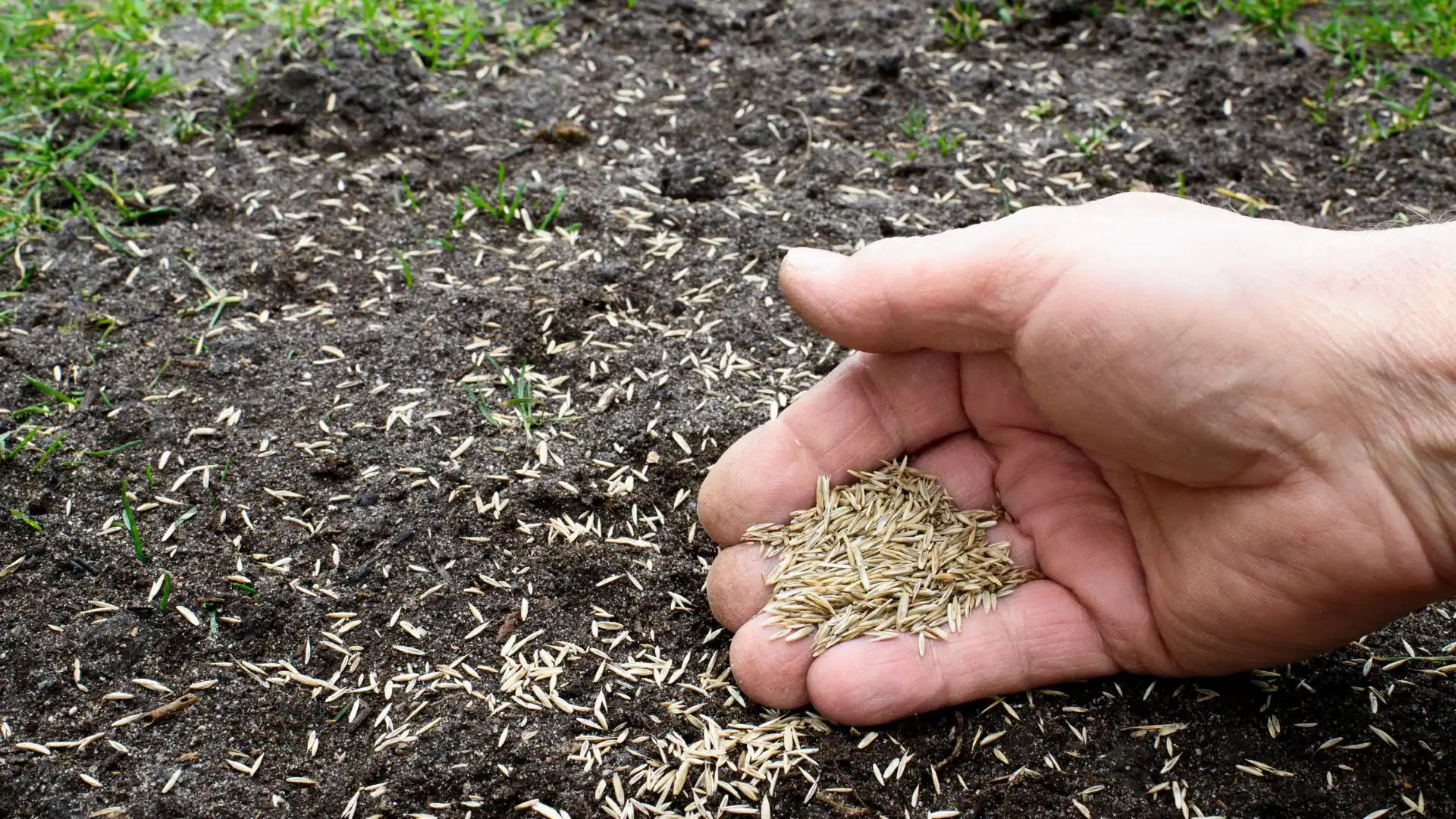
The seed we use isn’t what you’ll find at a hardware store. We select premium cool-season grass blends turf-type tall fescue, Kentucky bluegrass, and perennial ryegrass that are evaluated specifically for Long Island’s climate. Tall fescue is typically the backbone of a Nesconset lawn program because its deep root system handles the sandy, well-draining soils here better than most alternatives, and it holds up through the summer drought cycles that hit inland North Shore communities harder than coastal ones. Kentucky bluegrass adds density and color. Perennial ryegrass fills in fast during establishment. The right blend depends on your yard’s sun exposure, soil condition, and how the lawn is used.
Every program we build for Nesconset homeowners is structured around Suffolk County’s regulatory calendar. The county’s fertilizer law prohibits applications between November 1 and April 1 fines run up to $1,000 for violations. That means fall seeding programs need to be completed and fertilized before that cutoff, which reinforces why the late August through mid-October window isn’t just agronomically ideal, it’s legally necessary to do the job right. We build that compliance into every program from the start, not as an afterthought.
Whether you’re restoring a lawn that’s gone thin over the years or starting from bare ground after a renovation project, the program includes soil assessment, seedbed preparation, premium seed application, starter fertilization, and a post-seeding care plan. You know exactly what’s going into your lawn, when it’s going in, and what to expect at each stage of establishment.
The best window for lawn seeding in Nesconset is late August through mid-October. During that stretch, soil temperatures are still warm enough ideally between 50 and 65 degrees Fahrenheit to support fast, even germination for cool-season grasses like tall fescue and Kentucky bluegrass. At the same time, air temperatures are dropping, which reduces stress on young seedlings and sharply cuts down on competition from crabgrass and summer annual weeds.
Spring seeding is possible roughly mid-March through late April but it’s a harder window to work with. Weed pressure increases quickly as temperatures rise, and newly seeded grass has a much shorter runway before summer heat arrives. In Nesconset’s inland position, without the temperature-moderating effect of coastal proximity, summer heat builds fast. Lawns seeded in spring often look good in May and struggle by July. Fall seeding consistently produces better long-term results here, and it’s the window we build our programs around. One important note: Suffolk County’s fertilizer law prohibits applications after November 1, so fall seeding needs to be completed and starter fertilizer applied before that cutoff.
Turf-type tall fescue is the most reliable performer in Nesconset’s soil conditions. The sandy, low-organic-matter soils left behind by the area’s pine barrens history drain quickly, which means grass varieties that rely on consistent surface moisture struggle here. Tall fescue develops a deep root system that reaches moisture below the surface, which is exactly what you need to get through a dry Long Island summer without the lawn browning out or going thin.
For most Nesconset lawns, we use a blend rather than a single variety. Perennial ryegrass is added for fast establishment it germinates quickly and gives you visible coverage while the slower-germinating species fill in. Kentucky bluegrass adds density and a richer color but takes longer to establish and does best in areas with some shade relief. The right blend depends on your specific lot sun exposure, soil depth, how much foot traffic the lawn gets, and whether there are areas with standing water or drainage issues near the Lake Ronkonkoma border side of the hamlet. A one-size-fits-all seed bag from a hardware store doesn’t account for any of that.
The seed itself is only part of the equation and honestly, not even the most important part. The reason most DIY overseeding attempts in Nesconset don’t hold is that the seed goes down on compacted, unprepared soil without proper seed-to-soil contact, without pH adjustment, and without starter fertilization timed to actually support germination. You get spotty coverage that looks okay for a few weeks and then thins out again by the following summer.
Professional overseeding pairs the right seed with the right preparation. Core aeration before seeding breaks up Nesconset’s compacted ground and creates thousands of small pockets where seed can make direct contact with soil, absorb moisture, and root properly. That single step aeration before seeding is the biggest differentiator between a professional program and a broadcast spreader on unprepared ground. Add premium seed selection matched to your soil type, starter fertilizer applied within Suffolk County’s regulatory window, and a post-seeding care plan, and you’re looking at a lawn that actually thickens and holds rather than one that looks promising in October and disappoints you by May.
Suffolk County’s Chapter 459 Fertilizer Law prohibits lawn fertilizer applications between November 1 and April 1. The law was designed to reduce nitrogen runoff into the county’s groundwater and coastal waterways a real concern in Suffolk County, which relies heavily on groundwater for drinking water. Violations carry fines of up to $1,000, and the law applies to both homeowners and lawn care companies operating in Nesconset.
For lawn seeding programs, this matters because starter fertilizer is a critical part of establishment it feeds the root system during the first weeks after germination. That fertilizer has to go down before the November 1 cutoff, which means fall seeding projects need to be completed and fertilized by mid-to-late October at the latest. It’s one of the reasons the fall seeding window in Nesconset has a real hard stop, not just an agronomic one. We don’t schedule seeding jobs in late October and then discover the fertilizer window has closed that’s a planning failure that costs you a season of results.
Germination timeline depends on the seed variety and soil conditions, but for a fall-seeded Nesconset lawn, you can typically expect to see initial germination within 7 to 21 days. Perennial ryegrass is the fastest often visible within 7 to 10 days. Tall fescue takes closer to 10 to 14 days. Kentucky bluegrass is the slowest, sometimes 14 to 21 days or longer. That’s why blends work well here the ryegrass gives you early visible coverage while the other varieties establish underneath.
What you’re seeing in those first few weeks is surface germination, not an established lawn. The grass needs 6 to 8 weeks of growth before it’s ready for its first mowing, and a full season before it’s genuinely dense and rooted deeply enough to handle summer stress. For Nesconset homeowners seeding in the fall, that means the lawn goes into winter as young, establishing turf and comes back in spring noticeably thicker and more uniform than it was before. The second summer after a fall seeding program is typically when you see the full result: a lawn that holds its color and density through the heat and drought that Nesconset’s inland position makes more pronounced than coastal communities nearby.
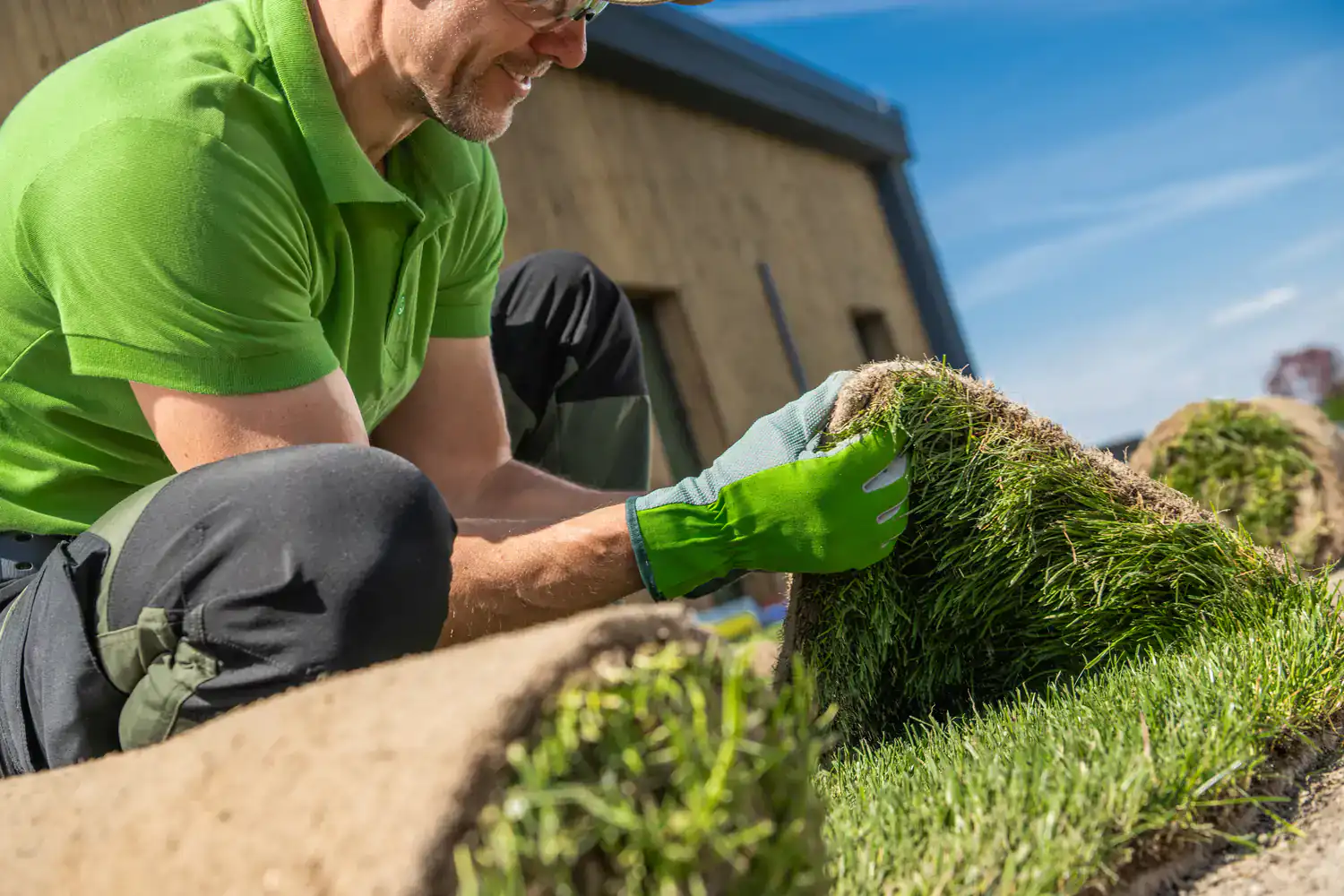
Sod gives you an instant lawn. Seeding gives you a better one over time and at a fraction of the cost. For most Nesconset homeowners dealing with a thinning or patchy lawn, professional overseeding is the right answer. It’s less disruptive, significantly less expensive, and when it’s done correctly with proper soil prep and premium seed, it produces a lawn that’s better adapted to your specific soil conditions than sod cut from a farm with different soil entirely.
Sod makes more sense in specific situations: when you need ground covered quickly for erosion control, when a construction project has left large areas of bare, graded soil that need immediate stabilization, or when a homeowner’s timeline doesn’t allow for the 6-to-8-week establishment period that seeding requires. In those cases, sod installed on properly prepared Nesconset soil with pH adjustment and good soil-to-sod contact can work well. But for renovation projects on existing lawns, or for homeowners who want the best long-term result for a reasonable investment, seeding is almost always the better call. We’ll give you a straight answer on which approach fits your situation when we assess your property not the one that costs more.
Useful Links
Other Services we provide in Nesconset