
Hear from Our Customers
If you’ve watched the same dead patches come back every July, or reseeded the same spots two falls in a row only to see them fail again by the following summer, the problem isn’t your seed or your watering schedule. It’s an undiagnosed fungal disease that never got treated correctly and it’s still in the soil waiting.
East Islip’s coastal environment makes this more common than most homeowners realize. The Great South Bay sits right at the hamlet’s southern edge, and the humidity it pushes inland during summer keeps nighttime temperatures elevated and grass blades wet longer than they should be. That combination is exactly what brown patch needs to spread. Lawns in The Moorings, along Bayview Avenue, and anywhere near the water face the highest disease pressure in the area and they need more than a bag of something from the hardware store to fix it.
The clay soil component that runs through East Islip’s waterfront neighborhoods makes things worse. Unlike the sandier profiles further north toward Sunrise Highway, clay-influenced soil holds moisture long after rain or dew clears, extending the conditions that fungal pathogens need to establish. Once we break that cycle with the right treatment at the right time, your lawn stops declining and starts recovering and it stays that way.
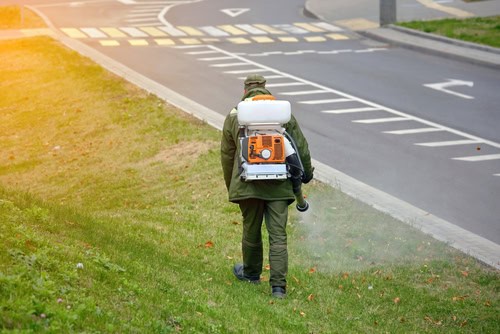
We hold a New York State DEC commercial pesticide applicator license the legal credential required to apply pesticides for hire in New York. That license isn’t a formality. It’s a verifiable, state-issued certification that requires passing exams, meeting experience requirements, and renewing every three years. It also means access to restricted-use fungicide formulations that aren’t available at any retail store in East Islip or anywhere else the same professional-grade chemistry used on golf courses and university turf programs.
We serve Suffolk County from Port Jefferson Station, which means we know East Islip’s South Shore conditions from direct experience. We know what Haven Loam does near the Great South Bay. We know that a lawn near Heckscher State Park faces a different spore and moisture environment than one further inland. When you call us, you’re not explaining your neighborhood to someone reading from a map you’re talking to someone who already understands it.
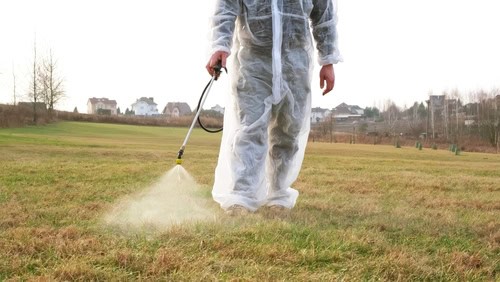
The first thing that happens is identification. Brown patch, dollar spot, and red thread are the three most common fungal diseases on East Islip lawns, and they each require different fungicide chemistry, different timing, and different application rates. Treating dollar spot with a product designed for brown patch produces nothing. Before any product is selected or applied, we identify what’s actually on your lawn.
Once the pathogen is confirmed, we match the treatment to the disease. For brown patch, that means acting before nighttime temperatures lock above 70°F the point where Great South Bay humidity accelerates its spread from a manageable patch to a lawn-wide problem. For red thread, timing shifts to spring and fall, when East Islip’s mature tree canopy and coastal moisture create the cool, damp conditions that fungus needs to take hold. Dollar spot is addressed based on your soil profile and the specific stress conditions present on your property.
We also rotate fungicide chemistries across the season alternating between different modes of action to prevent resistance from building up. This is standard practice on professional turf and almost never done correctly with over-the-counter products. After every application, you receive written documentation of exactly what was applied, at what rate, and when re-entry is safe. That documentation is a legal requirement under New York State law and it’s something an unlicensed operator simply cannot provide.
Ready to get started?
Every fungicide treatment we provide begins with a property-level assessment. That means evaluating your specific soil profile, the shade coverage from your tree canopy, how close you are to the bay, and what disease symptoms are present before a single product is chosen. For East Islip properties especially those in the waterfront neighborhoods where clay soil retains moisture and salt air adds turf stress that assessment changes the entire treatment plan.
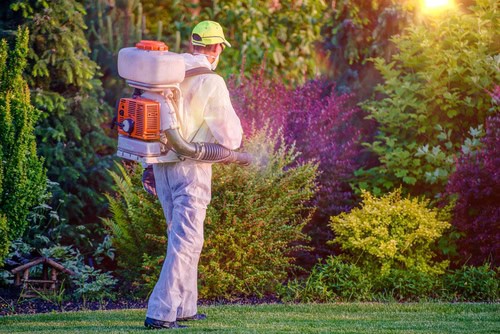
The treatment itself uses restricted-use professional fungicide formulations unavailable at retail. These are higher-concentration, more effective active ingredients the same class of products used on golf course fairways and professional sports turf. Depending on your property’s history and current disease pressure, the program may include preventative applications timed to East Islip’s disease windows, curative applications targeting active infections, or a combination of both across the growing season.
New York State also requires that we notify your neighbors before any commercial pesticide application a legal obligation that licensed operators follow and unlicensed ones routinely skip. You’ll receive written documentation after every visit as required by the NYS Commercial Lawn Care Contract Law. That accountability to you, to your neighbors, and to the state is built into every job we do in East Islip, from the neighborhoods near Heckscher State Park to the properties directly on the Great South Bay.
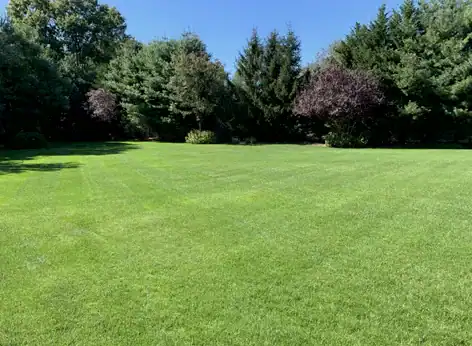
Recurring patches almost always mean the underlying fungal pathogen was never fully eliminated it went dormant over winter and reactivated when conditions were right again. In East Islip specifically, the combination of Great South Bay humidity, warm summer nights, and the clay soil component in many waterfront neighborhoods creates an environment where brown patch and dollar spot can persist in the soil year after year without a targeted fungicide treatment to break the cycle.
Reseeding over an active fungal problem doesn’t fix it the new seed establishes into the same infected soil and fails again by the following summer. The only way to stop the pattern is to correctly identify which pathogen is present, apply the appropriate chemistry at the right time, and follow through with a program that addresses both the active infection and the conditions that keep bringing it back.
They’re three distinct diseases caused by different fungal pathogens, and they each behave differently. Brown patch is the most destructive on East Islip lawns during summer it spreads rapidly when nighttime temperatures stay above 70°F and the air stays humid, which is exactly what Great South Bay conditions produce from late June through August. It shows up as irregular tan or brown patches with a darker border and can cover large areas of turf within days if left untreated.
Dollar spot produces smaller, silver-dollar-sized dead spots and is most active in late spring through early fall. It tends to be worse on lawns under nitrogen stress or drought pressure common on East Islip’s sandier soil profiles further from the water. Red thread shows up as pinkish-red threads on grass blades and is a cool-season disease, most active in spring and fall when temperatures sit between 60 and 75°F. East Islip’s mature tree canopy in the older estate-derived neighborhoods creates the reduced air circulation and lingering moisture that red thread needs. Each disease requires a different fungicide, which is why identifying the pathogen before treating is the only approach that actually works.
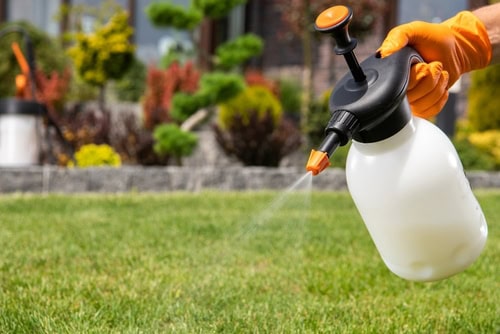
You can try, but the results are usually disappointing and the reason isn’t effort or technique. Over-the-counter fungicide products are limited to general-use formulations that are significantly weaker than the restricted-use professional-grade products we can access. The active ingredients available at retail are lower concentration, and many of the most effective fungicide chemistries for brown patch and dollar spot aren’t sold to the general public at all. They require a New York State DEC pesticide applicator license to purchase.
Beyond the chemistry gap, the timing issue is just as significant. Most homeowners apply fungicide reactively after the disease is visible and already spreading. Preventative applications timed to soil temperature thresholds and East Islip’s specific disease windows are far more cost-effective and produce better results. By the time a brown patch infection is large enough to see clearly in a South Shore lawn in July, the pathogen has already been active for days or weeks. A professional program intercepts disease before it reaches that point, which is a fundamentally different approach than what a bag from the hardware store can offer.
Salt air causes physiological stress in turf by disrupting the plant’s ability to take up water efficiently. Grass under salt stress shows tip burn, reduced vigor, and thinning and stressed turf is exactly what fungal pathogens target first. A lawn that’s already weakened by salt exposure from the Great South Bay or the Atlantic has significantly less natural resistance to brown patch and dollar spot than a healthy, unstressed lawn would.
For East Islip properties in The Moorings or anywhere along the southern neighborhoods closest to the bay, salt air stress is a compounding factor that often gets overlooked. A homeowner might treat what looks like a fungal problem and see partial improvement, but if the underlying salt stress isn’t accounted for, the turf stays vulnerable and the disease returns. A proper assessment looks at the full picture not just the visible symptoms, but the environmental conditions that are keeping the lawn susceptible in the first place.
It depends on your property’s disease history, soil type, and how close you are to the bay but for most East Islip lawns with a history of recurring disease, a single application isn’t enough. A well-structured program typically includes preventative applications timed to the start of each disease window, followed by curative applications if active infection is present. For brown patch, that means coverage through the July–August peak. For red thread and dollar spot, the treatment windows extend into spring and fall.
One important factor most homeowners don’t know about: using the same fungicide product repeatedly builds resistance in the fungal population. Within a few seasons, that chemistry becomes less effective which is why over-the-counter treatments that seemed to work initially stop producing results over time. A professional program rotates between different fungicide modes of action across the season to prevent resistance from developing. For East Islip lawns that have been treated with the same retail product for several years, that resistance buildup may already be a factor in why nothing seems to be working anymore.
Yes we hold a New York State Department of Environmental Conservation commercial pesticide applicator license, which is the legal requirement for any business applying pesticides for hire in New York. That license is verifiable through the NYSDEC and requires passing both core and category-specific state exams, meeting experience prerequisites, and completing continuing education every renewal cycle. It is not a self-described credential it is a state-issued certification with real legal accountability behind it.
For East Islip homeowners, that distinction matters on several levels. It means the products being applied on your lawn are professional-grade restricted-use formulations that produce results the over-the-counter alternatives cannot match. It means every application is documented in writing and provided to you a legal requirement under New York State’s Commercial Lawn Care Contract Law. It means your neighbors are notified before any application, as required by state law. And it means that if a question ever arises about what was applied near your garden, your well, or your property line, there is a complete paper trail. Suffolk County’s sole-source aquifer system makes proper pesticide handling genuinely important here and a licensed applicator is the only one legally and professionally equipped to handle it correctly.
Useful Links
Other Services we provide in East Islip