Hear from Our Customers
If brown patches show up every July, or you’re reseeding the same spots every fall and nothing takes, that’s not bad luck that’s an active fungal disease that never got properly identified. Brown patch, dollar spot, and red thread are the three most common lawn diseases in Nesconset, and all three look different enough that they’re regularly mistaken for drought stress, grub damage, or dead thatch. Treating the wrong problem means the right one keeps spreading.
Nesconset’s Haven Loam soil drains fast. Nutrients leach out quicker than in heavier soils, and when nitrogen drops during a dry stretch which happens regularly in this inland part of Suffolk County your turf gets stressed and vulnerable. Dollar spot thrives in exactly those conditions. It’s not a coincidence that it keeps coming back in the same spots on the same lawn every season.
The cool-season grasses covering most Nesconset lawns fescue, Kentucky bluegrass, perennial ryegrass are also the primary hosts for all three of these diseases. Getting the right fungicide on the right disease at the right time is what actually breaks the cycle. That’s what our customized fungicide treatment near Nesconset, NY is built to do.
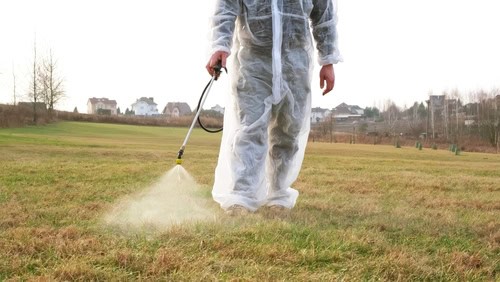
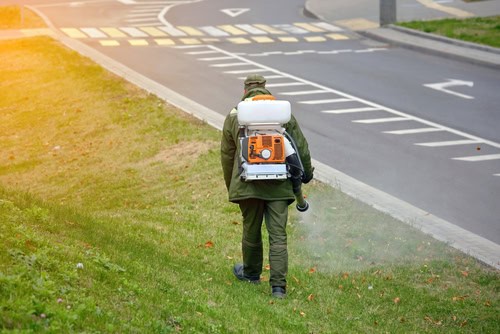
We hold a New York State DEC commercial pesticide applicator license. That’s not a membership or a marketing badge it’s a legal credential that requires passing state examinations, meeting experience standards, and renewing every three years with continuing education. More practically, it means access to restricted-use fungicides that no homeowner and no unlicensed operator can legally purchase or apply. The professional-grade chemistry used on golf courses and university athletic fields that’s what goes on your Nesconset lawn.
We’re based in Port Jefferson Station and travel the Route 347 corridor Nesconset Highway to service properties throughout this area. The sandy soils along this stretch of Smithtown, the cool-season grass varieties that dominate these neighborhoods, and the seasonal disease windows that hit Nesconset lawns every summer and fall aren’t abstractions. They’re what we diagnose on every visit.
Every visit starts with a proper look at what’s actually happening on your lawn. Brown patch has a darker border and spreads in irregular circles. Dollar spot shows up as small straw-colored patches, usually no bigger than a few inches across. Red thread produces bright pink threads on the grass blade itself. Each one requires different fungicide chemistry to treat effectively and applying the wrong product is the same as applying nothing at all.
Once the disease is identified, we select the right fungicide based on the specific pathogen, the grass type, and where you are in the season. In Nesconset, that also means accounting for your irrigation setup. A lot of properties here run in-ground systems, and evening watering is one of the most common reasons brown patch spreads wet blades overnight give Rhizoctonia solani exactly what it needs. That gets addressed as part of the diagnosis, not ignored.
After treatment, you receive written documentation of exactly what was applied the product, the rate, the date. New York State law requires licensed applicators to maintain these records, and you’re entitled to them. It also means your neighbors receive proper advance notification before any application, as required under NYS law. That’s not standard practice with unlicensed operators, but it is here.
Ready to get started?
Our fungicide program near Nesconset covers the three diseases most common to this area brown patch, dollar spot, and red thread along with any additional fungal issues identified during the diagnostic visit. We use professional-grade fungicides with multiple modes of action, rotated across the season to prevent resistance from developing. That rotation matters more than most people realize. When the same active ingredient gets applied repeatedly, fungal populations adapt and the product stops working. Rotating chemistries triazoles, strobilurins, and others depending on the situation is how professional turf management is done.
Timing is built around Nesconset’s specific disease windows. Brown patch is most aggressive from late June through August when nighttime temperatures stay above 70°F. Dollar spot runs spring through fall, with peaks during dry stretches when nitrogen is low. Red thread hits twice April through May and again in September and October and spreads fast through perennial ryegrass, which is one of the most common grass types on Nesconset residential lots.
Preventative applications, where appropriate, are timed before disease pressure peaks not after visible damage has already set in. Curative treatments are available when disease is already active. Both approaches are available depending on what your lawn needs and where it is in the season when you call.
Brown patch is caused by a fungus called Rhizoctonia solani, and it becomes highly active when nighttime temperatures in Nesconset stay above 70°F which happens consistently from late June through August. It spreads in irregular tan or brown circles with a slightly darker border, and it can advance several inches per day under peak summer conditions. A lot of homeowners mistake it for drought damage and water more, which actually makes it worse.
The bigger issue is that the fungus overwinters in your thatch layer and reactivates the following season. That’s why it keeps coming back in the same spots year after year on Nesconset properties. A proper brown patch fungicide application timed to your lawn’s specific conditions breaks that cycle. But it only works if the disease is correctly identified first. Brown patch and dollar spot look similar enough that misidentification is common, and they require different fungicide chemistries to treat.
Dollar spot appears as small, straw-colored circular patches, typically two to five inches in diameter, scattered across the lawn. Up close, you’ll often see an hourglass-shaped lesion on individual grass blades tan in the center with a reddish-brown border. Drought stress, by contrast, causes uniform thinning or discoloration across larger areas without that defined patch pattern.
In Nesconset specifically, dollar spot is a persistent problem because the local Haven Loam soil drains quickly and leaches nitrogen faster than heavier soils. When turf is nitrogen-deficient and under drought stress both of which happen regularly during inland Suffolk County summers it becomes highly susceptible. Homeowners who water more in response to what looks like drought are often feeding the humidity that dollar spot needs without fixing the nitrogen deficiency that created the vulnerability. A targeted dollar spot treatment addresses the fungal disease directly, and a proper diagnosis separates it from drought damage before any product is applied.
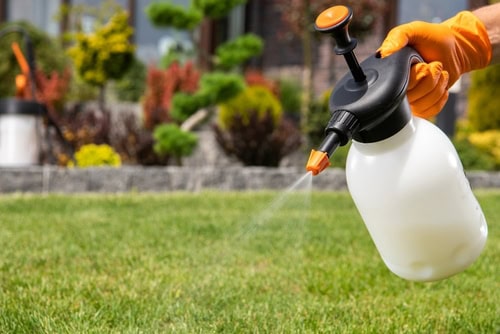
Homeowners can legally apply general-use pesticides to their own property in New York without a license. The limitation is that general-use products the ones available at any garden center or hardware store are lower-concentration formulations that often aren’t strong enough to knock back an active fungal disease, especially one that’s been recurring for multiple seasons.
The professional-grade fungicides that licensed applicators like us can access are restricted-use products. They’re not available for retail purchase, period. These are the same classes of active ingredients used on golf courses and professional athletic turf higher concentrations, more effective against established fungal populations, and applied at rates calibrated to the specific disease and grass type. If you’ve already tried a store-bought fungicide and the problem came back, that’s usually why. The chemistry available over the counter and the chemistry we bring to your Nesconset lawn are genuinely different products.
Red thread is one of the easier lawn diseases to identify once you know what to look for. The disease produces bright pink or red thread-like strands on the grass blade itself visible to the naked eye, especially in morning light. Affected areas look bleached or dead from a distance but have that distinctive coloring up close. It spreads through spore dispersal and can travel up to eight feet from a single infected area, which is why a small patch can turn into a large section of dead-looking turf quickly.
In Nesconset, red thread peaks twice a year April through May as temperatures settle into the 60–75°F range, and again in September and October as the season cools back down. Perennial ryegrass, which is one of the most common grass types on residential lots in this area, is among the most susceptible hosts. A red thread fungicide application timed to those spring and fall windows stops the spread before it gets out of hand. Waiting until the damage is visible and widespread means more of your lawn needs to recover.
The most cost-effective time to start is before disease pressure peaks not after you’re already looking at dead patches. For Nesconset lawns, that means a preventative application window in late spring, ahead of brown patch season, and another in early fall before red thread’s second peak. Getting ahead of the disease is always more efficient than trying to stop it once it’s already spreading.
That said, if you’re calling in the middle of summer with active brown patch or in September with red thread already visible, curative treatment is still effective it just takes longer to see results because the disease has had time to establish. Either way, the starting point is always a proper diagnosis. Nesconset’s combination of sandy soil, cool-season grasses, and in-ground irrigation systems creates a specific disease environment, and the timing of any fungicide program needs to account for those local conditions, not just follow a generic calendar.
If you’ve reseeded the same areas multiple times and the grass either doesn’t establish or dies within a season, there’s almost certainly an active fungal disease in that soil. New seedlings can’t survive in ground where a pathogen like Rhizoctonia solani or Clarireedia jacksonii is still present the disease kills the seedling before it can root. Every bag of seed and every hour of watering is working against an active infection that hasn’t been treated.
This is one of the most common and frustrating situations Nesconset homeowners run into, particularly on lawns with fescue or ryegrass in shaded or irrigated areas. The fix isn’t more seed it’s identifying and treating the underlying fungal disease first. Once the pathogen is suppressed with the right fungicide application, reseeding actually has a chance to work. Skipping that step and going straight to seed again is how the same dead patch reappears in the same corner of your lawn for the fourth consecutive fall.
Useful Links
Other Services we provide in Nesconset