
Hear from Our Customers
Brown patches stop spreading. The same dead circle that came back every July finally stays gone. You reseed in the fall and it holds because the disease that was killing it was treated before the seed went down, not after.
That’s the difference between a diagnosis-first fungicide program and a generic spray schedule. Sayville lawns near the waterfront stay wet longer after rain. Morning fog off the Great South Bay settles into turf blades and doesn’t burn off until mid-morning giving fungal spores a longer window to germinate and spread than you’d see in an inland community. A program that doesn’t account for that is just guessing.
On the western edge of Sayville, where properties border the Connetquot River State Park Preserve, the moisture influence is even more persistent. Shade from mature tree canopy, riparian humidity, and reduced airflow keep turf wet well past sunrise. Homes in that corridor tend to see faster brown patch spread and more recurring red thread activity in spring and fall. Knowing where you live on that map changes what gets applied and when.
Lawn Master holds a New York State DEC commercial pesticide applicator license. That’s not a marketing badge it’s a legal requirement that most of the companies showing up in your search results either don’t hold or don’t prominently disclose. Without it, a company cannot legally apply pesticides for hire in New York State, and they cannot access restricted-use fungicide formulations the professional-grade chemistries that actually resolve established disease rather than temporarily suppressing it.
We serve Sayville and the South Shore of Suffolk County, and we know this market well. The sandy loam soils, the bay-driven humidity, the moisture corridor along the Connetquot River these aren’t details we read about in a manual. They’re conditions we treat around every season. When you call Lawn Master, you’re not getting a franchise rep running a national playbook. You’re getting a licensed applicator who understands why your Sayville lawn behaves the way it does.
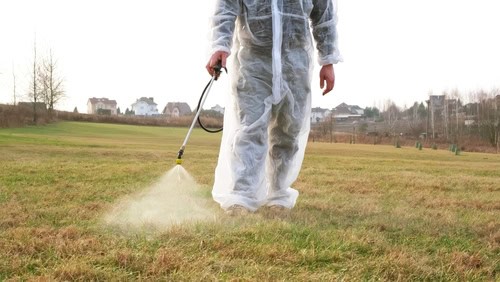
It starts with identifying what’s actually on your lawn. Brown patch, dollar spot, and red thread are the three most common fungal diseases on Long Island, and they don’t all respond to the same chemistry. Brown patch thrives when nighttime temps push past 70°F and humidity is elevated which describes Sayville in July and August almost every year. Dollar spot tends to show up in nitrogen-deficient turf on fast-draining sandy soils, which is most of the South Shore. Red thread peaks in the cooler shoulder seasons, spreads fast, and is often already well beyond the visible patch by the time a homeowner notices it. Treating any of these with the wrong product wastes your money and gives the correct pathogen more time to spread.
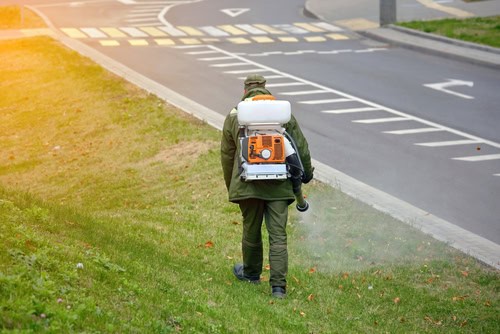
Once the disease is identified, we select the right fungicide chemistry for what’s present not what’s convenient or what’s already loaded in the truck. As NYS-licensed commercial applicators, we have access to restricted-use systemic fungicides that aren’t available at any retail store. These are professional-grade formulations applied at the correct rate, at the right timing, matched to the disease and your soil conditions. We also rotate chemistries across applications to prevent resistance from building up something a single store-bought product can never do.
After every application, you receive full documentation: what was applied, at what rate, and on what date. New York State requires licensed applicators to maintain these records, and we provide them to you directly. You also receive prior written notice before any application, as required by state law. No surprises, no guesswork just a clear record of what happened on your property and what to expect next.
Ready to get started?
Every fungicide engagement through Lawn Master starts with an on-site disease assessment. We’re looking at the pattern of damage, the margins of the affected area, the soil conditions, and the seasonal context before anything gets applied. In Sayville, that context matters a lawn backing up to the bay corridor in late July is a different situation than a lawn on a well-drained street in the center of the hamlet, and the treatment reflects that.
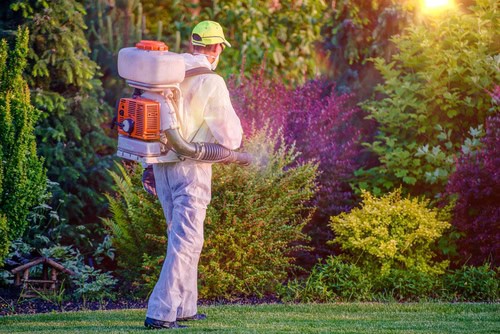
For active outbreaks, we apply curative fungicide treatments using restricted-use professional formulations matched to the specific pathogen identified. For properties with a documented history of recurring disease particularly those near the waterfront or along the Connetquot River corridor we offer preventative programs timed to Sayville’s disease windows: ahead of brown patch season in early summer and ahead of red thread activity in spring and fall. Preventative programs consistently outperform repeated emergency curative calls, both in results and in total cost over a season.
Suffolk County’s regulatory environment also plays a role in how we work. As a licensed commercial applicator operating under NYS DEC requirements, Lawn Master complies with all neighbor notification requirements, maintains full application records, and operates within county-level guidelines on pesticide use near sensitive groundwater areas. If you’ve been working with a company that can’t tell you exactly what they applied and why, that’s worth paying attention to.
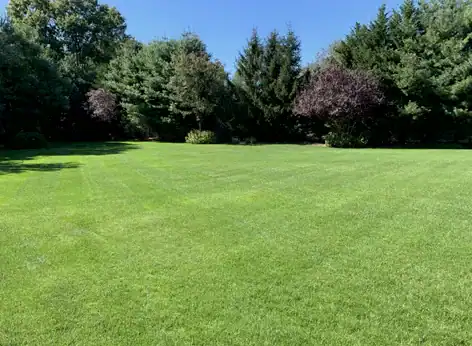
The most common reason is untreated fungal disease specifically brown patch, caused by Rhizoctonia solani. It doesn’t go away on its own between seasons. The pathogen overwinters in the thatch layer and soil, and when conditions get favorable again warm nights, elevated humidity, wet turf it picks up right where it left off. Reseeding into active disease is the single most common mistake homeowners make. The new grass establishes, looks fine through fall, and then dies in the exact same spot the following summer.
In Sayville, brown patch conditions arrive reliably every July and August. Nighttime temperatures push past 70°F, and moisture from the Great South Bay keeps humidity elevated through the night and into the morning. If your lawn has a history of recurring patches in the same location, the fix isn’t more seed it’s treating the underlying disease first, then reseeding into clean soil. That’s the sequence that actually holds.
They’re three separate diseases caused by three separate pathogens, and they respond to different fungicide chemistries. Brown patch produces large, circular, straw-colored areas sometimes with a darker border and spreads fast in warm, humid conditions. Dollar spot shows up as smaller, roughly silver-dollar-sized bleached spots, often with a reddish-brown margin, and it’s most common in nitrogen-deficient turf on fast-draining sandy soils. Red thread is identifiable by the pinkish-red threads visible on grass blades, peaks in cooler weather, and can spread up to eight feet from a single infected area before you notice it.
On Sayville’s South Shore, all three diseases are active at different points in the season. Sandy loam soils make dollar spot a persistent risk throughout summer. Bay-driven humidity fuels brown patch from July through August. Red thread shows up in spring and again in fall when temperatures cool and nitrogen levels drop. The reason store-bought fungicides often fail is that they’re frequently the wrong chemistry for the disease that’s actually present and they’re applied after the disease has already spread well beyond what’s visible.
If your lawn is currently showing active disease visible patches, discoloration, or spreading damage you need a curative treatment. That means applying the right fungicide chemistry to stop the pathogen that’s currently active and limit further spread. Curative treatments work, but they work on a disease that has already caused damage. The turf that’s dead doesn’t come back on its own; it needs to be reseeded after the disease is controlled.
If your lawn has a documented history of recurring disease the same patches in the same spots, year after year a preventative program is almost always the smarter investment. Preventative fungicide applications are timed to the disease windows before the pathogen reaches damaging levels. For Sayville lawns, that means applications ahead of brown patch season in early summer and ahead of red thread activity in spring and fall. Homeowners near the waterfront or along the Connetquot River corridor tend to see the strongest return on preventative programs because their microclimatic conditions make outbreaks faster and more severe when left unchecked.
The professional-grade fungicides we apply are registered for commercial turf use and applied at label-specified rates by a NYS-licensed commercial pesticide applicator. Once the application has dried typically a few hours under normal conditions the treated area is safe for normal foot traffic, including children and pets. We’ll give you a specific re-entry window based on the product applied and the weather conditions at the time of treatment.
As a licensed applicator under NYS DEC requirements, Lawn Master is also required to provide you with prior written notice before any application and to maintain full records of every product used on your property. If you ever want to know exactly what was applied, at what concentration, and when that information is available to you. That level of documentation and accountability isn’t something every lawn company offers, and it’s worth asking about before you hire anyone to apply anything to your property.
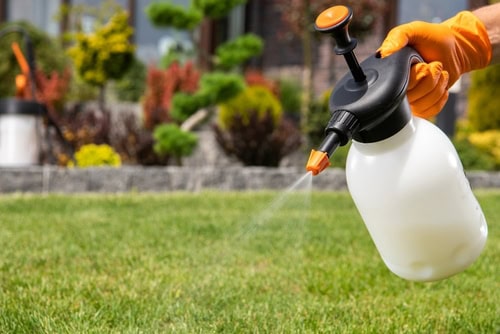
You can, but there are a few reasons it usually doesn’t work as well as homeowners hope. First, over-the-counter fungicides contain lower concentrations of active ingredients than professional-grade formulations, and they’re often applied at the wrong rate for the soil conditions present. On Sayville’s sandy loam soils, contact fungicides applied at retail rates may not achieve effective residual activity in the root zone the product drains through before it can do its job.
Second, and more importantly, most homeowners apply the wrong chemistry because they haven’t identified the specific disease present. Brown patch, dollar spot, and red thread each respond to different active ingredients. Applying a broad-spectrum product to the wrong disease is the lawn care equivalent of taking the wrong medication it might do something, but it won’t fix the actual problem. The third issue is resistance: using the same product repeatedly builds resistance in the fungal population, and the product stops working over time. Professional programs rotate chemistries specifically to prevent that. If you’ve already tried a store-bought fungicide and it didn’t work, that’s usually the reason.
It creates a microclimate that’s measurably more favorable to fungal disease than what you’d find in an inland community. The bay keeps relative humidity elevated throughout the growing season Sayville’s average humidity peaks around 78% in May and June, which is the critical window for red thread and early brown patch development. Overnight moisture lingers on turf blades longer than it does further inland. Morning fog rolls in off the water and doesn’t burn off until mid-morning, extending the daily window during which fungal spores can germinate and infect new tissue.
The practical result is that Sayville lawns near the waterfront are at higher risk for faster disease spread than the same grass type on a drier, inland lot. The same is true for properties on the western edge of Sayville bordering the Connetquot River State Park Preserve, where riparian moisture and mature tree shade keep turf wet well past sunrise. If you live near either of those corridors and you’ve noticed your lawn struggles more than your neighbors further from the water, that’s not coincidence it’s microclimate. A fungicide program that accounts for where your property sits, not just what town you’re in, is what makes the difference.
Useful Links
Other Services we provide in Sayville