
Hear from Our Customers
Kyllinga doesn’t respond to broadleaf weed killers or crabgrass preventers. It’s a sedge a completely different plant family and treating it with the wrong product is exactly why so many Commack homeowners are still dealing with it after multiple attempts. Once you’re working with the right chemistry and the right program, the results are real and lasting.
For Commack properties specifically, there are two conditions that come up constantly: irrigation systems and mature tree canopy. Homes along streets near Hoyt Farm Nature Preserve, and throughout Commack’s older neighborhoods, often have both established shade trees that keep soil moist, and in-ground sprinkler systems running on fixed schedules that add even more moisture to areas that are already sitting wet. Kyllinga finds those spots and moves in fast.
On a typical Commack lot a quarter to a third of an acre an untreated infestation that starts near a downspout or irrigation head can spread far enough within two seasons that lawn restoration becomes the conversation instead of weed control. Getting ahead of it early means you’re dealing with a targeted treatment program, not a full renovation.
We’re a locally owned lawn care company based in Port Jefferson Station, operating exclusively in Suffolk County. That focus matters here because Suffolk County isn’t a generic market it has its own soil conditions, its own regulatory requirements, and its own weed pressure patterns that a national chain or franchise operator simply doesn’t deal with day to day.
Every applicator at Lawn Master holds a valid New York State DEC Commercial Pesticide Applicator License, which is what’s legally required to purchase and apply the professional-grade herbicides that actually work on kyllinga. That’s not a marketing point it’s the reason the treatment works when everything else you’ve tried hasn’t.
Commack sits across two towns Huntington and Smithtown and we know this market well. When you call, you’re reaching us directly, not a call center routing your job through a regional office.
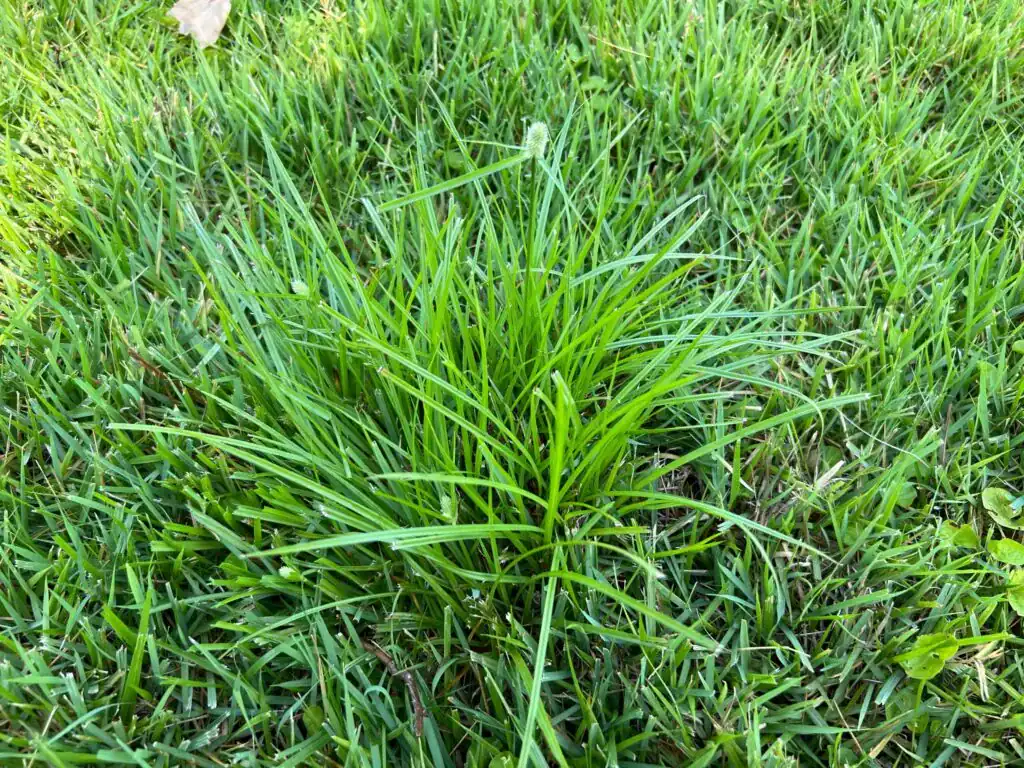
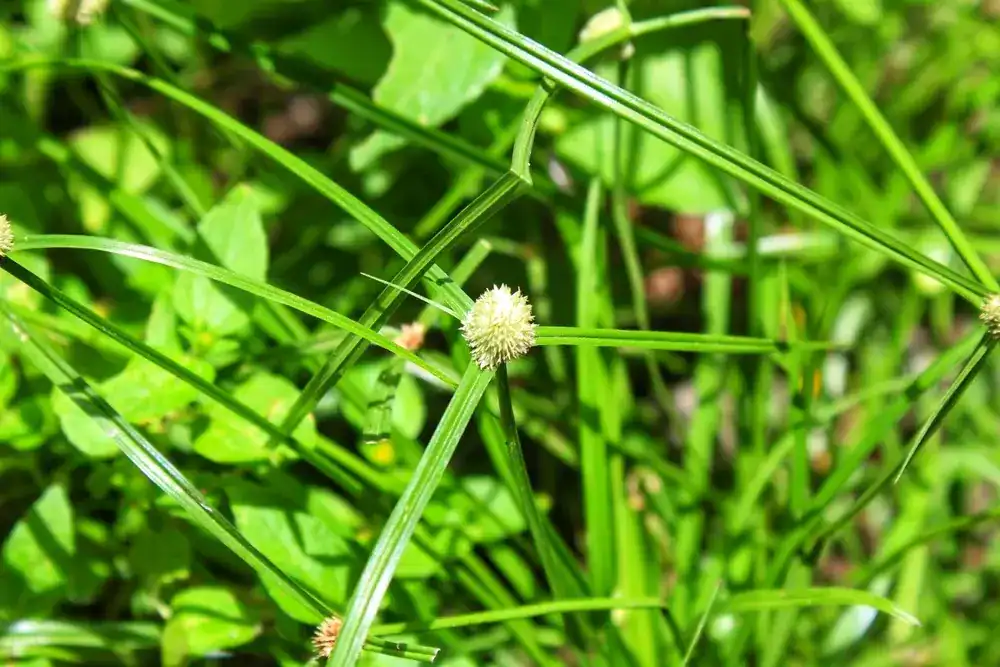
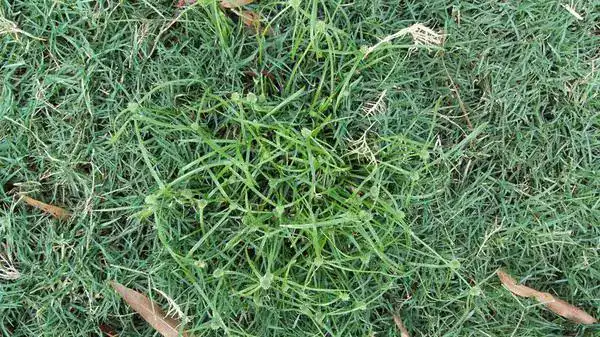
The first step is identification. Kyllinga and nutsedge are both sedges and they look similar enough that misidentification is common even among lawn care providers. Green kyllinga grows lower, forms a denser mat, and has a round or oval seed head rather than the starburst shape of yellow or purple nutsedge. Treating one like the other produces incomplete results. Before any product goes down, we confirm the specific sedge species.
From there, the treatment program is structured around the plant’s biology, not a fixed calendar. In Commack’s Long Island climate, kyllinga is actively growing from late May through late August that’s the window when herbicide uptake is highest and results are most reliable. A properly structured program requires two to three targeted applications spaced four to six weeks apart during that window. One application will knock the above-ground growth back, but the rhizome network underground survives and pushes new growth within weeks. The follow-up applications are what actually break that cycle.
Before any application in Commack, we check the Suffolk County Department of Health Services pesticide buffer zone map. Suffolk County Local Law 41-2007 establishes pesticide-free zones around public drinking water supply wells, and every treatment we perform is made in full compliance with those requirements documented and on record.
Ready to get started?
The herbicides we use in our kyllinga program halosulfuron-methyl and sulfentrazone are professional-grade formulations that require a licensed applicator to purchase and use legally in New York. These are not the same products available at retail stores in Commack or anywhere else in Suffolk County. The difference in efficacy is significant, and it’s the core reason professional treatment produces results that DIY attempts don’t.
Our program includes the full multi-application treatment sequence timed to kyllinga’s active growth window, identification of the moisture or drainage conditions driving the infestation, and a post-treatment plan for the bare and thin areas the sedge leaves behind. Killing the weed is only part of the job those open areas need to be overseeded with appropriate cool-season turf varieties for Long Island’s climate, or they become re-entry points for kyllinga, crabgrass, and other opportunistic weeds the following season.
For Commack homeowners with in-ground irrigation systems, our program also includes a conversation about watering schedules. Chronically moist soil from over-irrigation is one of the most common reasons kyllinga keeps coming back in this community, and adjusting the irrigation timing is often as important as the herbicide program itself.
Kyllinga is a perennial sedge, which means it doesn’t die off completely in winter the rhizome network underground survives and pushes new growth back up each spring. If only the above-ground plant tissue was treated, or if the treatment was applied outside the active growing window, the rhizomes stay intact and the cycle repeats.
In Commack specifically, the conditions that allowed kyllinga to establish in the first place moist soil near irrigation heads, low-lying areas near downspouts, shaded spots under mature trees don’t go away on their own. Even after a successful treatment program eliminates the current infestation, those same conditions will attract new kyllinga if they’re not addressed. A complete program looks at both the weed and the environment it’s thriving in, and makes recommendations on irrigation scheduling or drainage to reduce the risk of reinfestation the following season.
They’re related both are sedges in the Cyperaceae family but they’re different plants, and yes, it matters. Green kyllinga grows lower and denser than nutsedge, forms a more mat-like patch, and has a distinctly round or oval seed head. Yellow and purple nutsedge grow taller and have a starburst-shaped seed head. Visually, they’re easy to mix up, especially in an established lawn where both could theoretically be present.
From a treatment standpoint, the same professional-grade herbicides halosulfuron-methyl and sulfentrazone have activity against both, but the application timing, rate, and program structure can vary depending on which species you’re dealing with. A provider who doesn’t confirm the identification before treating is guessing, and that’s why a lot of Commack homeowners have already spent money on programs that delivered incomplete results. Getting the ID right before any product goes down is the first step in the program for a reason.
The honest answer is no not effectively. The retail products available at hardware stores and garden centers in Commack are not the same formulations used in professional kyllinga control programs. The active ingredients that deliver consistent results against kyllinga primarily halosulfuron-methyl and sulfentrazone require a New York State DEC Commercial Pesticide Applicator License to purchase and apply in professional-grade concentrations. That’s a legal requirement, not a marketing claim.
Consumer-grade sedge products exist, but they typically carry lower concentrations of active ingredients and require more frequent reapplication to see any meaningful effect. On a Commack-sized lot with an established kyllinga infestation, the result is usually partial suppression at best the weed comes back, you try again, and the infestation continues spreading while the season runs out. By the time the right professional program starts, the problem is larger and more expensive to address than it would have been at the start.
A properly structured program requires a minimum of two to three applications spaced four to six weeks apart during kyllinga’s active growing season. In Commack’s Long Island climate, that window runs from late May through late August. A single application will visibly damage the above-ground growth, but the underground rhizome system survives and regenerates new plant tissue within a few weeks. The follow-up applications are what disrupt that cycle and work down into the rhizome network over time.
Some heavier infestations particularly in Commack lawns where kyllinga has been spreading untreated for more than one season may require a second-year follow-up program to fully clear the seed bank from the soil. Kyllinga can produce up to 5,000 seeds per plant per year, and those seeds can remain viable in the soil for multiple seasons. That’s why starting treatment early and completing the full program matters more than any single application.
Very likely, yes. Kyllinga is a moisture-loving sedge it doesn’t invade random areas of a lawn, it targets the wet spots. In Commack, where in-ground irrigation systems are common in established residential neighborhoods, fixed watering schedules that run regardless of recent rainfall create the kind of chronically moist soil conditions that kyllinga needs to germinate and spread. The infestations in this community often start near irrigation heads, in low corners where water pools, or in areas near downspouts and then expand outward from there.
Treating the kyllinga without addressing the irrigation schedule is a short-term fix. The same conditions that allowed it to establish the first time will allow it to reestablish after treatment if nothing changes. As part of our program, we look at where the infestation is concentrated and, where irrigation is a contributing factor, make specific recommendations on adjusting watering frequency and timing to reduce moisture in those areas between treatments.
The optimal window is late May to early June, when kyllinga has fully broken dormancy and is actively growing. That’s when the plant is metabolically active enough to take up herbicide efficiently, and it gives the program enough time to complete two to three applications before the growing season ends in late August. Applications made too early in spring before the plant has fully emerged or too late in fall, when it’s starting to slow down, are significantly less effective and often require an additional season to finish the job.
The practical reality in Commack is that most homeowners first notice kyllinga in mid-to-late July or August, when it stays visibly green and keeps growing while the surrounding cool-season turf slows down under summer heat. That timing is frustrating because the season is already partially gone. If you’re noticing it now in summer, it’s still worth starting treatment but the earlier in the season you begin, the more complete the results will be by fall. If you’re reading this in the off-season, spring is exactly when to call.
Useful Links
Other Services we provide in Commack