
Hear from Our Customers
If you’ve been treating a dark green, low-growing patch in your lawn and watching it come back every season, there’s a good chance it’s kyllinga and a good chance the product you’ve been using doesn’t touch it. Kyllinga is a sedge, not a grass or a broadleaf weed, which means the herbicides at every hardware store on Long Island are essentially useless against it. Once you’re using the right chemistry, applied at the right time, the results are different.
East Islip’s geography makes this weed particularly stubborn. The flat terrain south toward the bay, the elevated water table in the blocks closest to the Great South Bay, and the coastal humidity that lingers through the entire growing season those conditions don’t just favor kyllinga, they sustain it. Thin or stressed turf in moist soil is exactly where kyllinga establishes first, and once it’s in, it spreads through an underground root network that a single spray won’t reach.
What you end up with after proper treatment isn’t just a dead patch where the kyllinga was it’s a lawn that’s actually competitive again. Dense, healthy turf crowds out reinfestation. The bare areas left behind after treatment get overseeded. The conditions that let kyllinga in get addressed. That’s the full picture, and that’s what a real kyllinga control program in East Islip delivers.
We’re a locally owned lawn care company operating out of Port Jefferson Station, serving homeowners across Suffolk County including East Islip and the surrounding South Shore communities in the Town of Islip. This isn’t a franchise. There’s no regional manager between you and the person responsible for your lawn.
The herbicides that reliably eliminate kyllinga halosulfuron-methyl and sulfentrazone aren’t available in any retail store. They require a New York State DEC Commercial Pesticide Applicator License (Category 3a) to purchase and apply. We hold that license. That’s not a small detail when you’re dealing with a weed that’s been misidentified, undertreated, and spreading for a season or two already.
We know the South Shore. We know what kyllinga looks like in the bayside blocks near Heckscher State Park. We know the difference between green kyllinga and nutsedge, and we know why that distinction changes the treatment. That’s the baseline for doing this right.
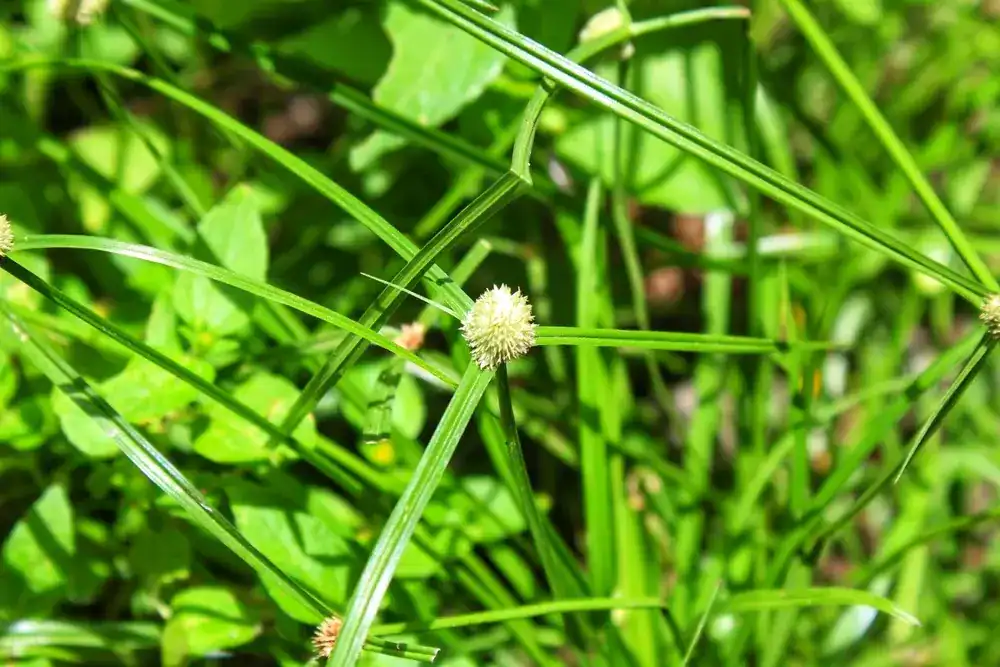
It starts with identification. Kyllinga and nutsedge are both sedges, but they’re different plants, and treating one like the other produces incomplete results. Before anything gets applied to your East Islip lawn, the weed gets confirmed visually, at the species level. Green kyllinga has a distinctive round seed head and forms a dense, low mat. Nutsedge grows taller and more upright. If you’ve been told “it’s just nutsedge” and the problem persists, that’s likely where things went sideways.
Once the species is confirmed, treatment begins during kyllinga’s active growth window late May through late August in East Islip’s coastal climate. The bay’s moderating influence on temperature means kyllinga can begin pushing growth slightly earlier here than in inland Suffolk County communities, so timing the first application correctly matters. A single application will visibly set the plant back, but it won’t eliminate an established infestation. The underground rhizome network survives one round of treatment and regenerates. A properly structured program runs two to three applications spaced four to six weeks apart, targeting the plant as it tries to recover.
After the final application, any thin or bare areas left behind get addressed through overseeding and soil work. Kyllinga exploits weak turf so the last step is making sure your lawn is dense enough that it doesn’t get a foothold again. Every application is made in full compliance with Suffolk County pesticide regulations and, where relevant, the Town of Islip’s Wetland and Watercourse Management Area Overlay District requirements for properties near bay-adjacent wetlands.
Ready to get started?
Every kyllinga control program starts with a proper site assessment looking at the infestation size, the species present, the soil conditions, and the drainage patterns on your specific property. For East Islip homeowners in the bayside blocks, near the Heckscher State Park boundary, or in neighborhoods like Deer Run and Country Village where moist low spots are common, that assessment shapes the entire program. Cookie-cutter treatments don’t account for the conditions that made your lawn vulnerable in the first place.
The treatment itself uses professional-grade sedge herbicides the same chemistry used on golf course turf, including at facilities like Timber Point Country Club in adjacent Great River applied by a licensed applicator following NYSDEC Category 3a requirements and Suffolk County Chapter 647 pesticide regulations. You’ll receive proper notification ahead of each application, and every visit is documented. For properties near wetlands or watercourses regulated under Town of Islip code, buffer zone requirements are factored in before anything is applied.
The program doesn’t end when the kyllinga is dead. Bare and thin areas get overseeded with turf varieties suited to East Islip’s coastal soil conditions. Irrigation and drainage recommendations get included where they’re relevant. The goal is a lawn that doesn’t just lose the weed it stays competitive enough that the weed doesn’t come back. That’s what our kyllinga control program in East Islip is built to deliver.

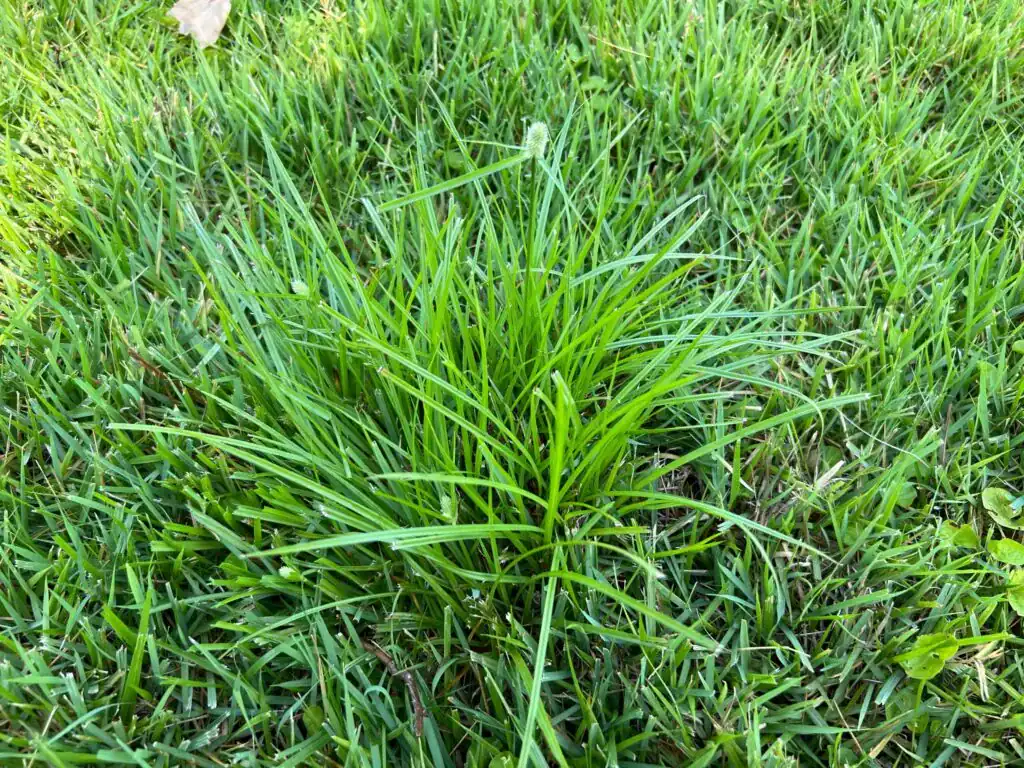
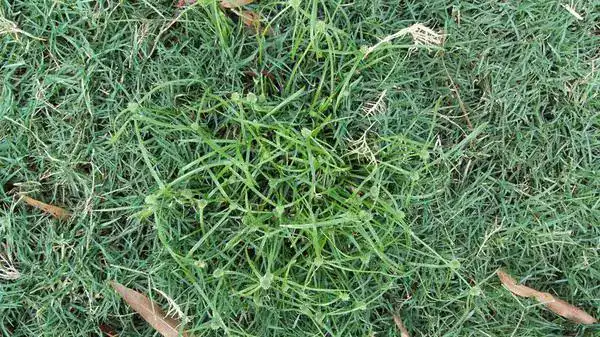
The easiest visual difference is the seed head and the growth habit. Kyllinga particularly green kyllinga stays low to the ground, forms a dense mat, and produces a small, round or oval seed head. Nutsedge grows taller and more upright, with an elongated, branching seed head. Both are sedges, both have the triangular stem that’s the hallmark of the Cyperaceae family, and both are a darker green than your surrounding turf. But they’re different plants, and that matters for treatment.
In East Islip, kyllinga tends to show up first in the lower, moister areas of a lawn the spots near the back of a property, low-lying areas that hold water after rain, or sections of the lawn where the water table sits close to the surface in the bayside blocks. If you’ve got a patch that stays greener than everything else in July and August, stays lower than the surrounding grass, and hasn’t responded to standard weed killers, kyllinga is a strong candidate. We can confirm the species on-site before any treatment begins.
Kyllinga is a sedge it’s not a grass and it’s not a broadleaf weed. The herbicides sold at retail stores are formulated to target one of those two categories. Broadleaf weed killers that contain 2,4-D, dicamba, or triclopyr won’t affect kyllinga. Grassy weed killers won’t either. The chemistry that actually works on sedge species halosulfuron-methyl (sold professionally as Sedgehammer) and sulfentrazone (sold as Dismiss) is only available in professional formulations to licensed applicators. You can’t buy it at Home Depot or any hardware store on Long Island.
This is why so many East Islip homeowners end up frustrated after applying multiple products and watching kyllinga come back untouched. It’s not a matter of applying more product or trying a different retail brand it’s a product access issue. The right chemistry simply isn’t available without a New York State DEC Commercial Pesticide Applicator License. Once the correct herbicide is applied at the right growth stage, the difference in results is significant.
For an established infestation, plan on a minimum of two to three applications spaced four to six weeks apart. A single treatment will visibly damage the plant it’ll brown out and appear dead but kyllinga spreads through an underground rhizome network, and that network survives one round of herbicide. New growth pushes up from the surviving rhizomes within a few weeks, especially in East Islip’s warm, moist summer conditions. The follow-up applications are what actually break that cycle.
The timing of those applications matters as much as the number. Kyllinga needs to be actively growing and metabolically active to absorb the herbicide effectively. In East Islip’s coastal climate, that window runs from late May through late August the Great South Bay’s moderating influence keeps soil temperatures favorable for kyllinga growth slightly longer than in inland communities. Applications made too early in spring, before the plant is fully active, or too late in fall, after it begins going dormant, produce significantly weaker results. A properly timed program accounts for East Islip’s specific growing season, not a generic Long Island calendar.
It’s a real concern for East Islip homeowners whose properties are near the park’s boundaries. Heckscher State Park covers 1,657 acres of natural land along the Great South Bay, and natural areas like that harbor kyllinga and other sedge species that can migrate into adjacent residential lawns through wind-dispersed seed, wildlife movement, and mowing equipment. You can eliminate the current infestation in your lawn and still face reinfestation pressure from the natural seed bank nearby.
The answer isn’t to give up on treatment it’s to pair chemical control with the cultural practices that make your lawn resistant to reinfestation. Dense, healthy turf is the best long-term defense against kyllinga. When desirable grass is thick and competitive, kyllinga has a much harder time establishing from seed. That means overseeding bare and thin areas after treatment, addressing drainage issues that create the moist conditions kyllinga exploits, and adjusting irrigation to avoid the prolonged soil moisture that gives it an advantage. Eliminating the current infestation is step one. Building a lawn that resists the next round is step two.
Yes, and there are a few specific reasons for that. The flat terrain in East Islip’s residential neighborhoods particularly in the blocks south toward the bay means the water table sits noticeably closer to the surface than in inland Suffolk County communities. Even without overwatering, lawns in those areas can have persistently moist root zones throughout the growing season. Kyllinga thrives in exactly those conditions. It outcompetes cool-season turf grasses in warm, wet soil, and the coastal humidity that comes with living near the Great South Bay keeps that moisture level elevated through the entire summer.
The bay also moderates temperature extremes in East Islip, which means the warm season is slightly longer here than in towns further north and inland. That extends kyllinga’s active growth window and gives it more time to spread via rhizomes and seed before cooler temperatures slow it down. For homeowners in the bayside blocks or in low-lying areas of neighborhoods like Beecher Estates or near the Heckscher State Parkway corridor, these conditions aren’t something you can fully control but they are something we account for in a properly structured treatment program.
It can, but it requires a licensed applicator who knows the applicable regulations and in East Islip, those regulations are more layered than in purely inland communities. The Town of Islip’s Wetland and Watercourse Management Area Overlay District establishes buffer zone requirements for properties near designated wetlands and watercourses. Suffolk County’s pesticide regulations under Chapter 647 add notification and documentation requirements on top of that. And New York State’s Nutrient Runoff Law restricts certain applications near water bodies relevant in a coastal community where runoff can reach the Great South Bay.
None of this means kyllinga can’t be treated on bay-adjacent or wetland-proximate properties in East Islip. It means the applicator needs to know where the regulated areas are, what the buffer distances require, and how to document the application properly. We operate exclusively in Suffolk County and are fully familiar with Town of Islip overlay district rules, SCDHS pesticide buffer zone requirements, and NYSDEC licensing obligations. Every application on a waterfront or wetland-adjacent property in East Islip is planned and executed with those requirements factored in from the start not figured out after the fact.
Useful Links
Other Services we provide in East Islip